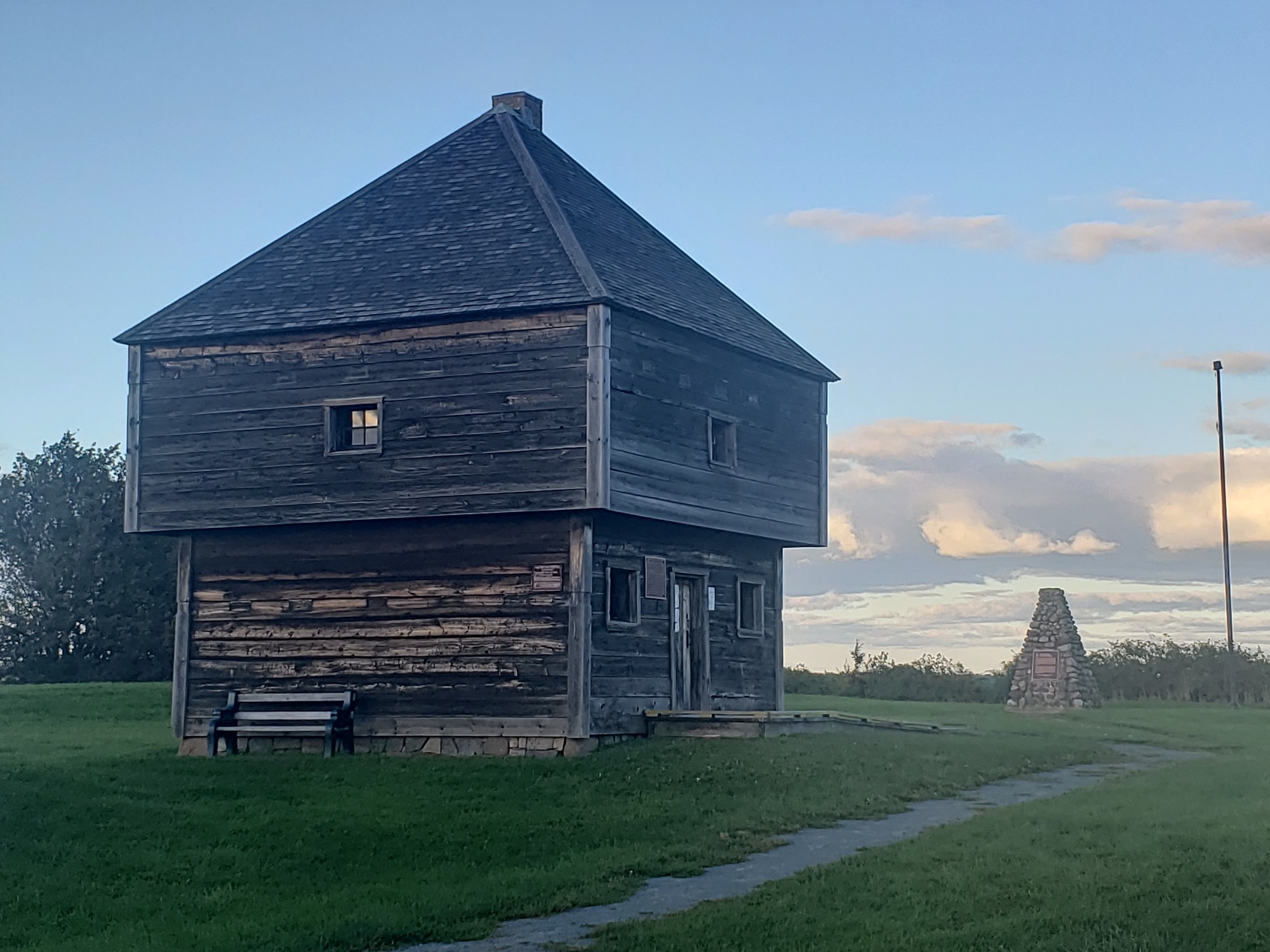
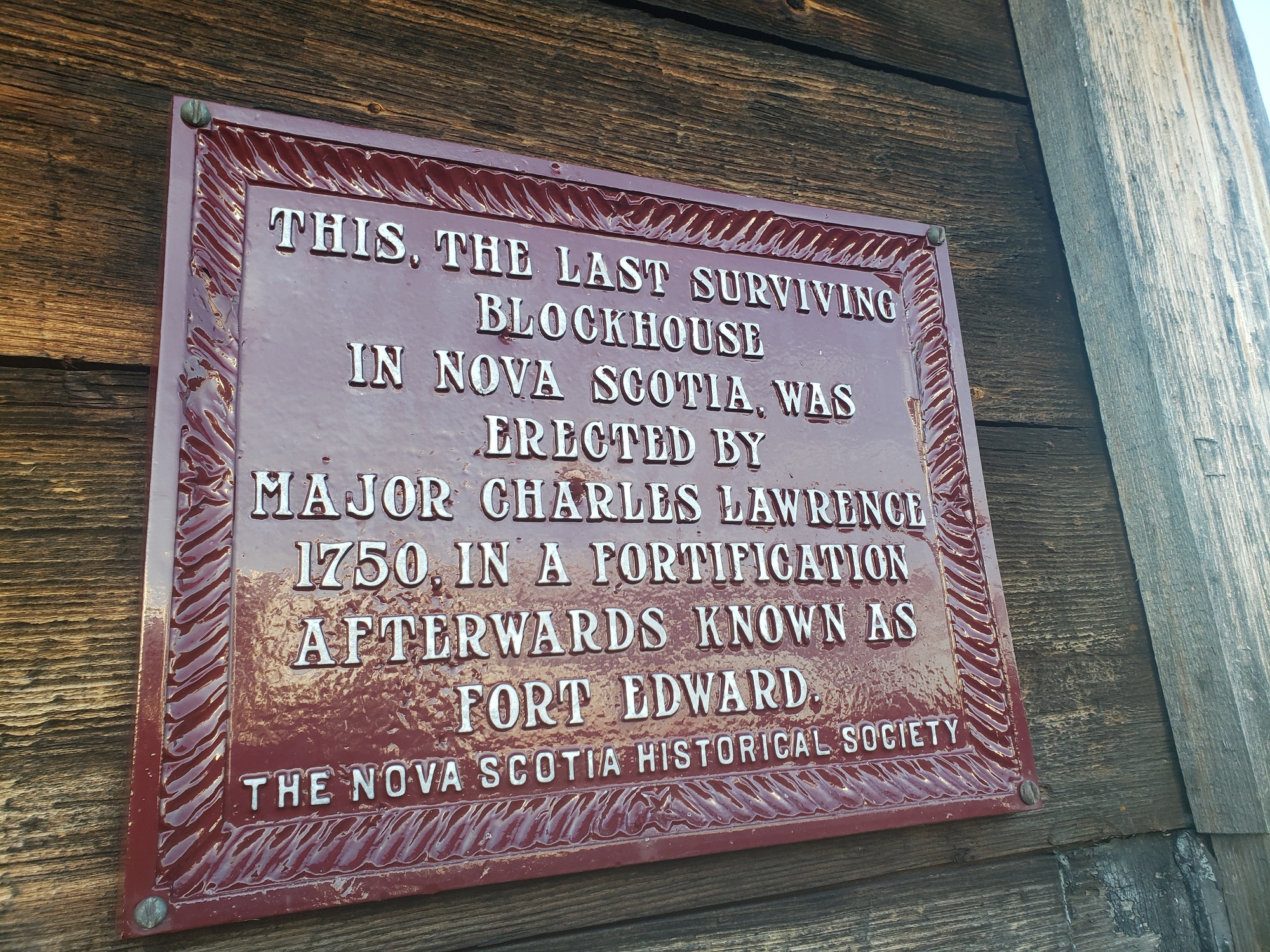
[blockhouse plaque/plaque du blockhaus]
THIS, THE LAST SURVIVING
BLOCKHOUSE
IN NOVA SCOTIA, WAS
ERECTED BY
MAJOR CHARLES LAWRENCE
1750, IN A FORTIFICATION
AFTERWARDS KNOWN AS
FORT EDWARD.
THE NOVA SCOTIA HISTORICAL SOCIETY
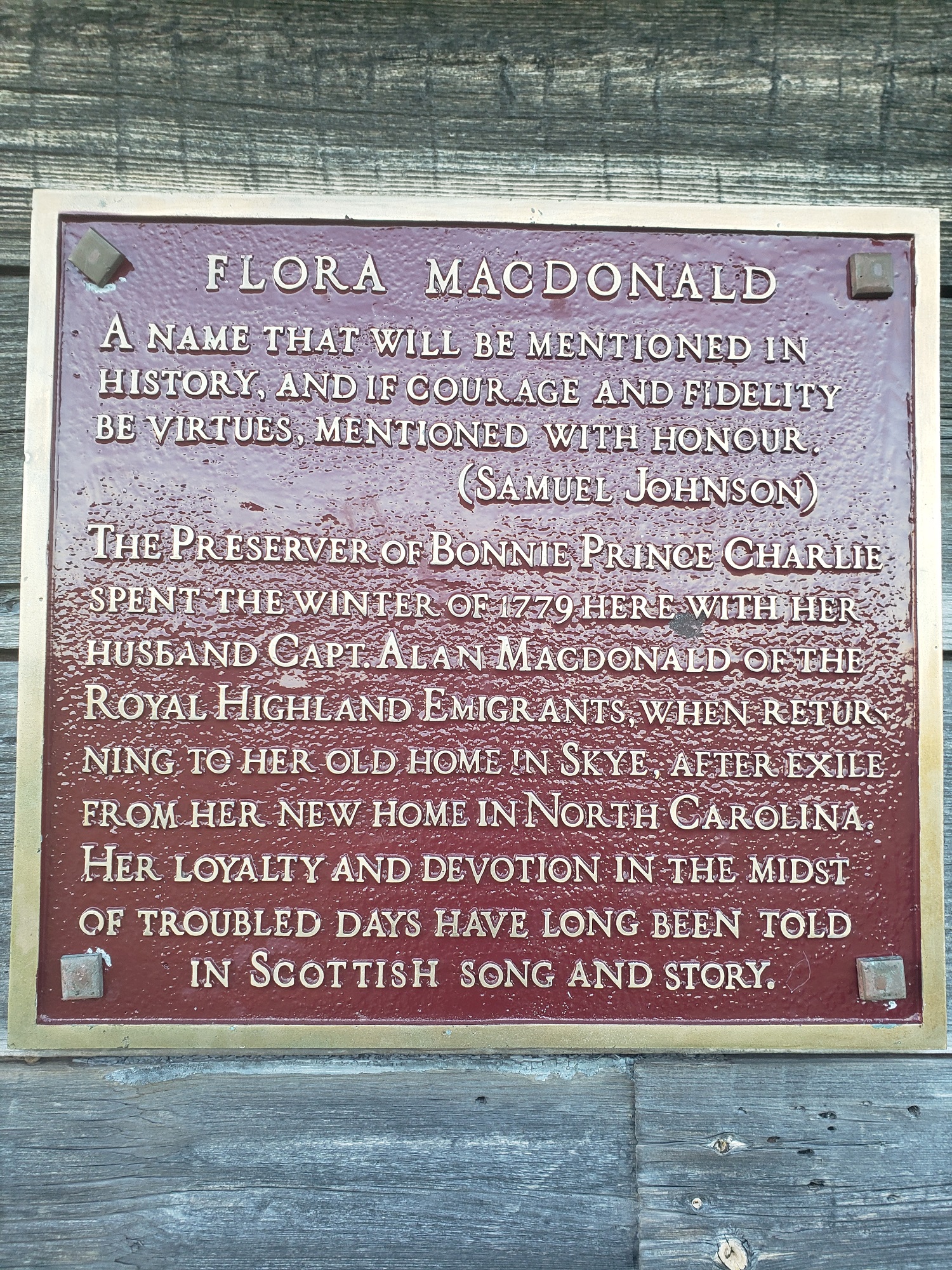
[plaque]
FLORA MACDONALD
A NAME THAT WILL BE MENTIONED IN
HISTORY, AND IF COURAGE AND FIDELITY
BE VIRTUES, MENTIONED WITH HONOUR.
(SAMUEL JOHNSON)
THE PRESERVER OF BONNIE PRINCE CHARLIE
SPENT THE WINTER OF 1779 HERE WITH HER
HUSBAND CAPT. ALAN MACDONALD OF THE
ROYAL HIGHLAND AND EMIGRANTS WHEN RETUR-
NING TO HER OLD HOME IN SKYE, AFTER EXILE
FROM HER NEW HOME IN NORTH CAROLINA.
HER LOYALTY AND DEVOTION IN THE MIDST
OF TROUBLED DAYS HAVE LONG BEEN TOLD
IN SCOTTISH SONG AND HISTORY.
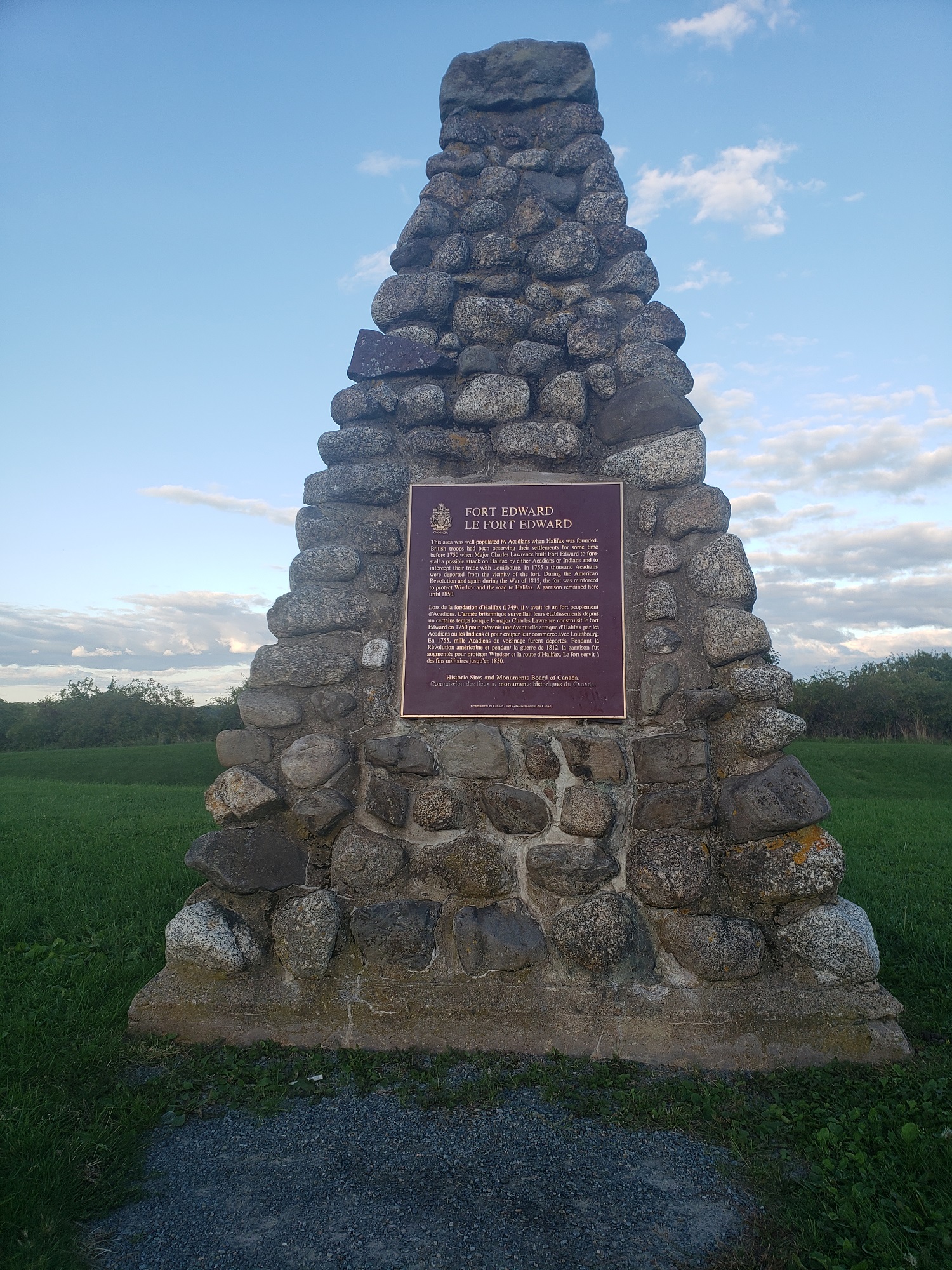
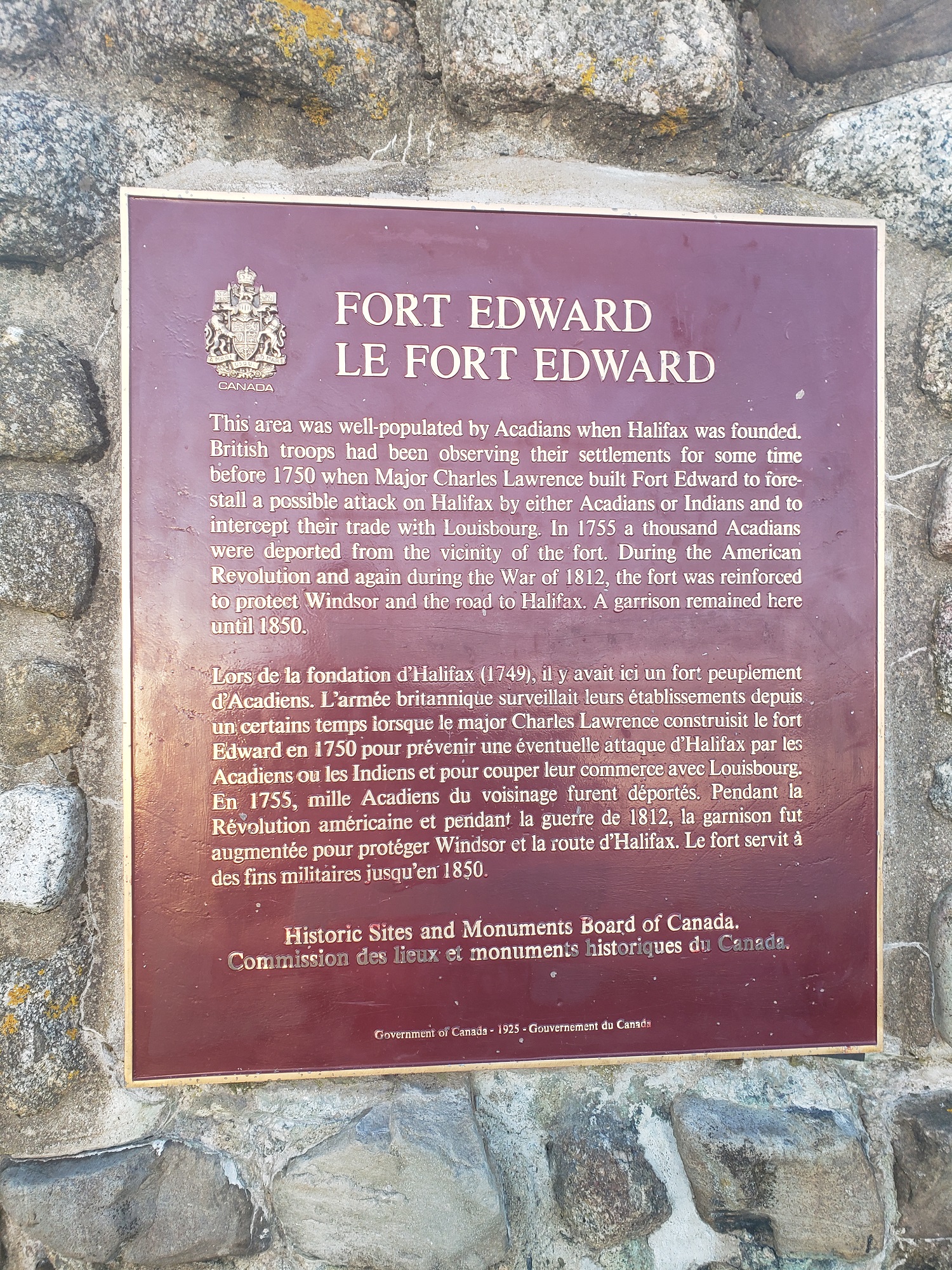
[cairn plaque/plaque sur le cairn]
FORT EDWARD
LE FORT EDWARD
This area was well-populated by Acadians when Halifax was founded.
British troops had been observing their settlements for some time
before 1750 when Major Charles Lawrence built Fort Edward to fore-
stall a possible attack on Halifax by either Acadians or Indians and to
intercept their trade with Louisbourg. In 1755 a thousand Acadians
were deported from the vicinity of the fort. During the American
Revolution and again during the War of 1812, the fort was reinforced
to protect Windsor and the road to Halifax. A garrison remained here
until 1850.
Lors de la foundation d’Halifax (1749), il y avait içi un fort peuplement
d’Acadiens. L’armée britannique surveillait leurs établissements depuis
un certains temps lorsque le major Charles Lawrence construisit le fort
Edward en 1750 pour prévenir une éventuelle attaque d’Halifax par les
Acadiens ou les Indiens et pour couper leur commerce avec Louisbourg.
En 1755, mille Acadiens du voisinage furent déportés. Pendant la
Révolution américaine et pendant la guerre de 1812, la garnison fut
augmentée pour protéger Windsor et la route d’Halifax. Le fort servit à
des fins militaires jusqu’en 1850.
Historic Sites and Monuments Board of Canada.
Commission des lieux et monuments historiques du Canada.
Government of Canada – 1925 – Gouvernement du Canada
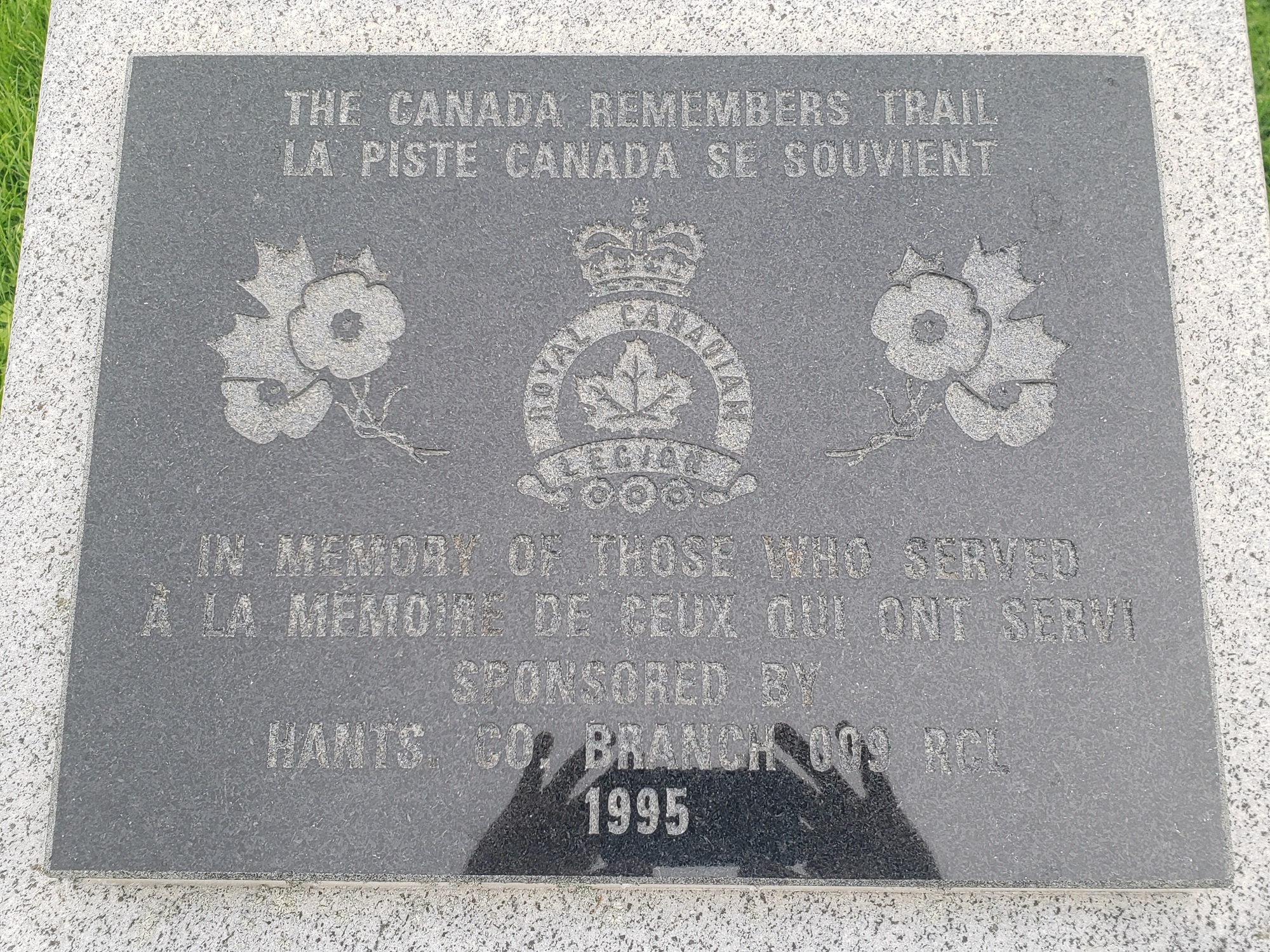
[plaque on plinth/plaque sur socle]
THE CANADA REMEMBERS TRAIL
LA PISTE CANADA SE SOUVIENT
ROYAL CANADIAN LEGION (symbol)
IN MEMORY OF THOSE WHO SERVED
À LA MEMOIRE DE CEUX QUI ONT SERVI
SPONSORED BY
HANTS. CO. BRANCH 009 RCL
1995