
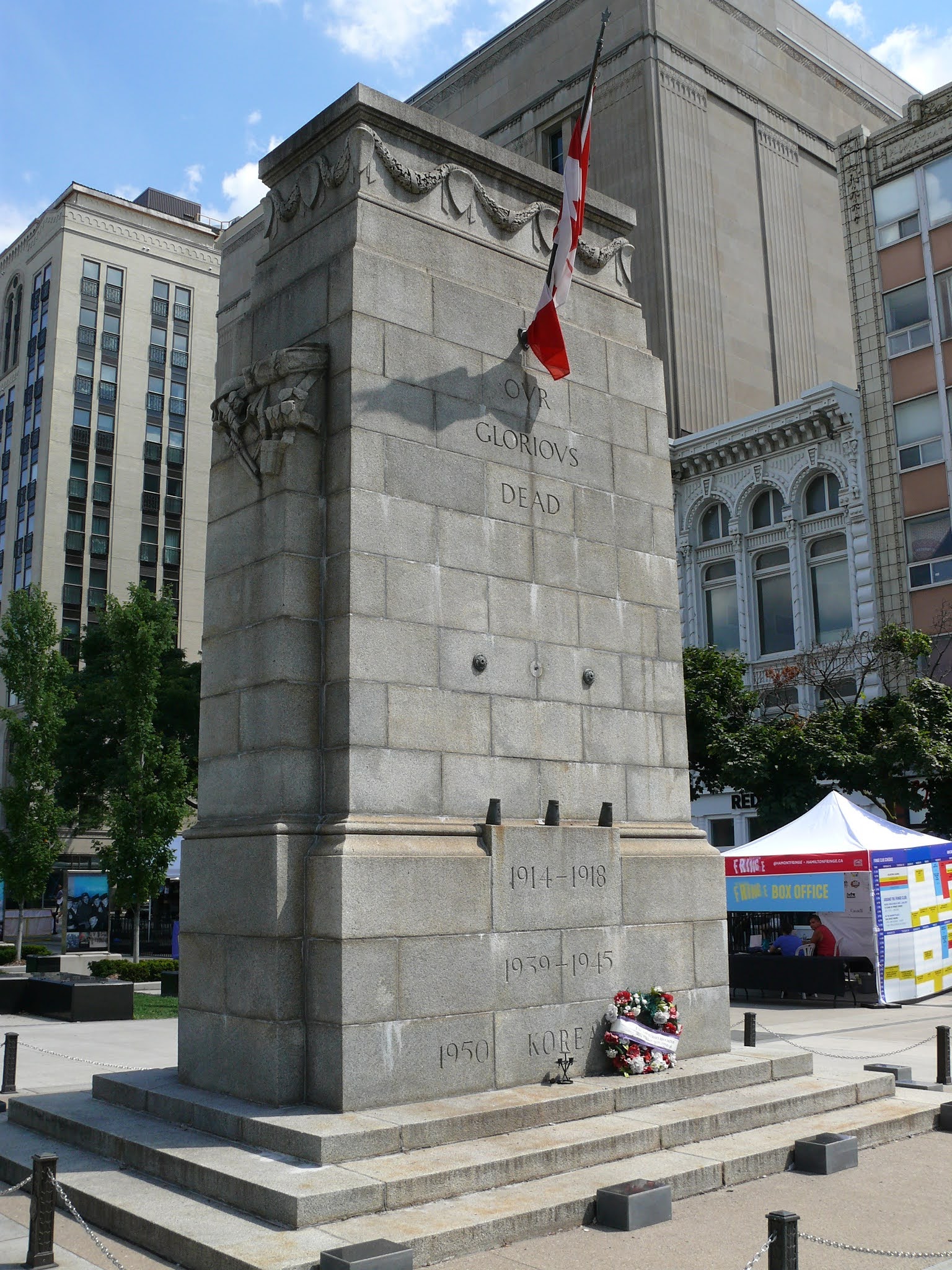
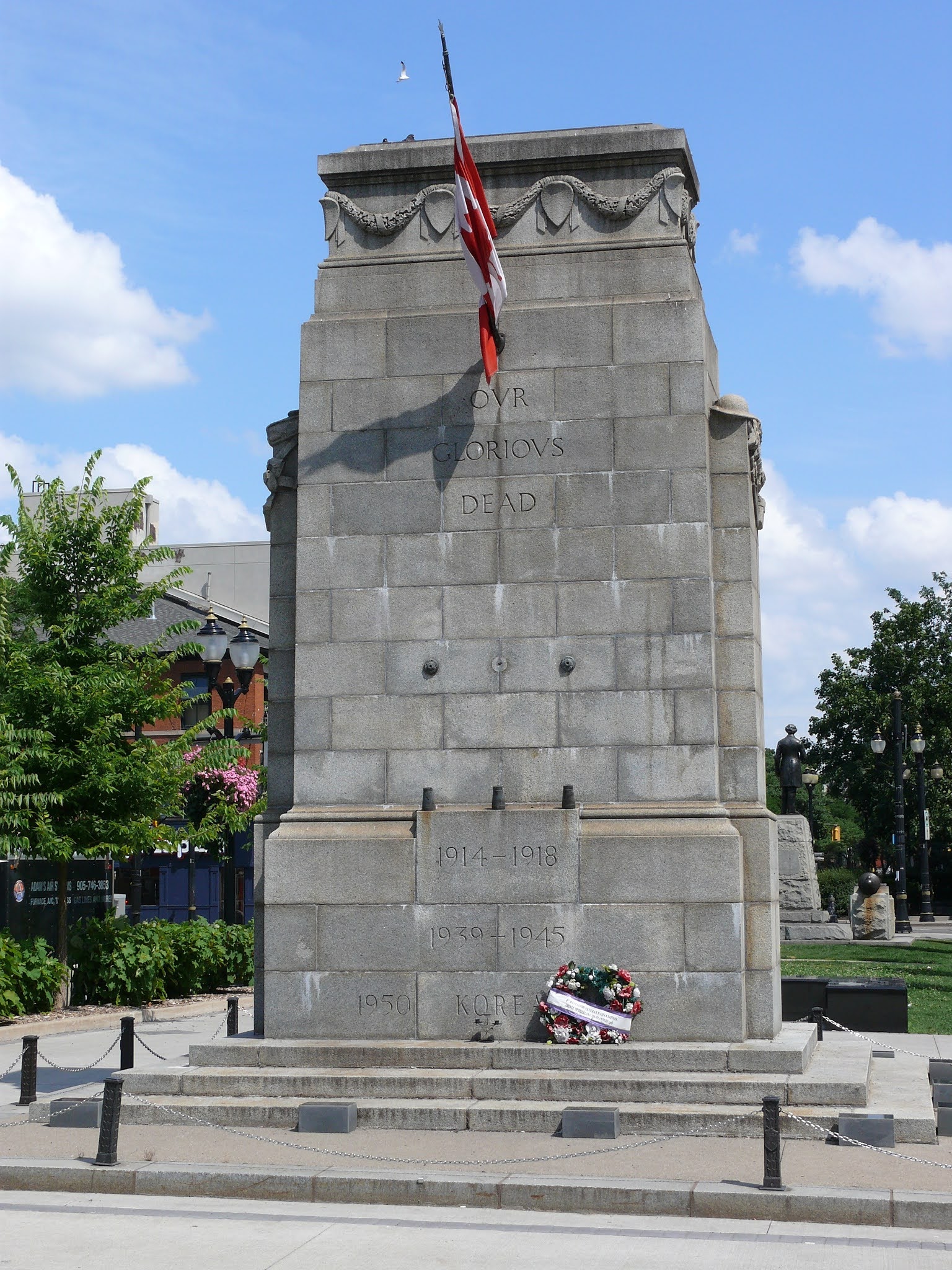

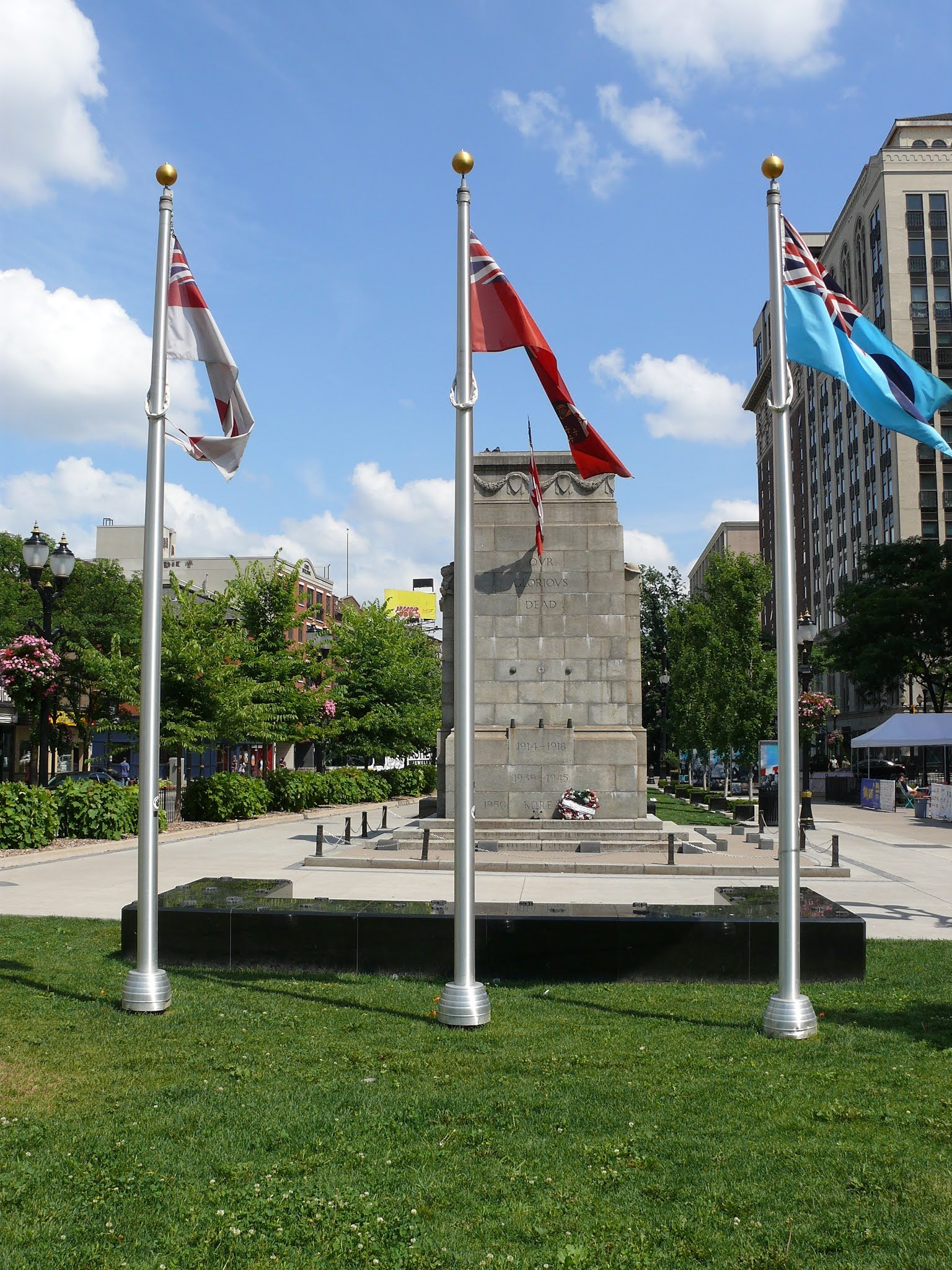
The Hamilton Cenotaph was erected through the efforts of the Canadian Club of Hamilton to commemorate those who sacrificed their lives during the First World War. The plan was proposed by John Stephen, President of the Canadian Club of Hamilton on Thursday, June 23, 1921. He felt the funds required could be raised by all of the Canadian Clubs in Hamilton. Architect William Russell Souter, a partner in the Hutton and Souter architectural firm, was chosen to design the cenotaph.
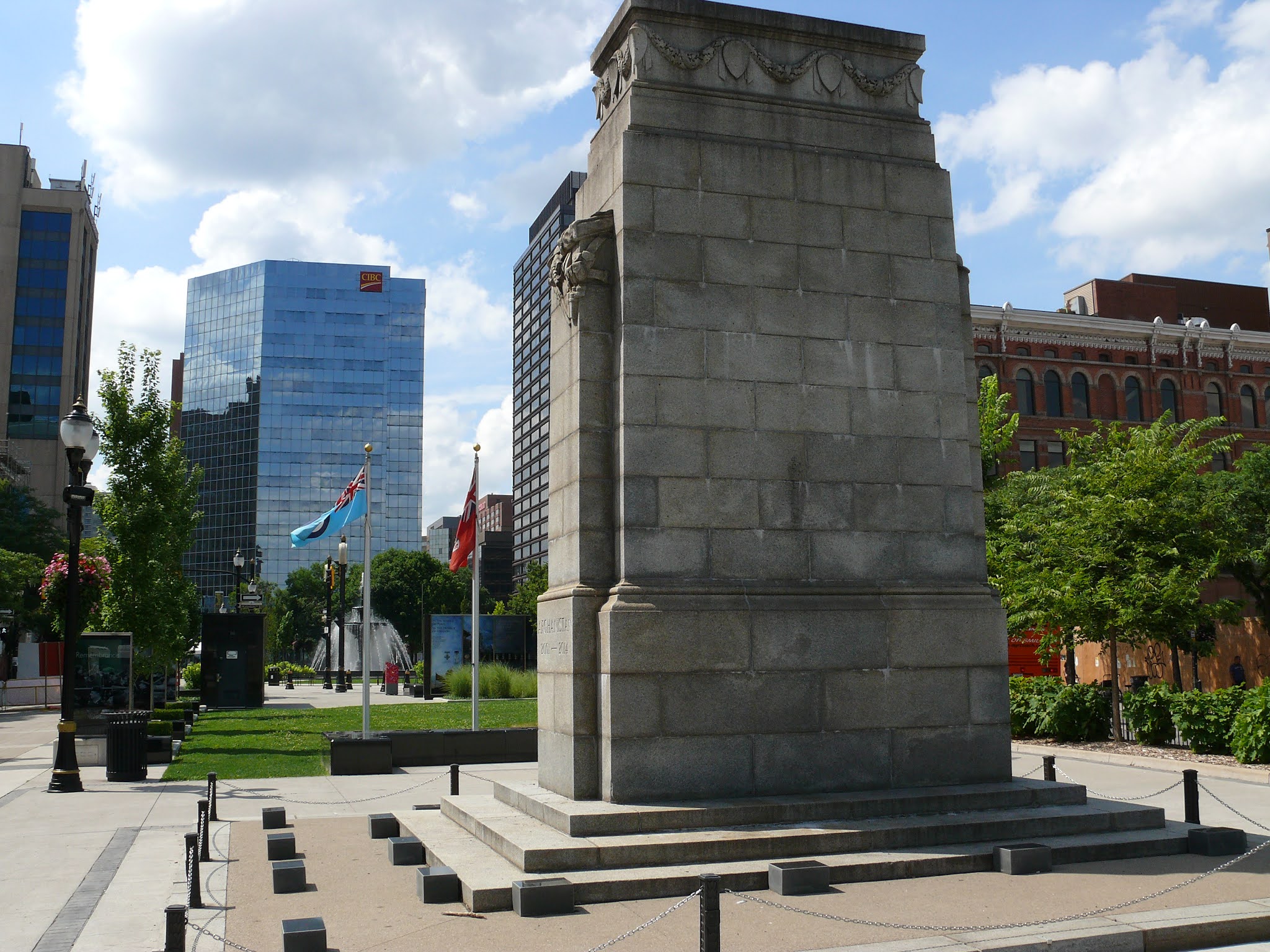
Constructed during the winter of 1922-23, the cenotaph is a replica of the Westminster Cenotaph in London. It is a granite column with a stone shaped casket resting on top. On either side are two smaller columns, mounted with carved replicas of the equipment used by Canadian troops in the First World War. On the original cenotaph, the only words were, "Our Glorious Dead".
The cenotaph was unveiled at 5:00 p.m. on May 22, 1923 by the Governor General, Viscount Byng of Vimy. Viscount Byng was recognized for leading the Canadians into France and Flanders. Over 5,000 spectators were present to observe the ceremony. The proceedings began with a short speech from A. R. Lancefield, president of the local Canadian Club and concluded by the unveiling with the massed singing of the hymn, Abide With Me. Over 500 bunches of flowers were laid around the monument.
Improvements to the cenotaph included bronze posts linked together by a bronze plated steel chain. The bronze posts house the badges that were issued to Veterans of both World Wars. Other improvements included the addition of shrubbery and flood lighting at night.