

In 1919, the Village of Hensall set out to find a memorial to honour those from the area who died in the First World War. Hensall’s neighbour, Usborne Township, unveiled an impressive soldier monument to its fallen in March 1919 and the Village of Hensall sought a monument of at least equal dignity.
Support for the monument came from the Village of Zurich. The Zurich Herald suggested locating the monument on Grand Trunk Railway land outside of Hensall because it would be neutral property and, therefore, a “union” monument bringing together the two towns and, perhaps, helping to heal old war wounds. The Grand Trunk Railway refused permission to erect the monument on its lands, but the Zurich council donated $1,000 to the Hensall memorial fund.
Through private subscriptions, church collections and individual donors, enough money was raised for the memorial by November 1919. The contract was awarded to Cunningham and Pryde Granite Dealers of Exeter whose soldier statue at Usborne’s Hurondale school had won high praise.
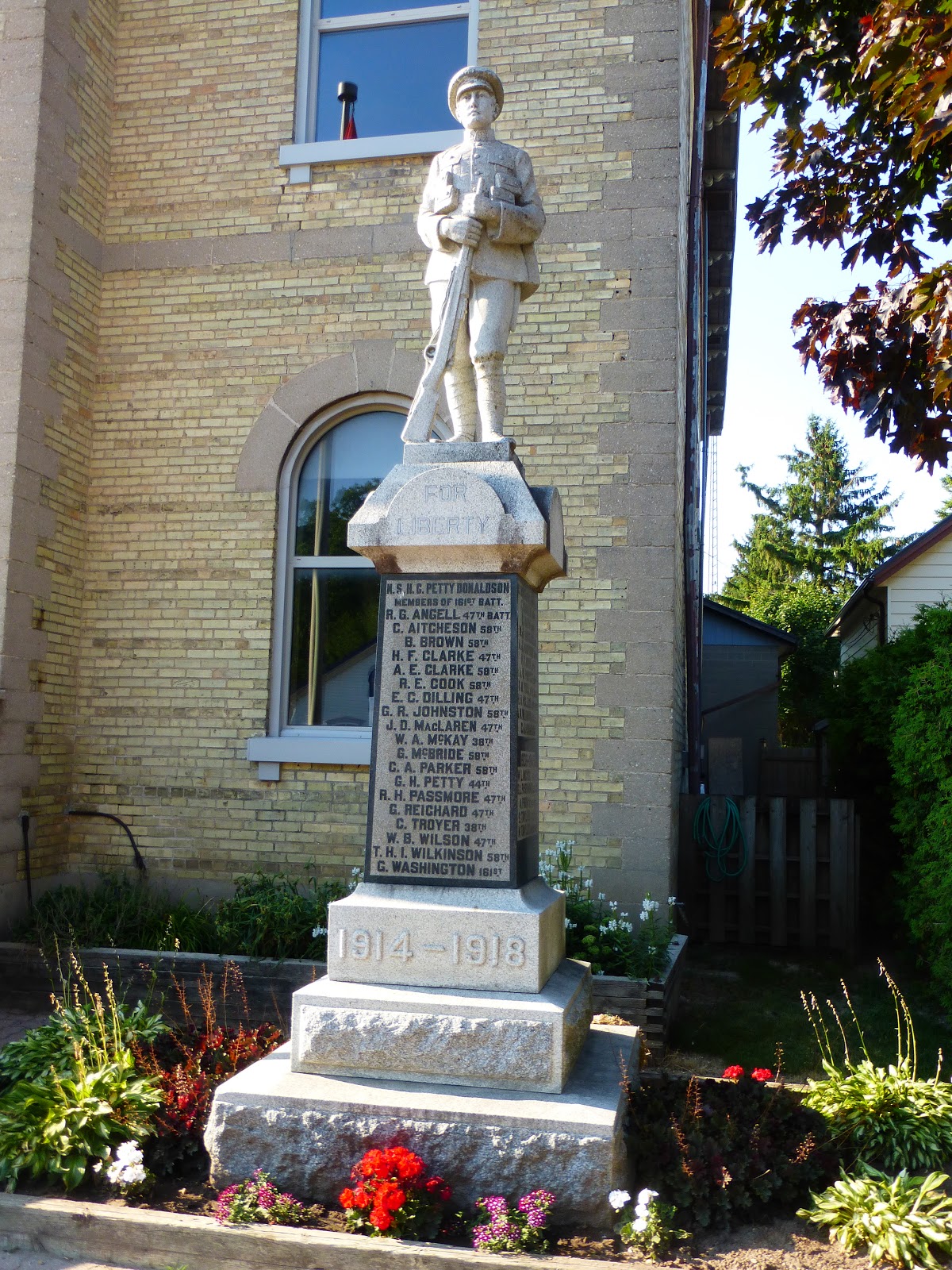
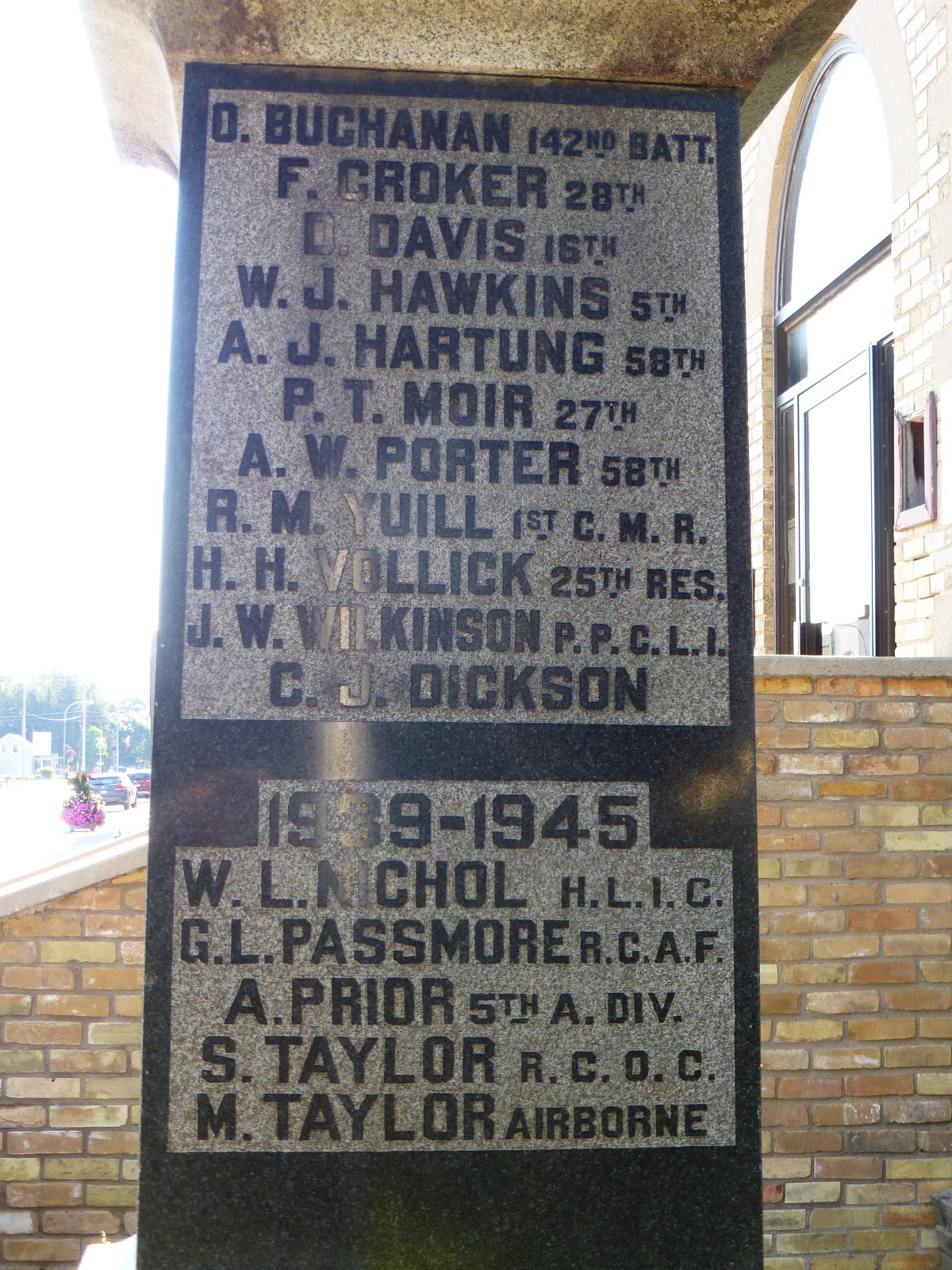
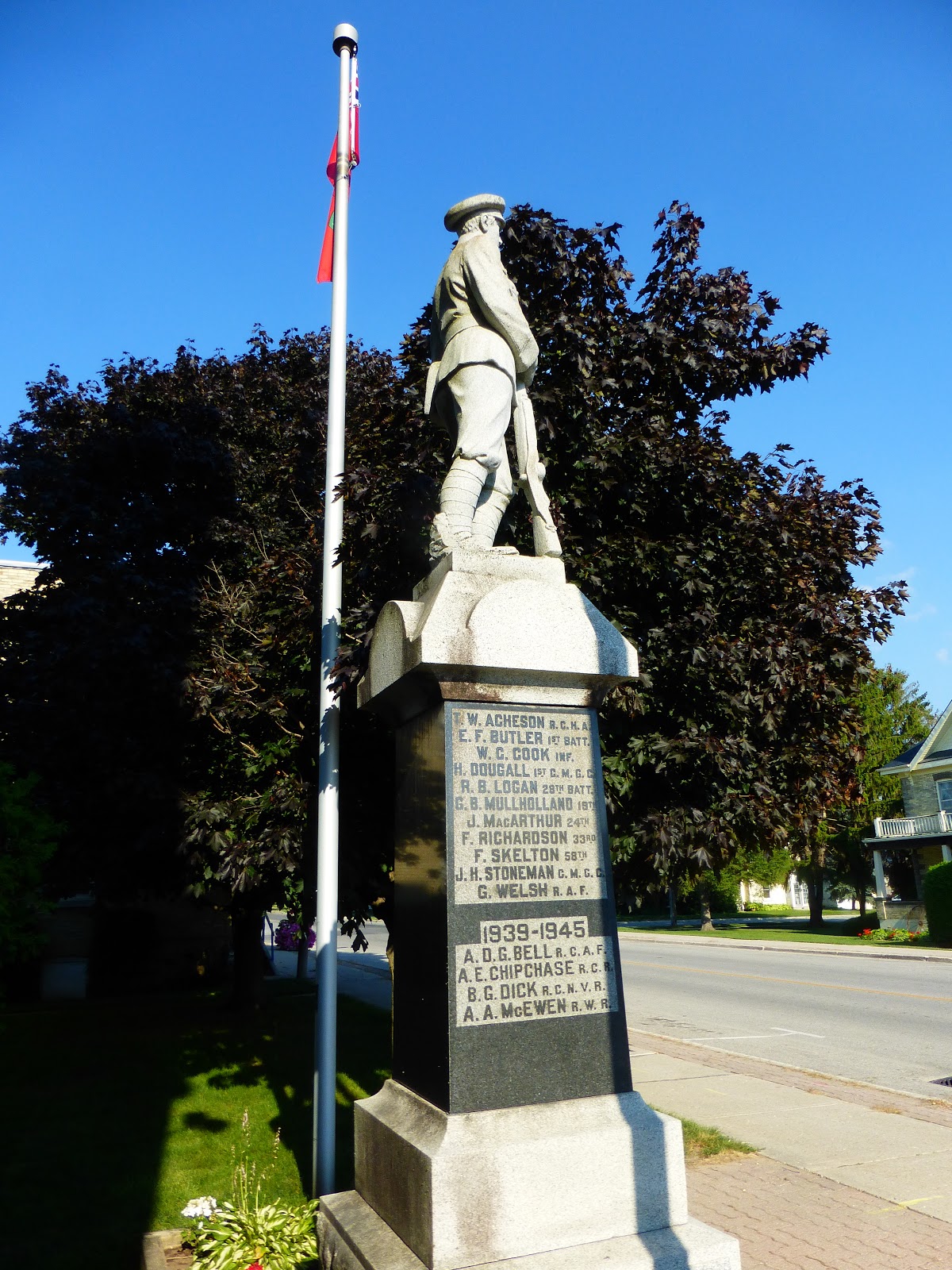
A strike in the factory where the monument’s pedestal was being made delayed the unveiling date. The bandstand in front of the town hall was moved to Acheson’s Hotel to make way for the new monument. In July 1920, the monument’s pedestal was installed in front of the town hall and in early December the soldier statue was installed. The life-sized Hensall soldier statue crowns the pedestal, gripping his rifle in both hands in the at-ease position and wears a typical Canadian uniform from the early part of the war. The Hensall Cenotaph stands nearly 15 feet high with 35 names of Hensall and Hay youth carved onto the granite monument.
On December 22, 1920, the cenotaph was unveiled to a crowd of about 1,500. Hensall Reeve George Petty gave a heartfelt address at the unveiling. He had lost his only son, George, and one daughter, Nursing Sister Gertrude Donaldson, in the Great War. Both their names appear on the cenotaph. Later, additions were made to honour those who lost their lives in the Second World War.
The Hensall statue is often compared to the Usborne soldier statue, which is in a similar pose and wears a similar uniform. However, each statue was carved individually by an Italian sculptor who used a photograph of a Canadian soldier as his model. The differences between the two can be seen in the facial features and web gear. The Hensall soldier also lacks the tree stump representing a life cut short that is found behind the Usborne soldier’s right leg.