
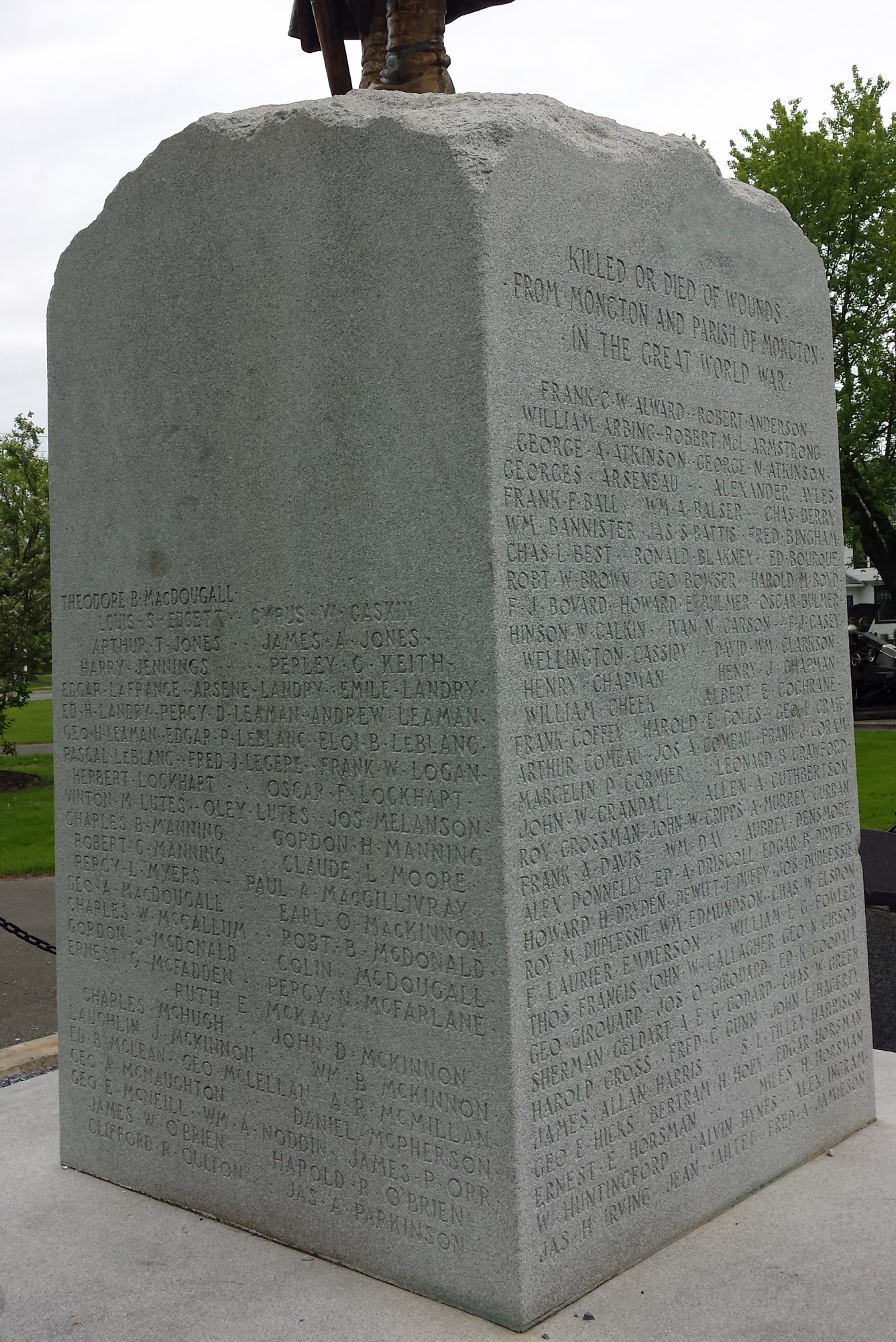
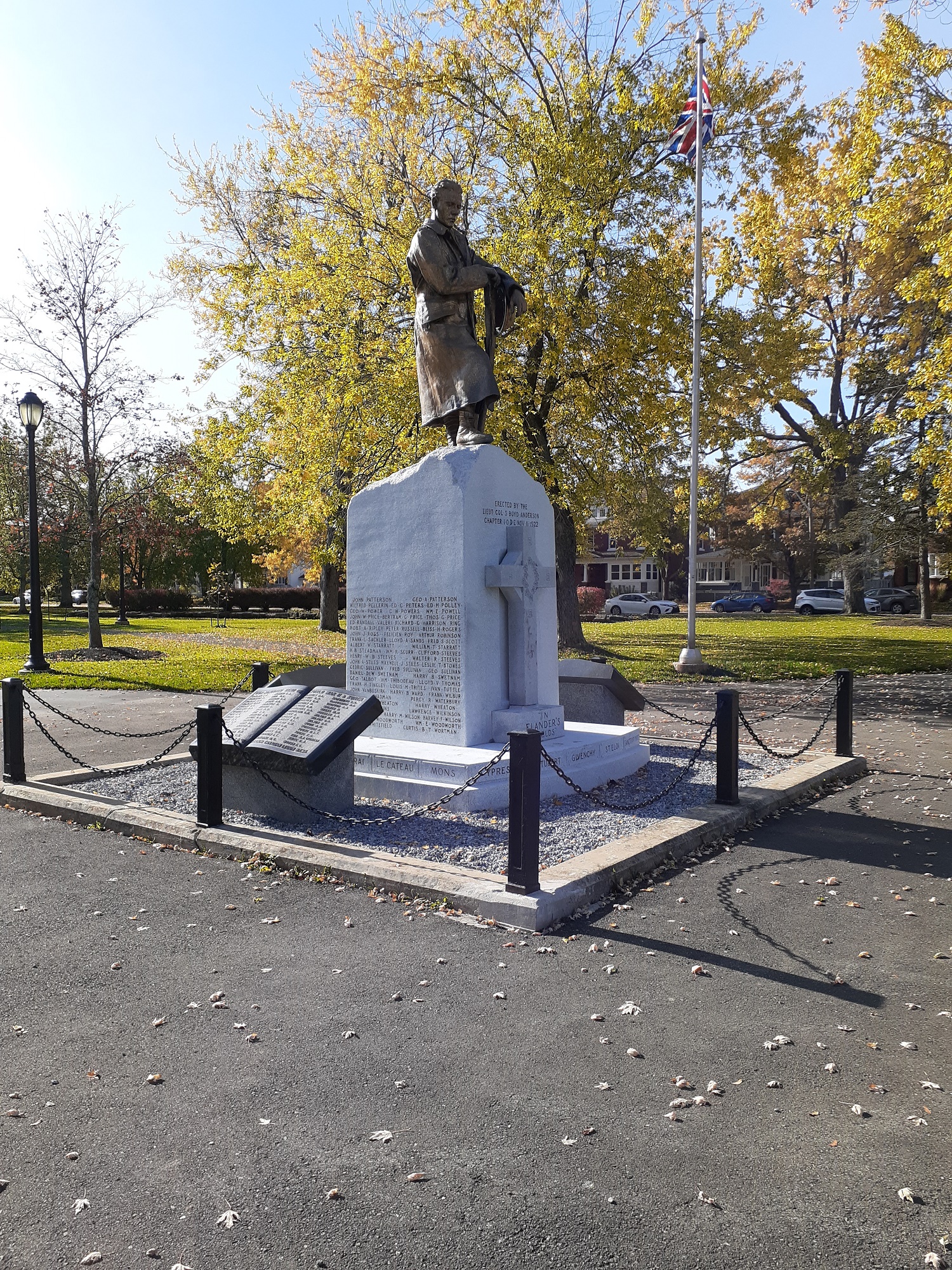
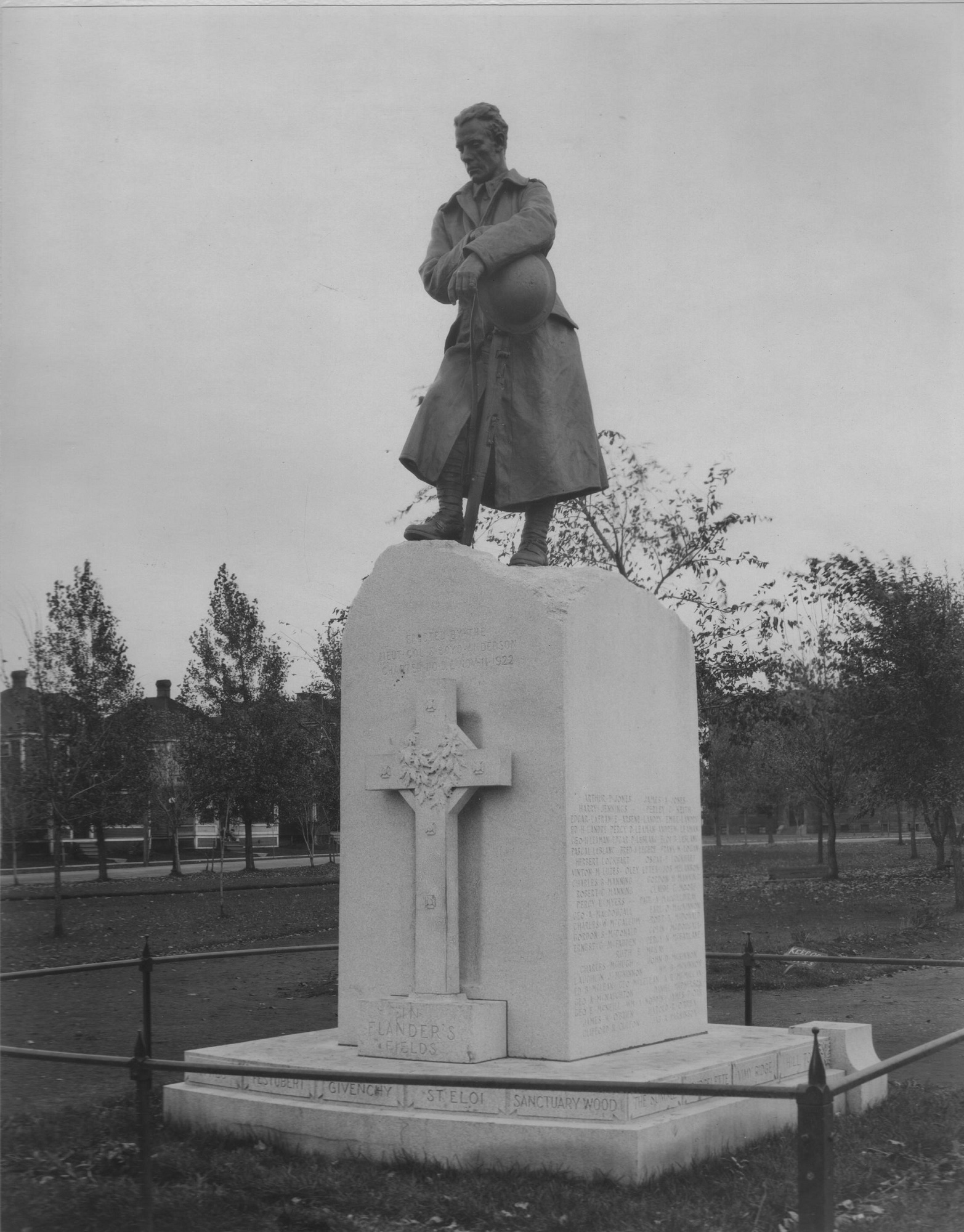
The first consideration for a memorial in Moncton was during a meeting on May 18, 1921, of the Lt Col. Boyd Anderson Chapter of the Imperial Order Daughters of the Empire, which was named in honour of a Monctonian who served with distinction for four full years. Mrs. Irvine Malcolm, Mrs. Boyd Anderson and Mrs. Burden suggested that the monument be made of granite and that the names of "all the boys from Moncton who ‘sleep in Flanders fields’" should be inscribed on the base of the monument.
The Imperial Order Daughters of the Empire fundraisers included weekly dances, concerts, and a raffle of a wardrobe trunk and complete bridal outfit which was won by Mrs. Sam Fong on April 22, 1922. One of the highlights of the Flower Carnival fundraiser was the opportunity to purchase Jon Felding and Son memorial wreaths, made of magnolia leaves and poppies all tied with a purple ribbon, to place on the memorial after the unveiling. The Imperial Order Daughters of the Empire raised funds for one and a half years. Peter Thompson of the Thompson Monument Company in Toronto erected the monument at a cost of $7000.
An article appeared in the Daily Times and in the Transcript in February 1922 for the community to send Mrs. Boyd Anderson the names of the war dead to be inscribed on the monument by the Thompson Monument Company. The list of names were to be arranged on a plaque in alphabetical order at the base of the monument.
On November 11, 1922, the Soldiers’ Monument was unveiled by two prominent soldiers - Standley Steeves and Peter Legere. The group of returned soldiers would form the largest group of Veterans assembled in Moncton since the war. Disabled men and nursing sisters joined the parade by motorcar. Lt Col. Samuel Boyd Anderson was the Master of Ceremonies and Mayor J. Fred Edgett acted as chairman.
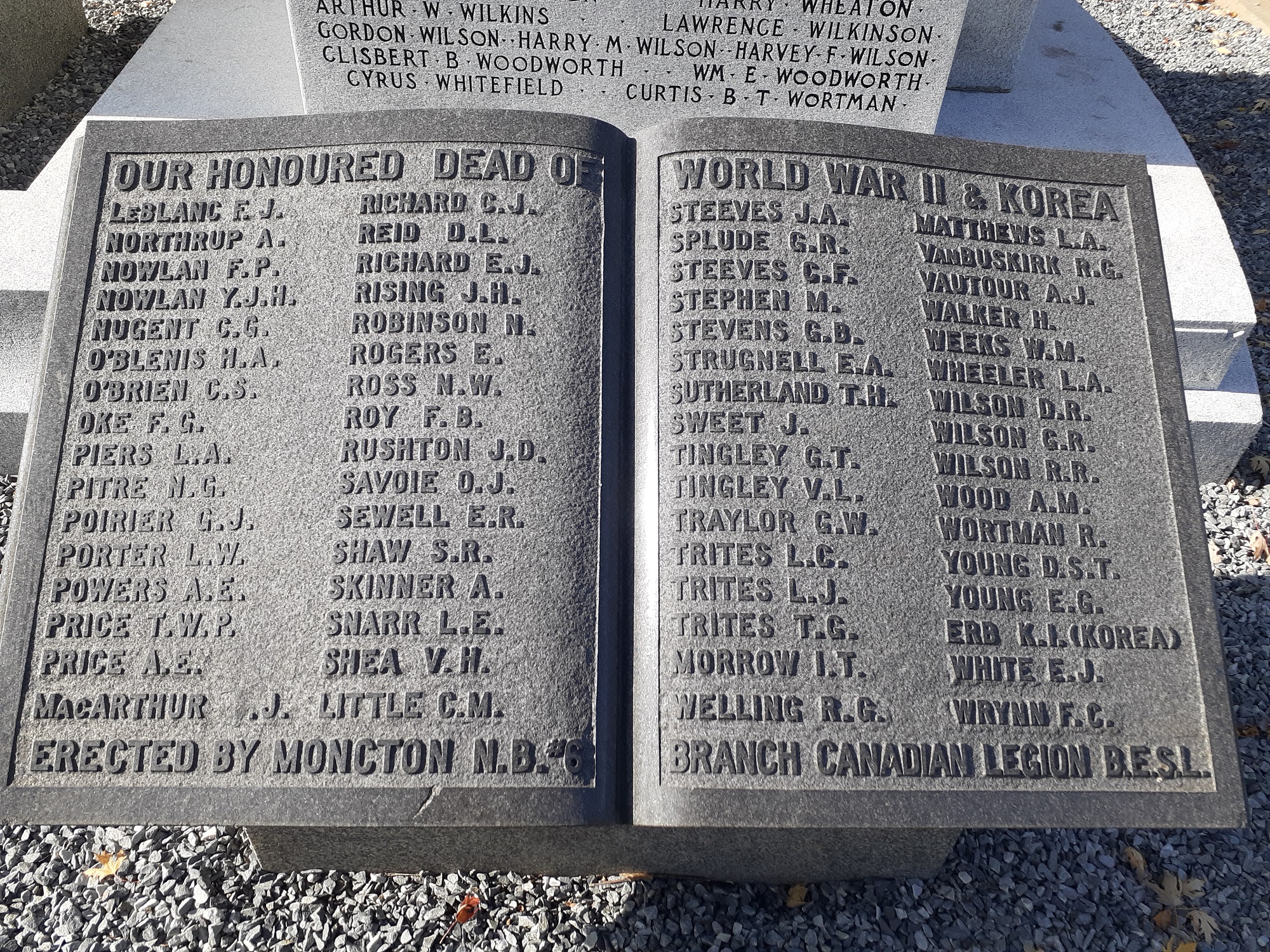
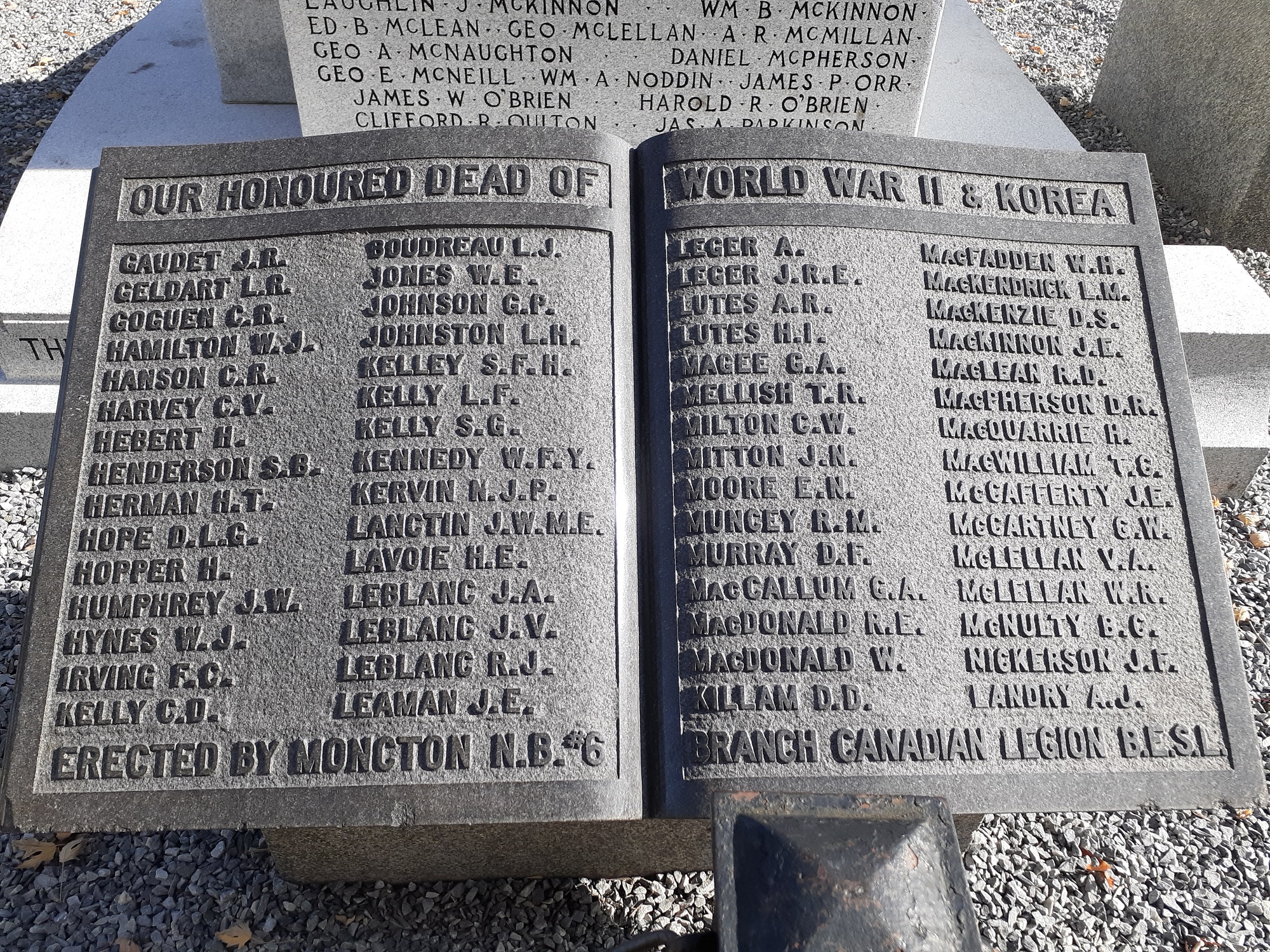
In 1954, Books of Remembrance were later added by the local Royal Canadian Legion to commemorate the losses of the Second World War and the Korean War. The Books of Remembrance were dedicated on June 12, 1955.
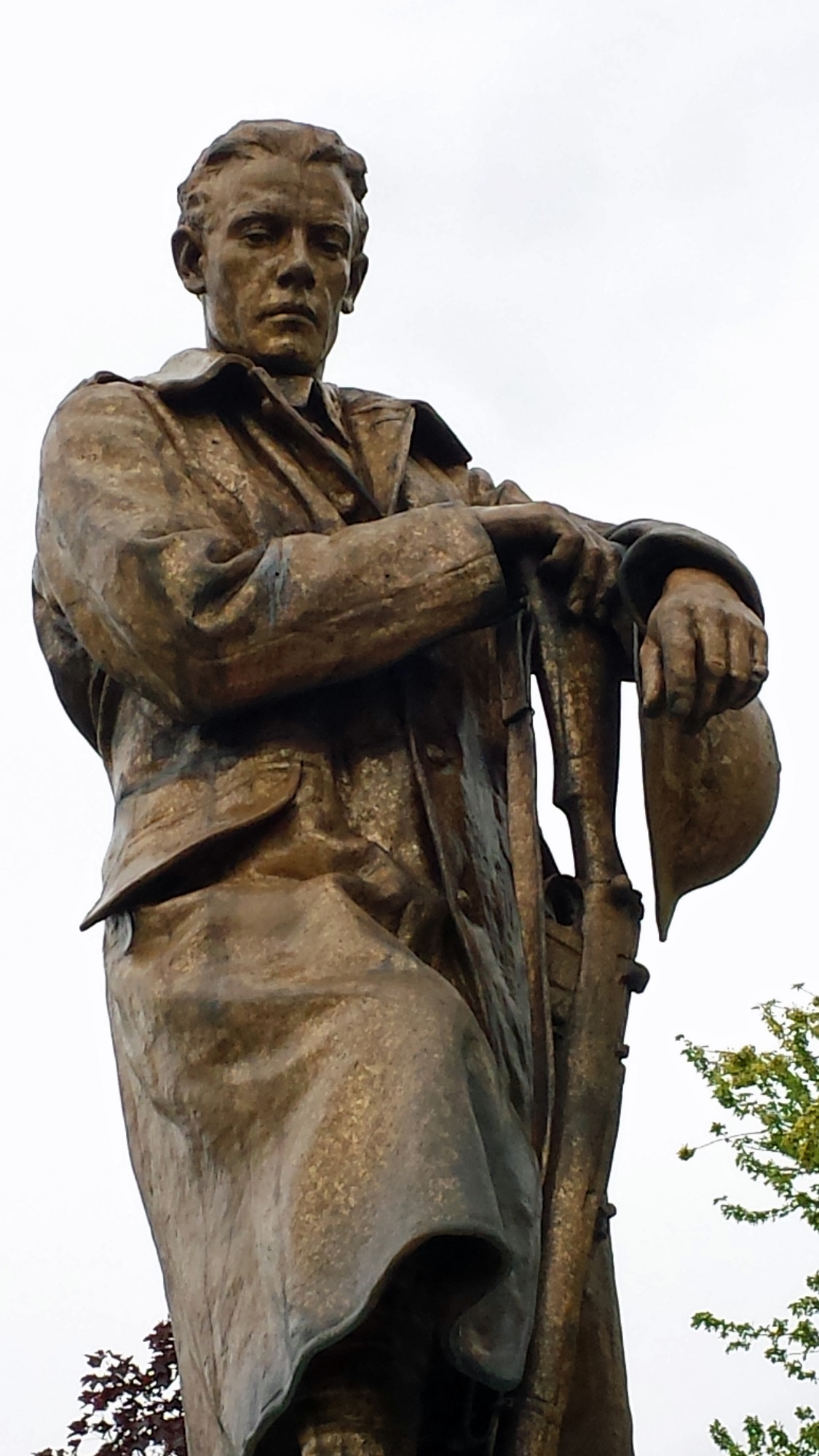
Emanuel Hahn's design represents the sorrows caused by war. The soldier atop the cenotaph looks down in sadness at the ground below him, as if he might find there, his fallen comrades, if not for the tragedy of war.
The bronze statue depicts a young, grieving Canadian soldier in a winter greatcoat. His right hand and left forearm rest on his helmet which is placed on top of his reversed rifle and his helmet hangs from his left forearm.
Emanuel Hahn moved to Toronto at the age of seven with his family of artists and musicians from Germany, in 1888. He studied commercial design and model-making at Toronto Technical School and Ontario College of Art and Industrial Design. At 25 years old Hahn began a nearly lifelong contract with Thomson Monument Company of Toronto. Two years later, he also started work as a studio assistant to sculptor Walter Seymour Allward. Part of his duties included assisting on Allward’s significant works such as the South African War Memorial in Toronto.
In 1912 Hahn began an association with the Thomson Monument Company of Toronto. It was there, along with several assistants, he made the many war memorials that are found across Canada: Fernie, British Columbia; Killarney and Russell, Manitoba; Alvinston, Bolton, Cornwall, Hanover, Lindsay, Malvern, Milton, Petrolia and Port Dalhousie, Ontario; Gaspe, Quebec; Moncton, New Brunswick; Springhill and Westville Nova Scotia; Summerside, Prince Edward Island.
Hahn is probably most famous as the designer of the Bluenose on the back of the Canadian dime and the Caribou on the back of the Canadian quarter. He was a victim of anti-German sentiment in the years following the Great War, when his design for the Winnipeg Cenotaph was rejected in 1925.