
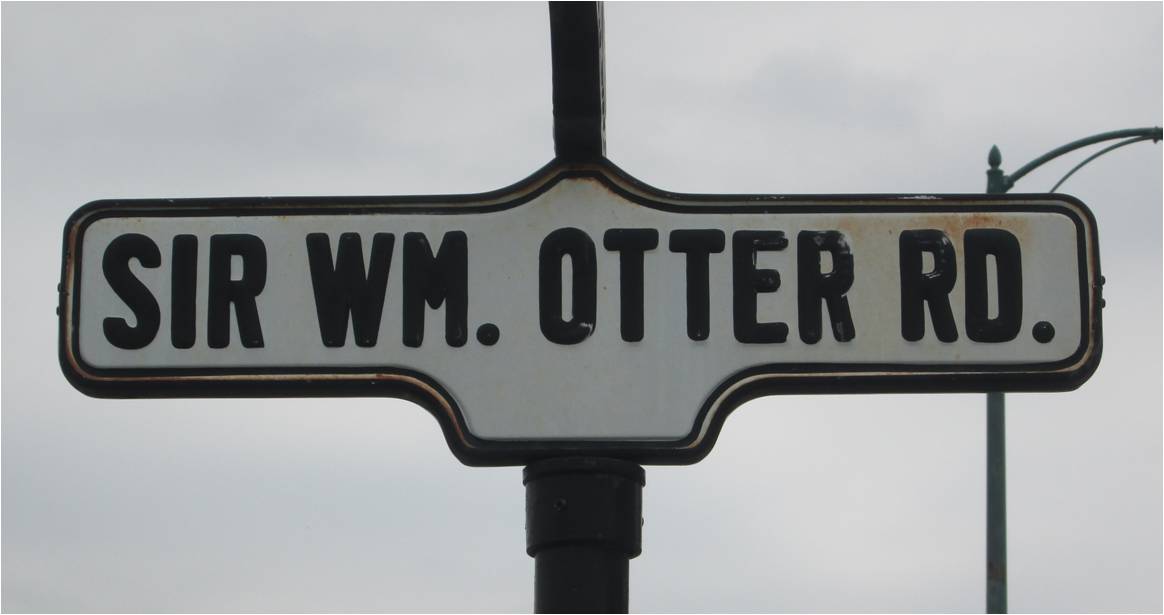
This street is named in memory of General Sir William Dillon Otter, KCB, DVO, VD.
William Dillon Otter was born in December 1843 near The Corners (Clinton) Ontario and moved to Toronto with his family in 1854. In October of 1861, he joined the Queen’s Own Rifles of Toronto and was promoted to Lieutenant in December 1864. The following summer he was appointed the Adjutant of the Regiment and in June 1866 fought at the Battle of Ridgeway, during the Fenian Raids. In 1869, he was promoted to Major and Lieutenant-Colonel in 1875, becoming the Commanding Officer of the Queen’s Own.
By 1883, the Canadian Government had decided to create a permanent infantry force and Otter was chosen to lead the Infantry School Corps unit in Toronto. In the spring of 1885, he was ordered to Batoche to assist in the suppression of the Riel Rebellion. He led the forces at the Battle of Cut Knife Creek and the ensuing operations but returned to Toronto in October. The following years saw Otter’s responsibilities increase and in October 1899, he was appointed the Commanding Officer of the Canadian infantry battalion authorized for the Boer War.
The Canadians reached Capetown at the end of November, and after a few months of training, fought at the Battle of Paardeburg Drift (18-27 Feb 1900). The Canadians took part in other battles, including Doornkop, and marched triumphantly into Pretoria on 5 June 1900. A few months later, the Canadians returned home and Otter was promoted to Colonel, returning to his position as Commander Military District No.2.
1903 saw amendments to the Militia Act which by 1908 led to Otter being promoted to Brigadier-General and appointed Chief of the General Staff. In 1910 he was promoted Acting Major-General and appointed Inspector General but retired in December 1912. In June 1913, he was made a KCB. He continued to be active in military affairs in the period leading up to the First World War and came out of retirement during the war.
In 1919, he headed the committee tasked with combining the units of the old militia regiments with the returning units of the Canadian Expeditionary Force. He was officially placed on the retirement list in 1922 in the rank of General. General Sir William Otter died in Toronto on 6 May 1929.