
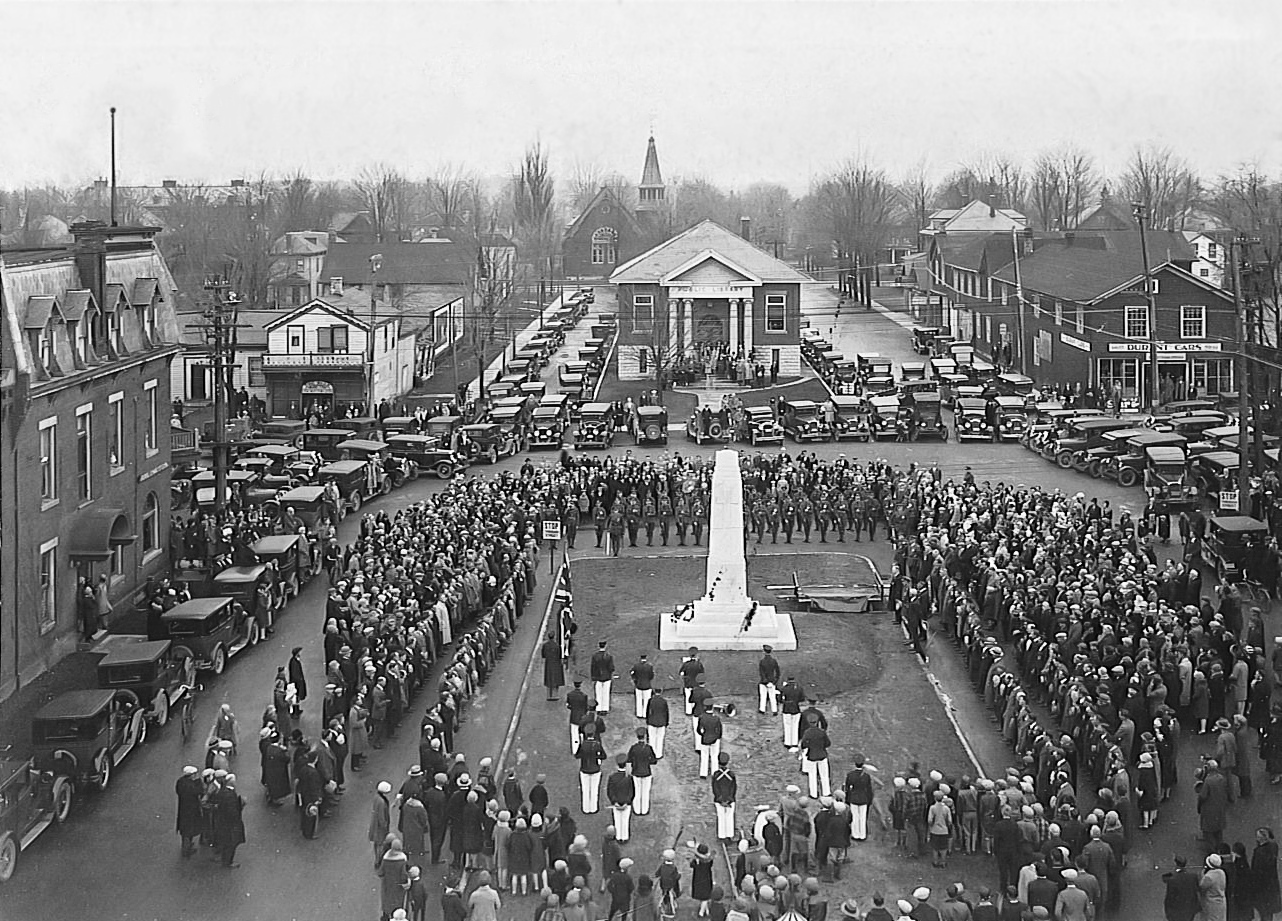
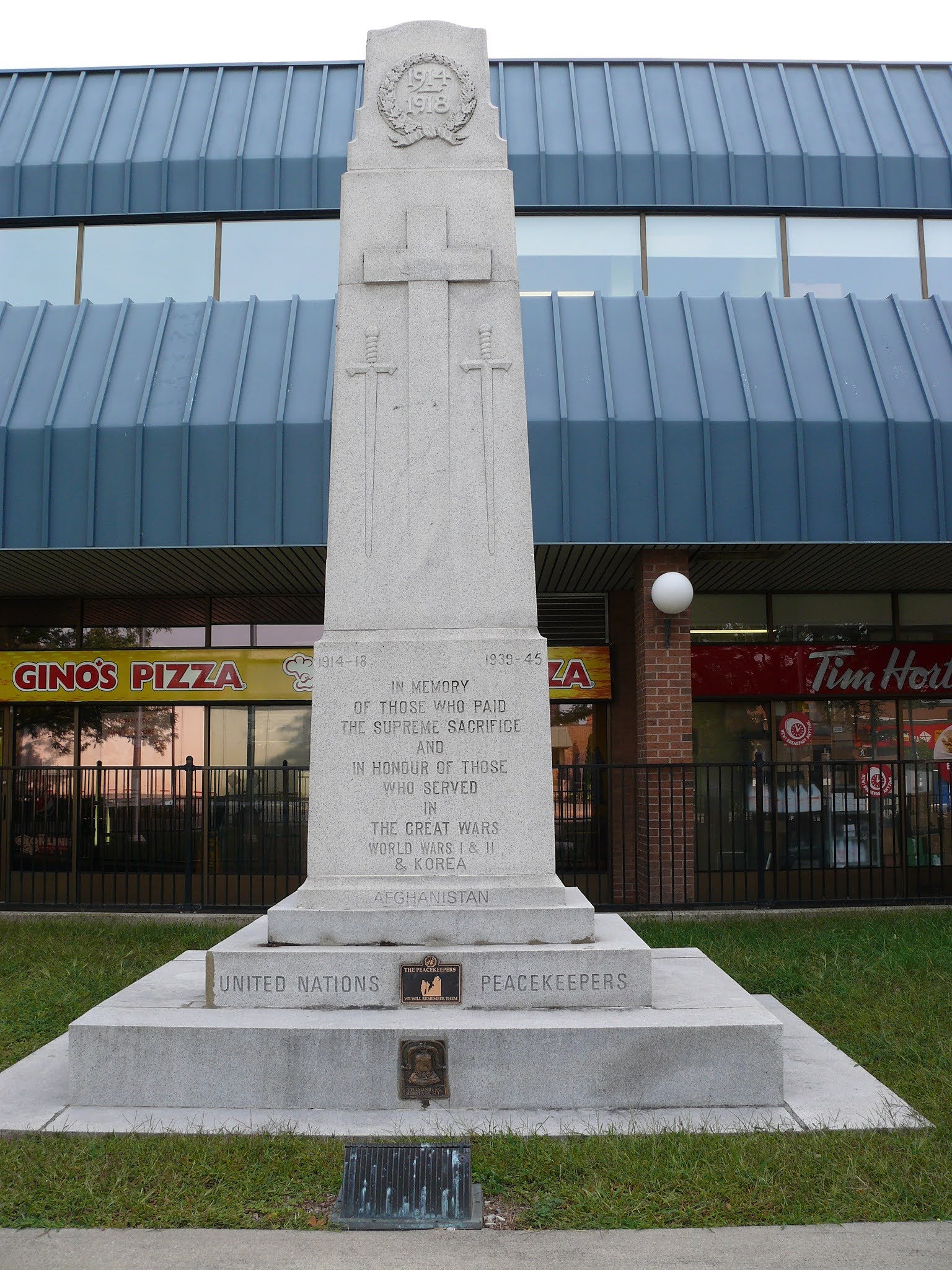
The Soldiers Memorial Monument in Tillsonburg, most commonly known as the cenotaph, was dedicated on Armistice Day, November 11, 1929. It was located in front of the Town Hall and was illuminated at night by the Public Utilities Commission. The memorial was unveiled one month before the end of Mayor Dr. R.E. Weston’s term and he called upon Mr. Theodore Young, whose son had been killed overseas, to unveil the monument representing the parents of the sons who gave their lives in the Great War.
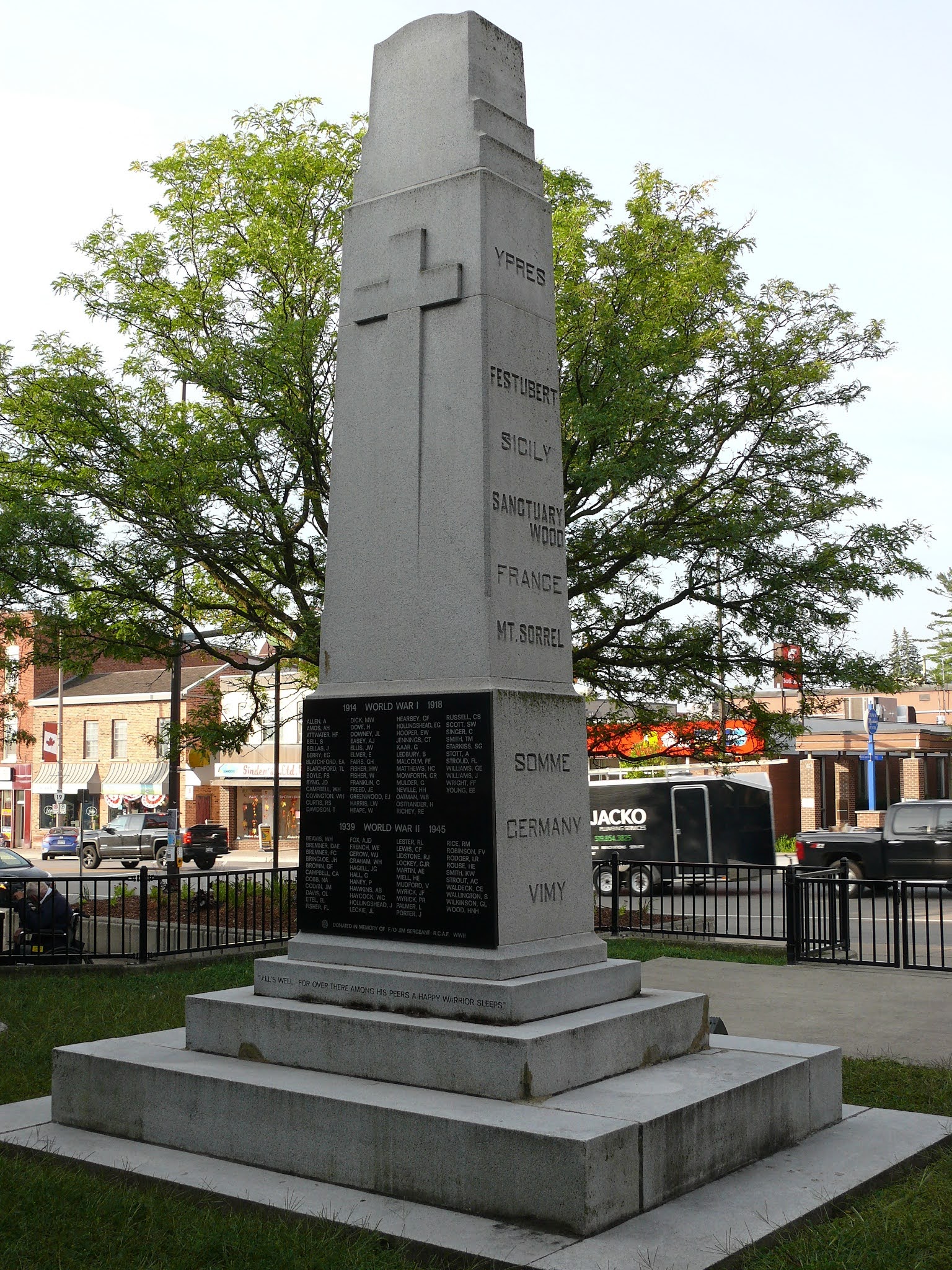
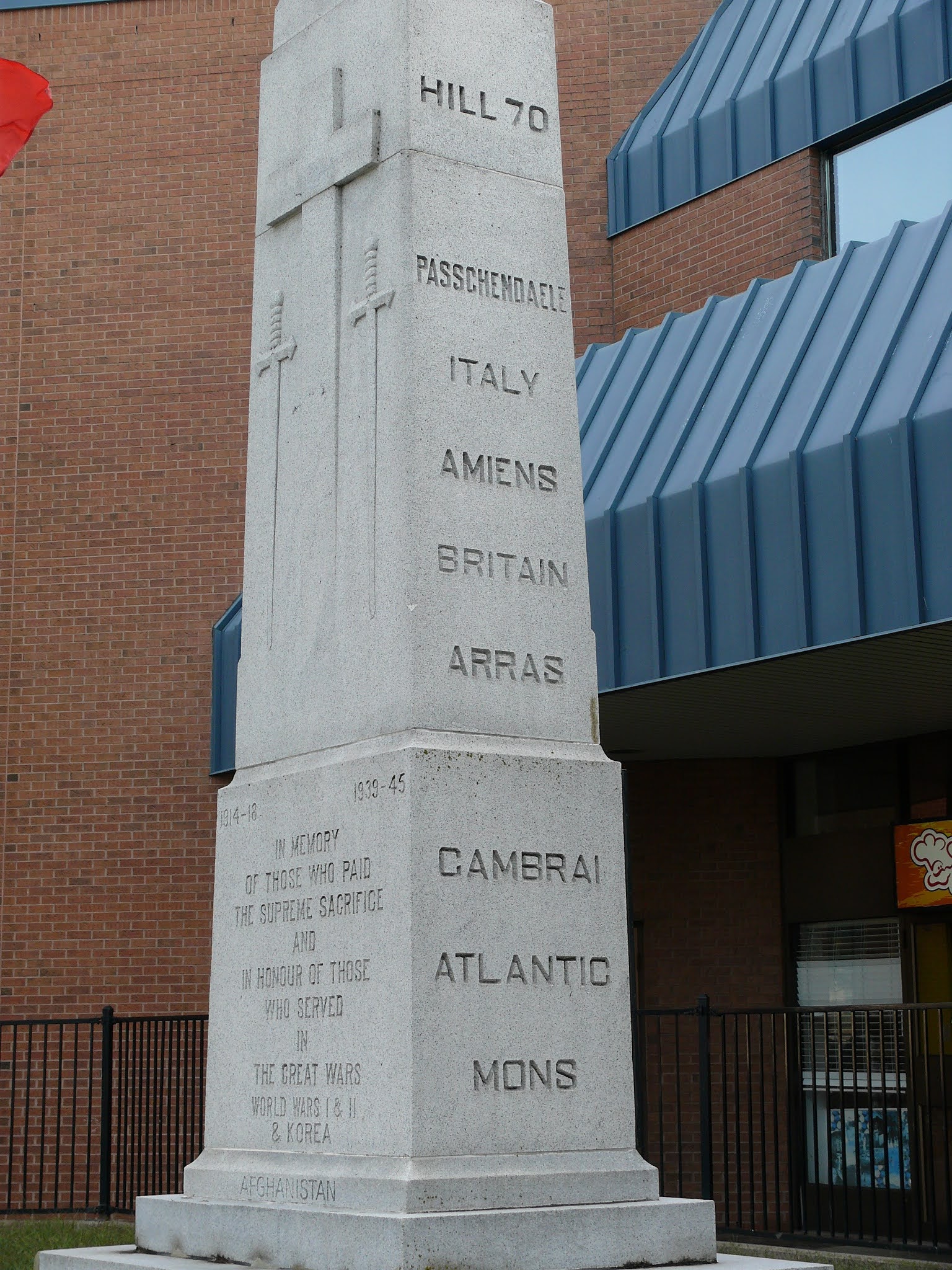
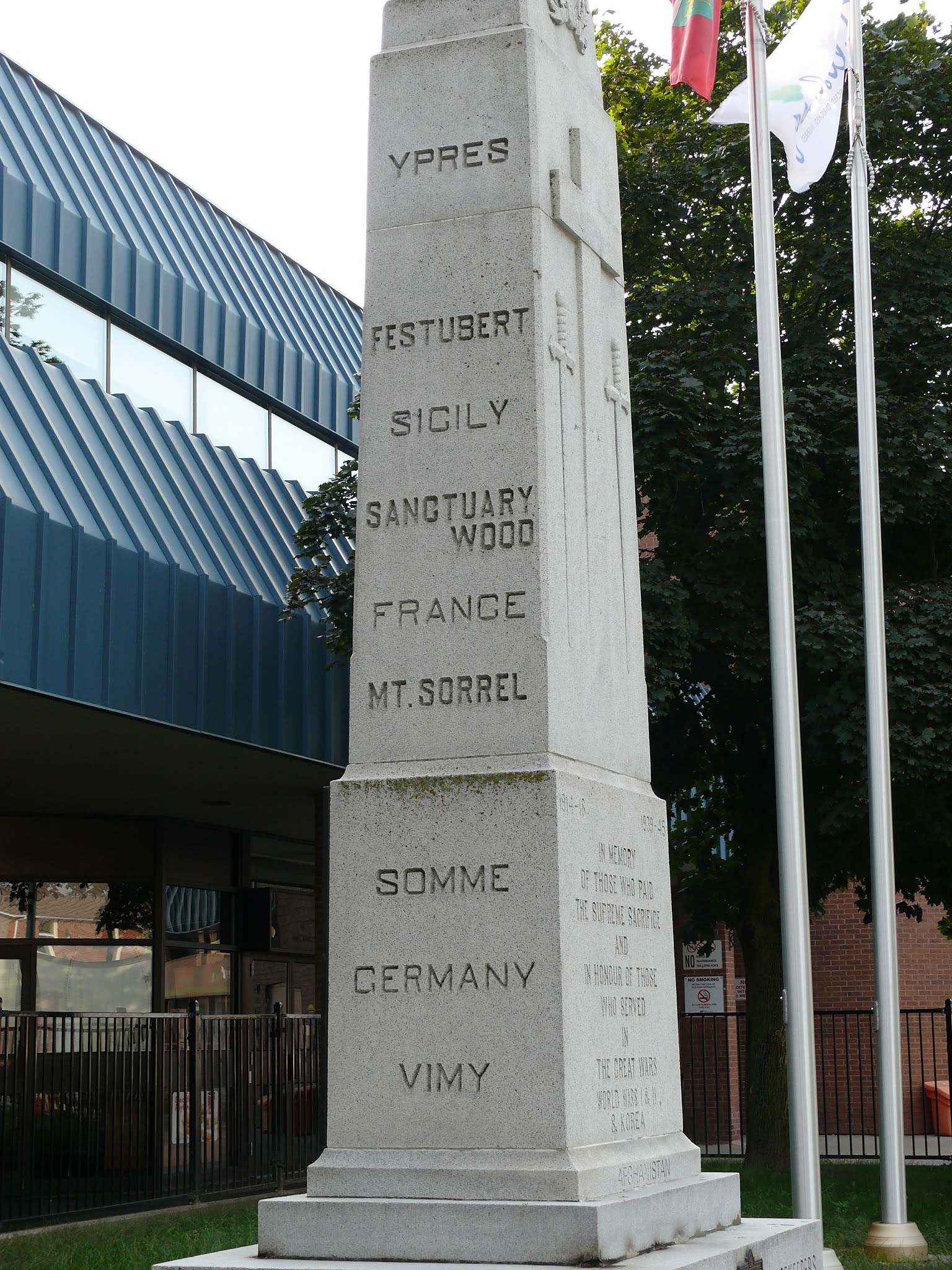
Similar to the Cenotaph in Whitehall, England, the Tillsonburg Soldiers’ Memorial Monument was designed and constructed by George Hunter of Simcoe. Made of grey granite from Beebe, Quebec, it stands 19 feet in height, with the names of the battles in which the men of Tillsonburg fought engraved on it.
The memorial was eventually moved in front of the Tillsonburg Town Centre, which opened in 1980. On October 7, 2014, a special dedication ceremony organized by the Royal Canadian Legion Branch 153 Tillsonburg Varnavair and the Tillsonburg Military History Club was held at the cenotaph to honour members of the International Security Force who served in Afghanistan. Sergeant Stephen Thomas MB, a member of the Queen’s Own Rifles, officially unveiled the Afghanistan memorial marker engraved on the cenotaph. Retired Master Corporal Kevin DeClark laid a memorial wreath bearing 158 poppies in honour of the 158 Canadian soldiers and civilians who had given their lives in Afghanistan.
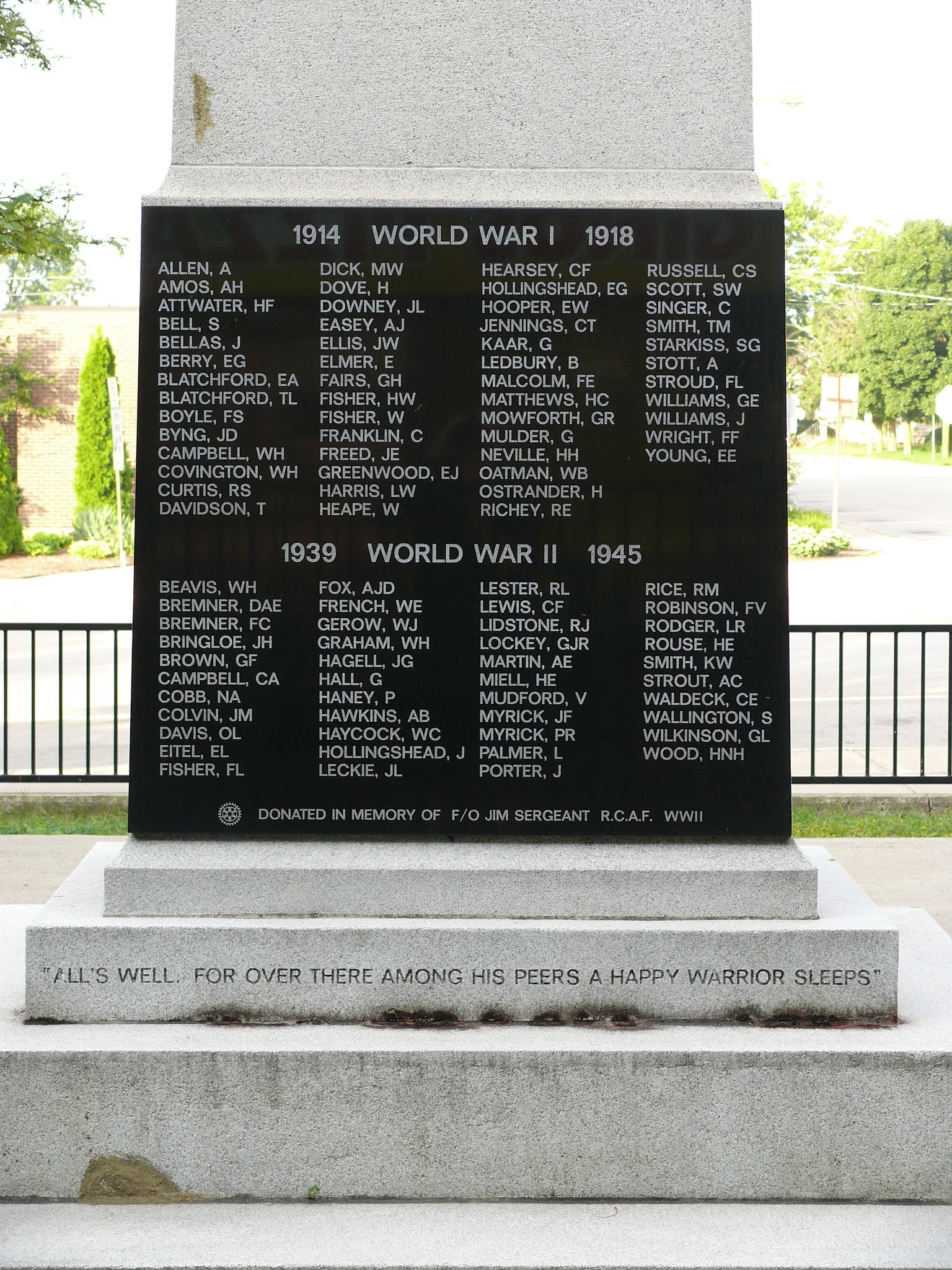
In 2015, a memorial plaque with the names of those who served in the First and Second World Wars was added to the back of the monument. The plaque was donated by Flying Officer Jim Sergeant, Royal Canadian Air Force, Second World War, who passed away in November 2013.
Fundraising for the cenotaph involved the entire town. The Tillsonburg Lions Club spearheaded the organization of the fundraising effort and the building of the monument, with local clubs, businesses, and individuals all generously contributing to the monument.
The memorial's infamous inscription, found on many cenotaphs, are the prose of John Ceredigion-Jones' The Returning Man. John was a Welsh-Canadian poet who was a habitual writer of letters to the editor and composer of poetry.