
On November 19, 1925, Mr. Fred Maas had a brick structure resembling a miniature cenotaph erected in his store windows. Around it lay a Canadian soldier's steel helmet, gas mask, cavalry helmet, small bombs, shell remnants and other items brought back from the war. Two small pedestals on either side of the structure were surmounted by glass globes which lit up the whole scene. A printed card with "Lest We Forget" explained their significance and Union Jacks hung in both windows. Mr. Hector Graydon had designed the small memorial with bricks supplied by Milton Pressed Brick Co. His display would influence the Streetsville Cenotaph design.
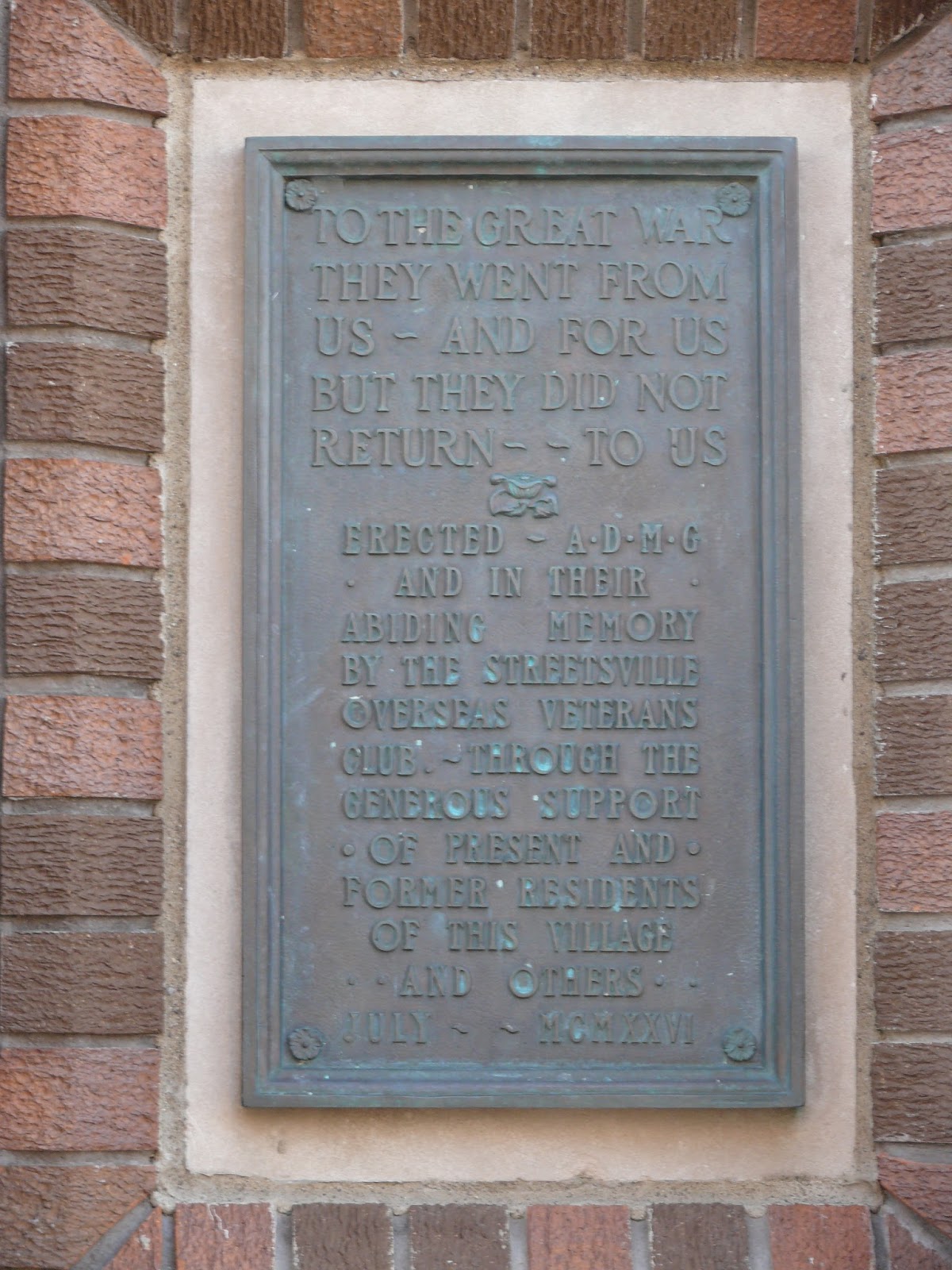
Streetsville and District Veterans held a meeting on November 18, 1925, to plan a memorial to honour the war dead of the First World War. The meeting was held at Major the Rev. Frank Vipond's house. In 1914, Vipond was Chaplain of the 36th Peel Battalion, Canadian Expeditionary Force. While overseas, his horse threw him, he spent months in the hospital and was never able to resume his parish duties after the war. The Overseas Veteran's Club was formed, including local Italian Veterans.
Artist and architect Rev. Samuel S. Finlay designed a high, four sided brick base that would bear four bronze plaques. Funds were raised by Veterans and Village Council agreed to light the memorial. The bricks were donated by Milton Pressed Brick Co. and Streetsville had the distinction of erecting the first brick.
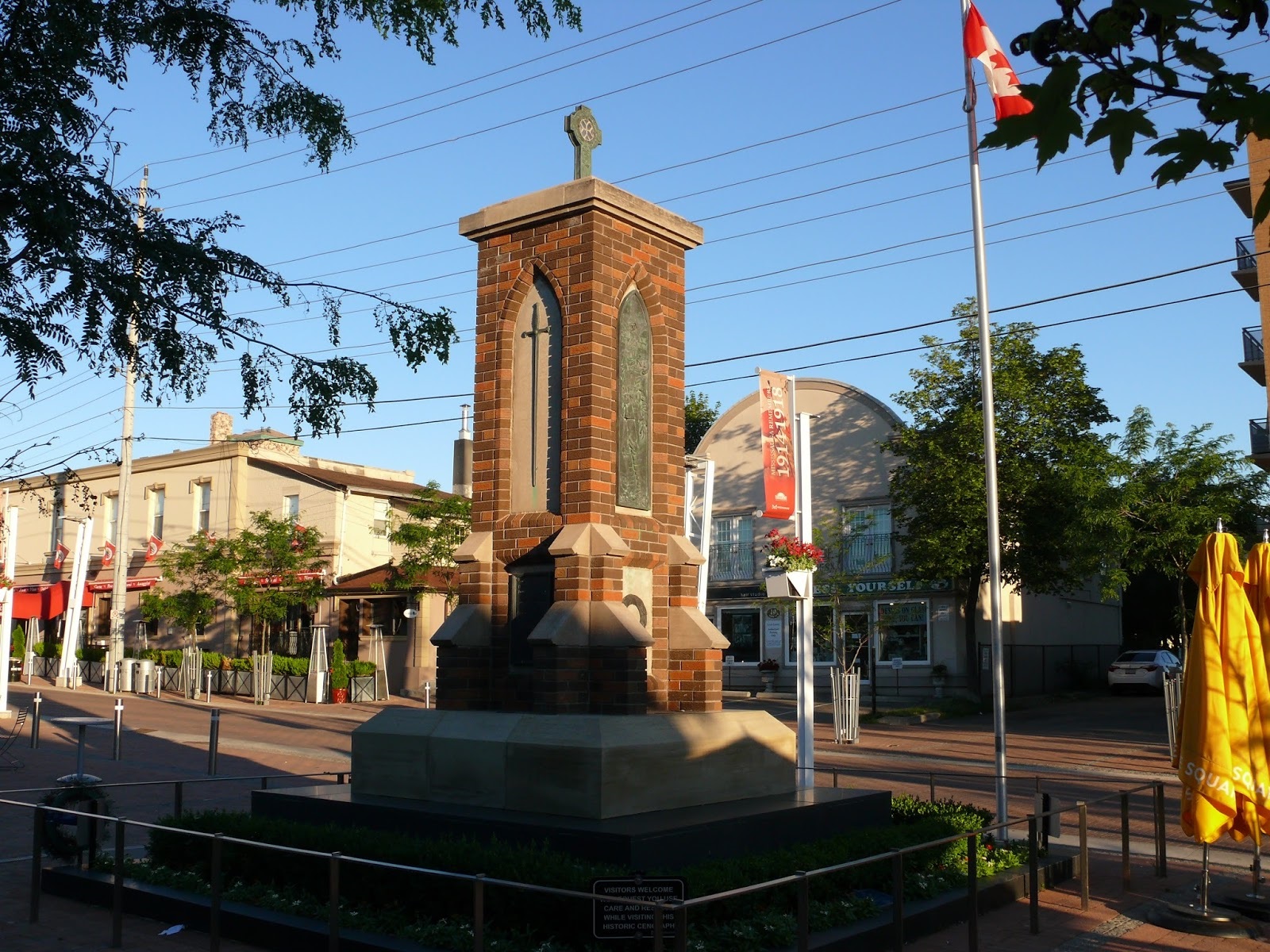
The base of the local stone is ten feet square, from this rises a solid structure four feet square formed of special hard brick and supported by buttresses on each side. This brick column stands 12 feet clear of the base. It is surmounted by a nearly one foot deep slab of grey sandstone. This stone is surmounted by one rising in concave another foot from which emerges a bronze celtic cross with a glass circle. The cross is two and a half feet high and six inches wide at the base. Originally there was an electric globe in the circle of the cross.
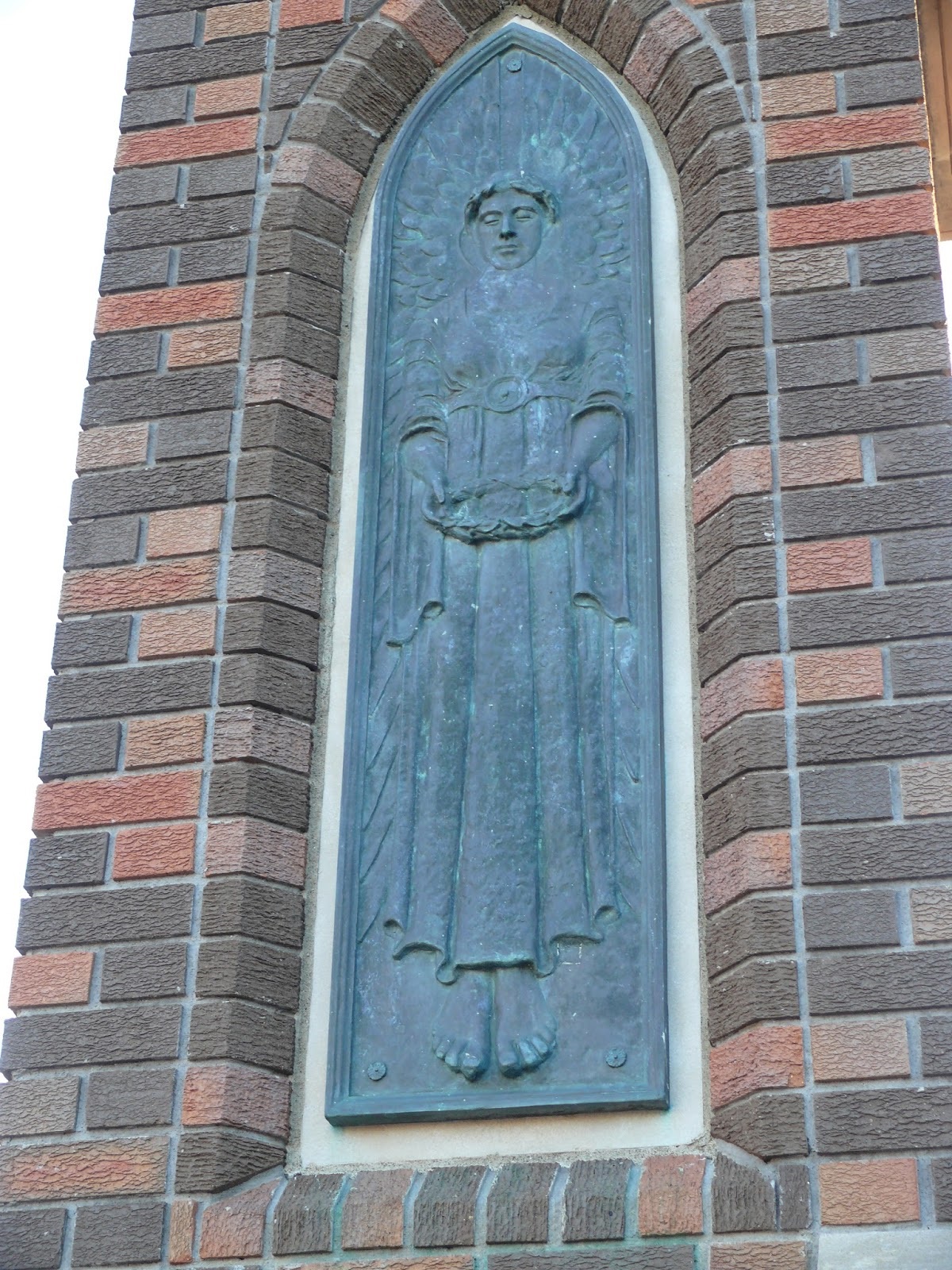
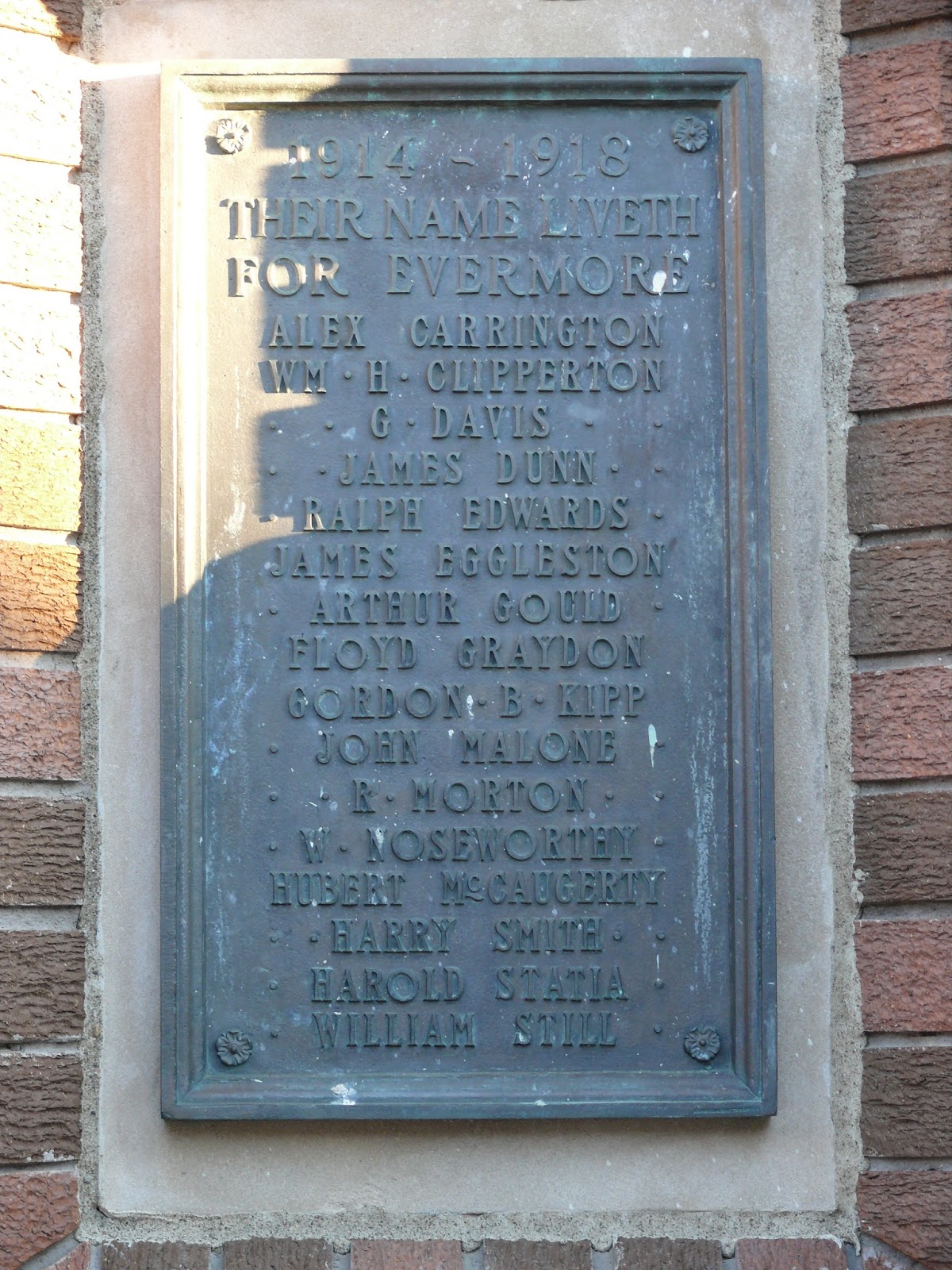
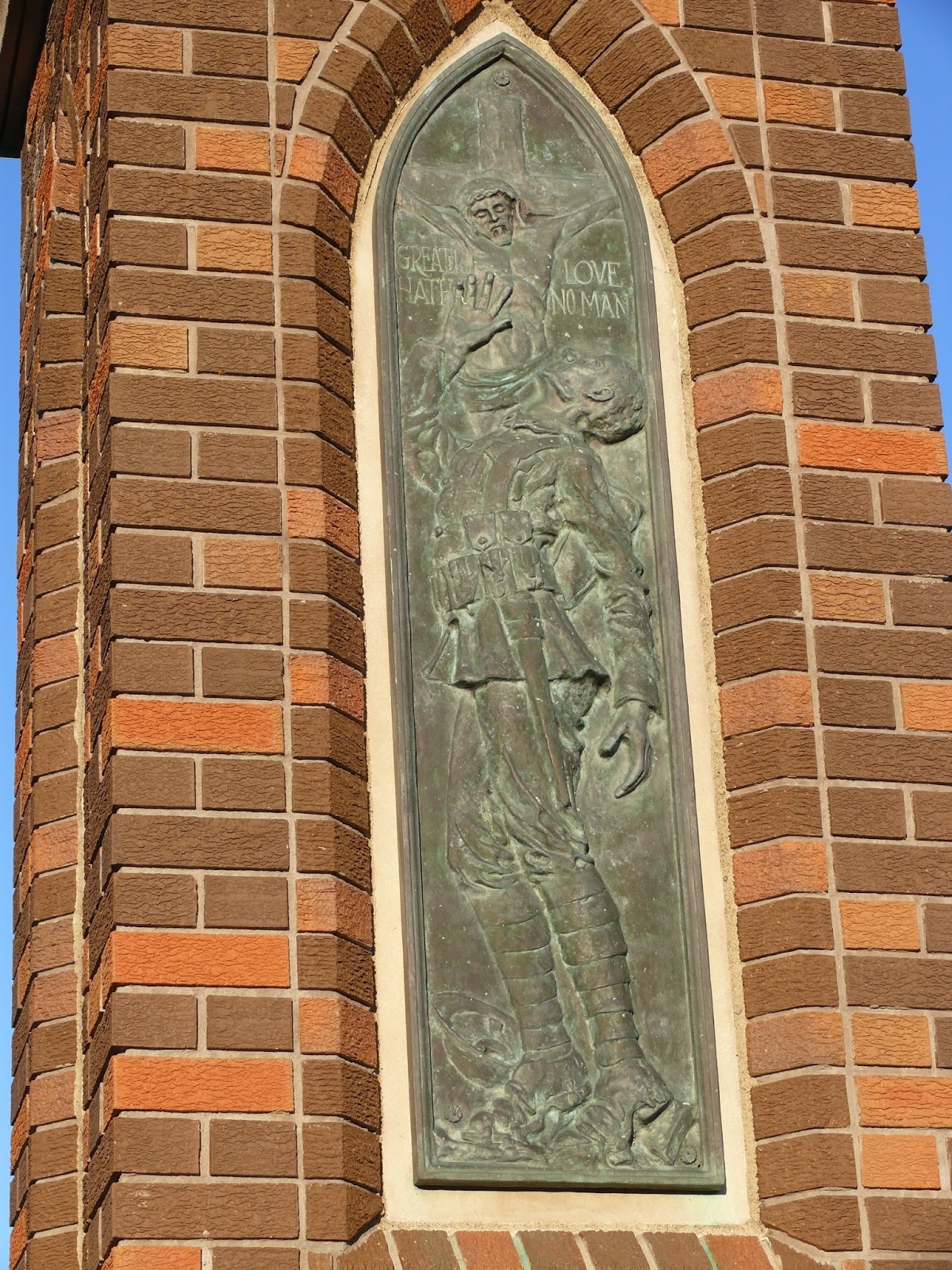
Above the buttresses each of the four walls has a nine inches deep recess and in each recess is a spirally executed symbolic five and a half feet high by one and a half feet wide bronze. These bronzes show the sword of sacrifice; the figure of "Remembrance" - a clothed angel standing with a wreath in hand and the fourth bronze is a fully equipped solider standing in remembrance with the crucifix above. A wreath lies in the square bronze tablet in the lower embrasure.
Bricklaying and supervision of the work was by A. Berrill. Two wrought iron lamp posts at the west entrance were made and donated by Sapper W. F. Lovatt. The cut stone contractors were Messrs. Geo. Oakley & Sons of Toronto and the contractors for bronze casting were Messrs. J.T. Tickell & Sons of Toronto. Village council donated the 60 feet flag staff and the flag was donated by H. Barber of Toronto. The city has a Book of Remembrance listing the vast amount of labour and various kind donations.
On July 1, 1926, the 17-foot high cenotaph was unveiled. Rev. Frank Vipond was the master of ceremonies, with over 2,000 people in attendance. During the ceremony, school children took an oath to care for the cenotaph, an oath that was carried on for many years. To this day, Cadets from 105-7th Toronto Regiment in Streetsville stand watch all night at the cenotaph before Remembrance Day.
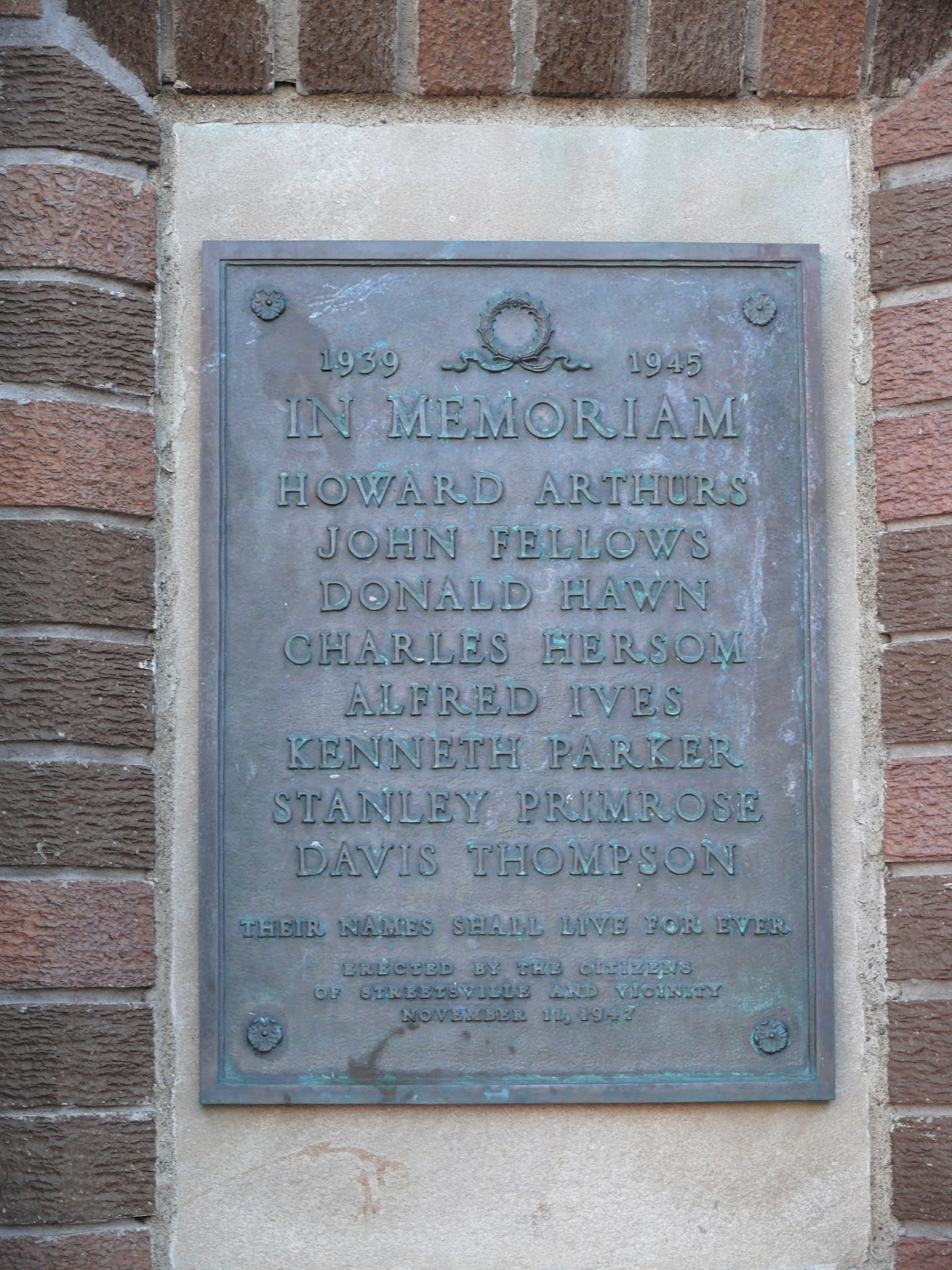
A plaque honouring those that died during the Second World War was added on November 11, 1947. New flood lights were installed on each side of the cenotaph in 1955. In 1993, the City of Mississauga, assisted by a dedicated community of donors, restored the cenotaph. It was dismantled, each block was numbered and cleaned and it was reassembled about 10 feet further east on Main Street to allow for better flow of traffic and protect it from being vandalized. The restored cenotaph was unveiled at the 1993 Remembrance Day ceremony. In 2014, the cenotaph was upgraded and moved again further back towards Church Street.