
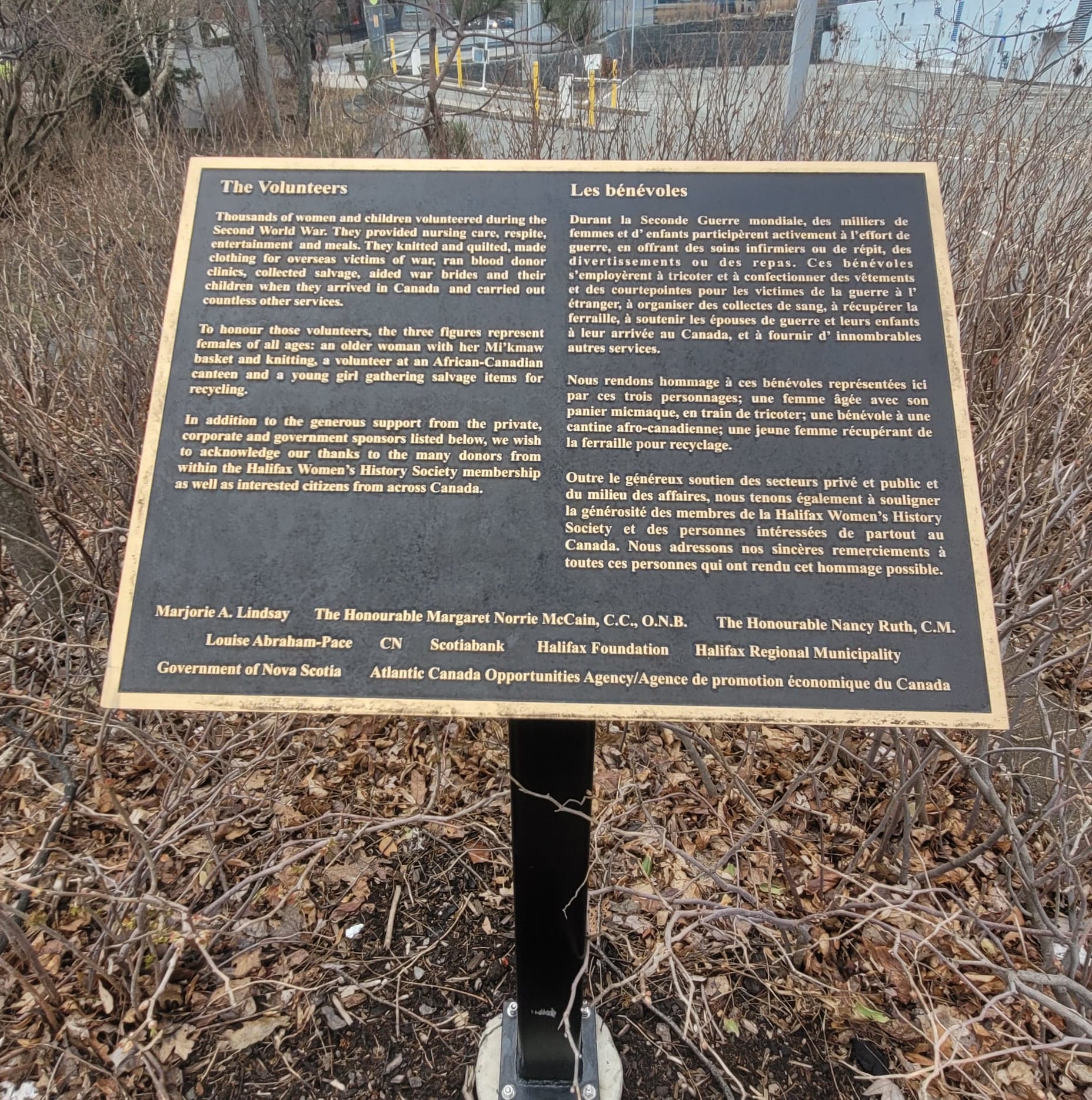
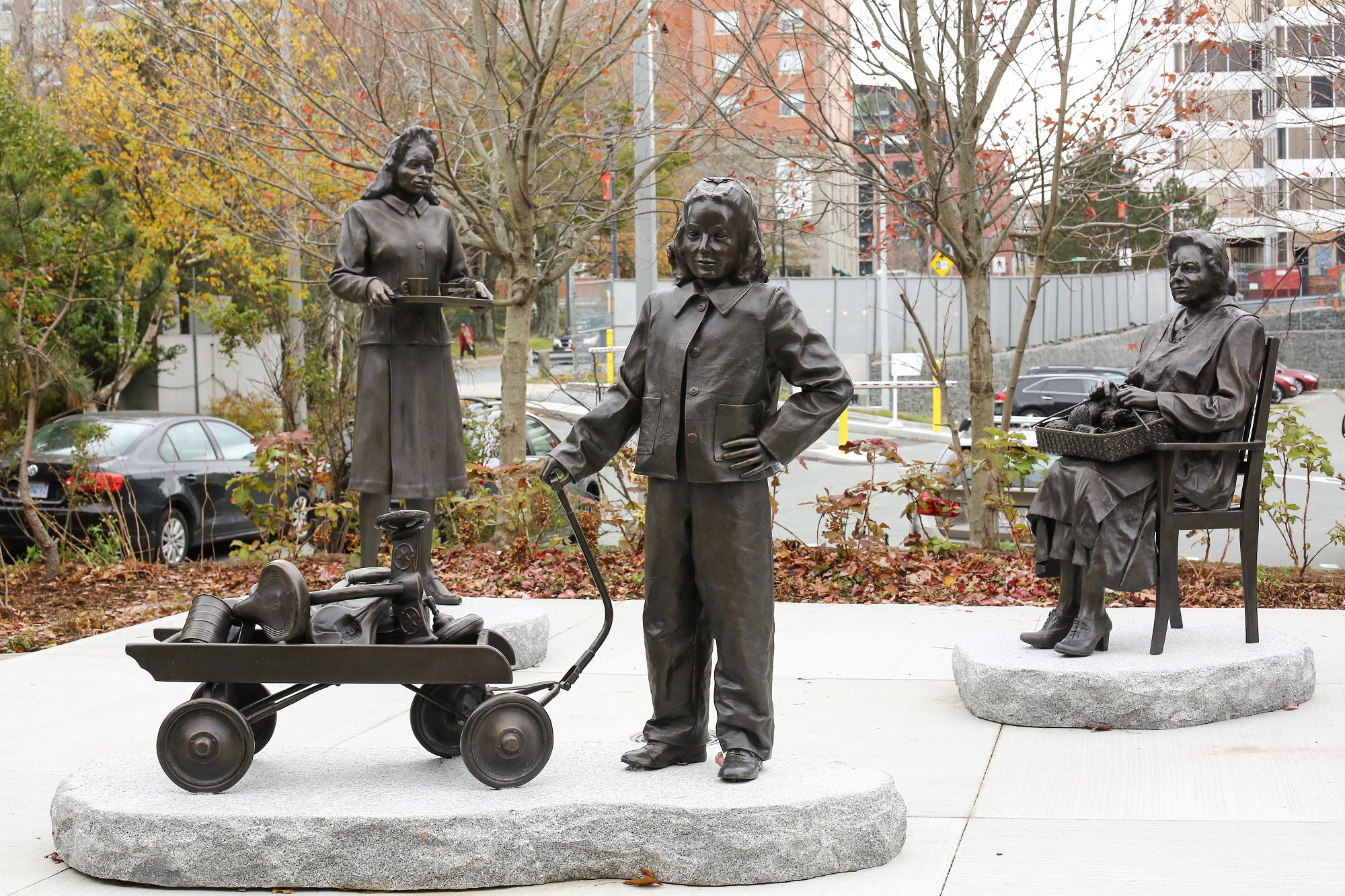
The Volunteers is the first monument with life sized bronze figures of women in Halifax’s history. It honours the work of thousands of women who volunteered during the Second World War. Their work was extensive, varied, and vital. The monument, a project of the Nova Scotia Women's History Society (formerly known as the Halifax Women’s History Society), was unveiled on November 16, 2017, on land provided by the Halifax Port Authority.
The design, by well-known Canadian artist Marlene Hilton Moore, was chosen in a national competition. The three figures represent an African Nova Scotian canteen worker with her tray, an older woman with her Mi’kmaq basket containing knitting supplies, and a young girl with her wagon piled with salvage items. Each figure rests on Nova Scotian granite base.
The seated statue exemplifies one of the most consistent of volunteer activities, knitting for the soldiers. Margaret Pelletier, a renowned basket maker from Whycocomagh, created a basket for Marlene to use when creating this statue. Hundreds of thousands of women supported the troops by knitting massive quantities of socks, caps, sweaters and other badly- needed comfort items. The Canadian Red Cross estimates that 750,000 volunteers knit 50 million articles during the Second World War.
The standing statue of a young African Nova Scotian woman carries a tray serving mugs of coffee and hearty sandwiches for the soldiers. Women fed more than 100,000 servicemen who passed through Halifax on their way to the war in Europe. Meals were one of the most important services women provided. The woman figure is helping serve meals to black servicemen. Canteens and clubs were segregated.
Children were also part of the volunteer war effort. The young girl statue is part of a salvage drive and is hauling her wagon full of pots, pans, and broken toys. The Federal Government encouraged Canadians to salvage materials for conversion into airplanes, tanks, and other weapons.