
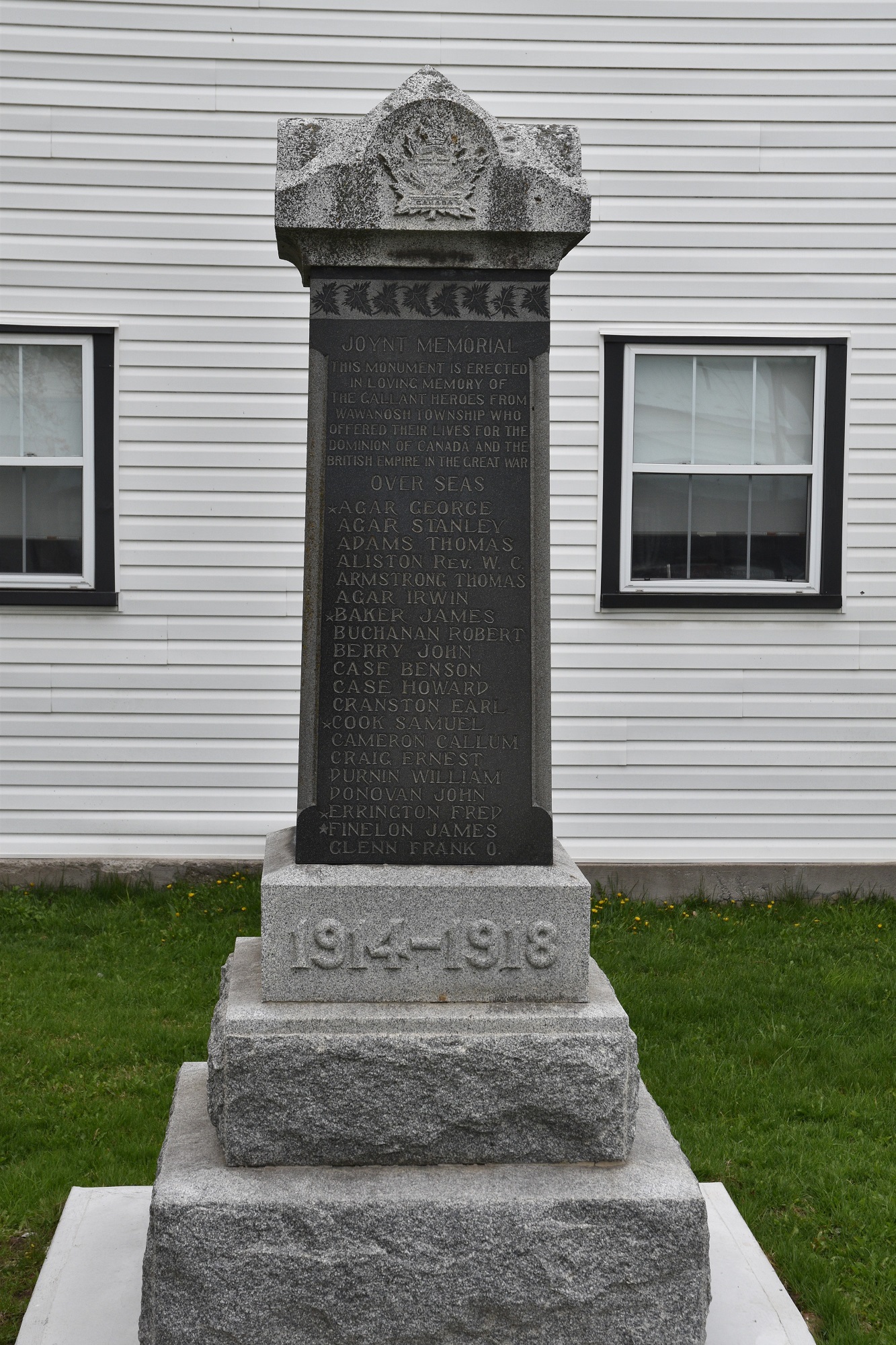
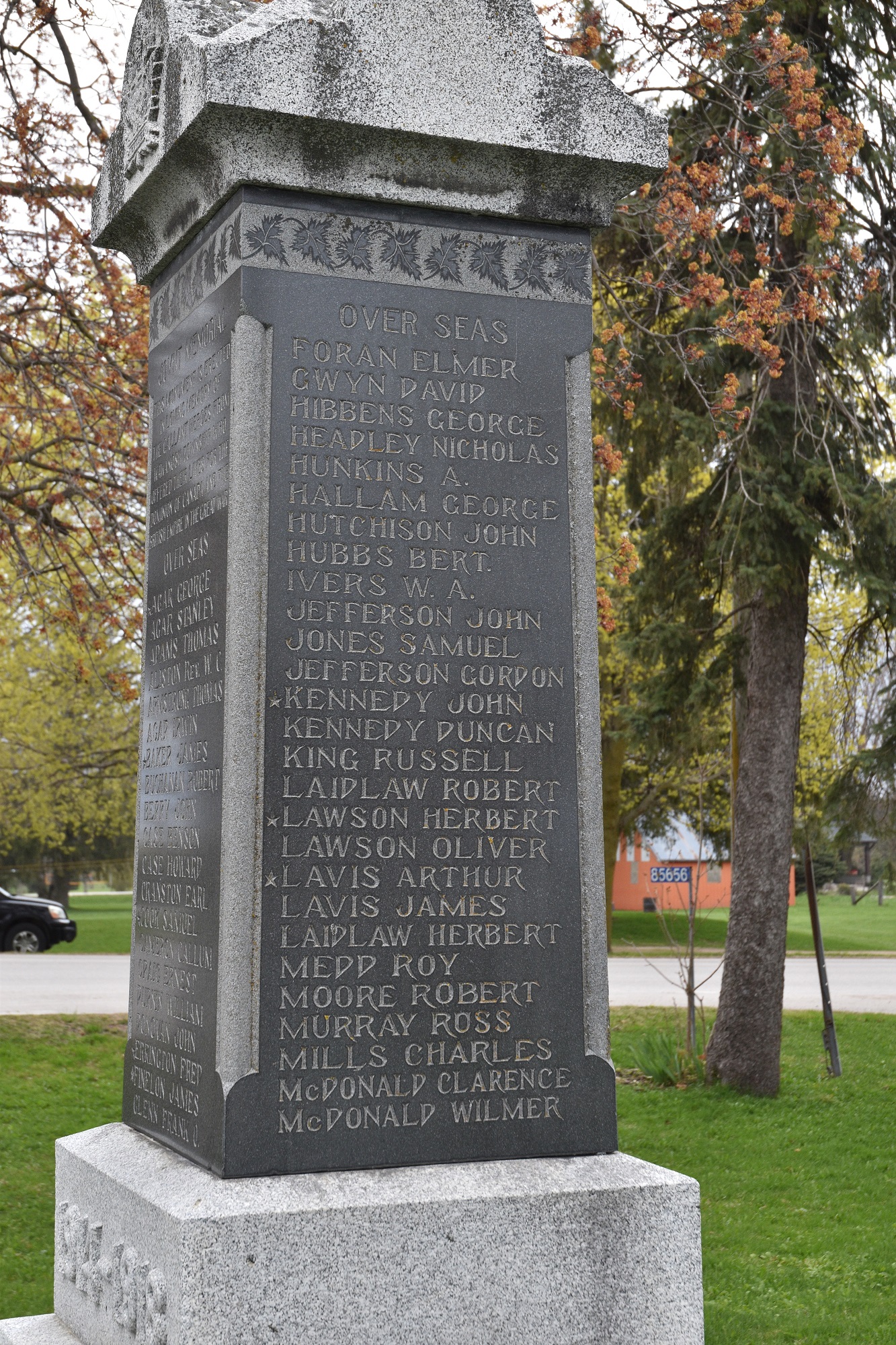
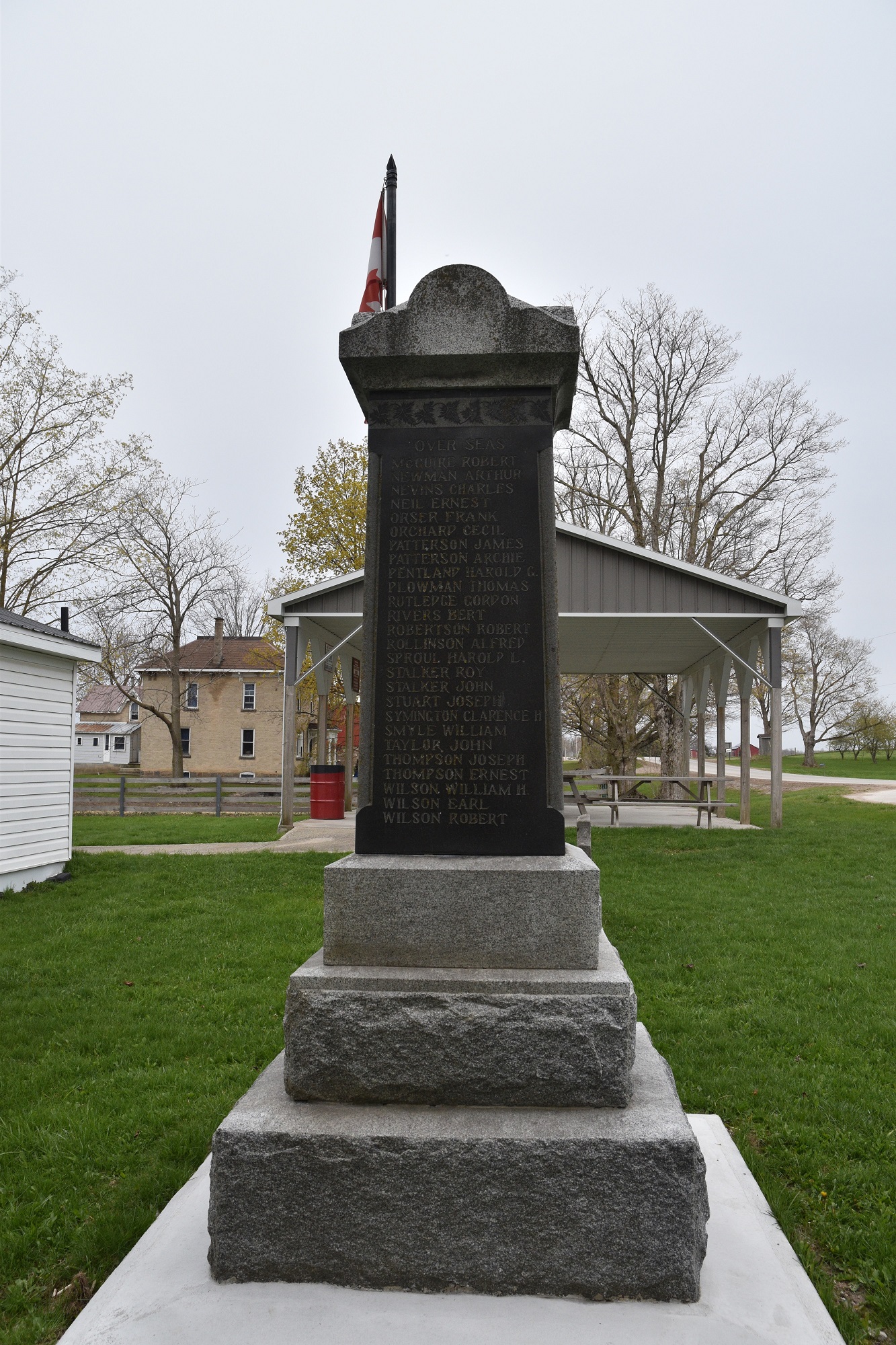
John Joynt was born in Mayo County, Ireland in November 1854 to John and Ellen Joynt. The family immigrated to Canada about 1865 and after initially settling in Durham County, the Joynt family moved to West Wawanosh. By 1919, John was elected to the provincial legislature as the Conservative member in North Huron, owned 1,400 acres of land and was one of the most prosperous men in the county. Too old to serve in the First World War and having only daughters, he wanted to do something for those that went overseas. He spent the then-considerable sum of $5,000 on a monument to honour those from West Wawanosh who served in the Great War. The Joynt War Memorial, also known as the West Wawanosh Soldiers’ Monument, was the only cenotaph in Huron County paid for entirely by a private individual.
In 1922, Johan donated land and moved the St. Helens community center to the northeast corner of the crossroads where he intended to place the war memorial. On May 24, 1923, Lieutenant-Colonel H.B. Combe, former commander of the 161st Huron Battalion, drew back the Union Jack and unveiled the monument. Seven girls placed bouquets on the monument for each West Wawanosh soldier who fell in battle. Between 3,000 and 4,000 people gathered for the unveiling ceremony. It was the largest gathering ever held before or since at St. Helens. The Women’s Institute purchased 600 loaves of bread and provided sandwiches and lemonade for everyone.
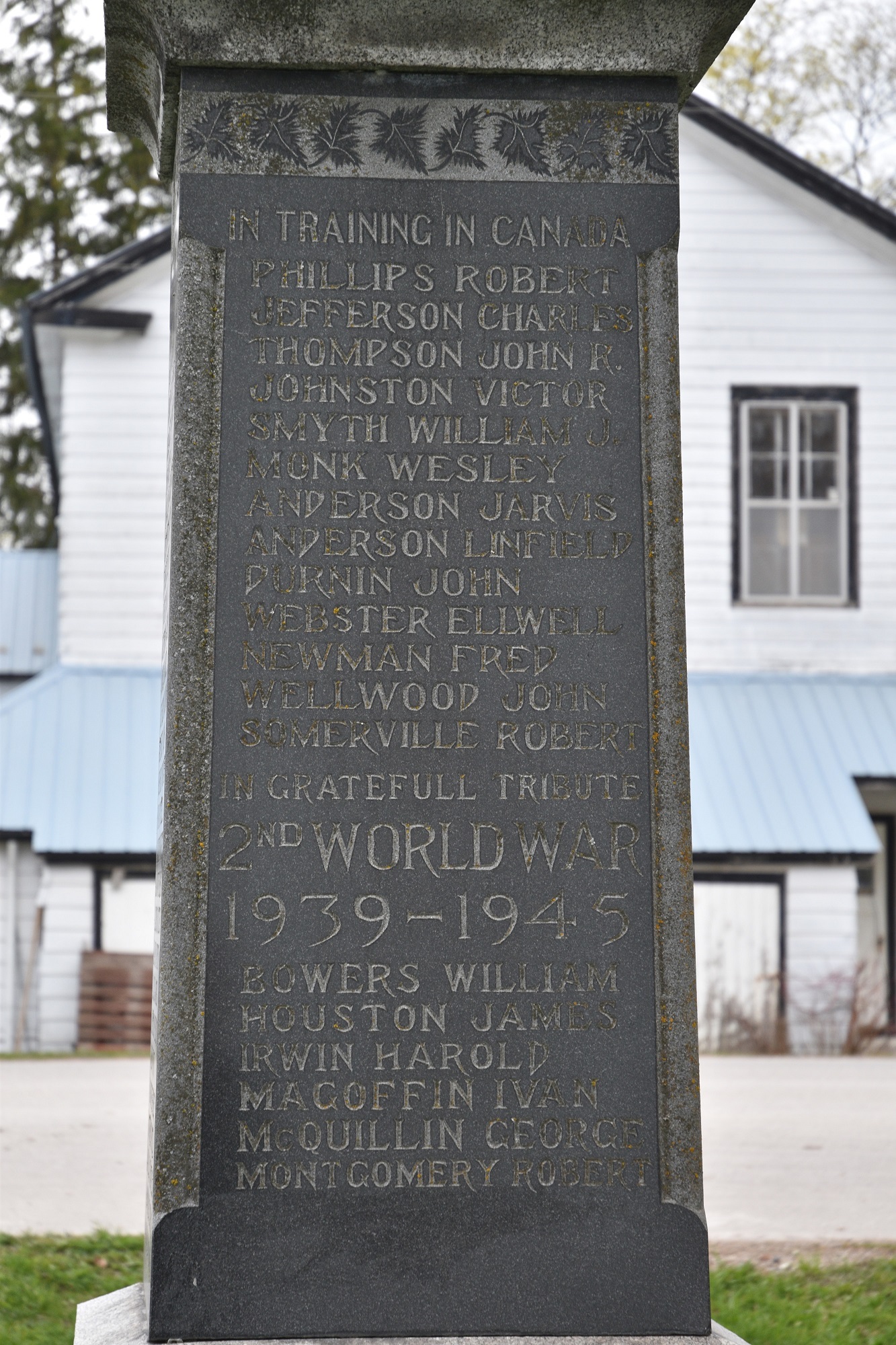
After the Second World War, six names were added to the monument.