
A Montreal Road of Remembrance was launched when the Montreal Women’s Club approached city council in January of 1922 with a proposal to transform a section of Sherbrooke Street West between Montreal West and Westmount (Notre-Dame-de-Grace). The intention was to eventually extend the tree planting along the entire length of the street. Norway maple trees were selected, each to be plaqued and protected with an iron grille. In the three months preceding the dedication ceremony, the Club received orders for 500 trees from families and friends of fallen soldiers, service clubs, and other groups. On April 22, 1922, the first four trees were planted and some 880 memorial trees eventually lined the street.
In 1922, 36 maple trees were planted as memorials to the Loyola boys who died in the First World War. Each tree grew in a wooden cradle about four feet high, wired and protected inside by burlap. A metal plaque was engraved with the name, rank and details of death. Each inscription was similar to one inscribed for graduate Terry McGovern of Port Arthur:
In memory of Arthur L. McGovern Capt. 28th. Bn. C.E.F.
Killed in action at Hooge, Belgium, June 6th, 1916.
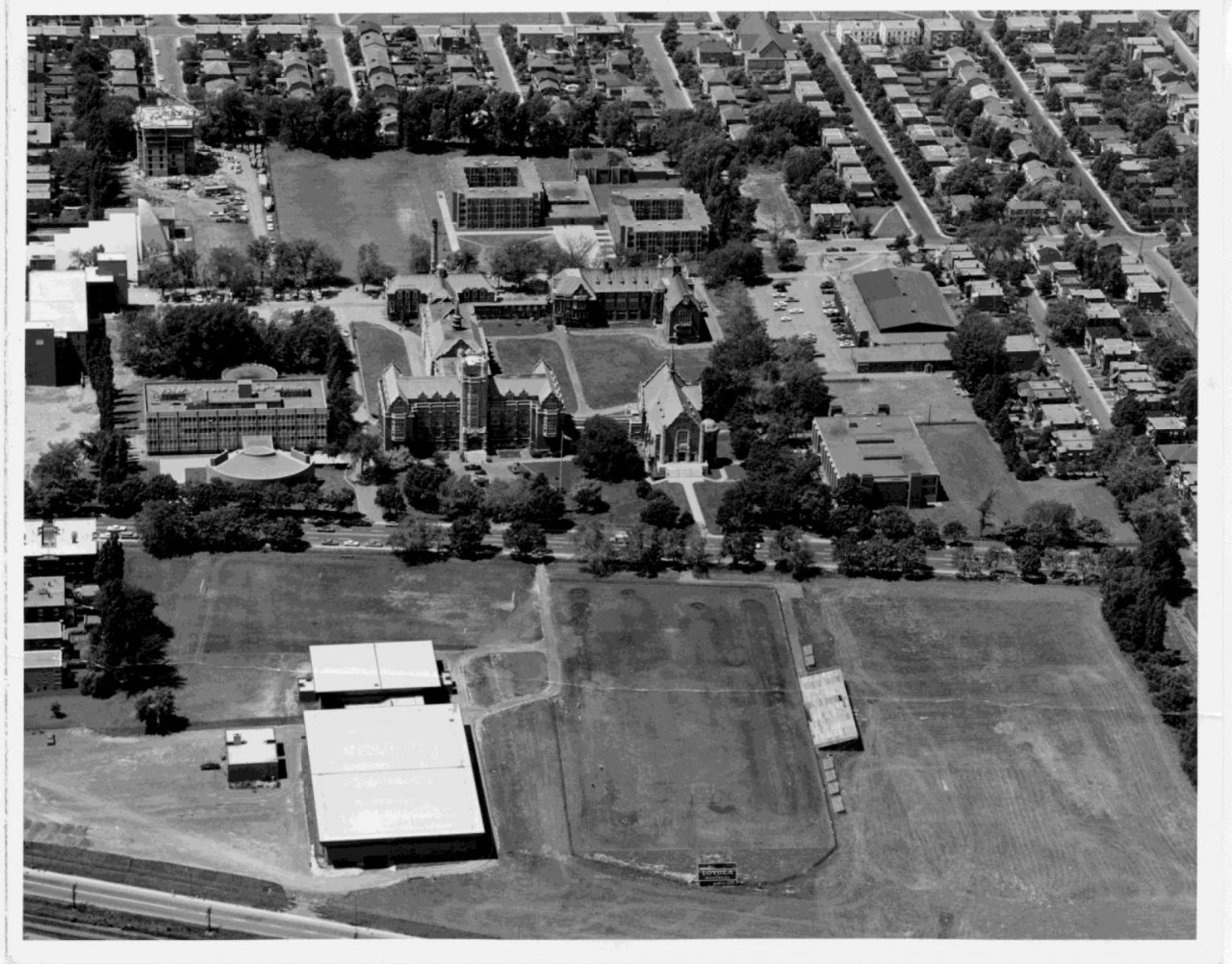
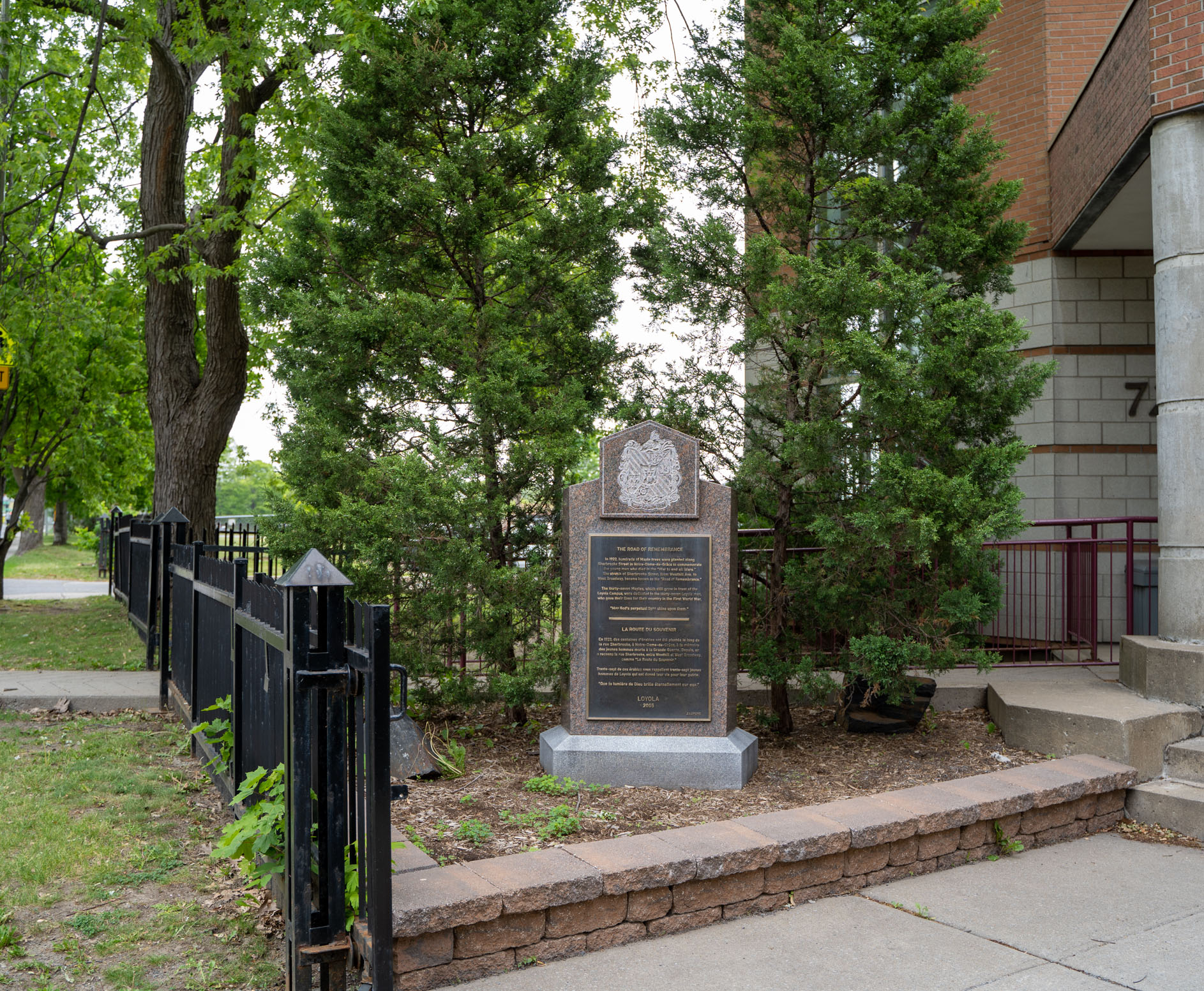
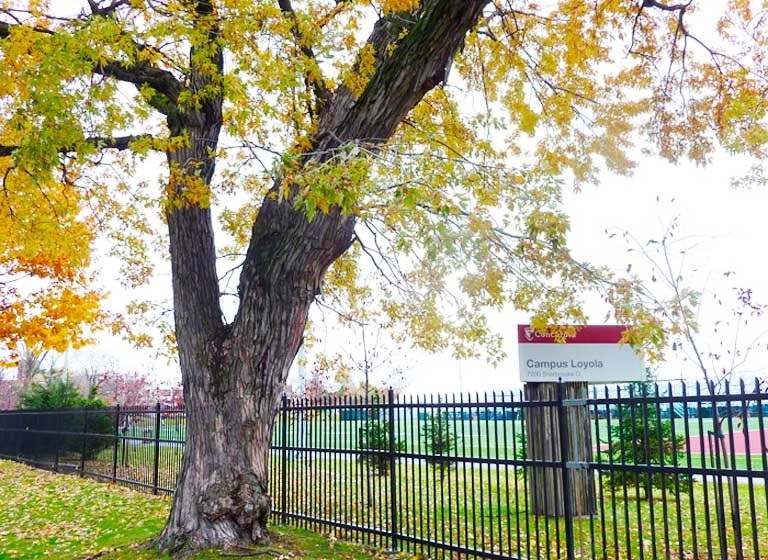
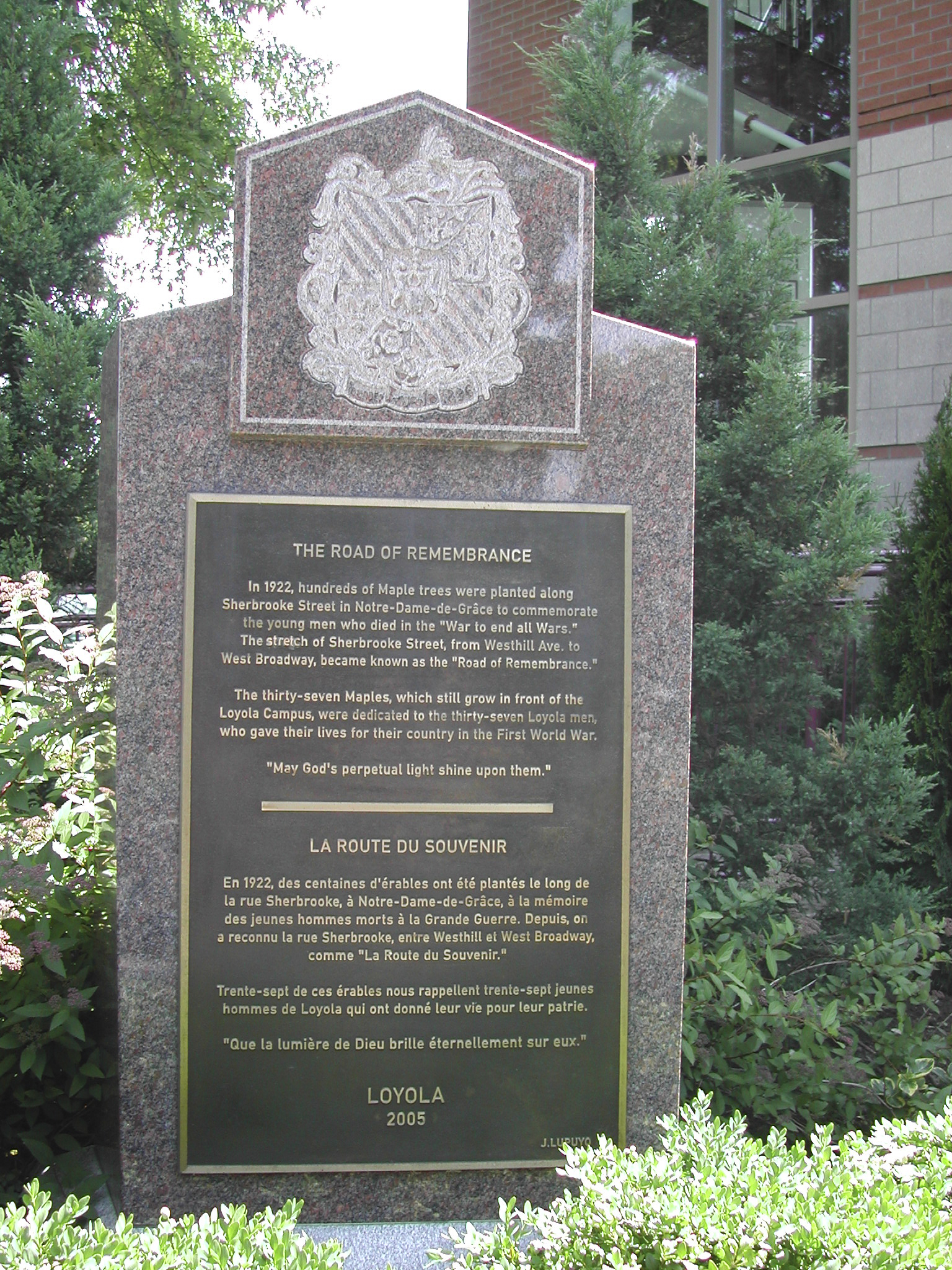
A 37th tree was planted by Loyola High School in 1996 when research by Dr. A. Gilbert Drolet revealed another Loyola war dead. Lieutenant John Howe's maple and a plaque commemorating the Road of Remembrance, sit at 7272 Sherbrooke St. W. Traditionally, on Remembrance Day, the trees were marked with poppy-decorated wreaths. Not all the trees are still standing. One tree looks out over the Stingers Stadium, across the street from the main entrance to campus. The plaques on the trees have disappeared and the Road of Remembrance is no longer commemorated. Close to 300 alumni and students of Loyola took part in the First World War, between 1,200 and 1,500 in the Second World War.
In 1918, Canadians turned to the duty of commemorating the dead. Some promoted practical memorials like Roads of Remembrance. These linear tree-lined avenues had trees that were typically a single species, regularly spaced along each side of the avenue that would grow tall and stately. American elms were chosen for many of these avenues. A small plaque was used to assign a particular tree to a specific fallen soldier. In some cases, the next-of-kin was involved in purchasing the tree and/or plaque for the deceased soldier.
Roads of Remembrance were based on two symbol-laden images. The first was France’s tree-lined country avenues: long straight roads, with large elms on either side, beautiful and useful, and loved by the Canadians overseas. The second symbol was a living memorial: trees represented the victory of life over death. Memorial trees became living symbols of the sacrifices made in France and Belgium.