OUR VICTORY (WARTIME) HOUSING HERITAGE
Normandy Blvd.,
Georgetown
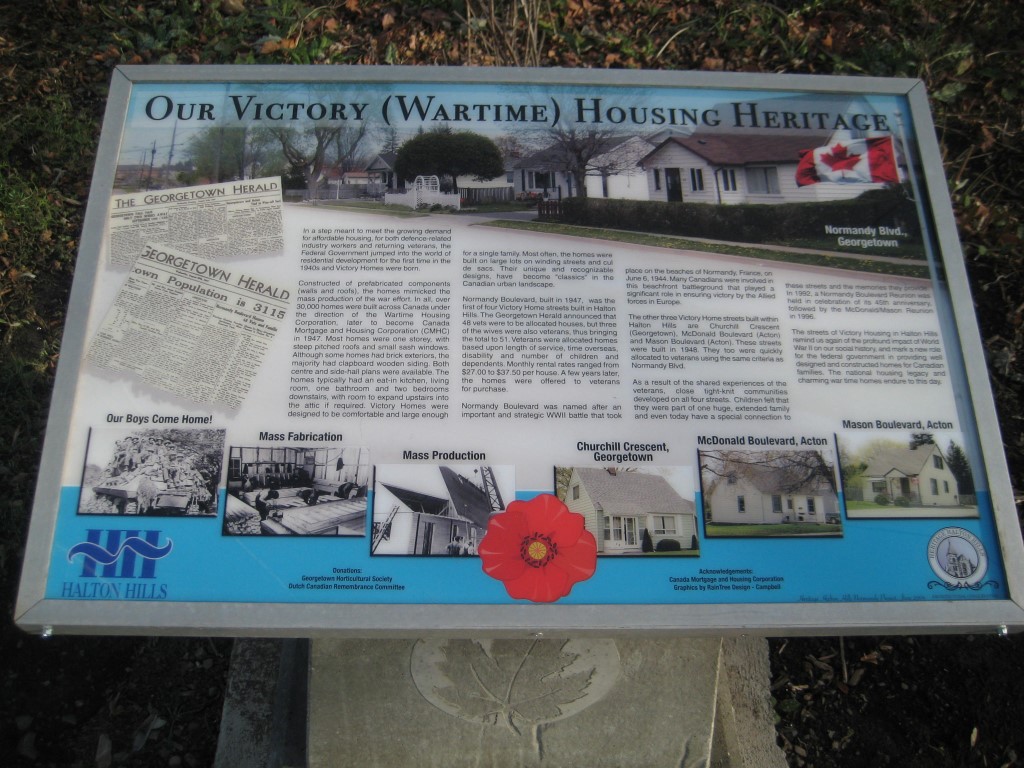
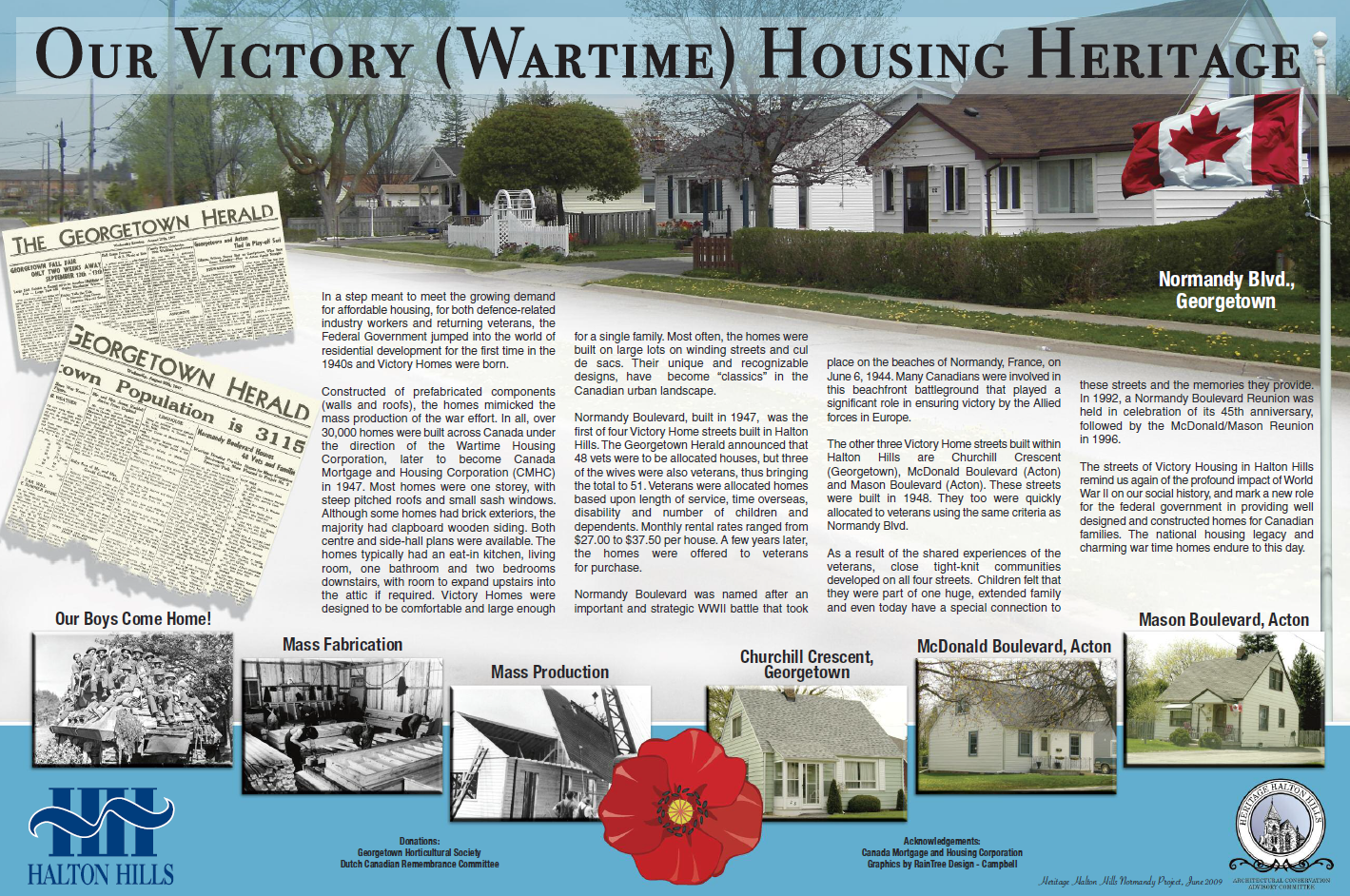
In a step meant to meet the growing demand for affordable housing, for both defence-related industry workers and returning veterans, the Federal Government jumped into the world of residential development for the first time in the 1940s and Victory Homes were born.
Constructed of prefabricated components (walls and roofs), the homes mimicked the mass production of the war effort. In all, over 30,000 homes were built across Canada under the direction of the Wartime Housing Corporation, later to become Canada Mortgage and Housing Corporation (CMHC) in 1947. Most homes were one storey, with steep pitched roofs and small sash windows. Although some homes had brick exteriors, the majority had clapboard wooden siding. Both centre and side-hall plans were available. The homes typically had an eat-in kitchen, living room, one bathroom and two bedrooms downstairs, with room to expand upstairs into the attic if required. Victory Homes were designed to be comfortable and large enough for a single family. Most often, the homes were built on large lots on winding streets and cul de sacs. Their unique and recognizable designs, have become “classics” in the Canadian urban landscape.
Normandy Boulevard, built in 1947, was the first of four Victory Home streets built in Halton Hills. The Georgetown Herald announced that 48 vets were to be allocated houses, but three of the wives were also veterans, thus bringing the total to 51. Veterans were allocated homes based upon length of service, time overseas, disability and number of children and dependents. Monthly rental rates ranged from $27.00 to $37.50 per house. A few years later, the homes were offered to veterans for purchase.
Normandy Boulevard was named after an important and strategic WWII battle that took place on the beaches of Normandy, France, on June 6, 1944. Many Canadians were involved in this beachfront battleground that played a significant role in ensuring victory by the Allied forces in Europe. The other three Victory Home streets built within Halton Hills are Churchill Crescent (Georgetown), McDonald Boulevard (Acton) and Mason Boulevard (Acton). These streets were built in 1948. They too were quickly allocated to veterans using the same criteria as Normandy Blvd.
As a result of the shared experiences of the veterans, close tight-knit communities developed on all four streets. Children felt that they were part of one huge, extended family and even today have a special connection to these streets and the memories they provide. In 1992, a Normandy Boulevard Reunion was held in celebration of its 45th anniversary, followed by the McDonald/Mason Reunion in 1996.
The streets of Victory Housing in Halton Hills remind us again of the profound impact of World War II on our social history, and mark a new role for the federal government in providing well designed and constructed homes for Canadian families. The national housing legacy and charming war time homes endure to this day.