
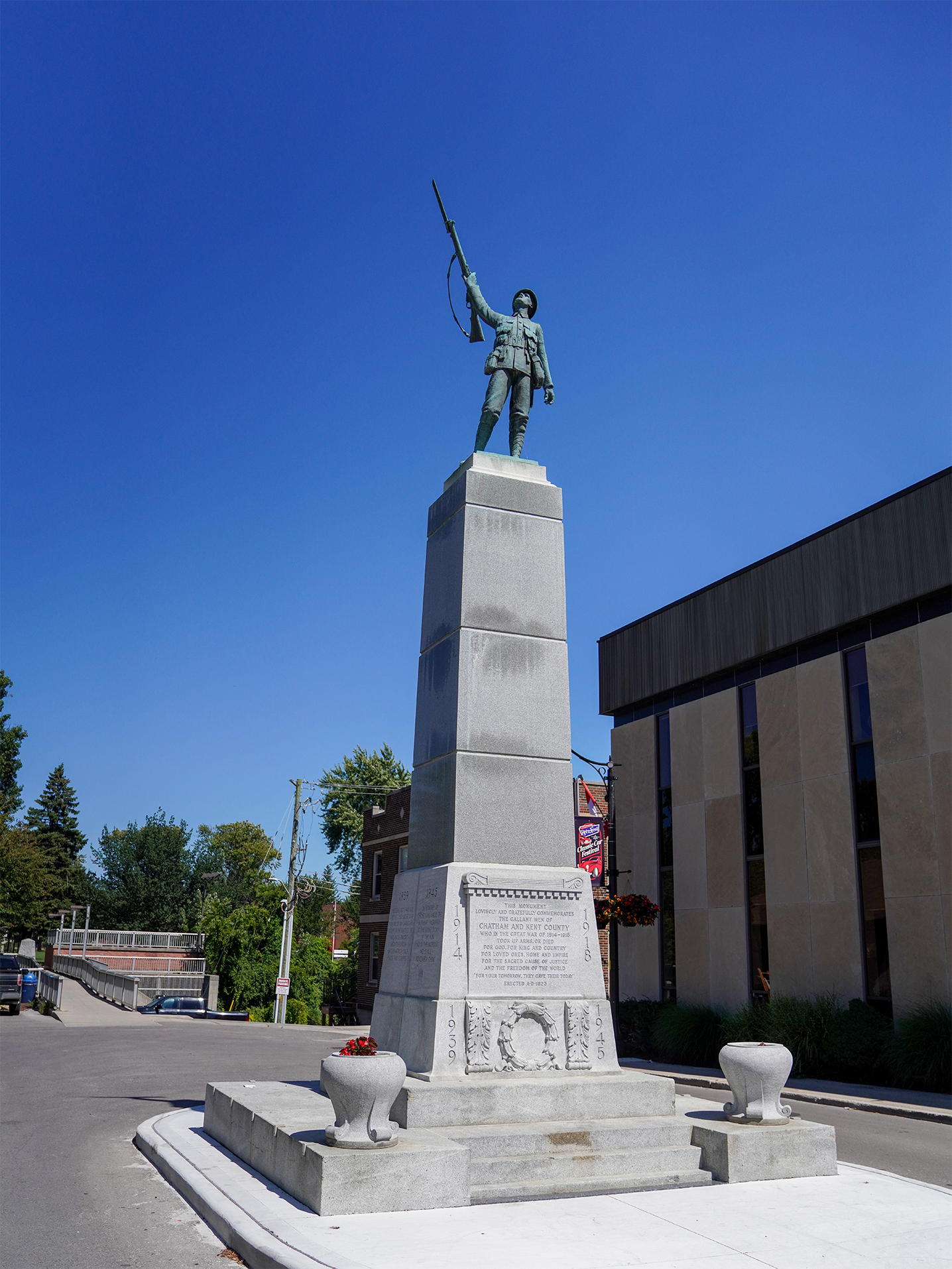
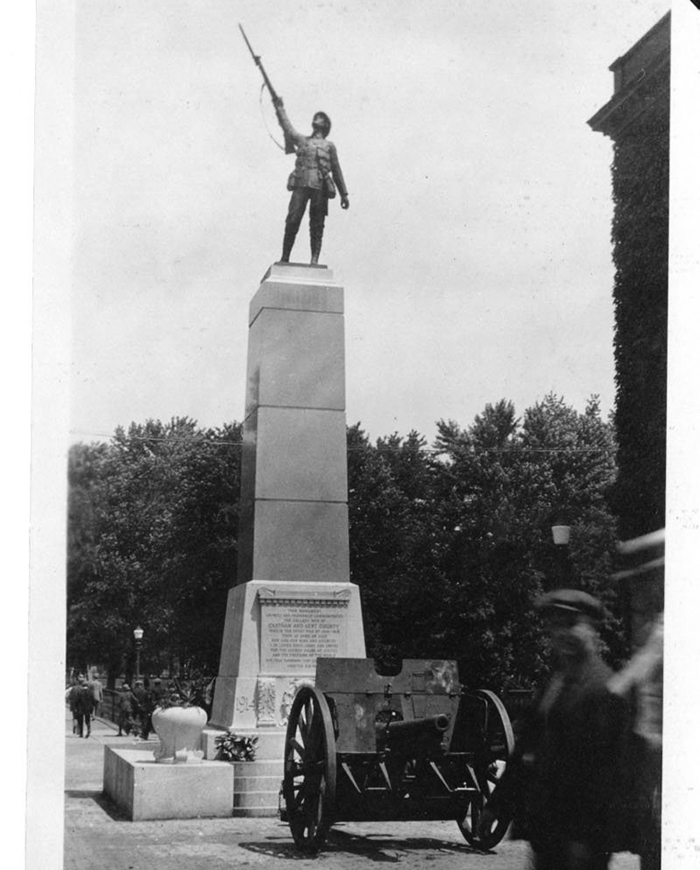
A few citizens in Chatham began planning for a Soldiers Memorial as a fitting remembrance to those who fought in the First World War. J. D. Ellwood suggested that some sort of memorial to the city and county boys be erected. There was also a movement to acquire German war memorabilia (artillery), which they completed in 1925.
On October 6, 1922, the 24th Kent Regiment Chapter of the Imperial Order Daughters of the Empire met in the Armory and pledged $1,000 for the memorial. By February 5, 1923, a motion for a debenture of $15,000 was put before the City Council which led to By-law 1866 dated February 23, 1923. A subsequent vote on April 2 failed to pass. On the next evening at First Presbyterian Church, $4,503 dollars were raised with the object of raising the whole amount requested in the defeated debenture. The memorial fund would represent the entire county and not Chatham alone.
By June 28, A. Skirving, secretary of the War Memorial Committee announced that the contract had been let, material ordered and notice sent to the council to complete the 14 x14x8 foot deep foundation. McIntosh Granite Co. supplied the stone and F.G. Tickle & Sons created the statue. The land at the north-end of 6th Street was donated by the City of Chatham.
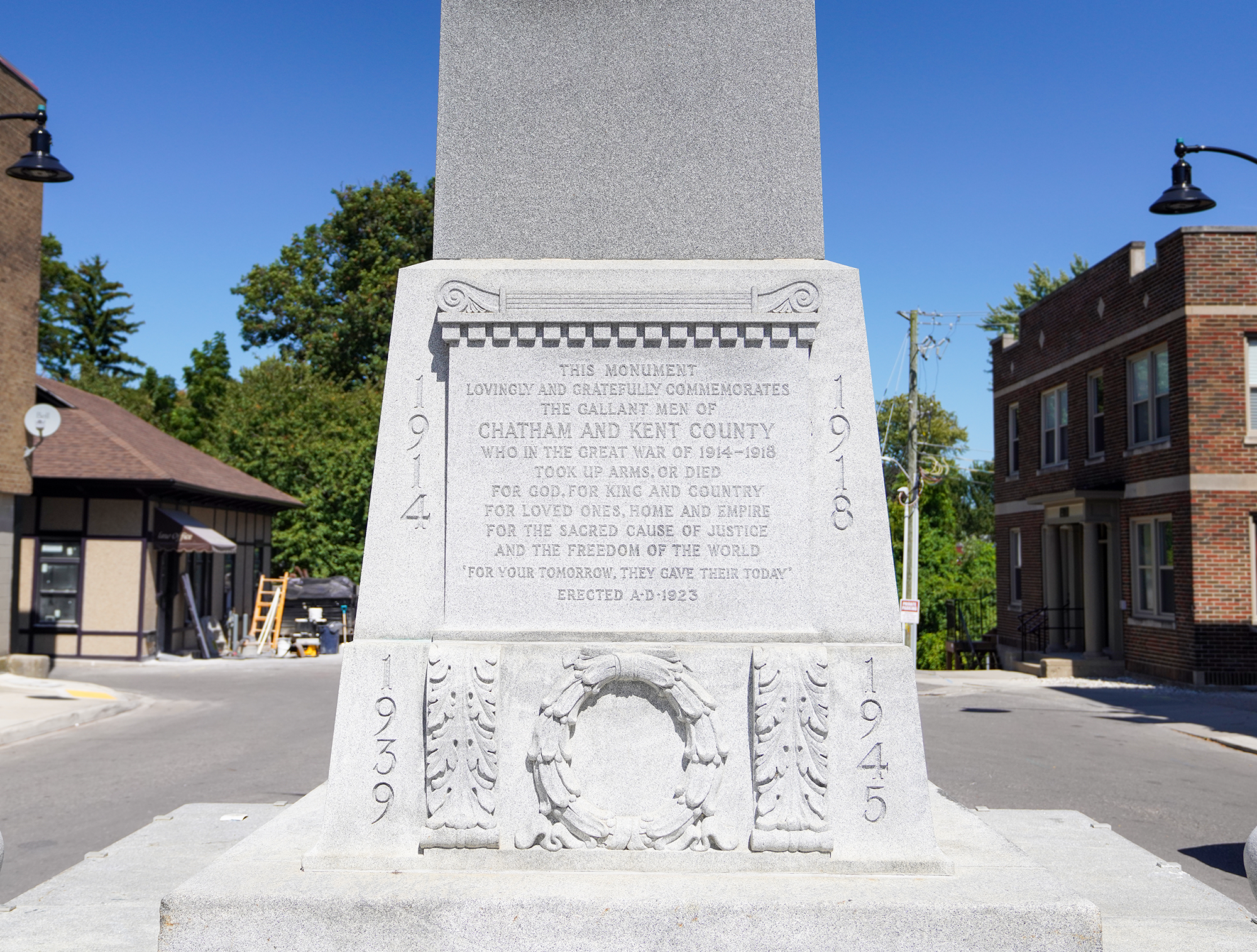
Excavation began on October 9, 1923, and contractor C.H. Colby moved the materials for the monument. The whole structure cost $15,000 and weighed 190 tons. The memorial was completed on November 8 and unveiled by Lieutenant-Governor Harry Cockshutt.
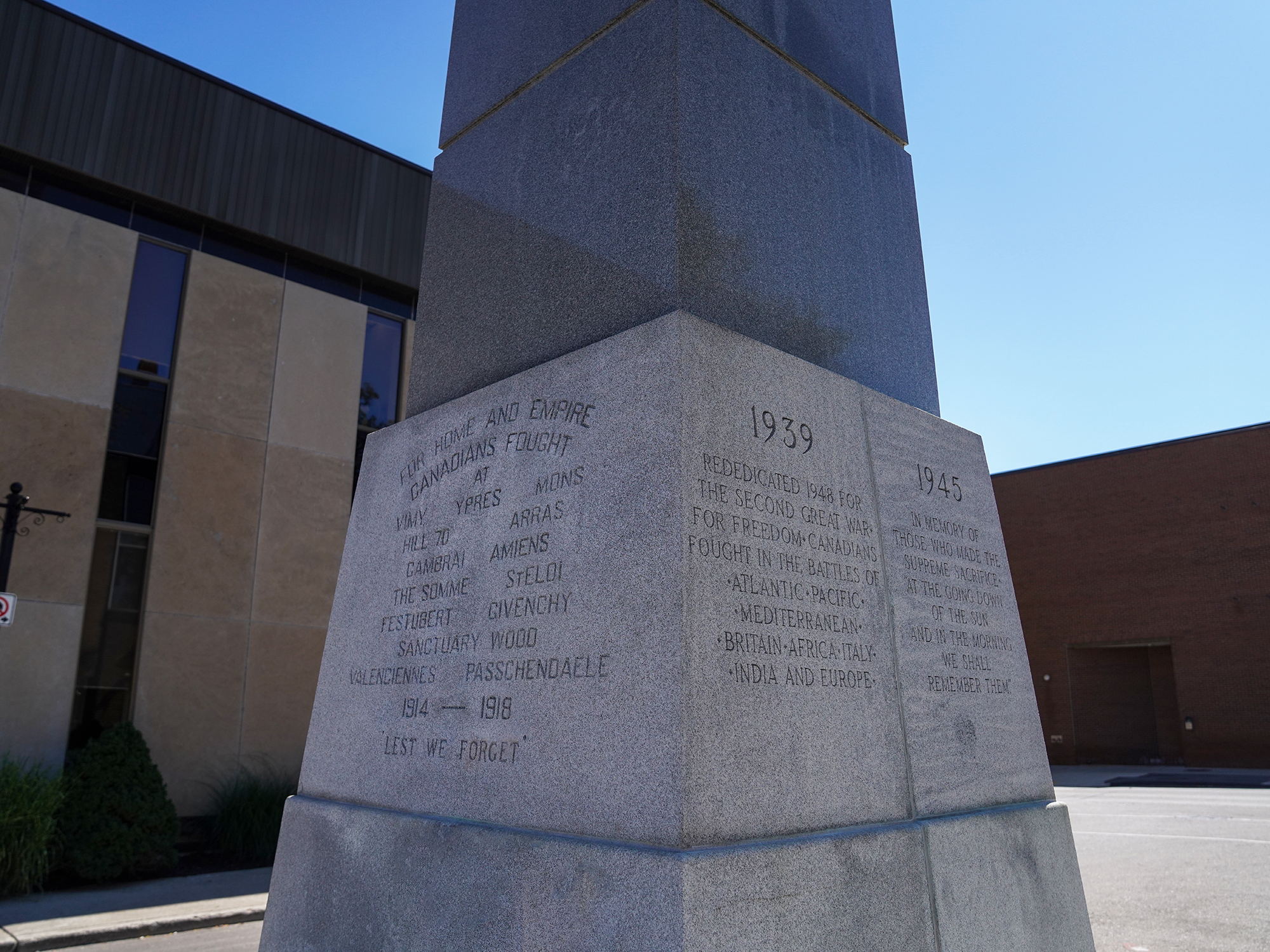
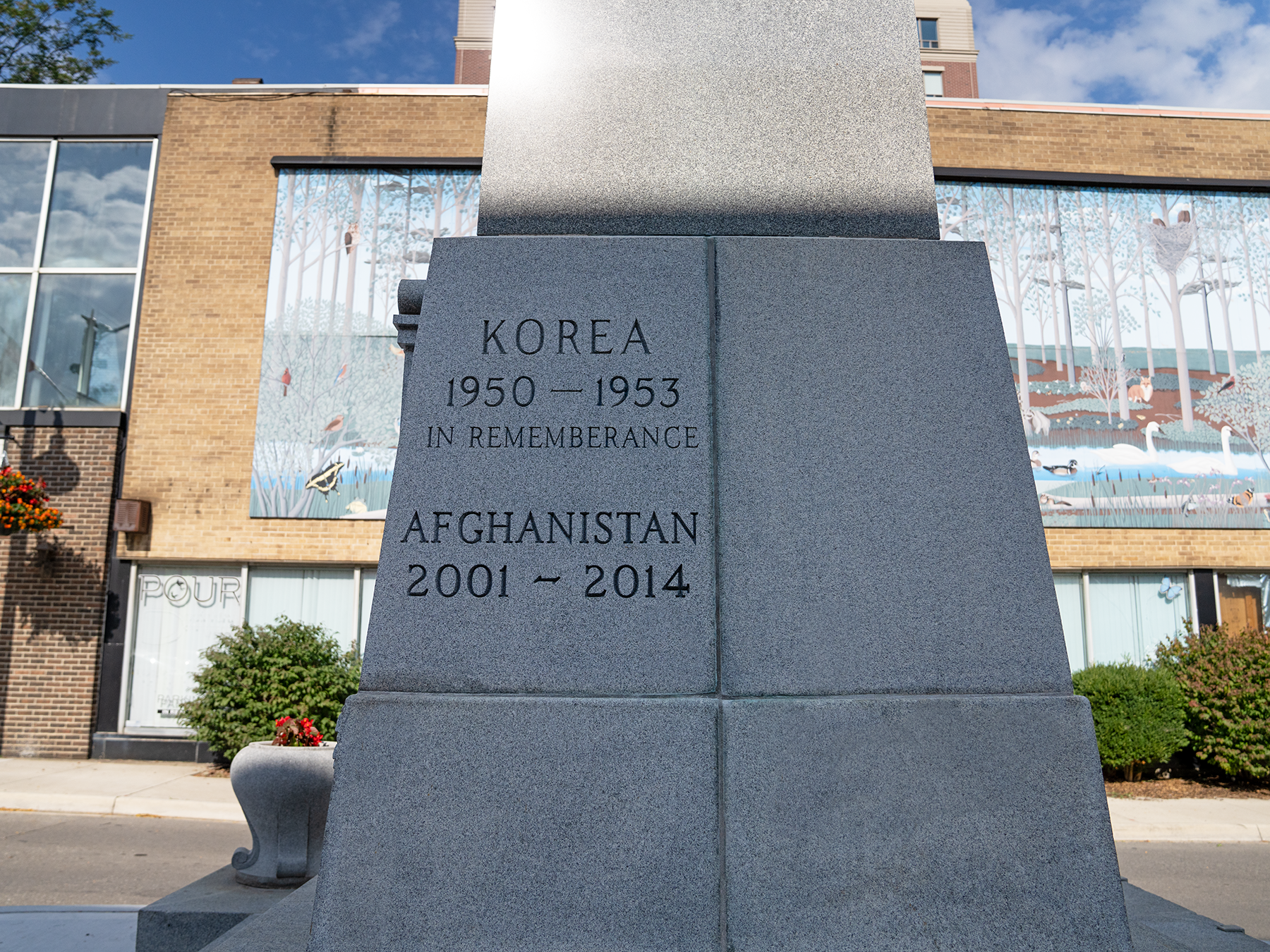
Later, the Second World War, Korean War and Afghanistan were added to the memorial. The “Soldiers Memorial”, as it was first known, is a tribute to the 697 men and women from the area who gave their lives in conflicts. It is not known what happened to the German artillery that was placed in front of the memorial.
The cenotaph sits on a battlefield from the War of 1812. At this site on October 4, 1813, stood 1,000 mounted Kentucky Militia, stretched to the east end of King Street, past the Wish Centre. Two hours behind them were another 2,000 American troops advancing on Chatham.
On the other side of McGregor Creek were 200 Indigenous lead by the great Chief Tecumseh. He was supported by the Caldwell Rangers from Essex, plus a few Kent Militia. Across the river from the point, about 35 British troops provided some covering fire. The rest of the British Army and refugees were retreating further up Longwoods Road heading to Fairfield.
This spot held the only remaining bridge over the creek and was the focal point Skirmish at the Forks. The battle was a delaying action to give more time for the British to escape. It lasted about two hours and ended when the Americans brought in their canon. People died here and many were wounded. Tecumseh himself was wounded here and killed the next day in the Battle of the Thames. The population on the farms and in settlements, as well as the Indigenous communities in Kent County suffered greatly and took many years to recover.