
On October 30, 1991, the CC-130 Hercules from 435 Transport Squadron in Edmonton crashed 16 kilometers from Alert Nunavut, while conducting the Boxtop 22 resupply flight to Canadian Forces Station Alert. At approximately 4:40 p.m., flight 22 of Operation BOXTOP – as the biannual resupply mission is called – was on its final approach to the station from Thule Air Force Base in Greenland. As the Hercules, loaded with 3,400 liters of diesel fuel, began its descent, the pilot flying lost sight of the runway. Moments later, radar contact and communication were lost as the aircraft hit a rocky cliff and crashed. The crew of another CC-130 Hercules, also bound for Alert, saw the fires of the crash and identified the location of Boxtop 22.
Many of the passengers on Boxtop 22 – the 22nd flight of the second major resupply mission of 1991 – were communications researchers from Communication Command, involved in signals intelligence work. Every hour or two, as 12 of the 14 survivors huddled half-frozen in the shattered tail section of the aircraft, Captain de Groot, a physician, called out the names of her fellow survivors to ensure they were still awake and had not succumbed to the cold. The two outside – Sue Hillier and Bob Thompson – could not be brought into the shelter of aircraft tail because their injuries were too extreme for them to be moved. The others built a shelter around them and, against all odds, they survived.
The survivors, some soaked in diesel fuel, endured more than 30 hours in a brutal storm that brought high winds and temperatures of -20C to -30C with extreme wind chill – all in the 24-hour darkness of the Arctic winter. The first two overland rescue efforts were called back due to weather conditions and dangerous terrain. A search and rescue Hercules from 413 Squadron in Greenwood, Nova Scotia, arrived over the site after about eight hours, but were unable to parachute in because of the high winds and lack of visibility due to cloud cover. When they finally risked the jump, almost all their equipment and medical supplies were whipped away by the wind and disappeared. They made do with what they had, offered shelter, assistance and comfort to the survivors. Shortly after, another group of search and rescue technicians jumped in, followed by a third overland expedition, carrying supplies and equipment.
The survivors and six search and rescue technicians were flown from the site to the station onboard a CH-135 Twin Huey helicopter that had been transported north onboard another Hercules. The remaining search and rescue technicians, the overland rescuers and the bodies of the dead were brought out by American HH-160 Pave Hawk helicopters from Elmendorf Air Force Base in Alaska.
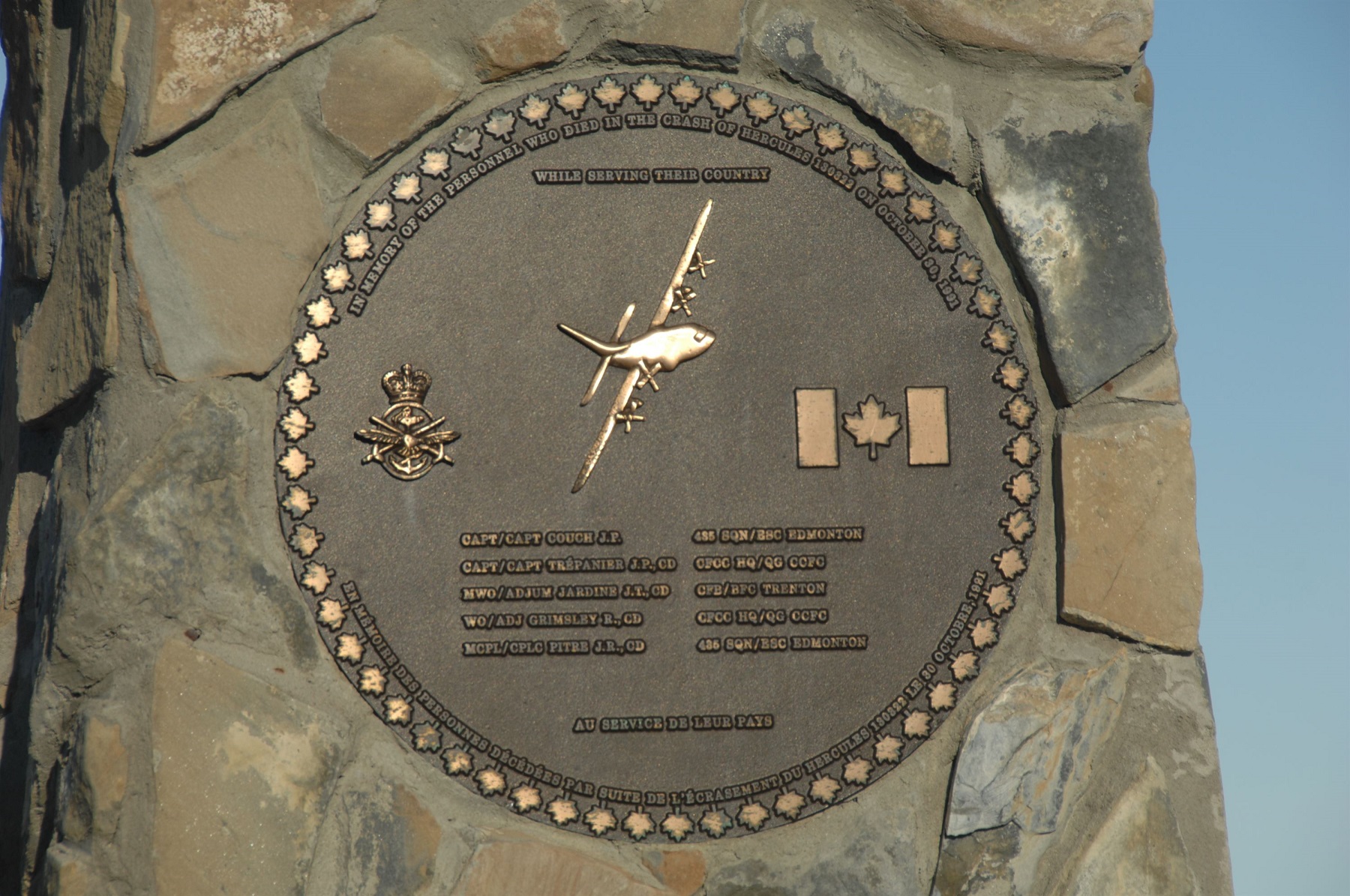
Four died almost immediately from injuries sustained during the crash: Captain Judy Trépanier, Master Warrant Officer Tom Jardine, Warrant Officer Robert Grimsley and Master Corporal Roland Pitre. Captain John Couch, the pilot, answered roll call for several hours before finally succumbing to hypothermia – after doing everything in his power to help ensure the survival of the crew. Captain de Groot called out the names one last time at Alert when all the survivors had been rescued and were gathered together in the station’s dining room, which had been turned into a makeshift medical facility. It was the first and last time all 13 were together; they were then flown south to medical facilities to begin the long process of healing.
In 2016, a small contingent of Royal Canadian Air Force personnel, along with Master Warrant Officer Cobden, Master Seaman Montgomery, search and rescue technician Sergeant Ben House (who was part of the first group of search and rescue technicians on the ground), and Lieutenant-Colonel (retired) Scott McLean, who was the commanding officer of Canadian Forces Station Alert in 1991 and led the station’s response to the crash, travelled to Alert along with the Boxtop 22 Cairn. The cairn was slung under a CH-147F Chinook helicopter and transported to the crash site where it was unveiled and dedicated. The Hercules wreckage still remains at the crash site.
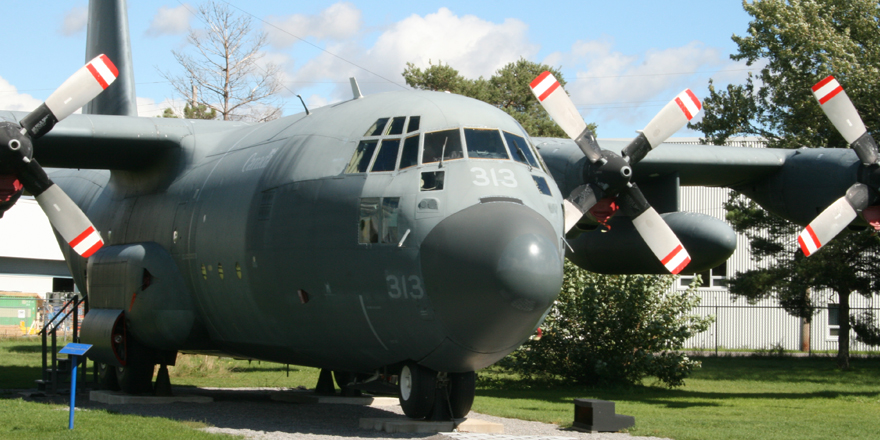
After being dedicated at the crash site, the cairn was taken to 8 Wing, from where all Boxtop resupply missions now originate, and placed on the grounds of the National Air Force Museum of Canada in front of the CC-130 Hercules on display there. On the front of the granite cairn is a brass plaque that describes the crash and its aftermath. On the reverse are the names of the five who died, the Air Command and Communication Command crests, and an image of a Hercules aircraft surrounded by maple leaves. An identical plaque was placed on a Boxtop 22 cairn that was dedicated in 1993 at Canadian Forces Station Alert. Surmounting the cairn is another piece of granite, carved and engraved to represent the tail of the crashed Hercules.
On October 30, 2016, seven survivors and their families, families of three who perished, as well as rescue personnel and a number of people who were in Alert on that terrible day, gathered at 8 Wing Trenton, Ontario, to mark the 25th anniversary of the crash and unveil a Boxtop 22 commemorative cairn. At the end of the private luncheon before the ceremony, the survivors were asked to stand. “Call the roll, Wilma,” came a voice from one of the tables. Captain de Groot stood and, as she once again called the roll, one by one the survivors in attendance stood and answered her call with “Here!”
The ceremony was open to the public and included a flypast by a CC-130H Hercules. The families of Master Warrant Officer Tom Jardine, Warrant Office Grimsley and Master Corporal Pitre attended the luncheon and ceremony. Master Warrant Officer Tony Cobden – the last Boxtop 22 survivor still serving in the Canadian Armed Forces – Captain (retired) Wilma de Groot, Captain (retired) Richard Dumoulin, Captain (retired) David Meace (who held the rank of master corporal at the time of the crash), Master Seaman (retired) Douglas “Monty” Montgomery, Master Warrant Officer (retired) Marc Tremblay and Sergeant (retired) Paul West were also there. Also surviving the crash were Mr. Robert Thomson, Ms. Susan Hillier, Lieutenant Joe Bales, Lieutenant Michael Moore, and Master Corporal Mario Ellefsen, and Private Bill Vance, who passed away in May 2002.
The workshop at Canadian Forces Station Alert produced engraved wooden replicas of the cairn's plaque. Lieutenant-General Mike Hood, commander of the Royal Canadian Air Force, gave the wooden plaques to family representatives of each of the three deceased members, as well as to the seven survivors during the luncheon in Trenton. Plaques were also created for those who were not in attendance.