
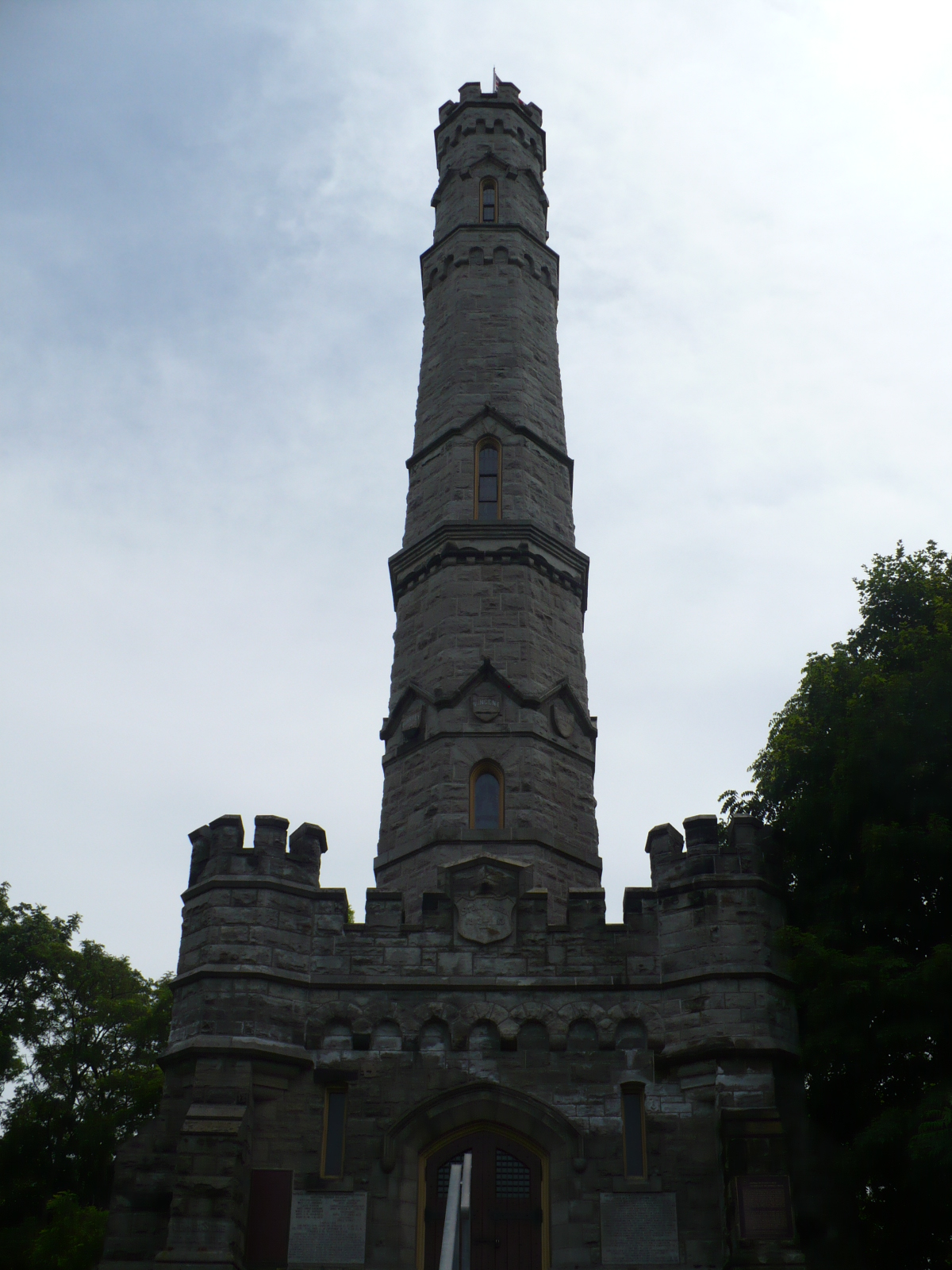

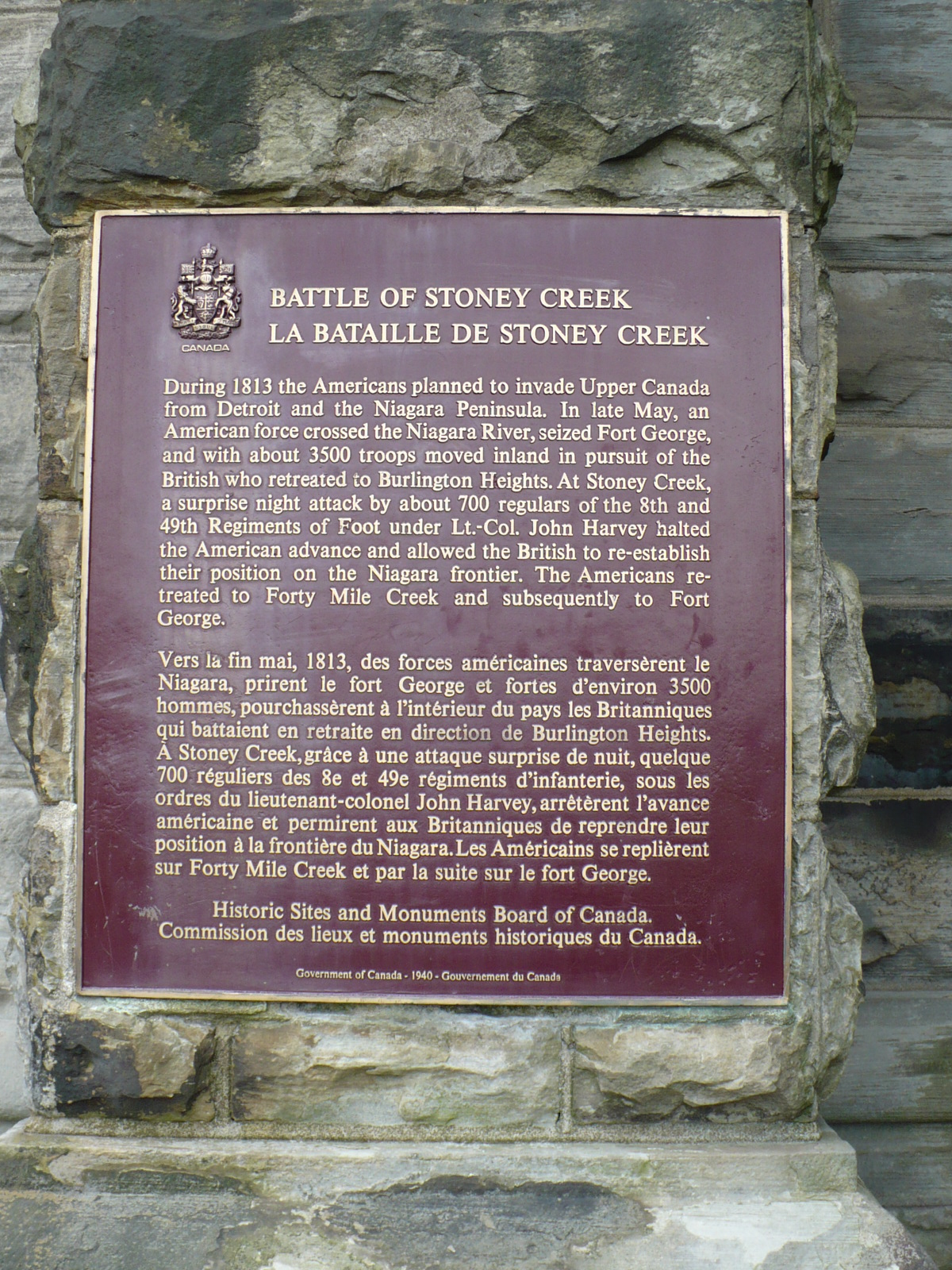
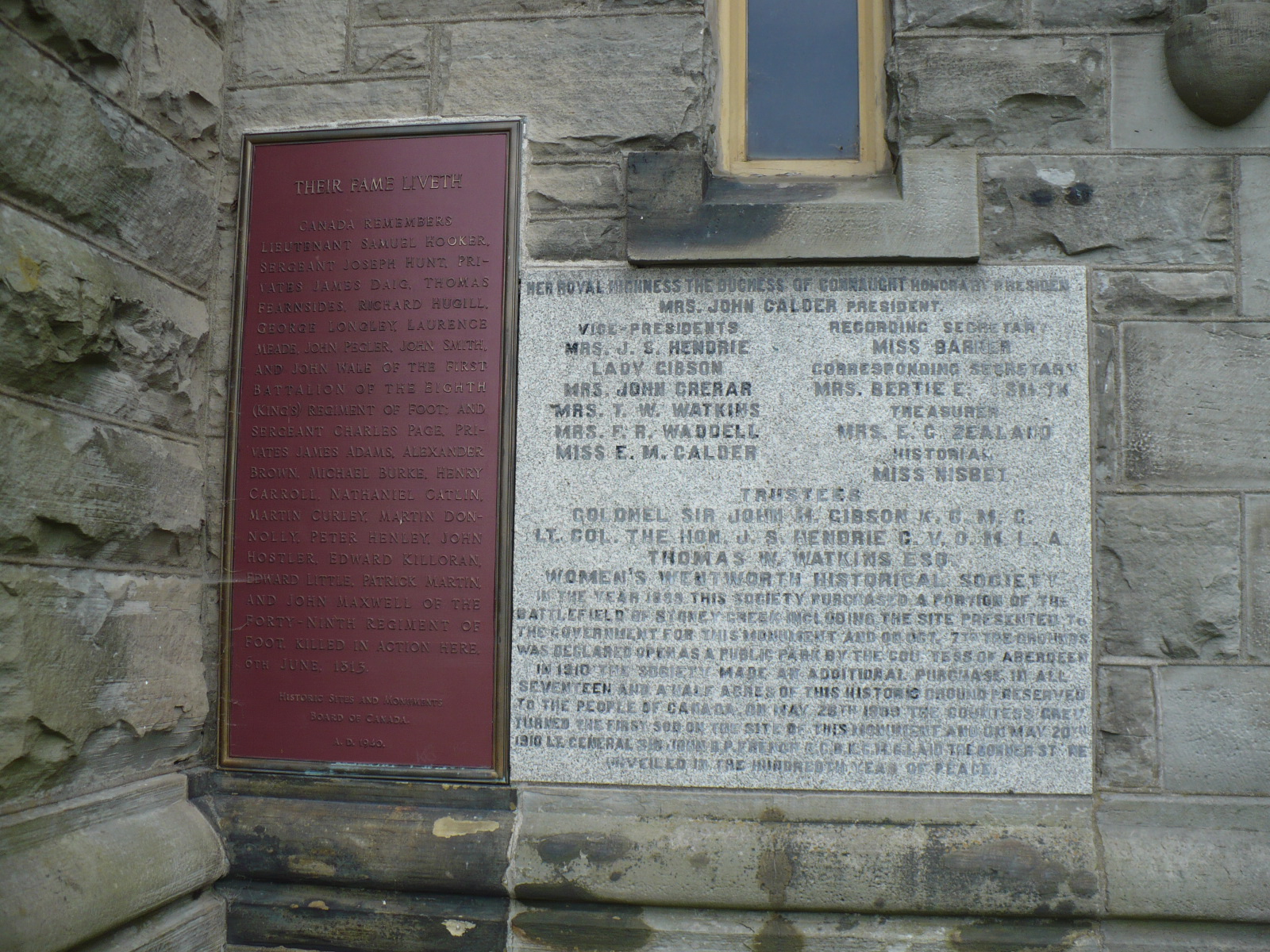
In 1888, the Wentworth Historical Society was formed, intent on commemorating the Battle of Stoney Creek. An outgrowth of the group, known as the Women's Wentworth Historical Society, opened the Battlefield House Museum (Gage House) in 1899 and in 1900, commissioned plans for the design of an impressive monument. The Women's Wentworth Historical Society, which was largely responsible for the monument's completion in 1913, became known as one of the first all-women's cultural societies in Canada.
The Battlefield Monument was constructed in memory of those who fought in the Battle of Stoney Creek - War of 1812. The Hamilton architectural firm of F.J. Rastrick and Sons prepared plans for the monument in 1900 with Edward L. Rastrick overseeing the design. The first sod was turned by Countess Grey on May 28, 1909 and the corner stone was laid by General French in a ceremony on May 26, 1910, with F.H. Dickenson in charge of the construction. Problems securing government funding caused delays throughout 1911. Work recommenced in 1912 when the Department of Militia and Defence guaranteed additional funds. On June 6, 1913, the monument was unveiled by Queen Mary via telegraph from Buckingham Palace.
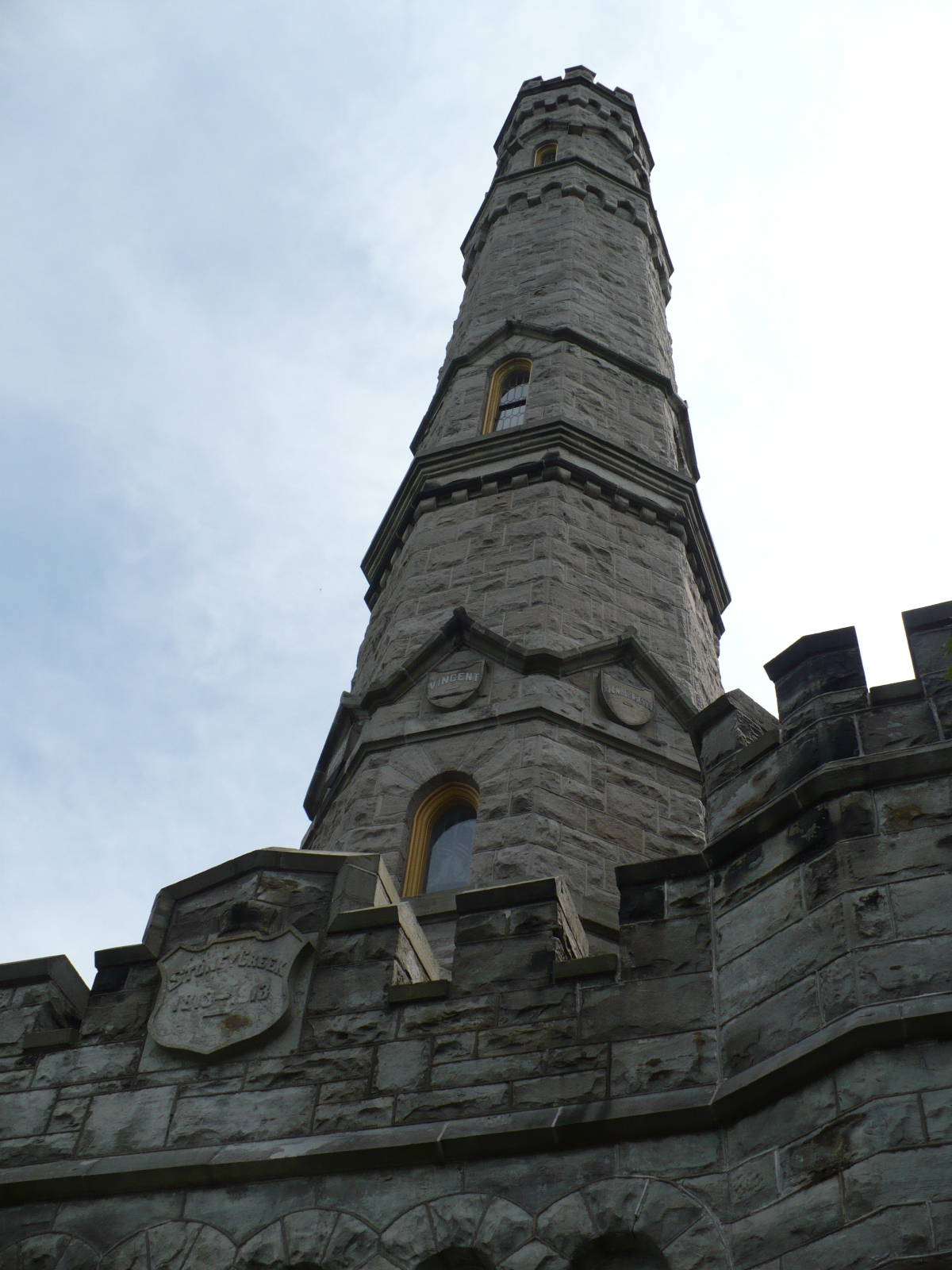
It is constructed of stone and measures 100 feet high, symbolizing the one hundredth anniversary of the battle on the date it was unveiled. This height also recognizes the one hundred years of peace between the United States and Canada which followed the War of 1812 - one foot of stone for every year of peace. The design was chosen to resemble the early 19th century Nelson Monument in Edinburgh, Scotland. A square base is topped by a tapering octagonal tower with Tudor Gothic Revival style detailing (crenellation, coping, corbels, shield motifs, heavy oak doorway, turrets, buttresses). Observation decks at the top of the base and at the top of the tower offer views of the entire battlefield. The interior spiral staircase is staged with broad landings.
Canadian Georgetown, Hamilton and Queenstown limestone were used for the monument and the core is of reinforced concrete. Eight stone shields encircle the monument, each inscribed with a name commemorating important British and Canadian figures of the battle, such as Major Ogilvie and Lieutenant Fitzgibbon. There are tree-lined paths, flower beds and a flight of steps leading from the Gage House to the monument.
William Murray, excerpt from a poem, Hamilton Spectator, Friday, June 6, 1913:
At Stirring Stoney Creek
The Centenary Of The Battle
Unveiling Of The Monument
Memory Of Its Heroes
The Queen has "touched the button" o'er
Three thousand miles of sea.
And, lo! The veil is seen no more
Where it was wont to be.
The monument in all its glory,
Stands up to tell its stirring story.
Nor should we overlook to-day
The feats of Countess Calder
And her companions, bright and gay-
Who'll never be noted aulder-
Without whose lustrous labours here
No monument could now appear.
The monument was restored in 1993 and opened by Lieutenant Governor Hal Jackman on June 4, 1994. It is now maintained and operated by the City of Stoney Creek.