
The Boys and Girls Club received a grant from the Minister of Canadian Heritage’s World War Commemoration Community Fund in 2015. Allan Bender and John Nobrega of Blinc Studios were commissioned to paint a series of narrative murals entitled “The Home Front”.
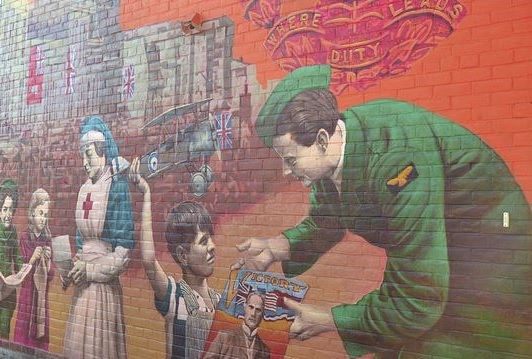
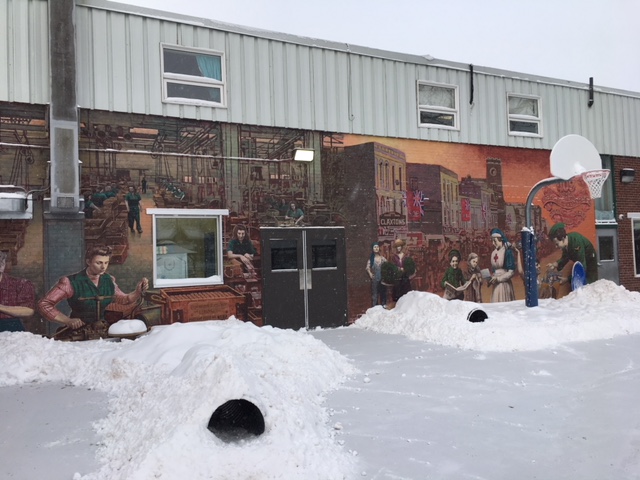
The outdoor mural was painted first and unveiled in a ceremony on November 9, 2015. Blinc Studios collaborated with the Royal Canadian Legion representatives and Ian McKechnie to develop the design. The left side of the mural is a depiction of the Dominion Arsenal factory of Lindsay. The factory workers painted are all women demonstrating their new roles because of the war. Arsenal operations were one of Lindsay’s significant contributions to the war effort and resulted in a series of tunnels under the town to protect against attacks on a single cache.
The streetscape shown on the right side of the mural is of downtown Lindsay circa 1918. Claxton’s Store is an instantly recognizable landmark for older residents and history buffs. The flags of the day are shown hanging from the buildings. In wartime, children and youth were pressed into service as well. Depicted in the mural are "farmerettes" or "soldiers of the soil" who were depended upon to work the farms and increase food production. The young girl knitting scarves to be sent overseas reinforces the rural/urban nature of Victoria, and how both contributed to the war effort. The nursing sister writing a letter home represents the many nurses who went overseas from this area to serve. The recruitment scene of a soldier and boy includes a cameo of Sir Samuel Hughes, after whom the local Royal Canadian Legion was named. The boy is enthralled in model airplane building and flying. The insignia is the 109th Victoria & Haliburton Canada Overseas Battalion from the First World War.
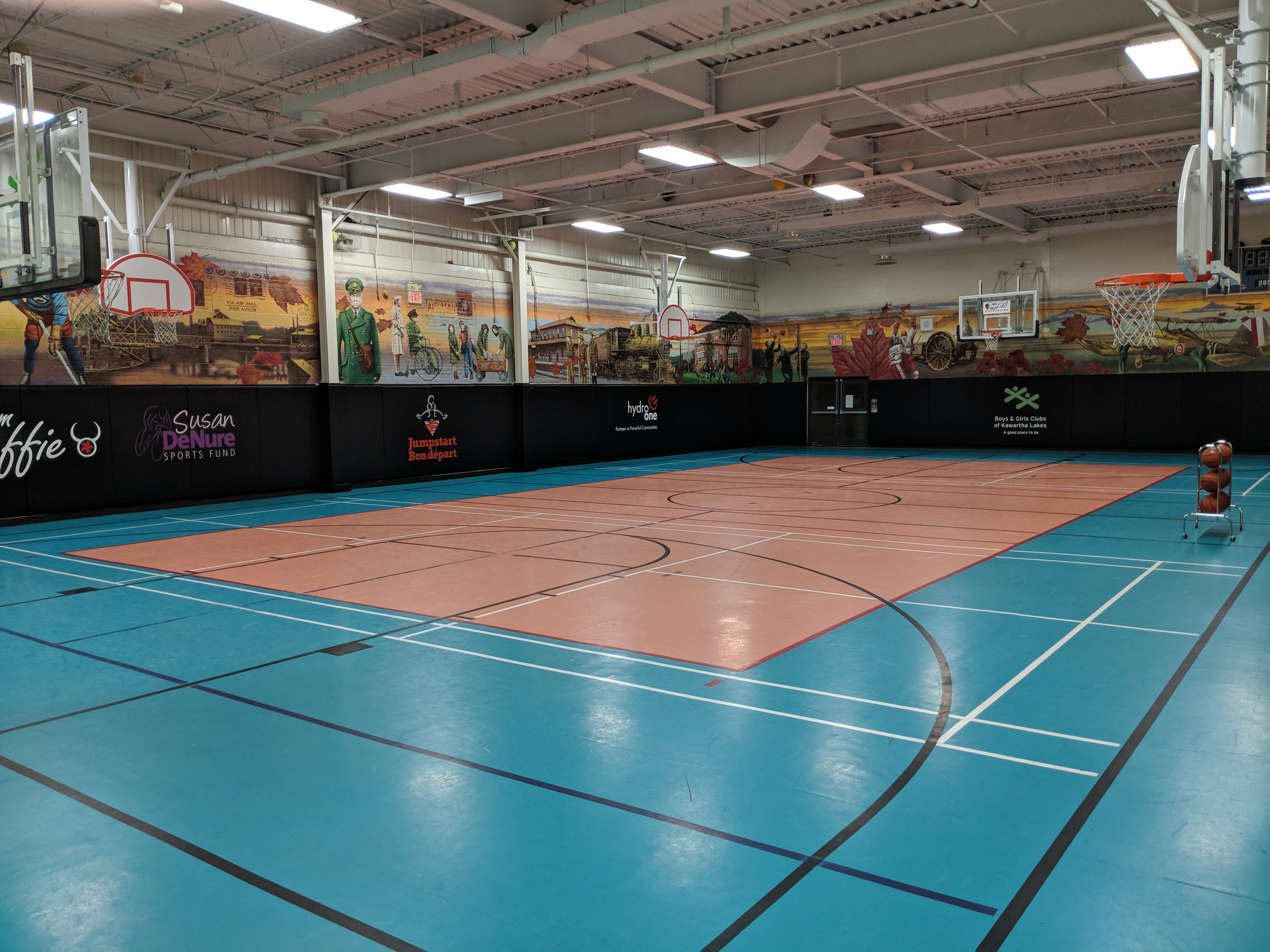
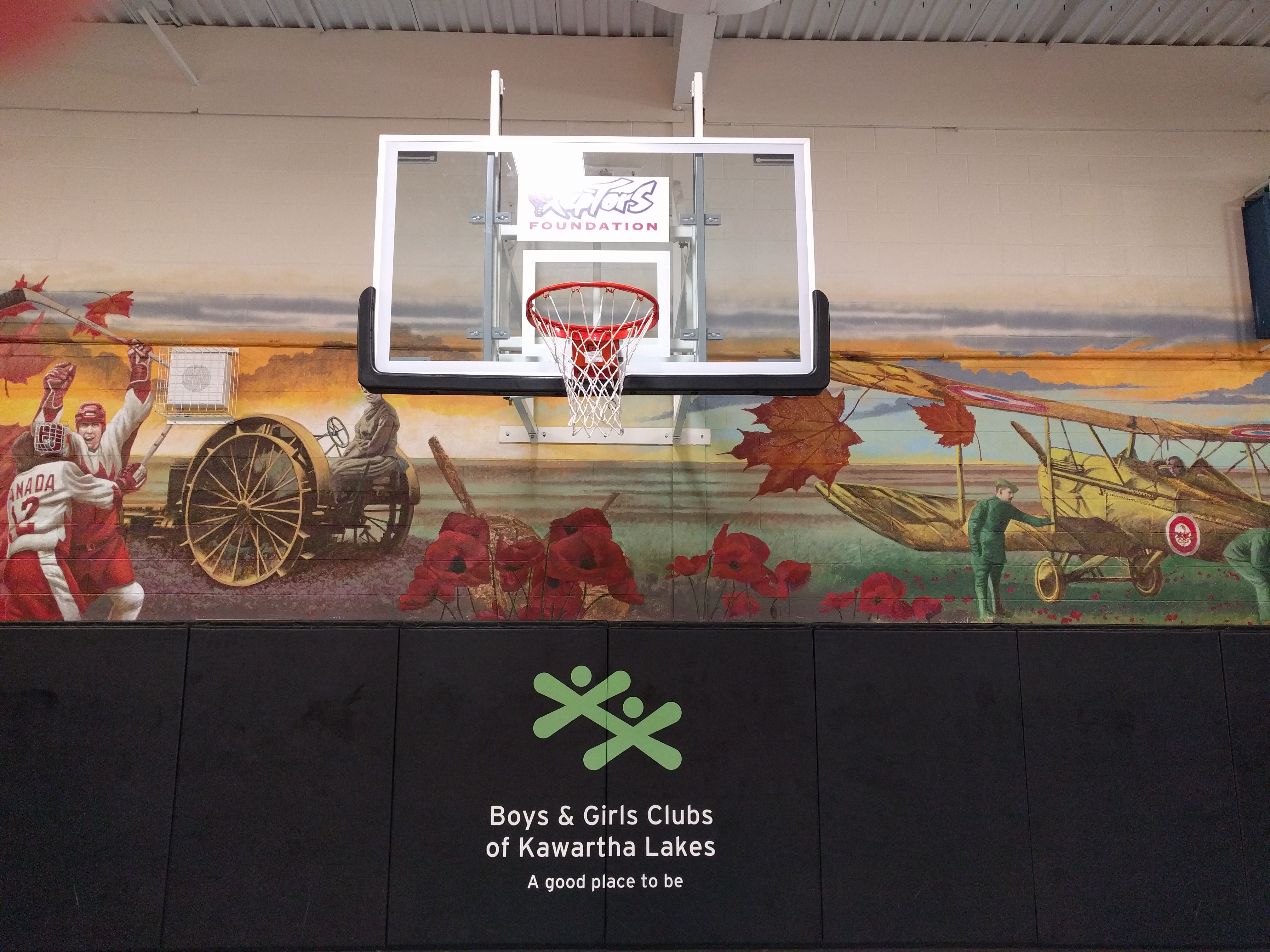
The gymnasium murals were designed and painted between November 2015 and March 2016 and unveiled on May 13, 2016. Three local high schools were involved with the team during a series of workshops to research their communities, identify themes and gather stories and photographs. The art students took part in the commencement blocking in stage of painting the murals. The murals home front theme illustrates Lindsay area during the First and Second World Wars.
West Wall: The young airplane enthusiast reappears in the north side of this mural. He is depicted looking at a First World War Sopwith Camel SE 5. The insignia on the side of the plane is the Royal Air Force 92nd Squadron. This squadron was made up of mostly Canadians and this particular plane was piloted by Lieutenant Earl Douglas Gordon who received his wings at Canadian Forces Base Borden. Continuing south, a female farmer shown on the tractor is another reference to women’s changing roles because of the wars. The iconic 72 Summit Series image is intended to show post war accomplishments made possible by Canadian wartime sacrifices. The final image on the west wall shows soldiers taking part in sporting activities to rehabilitate their injuries after being wounded.
South Wall: The west end of the South Wall mural begins with a rugby game being played at Central Senior School in wartime Lindsay. Continuing east, the Lindsay CNR Train Station is depicted where the young recruits are transported off to war and return to after their service to Canada. The station was located on Durham Street, just a stone’s throw from the Boys and Girls Club facility. There are more images of young people contributing at home to the war effort. An unsung local hero is celebrated near the middle of the mural. Chief Johnston Paudash came from a long line of warriors of the Mississauga Nation and served with valour as a sniper during the First World War. He returned to Lindsay to work in the Postal Service and was one of the great Chiefs of his community. To Chief Paudash’s right, a townscape of Lindsay is depicted looking across the Scugog River. The Lindsay Mill, built in 1869, takes center stage in this image. Another sports reference is the depiction of Royal Canadian Air Force Flyers hockey players who represented Canada on the world sports stage after surviving the war. The RCAF insignia is to the right of the two players. The most easterly image in this mural is another beautiful depiction of aircrafts as they fly a mission during the Second World War.
The effects of war are not limited to those who serve on the front lines of its battles. During the First World War, the entire community of Lindsay was involved, from the young people being recruited on the streets to the women who stepped up to work in the munitions factory or to keep the family farm functioning. Lindsay's story of war is told by the expansive and detailed mural.
The murals serve as an educational tool for Club staff to teach children and youth about historical Canadian accomplishments. Other partners in the planning and implementation of the project are the Royal Canadian Legion Sir Sam Hughes Branch 67, local historian Ian McKechnie, and Brian Lorimer, creator of Project Remembrance.