
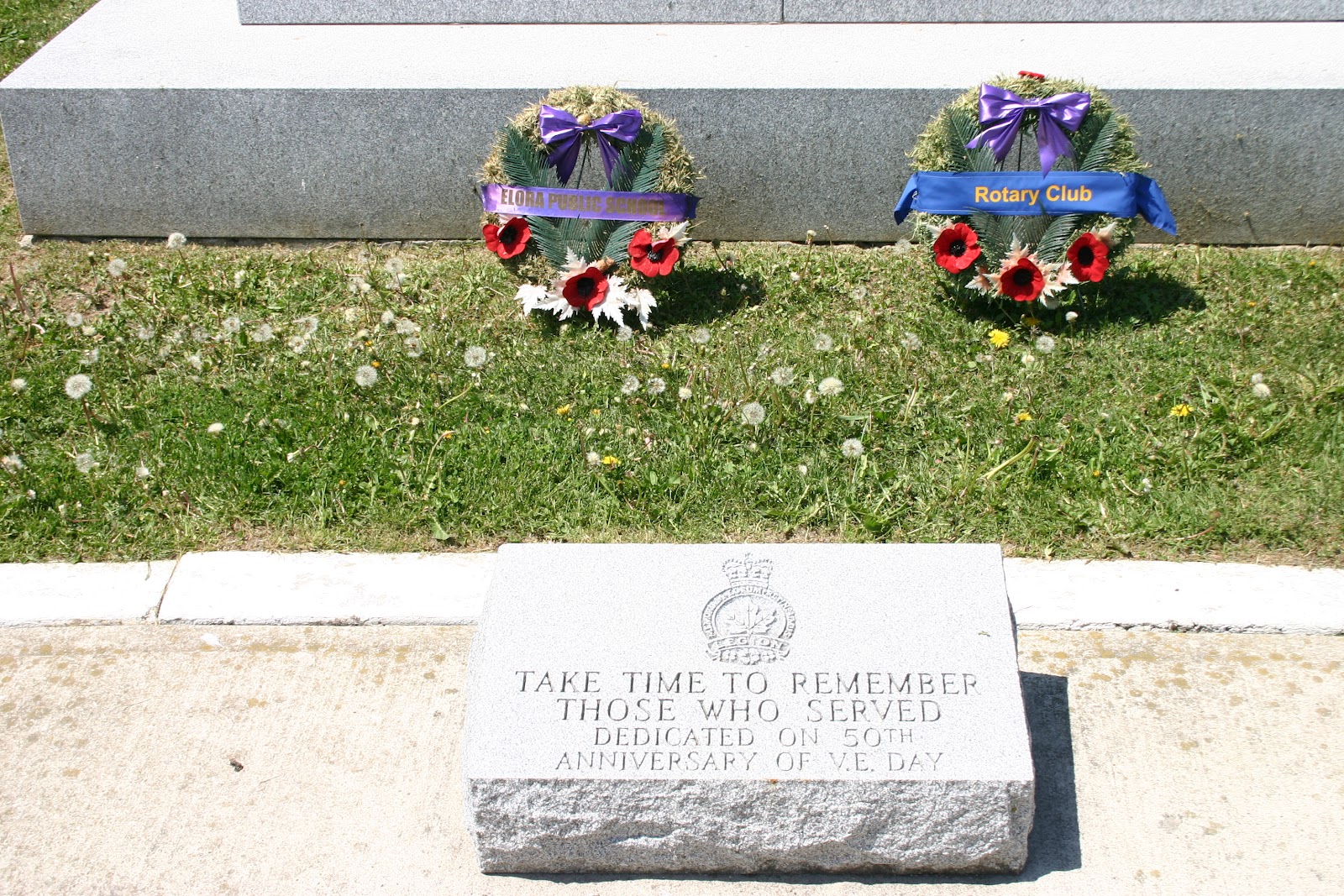
Eleven years had elapsed from the end of the war until the dedication of the war memorial. The war had affected Elora profoundly, but initially there was no consensus on how or even whether it should be commemorated. For the first few years after the war, a piece of captured German artillery served as a monument to the war.
In the fall of 1928, the Elora War Veterans Association's delegation of Jim Quinn, Gord Duncan and Fred Magnus, took the idea of a war memorial to council and asked for funding. The committee began work early in 1929 under the leadership of grocer E.C. Grimes, who had been a captain in the army. The residents were canvassed to choose a location and over 70% favoured in front of the town hall. Additional money for the cenotaph was raised through fundraisers and donations.
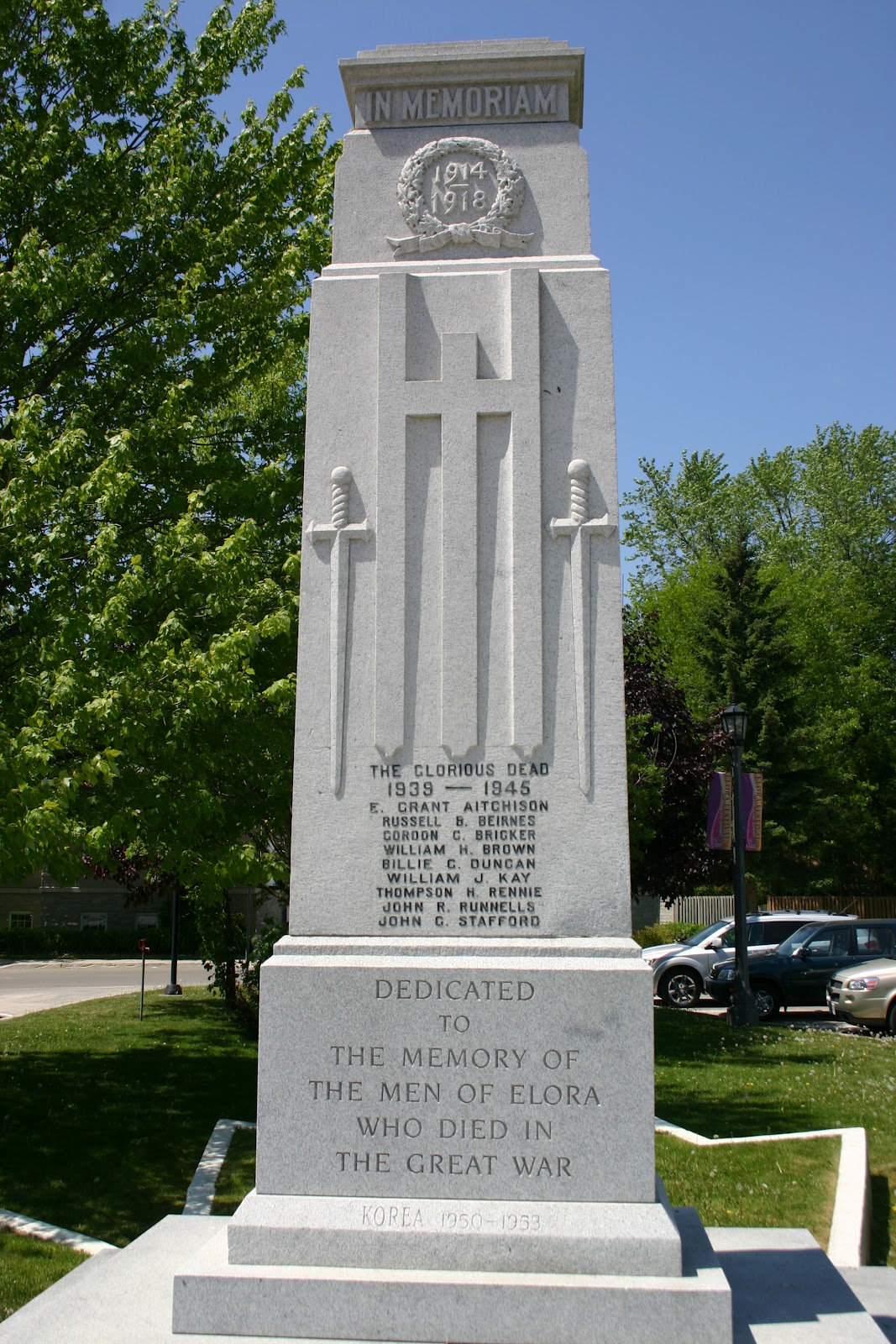
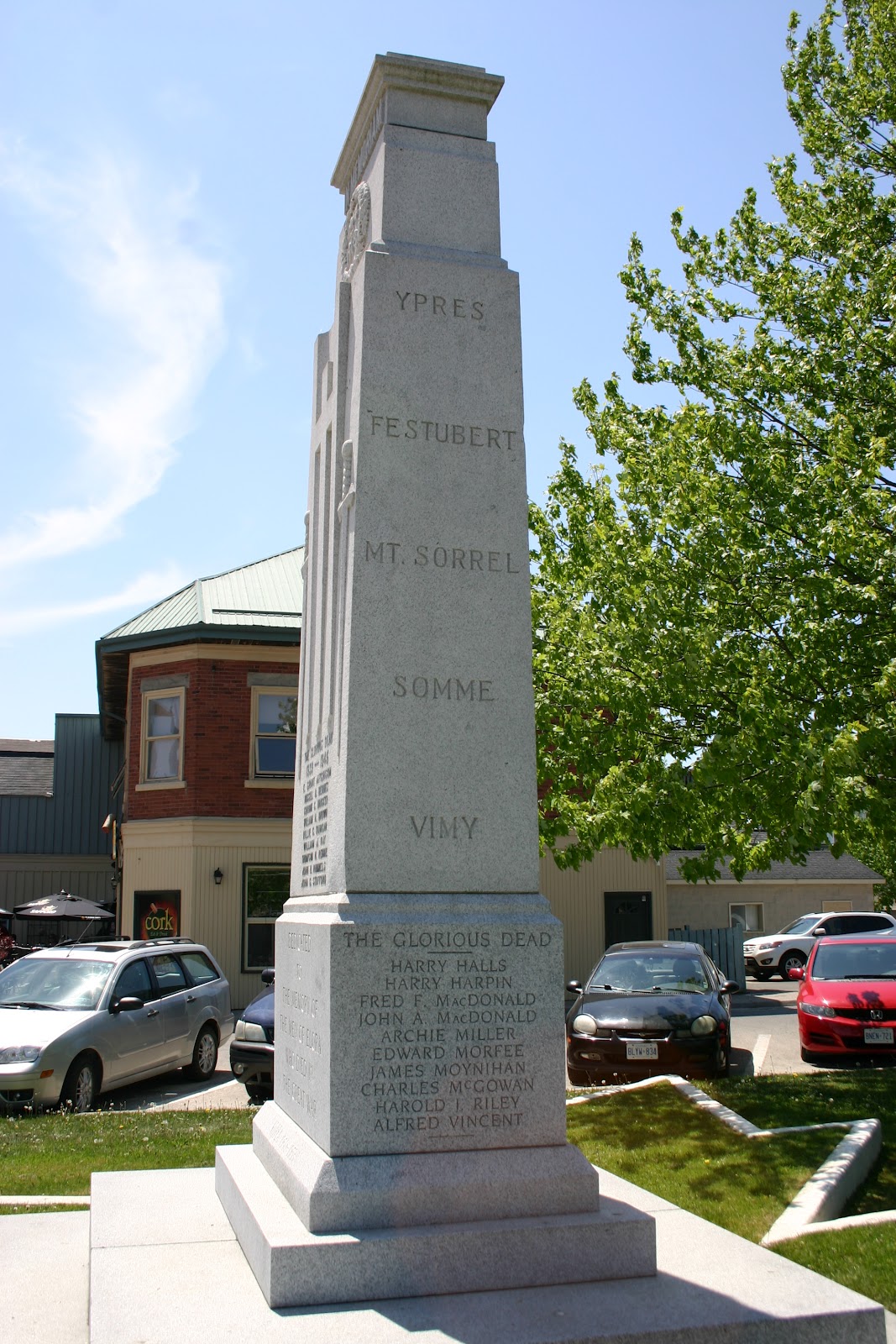
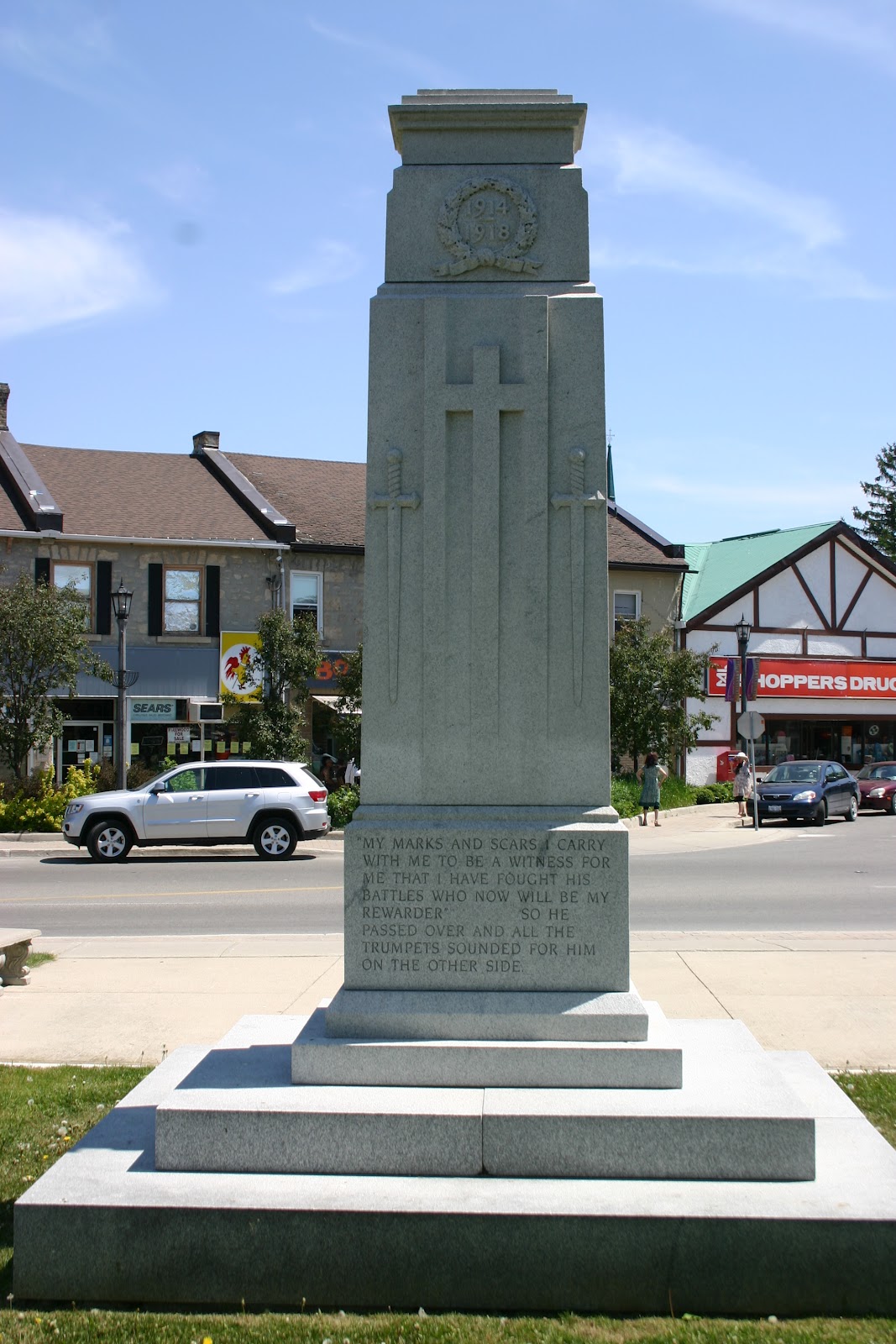
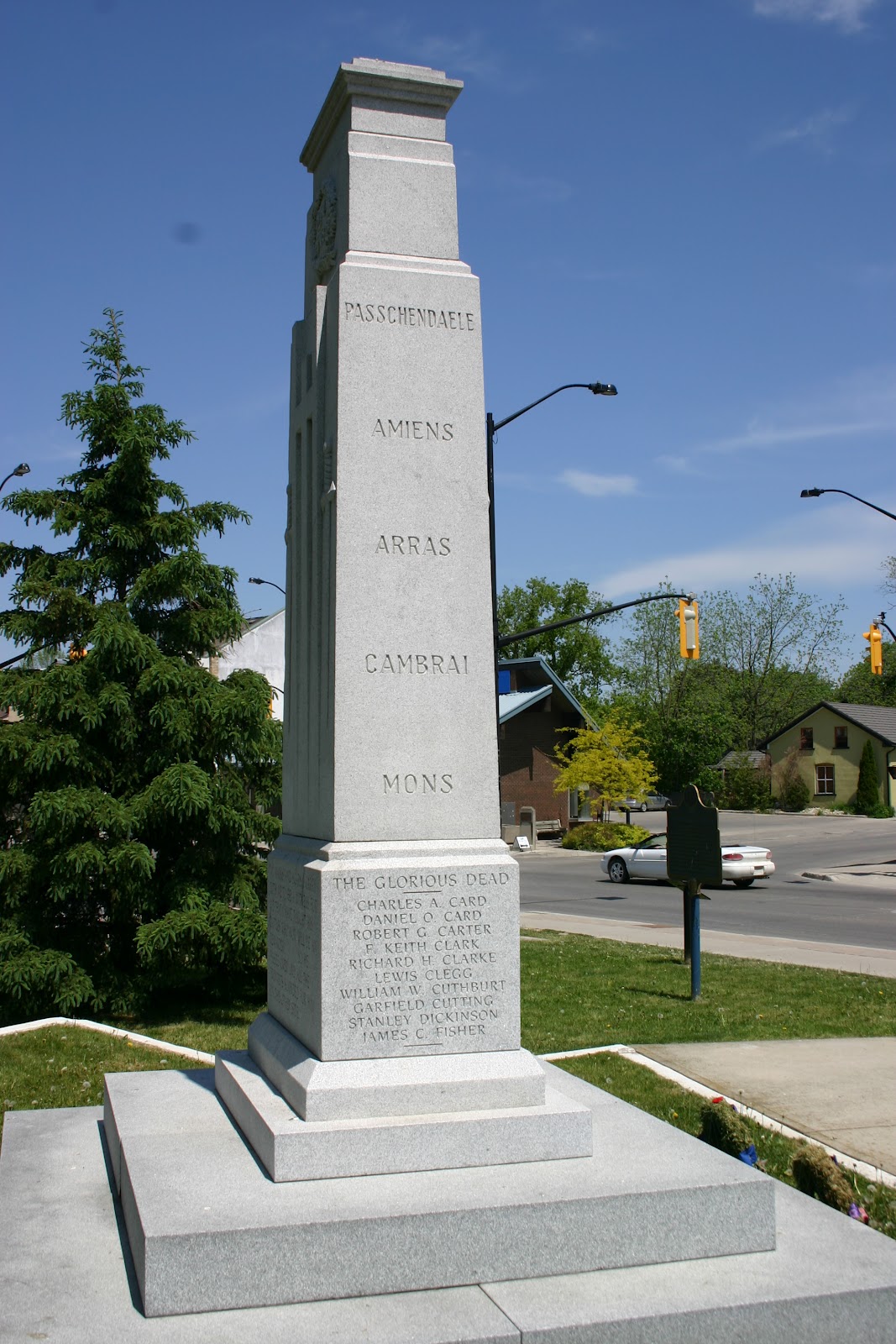
Design proposals were considered during April and May 1929, and the Hunter Granite Works proposal was chosen. Their design was the work of Captain George Hunter of Simcoe. A column 16 feet high column, on a base 9 feet by 10 feet, all made of La Casse granite from southern Quebec. After some minor changes, his plan was adopted. Hunter’s design included the names of the Elora men who died and the major battles in which they took part. The engraving included symbolic elements: two Crusaders’ swords, symbolizing the fight for a just cause; a cross, symbolizing the sacrifice of those who died; and a wreath of maple leaves, to identify the men with the Dominion of Canada.
The Town Council contributed the majority of the funds, with the remainder raised by the Rebekah Lodge through sales of poppies, and by donations that were solicited right up to the last week before the unveiling.
The Elora Cenotaph was dedicated to those who died in the Great War on November 10, 1929. A temporary platform, draped with Union Jacks, was put up in front of the town hall for the dignitaries. The front of the town hall was covered with red, white, and blue bunting. Smaller flags were strung on lines in front of the building, and the monument itself was covered with a large Union Jack. Margaret Fisher, the first mother to lose a son, unveiled the cenotaph.
Bordering the cenotaph is an outline of a maple leaf. The Second World War and Korean War inscriptions were added later.