
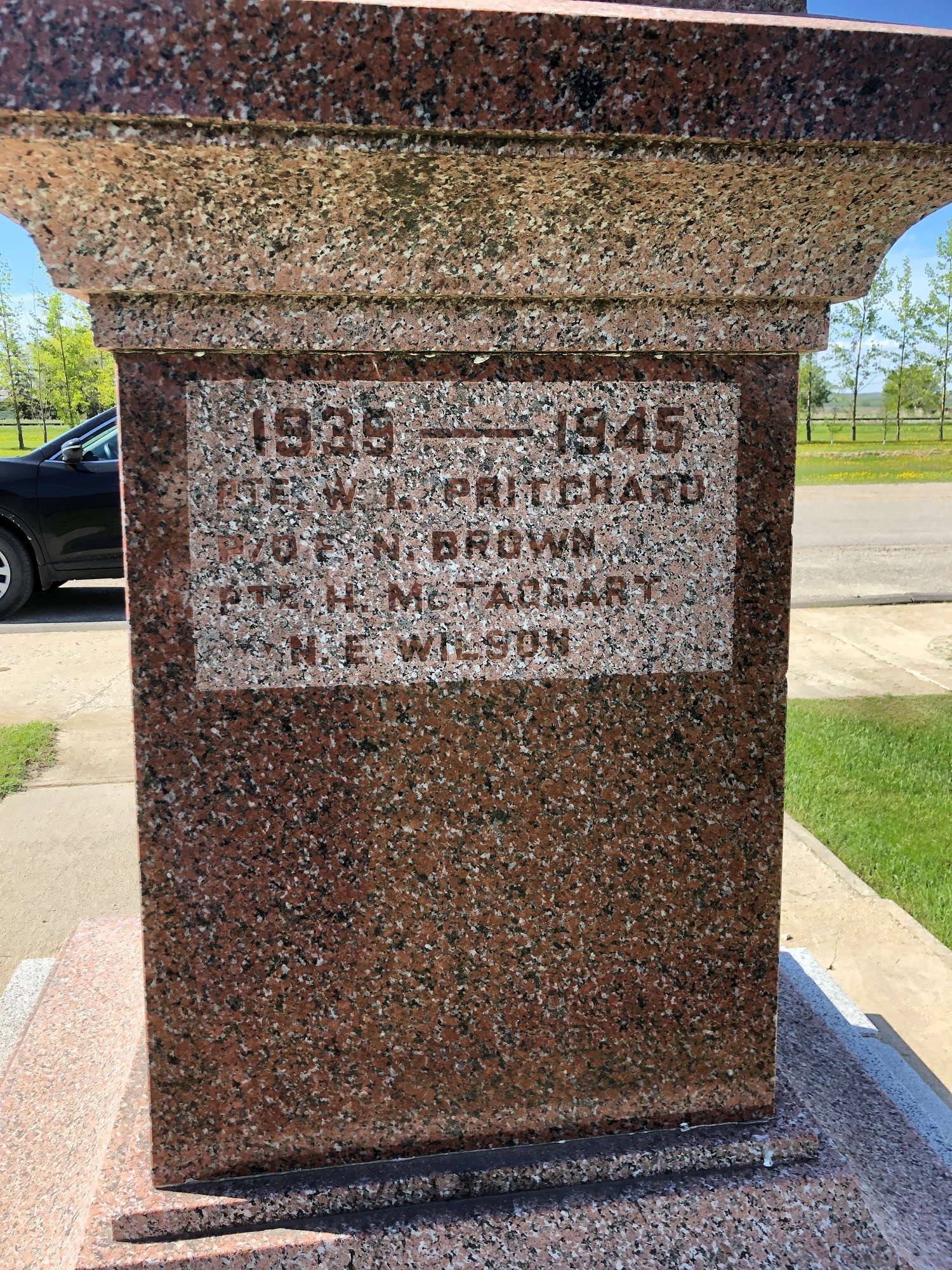
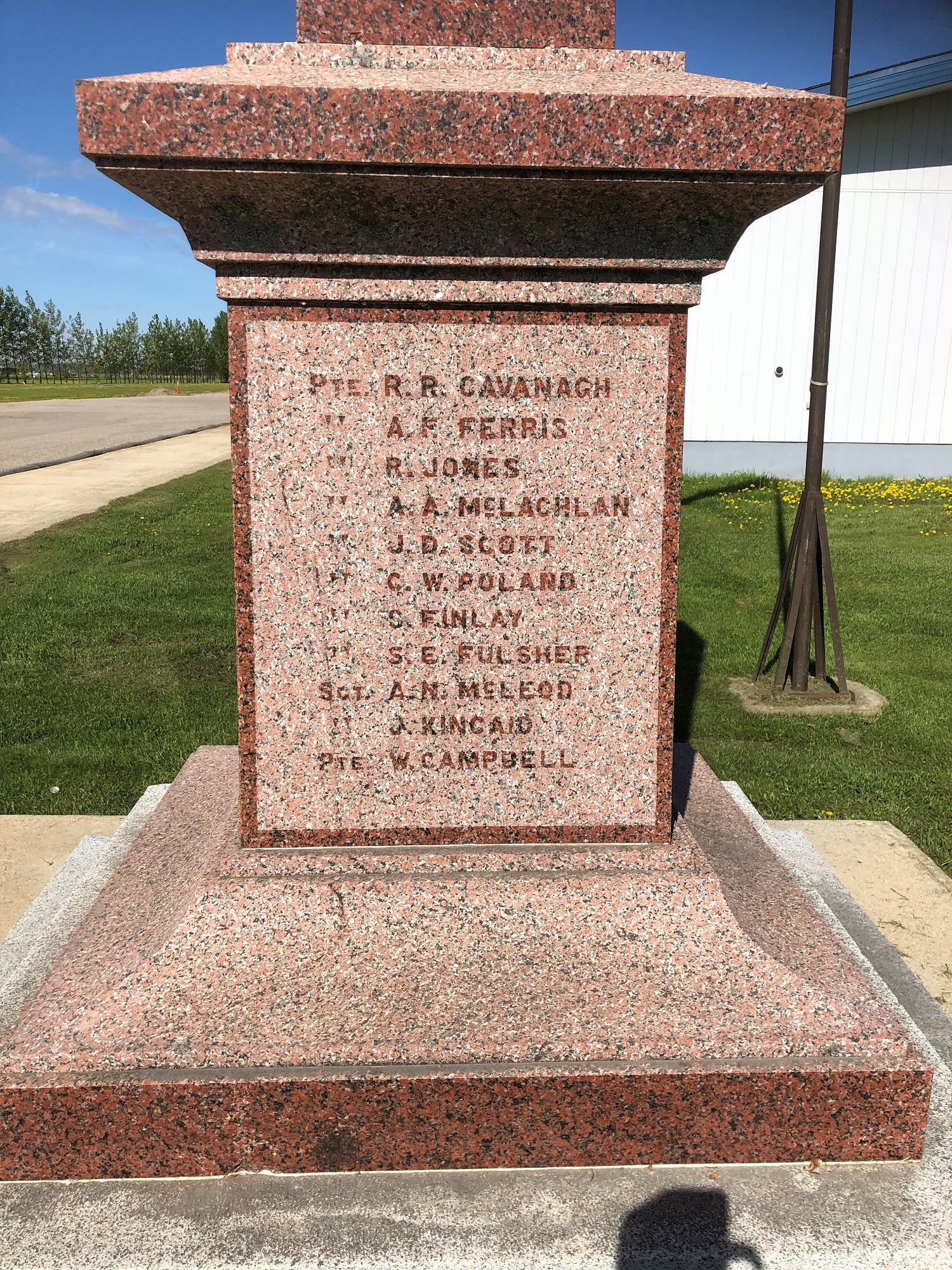
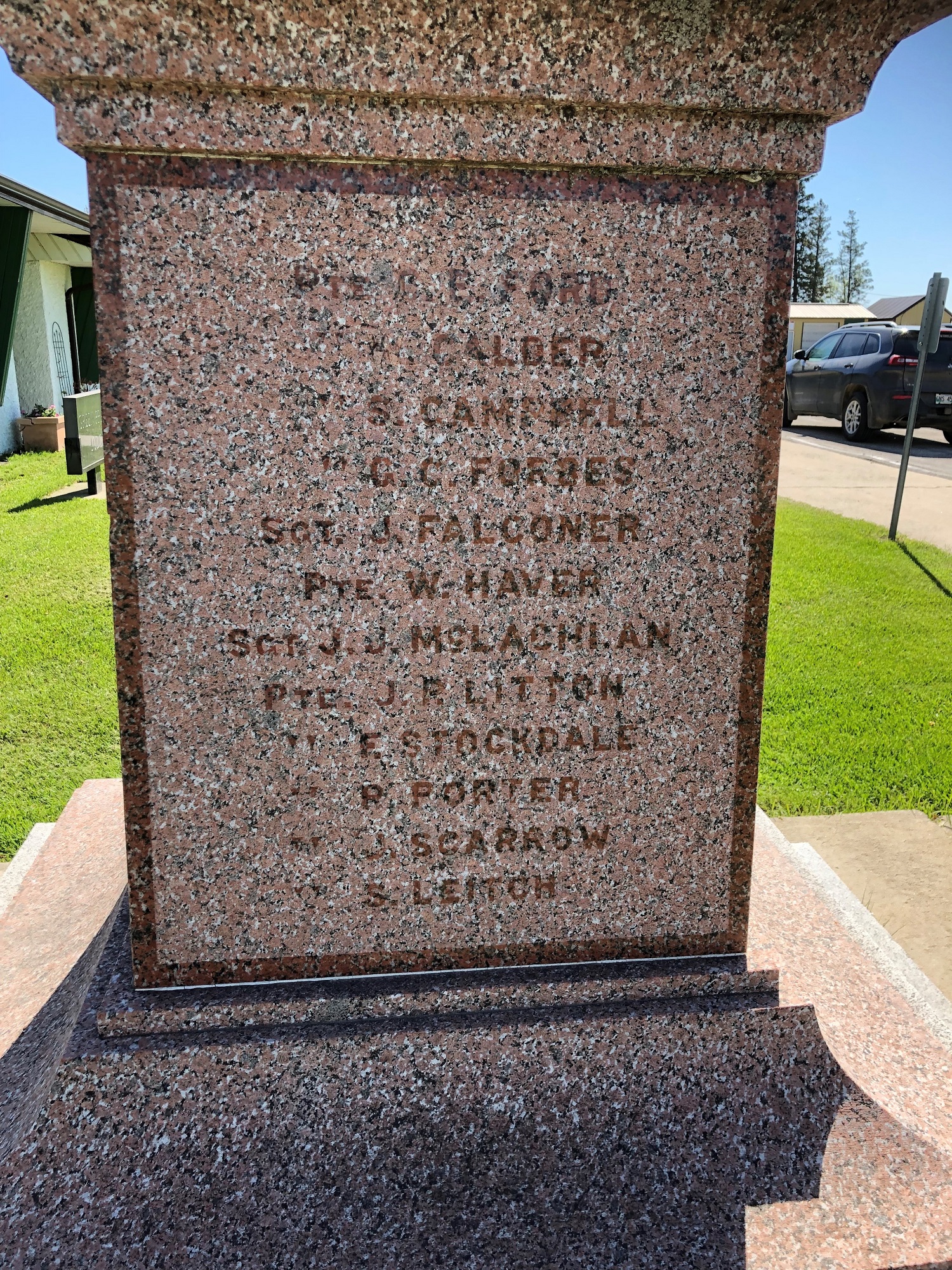
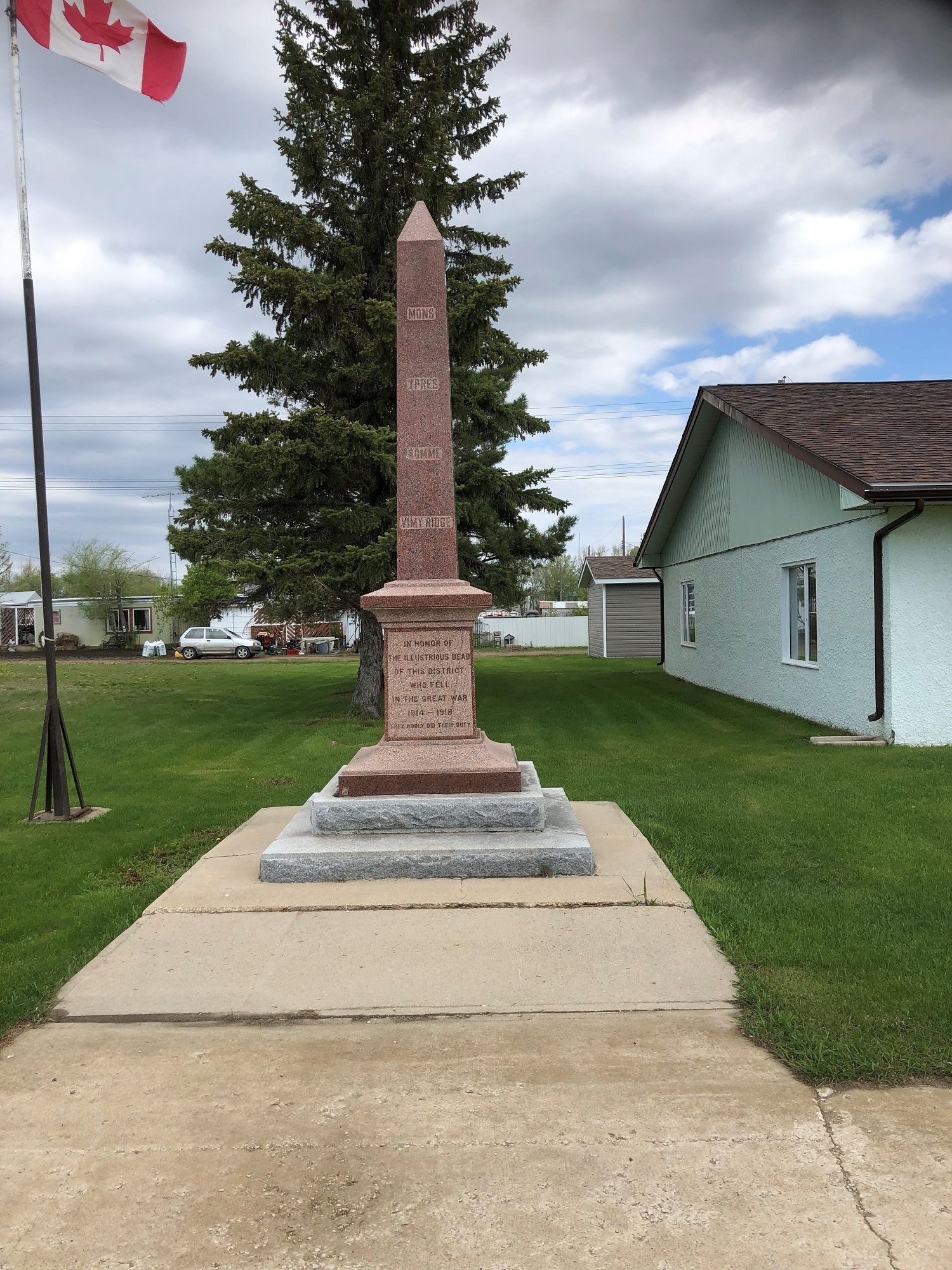
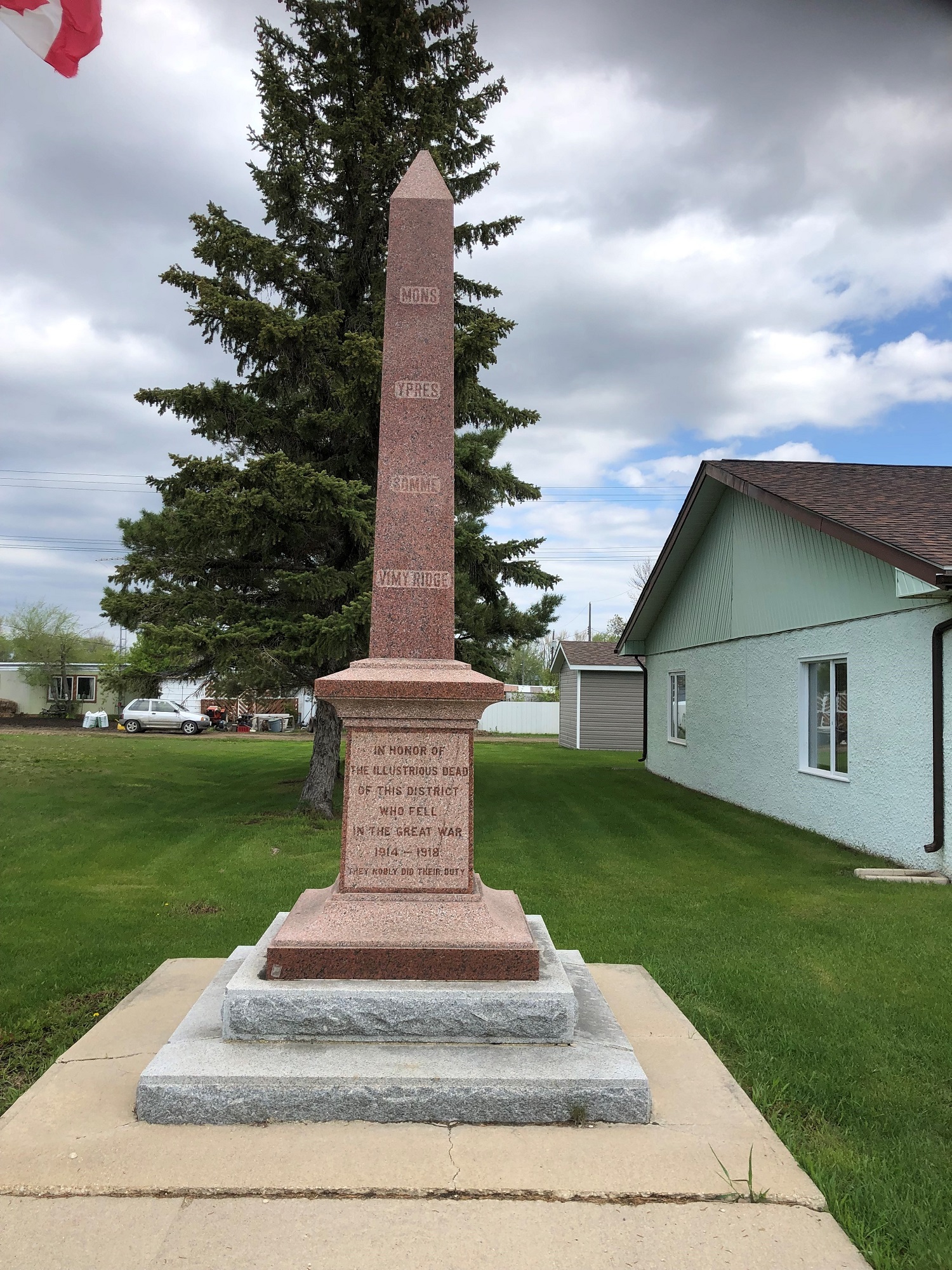
The cenotaph was unveiled on 1 October 1921 by the Lieutenant-Governor of Manitoba, Sir James Aikens. It is mounted on two rough-edged limestone steps, with the base curved to form a transition to the plinth. Originally dedicated to the local war dead of the First World War, it was expanded to incorporate a dedication to the local losses of the Second World War.
One of the first boys from Rathwell to volunteer and also the first to fall in the First World War was C. E. Ford. The girls of the district formed the Girls' Khaki Club and sent parcels overseas to all the Rathwell boys every Christmas and Easter. The club held teas, pancake suppers, and with the help of the community gathered scrap iron which was loaded in boxcars and shipped to Winnipeg to be sold. This money raised from the sale of scrap iron was used to erect the cenotaph. After the First World War was over and the boys returned from overseas, the Girls' Khaki Club had a banquet for them and presented them each with tie pins.