
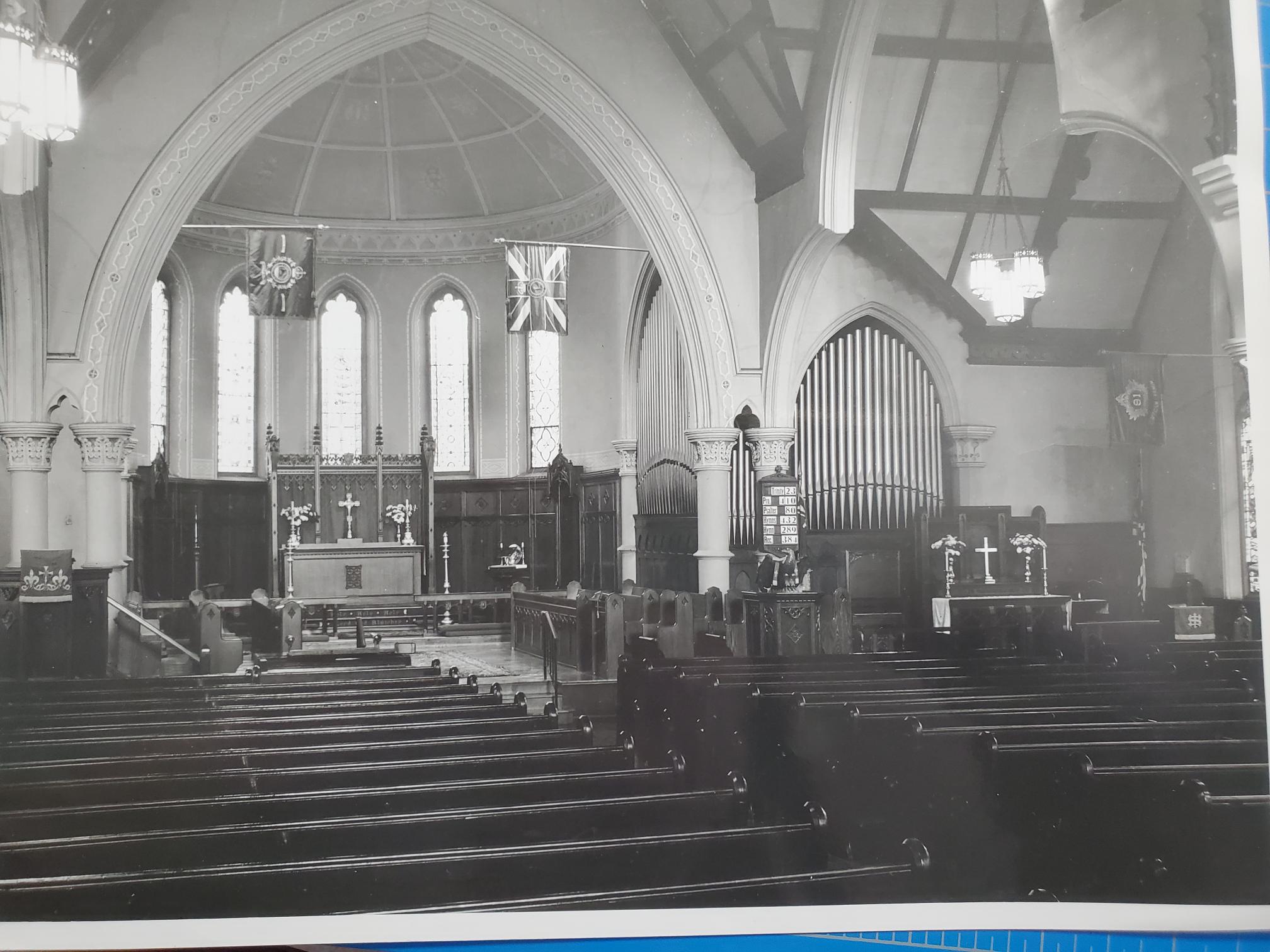
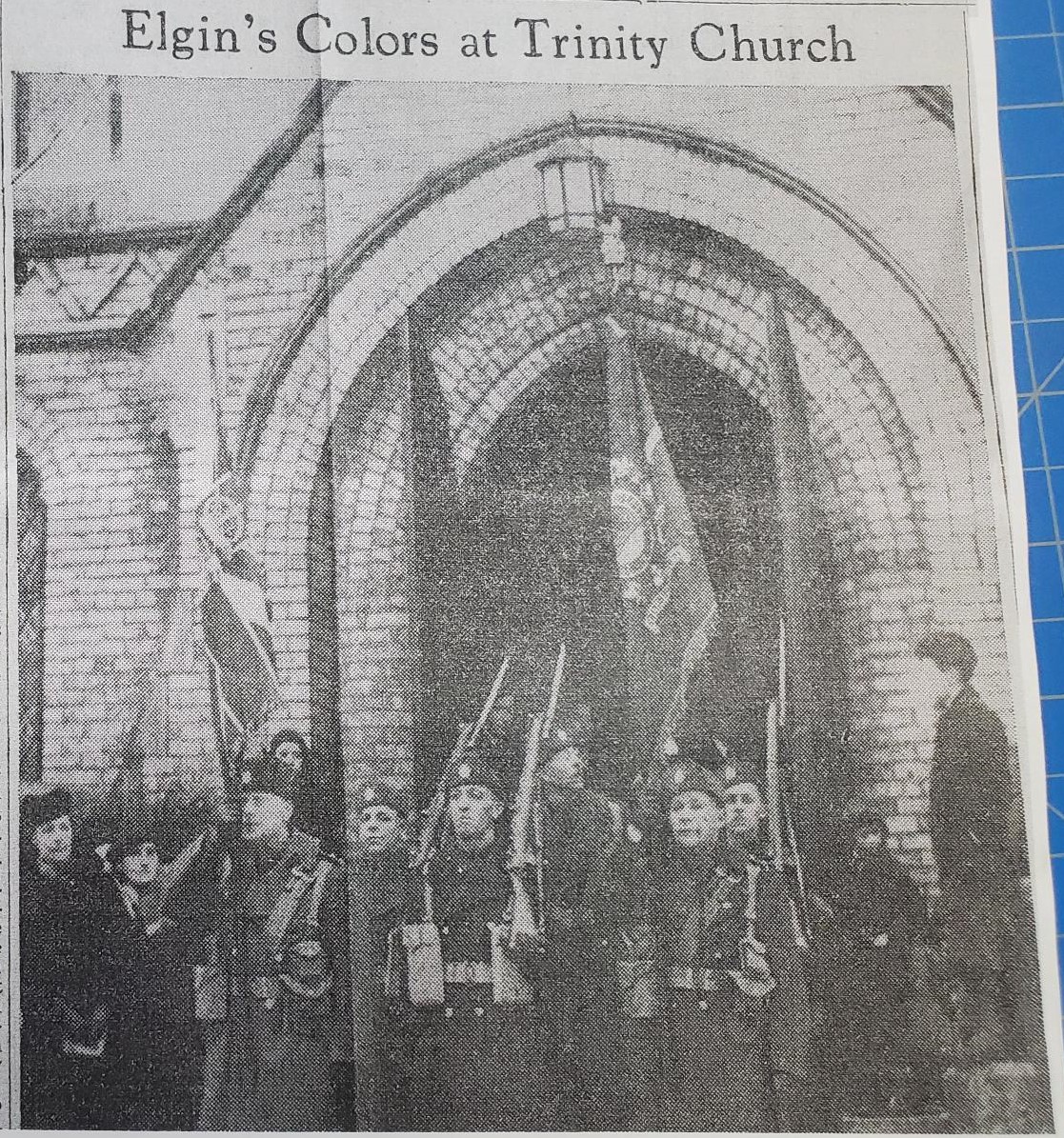
The 25th Elgin Battalion of Infantry originated in St. Thomas on 14 September 1866. During the First World War, it provided soldiers for the 91st Battalion Canadian Expeditionary Force (CEF). After the war, the regiment was renamed The Elgin Regiment and awarded the perpetuation of the 91st Battalion from the First World War. They carried the Colours of the 91st Battalion CEF from 1921 - 1935, when these were laid up in Trinity Anglican Church at Southwick Street. The Elgin Regiment were presented with their own Colours on 28 June 1936 by the Regimental Chapter of the Imperial Order Daughters of the Empire of St. Thomas. The Elgin Regiment was mobilized on 24 May 1940 for service in the Second World War and their Colours were deposited in the church on January 12, 1941.
The Elgin Regiment was converted to armour from infantry on 26 January 1942, and became the 25th Armoured Regiment (The Elgin Regiment) Canadian Armoured Corps. It was then converted and re-designated as the 25th Canadian Tank Delivery Regiment, and later 25th Armoured Delivery Regiment. After the war it became, again, The Elgin Regiment as an infantry regiment and retrieved its Colours from the church in January 1946.
It was converted again to armour as, first, The Elgin Regiment (27th Armoured Regiment) on 1 October 1954 and then The Elgin Regiment Royal Canadian Armoured Corps. Once it had become an armoured regiment, the nature of its ‘flag’ would have changed from the two Colours of an infantry regiment to the Guidon of an armoured regiment. The infantry Colours were laid up again when a Guidon appropriate to its status as an armoured regiment was presented on 22 August 1964.
Then, on 14 August 1997, the unit was converted yet again, this time to engineers as 31 Combat Engineer Regiment (The Elgin’s) on 14 August 1997. Engineer Regiments do not have Colours, and it is assumed The Elgins have retained this Guidon in their armoury. At the time of re-rolling from Armour to Engineers, the Directorate of History and Heritage gave permission for the Regiment to retain its Guidon and to carry it within the garrison, as long as no other Regiments or formations were on parade.
In earlier times, Colours played a prominent part in many battles. They served to identify units in battle, often marking the focal point of a struggle. Captured Colours were a prized trophy and attracted enemy attention and inspired much gallantry. By the late 19th and 20th Century, however, they were no longer carried in battle, but their status as the heart and soul of a Regiment continued, and the laying up of Colours signifies and helps keep holy the memories of the men who sacrificed their lives.