
Note - closed to the public since 2009.
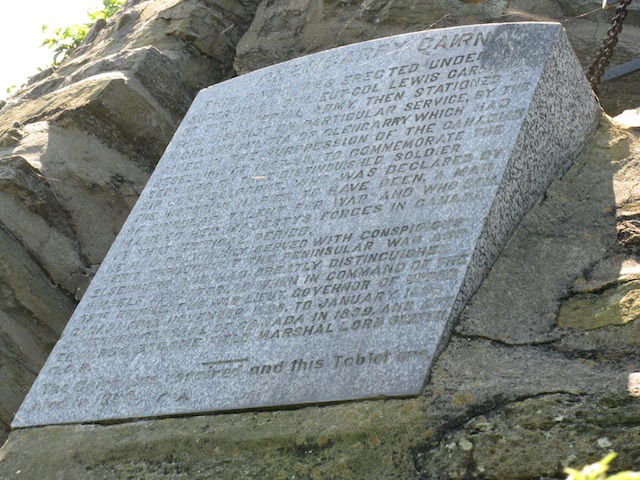
The cairn was completed in 1840 by the Glengarry Miltia and dedicated to Sir John Colborne with a "Royal Highland banquet and whisky galore."
Source: Bowering's Guide to Eastern Ontario Excerpts from The Ottawa Citizen, August 26, 2002: Battle brews over historic cairn by Kelly Egan.
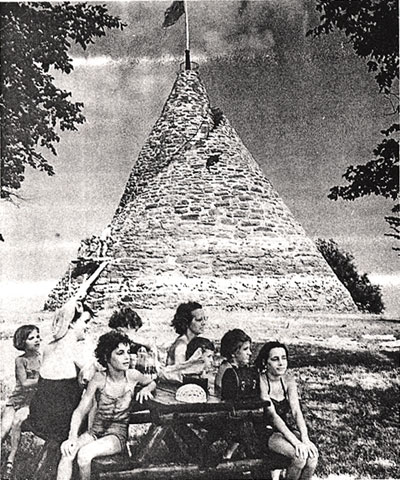
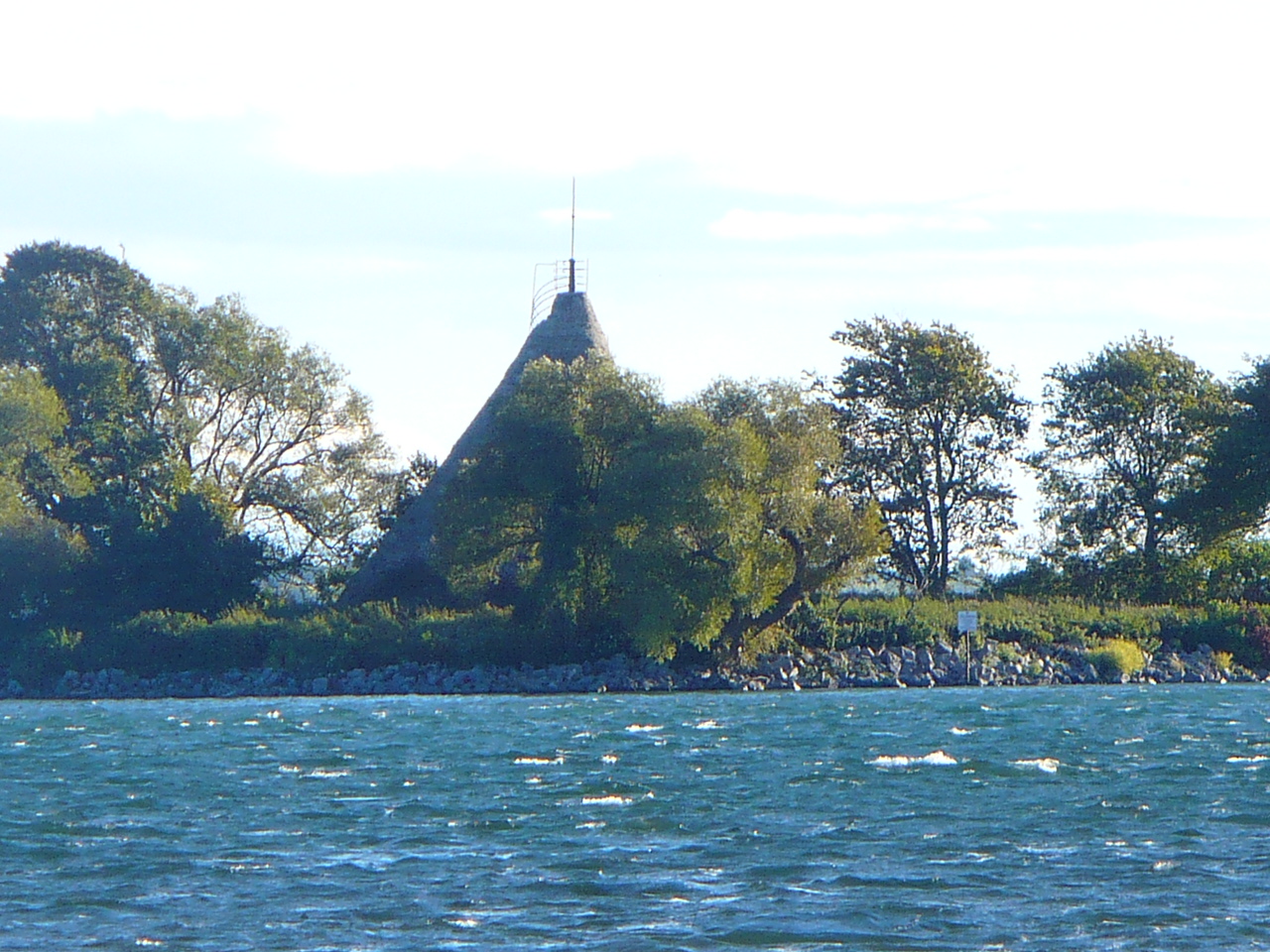
In 1997, a crew working for Parks Canada was digging around the base of the Glengarry Cairn, one of the oldest, most unusual stone monuments in Ontario. A national historic site since 1921, the cone-shaped arrangement of rock - hand stacked till it rose almost 16 metres (52 feet) - sat on an island in this broad section of the St. Lawrence River, a tribute to pioneer soldiering.
The crew made an astonishing discovery: human bones. The archaeologists dug some more, uncovering what appeared to be a burial ground, possibly as old as 2,500 years. Parks Canada notified the Mohawks of nearby Akwesasne, who owned the tiny island before it was expropriated in 1925. Talks ensued. The natives wanted the island back and the cairn, built in 1841-42, moved on the mainland.
Over time, the island and the monument, which has a crude staircase winding to the top, became a regular stopping ground for boaters. Picnic tables were set up, as was a dock, a barbecue area and an out-house. Periodically, major repairs were undertaken to stop the cairn from crumbling. (Today, a major crack has developed.)
The federal agency, meanwhile, would like to establish a mainland location where the cairn can be properly viewed on the island and where road traffic could stop and learn about the unusual memorial and its long history. The cairn is such a historical pillar in the area that it is part of the new coat of arms for the Township of South Glengarry, formed in 1998 as part of a county-wide municipal amalgamation.