
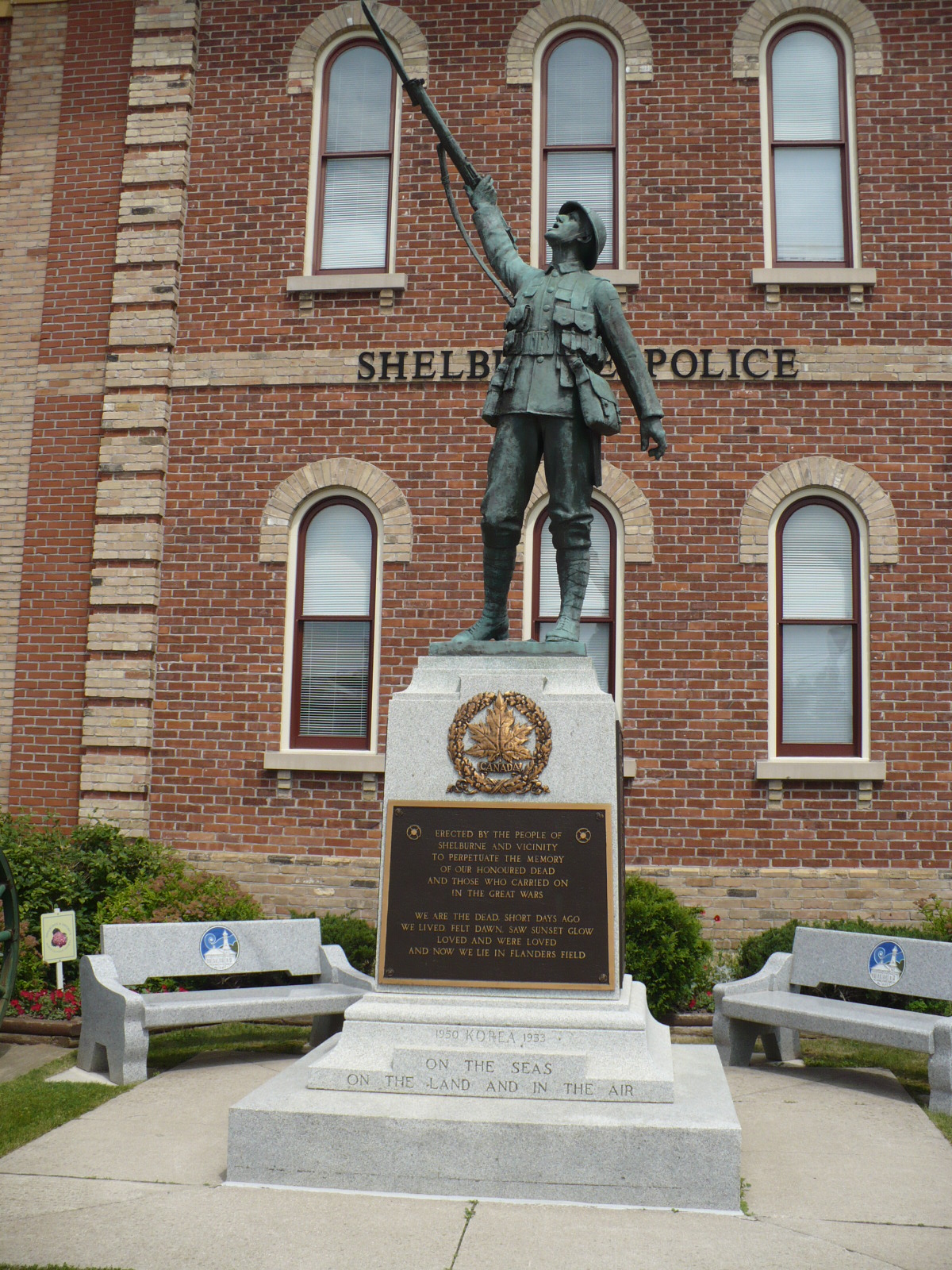
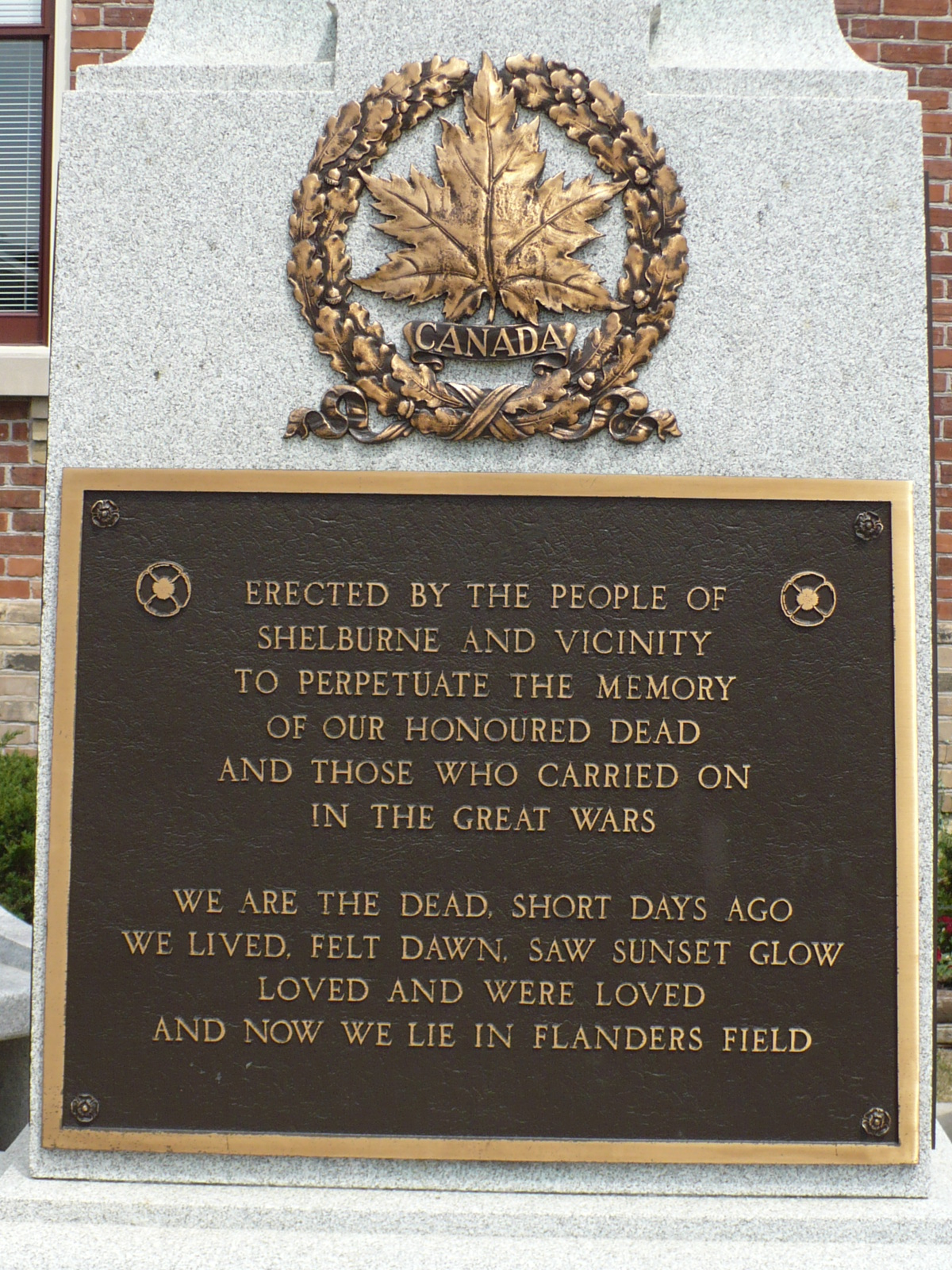
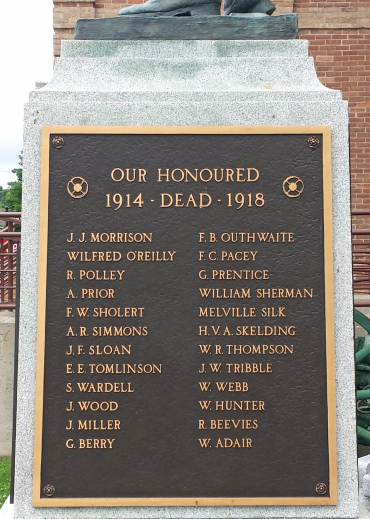
Early in 1919, proposals were made by the Great War Veterans Association and the Royal Canadian Legion to raise a memorial to those from the area who did not return from the First World War. Two and a half years later these discussions drew the attention of municipal officials and the Council of the County of Dufferin and money was raised for three urban communities within the county. Shelburne was one of three communities that received $3,300 for a memorial.
In April 1921, a committee was appointed to pick a site and work on plans for the cenotaph. Near the end of July 1922 an order was placed with the John Fleck Monument Company of Shelburne for a cenotaph, but an agreement for the site was not reached until August 15.
The town property from the back of the Town Hall to the lane at the south was finally settled on for the cenotaph. The old weigh scales and band building were moved to the east side of William Street in preparation for the cenotaph. In the middle of October, 13 horse and workmen teams levelled and prepared the memorial grounds. Stonemasons built a low retaining stone wall along the south side.
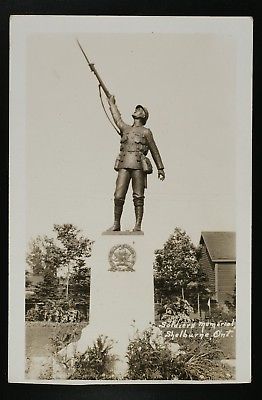
In early May a stone fountain was installed. On May 17 the cenotaph arrived, concrete walks were laid and the iron fence and bandstand were completed. The cenotaph features a statue of a First World War soldier celebrating victory atop a white marble base.
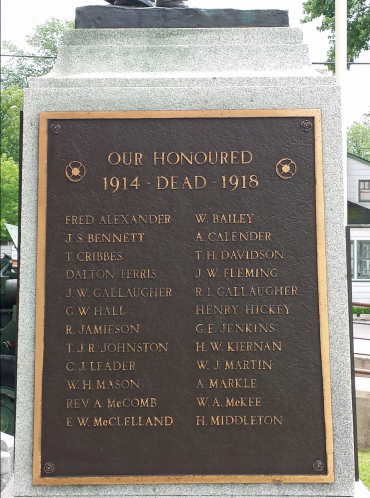
The official opening and dedication ceremony took place on June 4, 1923. Mrs. E. J. McComb of Melancthon, mother of the late Rev. T. Allan McComb, who gave his life overseas, pulled the rope for unveiling the cenotaph.
The captured German War Field Gun, at the northwest corner of the grounds is one of three guns received by Dufferin County from Ottawa. The fountain fell apart and was removed in the late 1950s.