
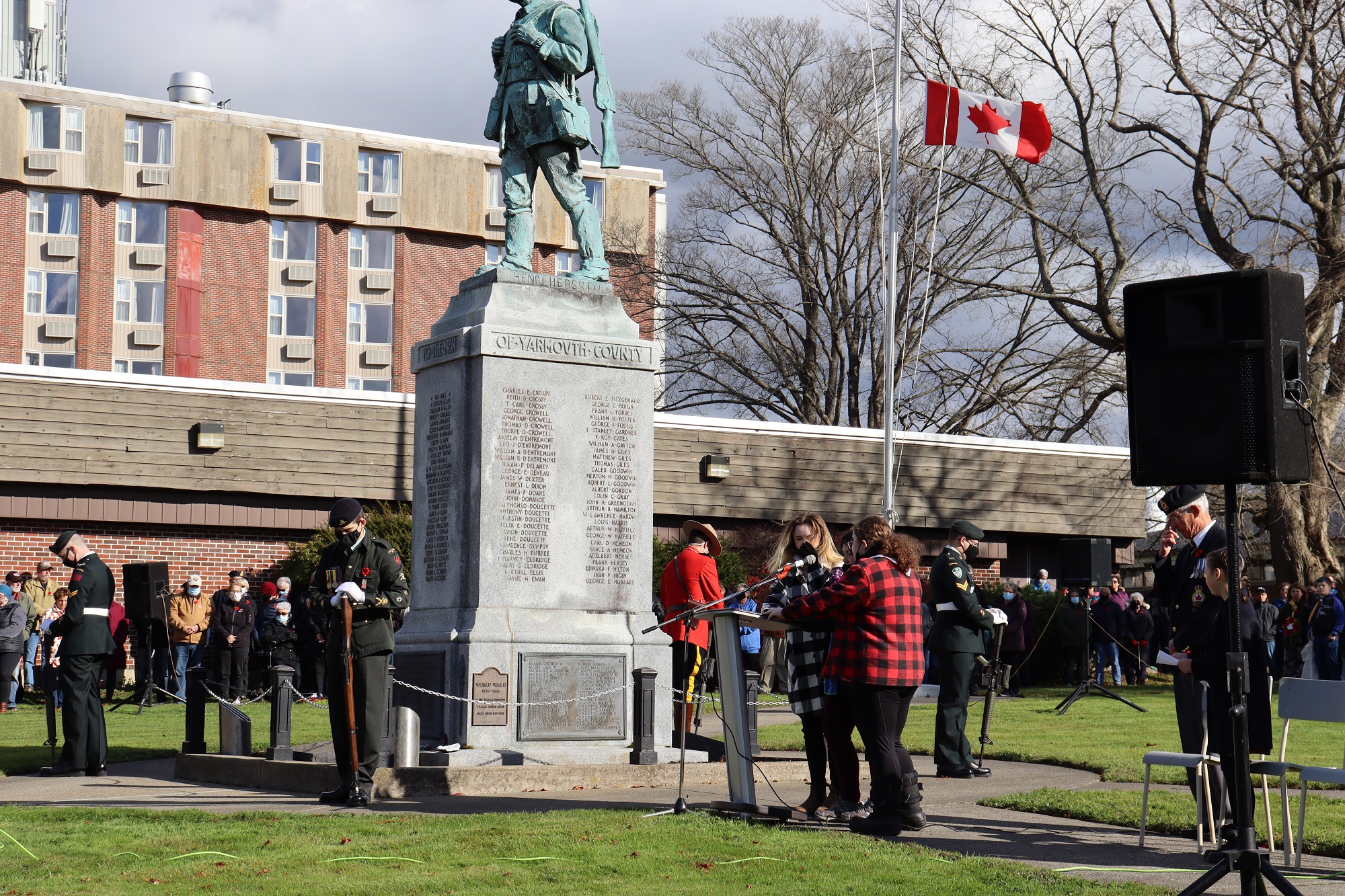


In November 1920, a banner headline in the Yarmouth Telegram read: "Local Council of Women Urge War Memorial", bringing the idea to construct a war memorial to the attention of everyone. A decision was made by the Town Council and a committee was appointed to proceed with the planning of a worthy memorial. In January, the tasks of collecting the money for the construction and collecting the list of names to be inscribed on the monument began.
The statue of a soldier was designed by Henri Hébert of Montreal. It is seven feet tall, cast in bronze and weighs 680 kilograms. The soldier wears a leather vest and leg wrappings over his puttees; his rifle is covered with a canvas to keep it dry. He is war-weary, caked in mud and has a cigarette stub between his lips. Hébert is the only artist to represent that cigarettes were common in a soldier's life.
The base section was designed and fabricated by Noble & Hyde of Montreal, an architectural firm that designed many monuments already erected in Canada. The granite was supplied by the Standard Granite quarries. The cost for the entire monument was $16,500, all of which was raised by volunteers canvassing for donations. At the time of the unveiling a sum of $10,272 had been collected, the remainder of the amount was collected after.
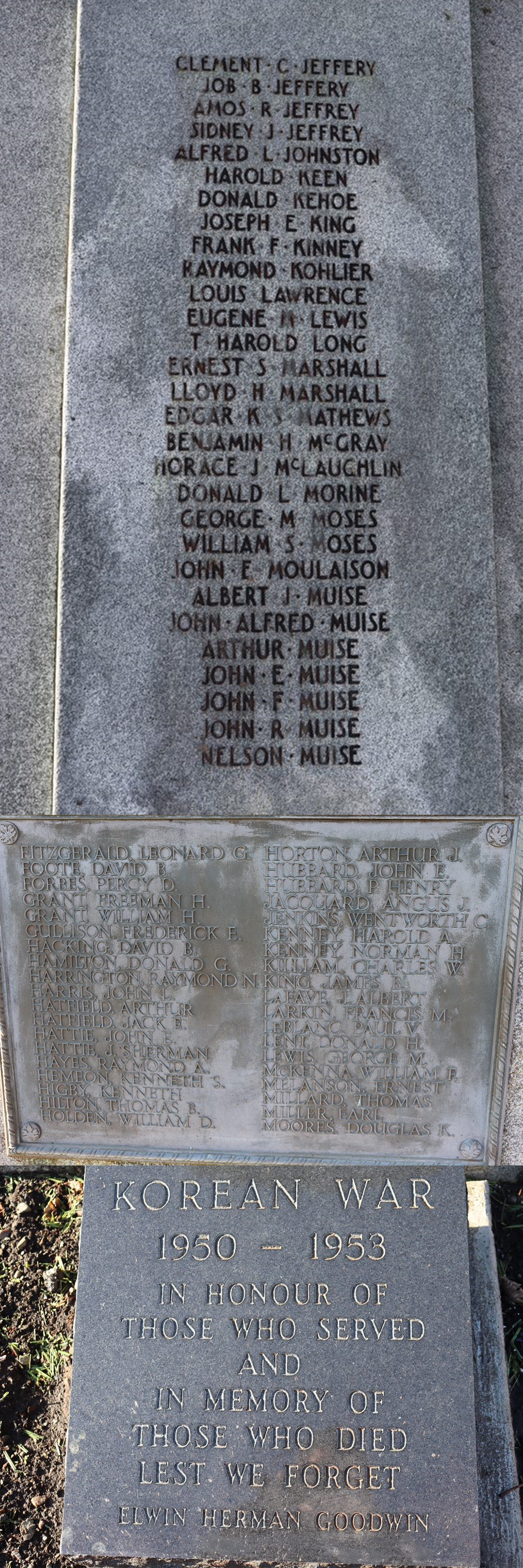
The monument was unveiled on June 9, 1923, by the sister of Malcolm Cann. Malcolm Cann along with three others, were the first Canadians to be killed in the line of duty in the First World War. At the time of the unveiling, there were 173 names to be put on the monument. A record was made of every man in Yarmouth County who fell, which included the date and place he was born, where he enlisted, where he died and the brigade in which he was serving at the time of his death. A copy of this record was kept in a vault at the Court House.
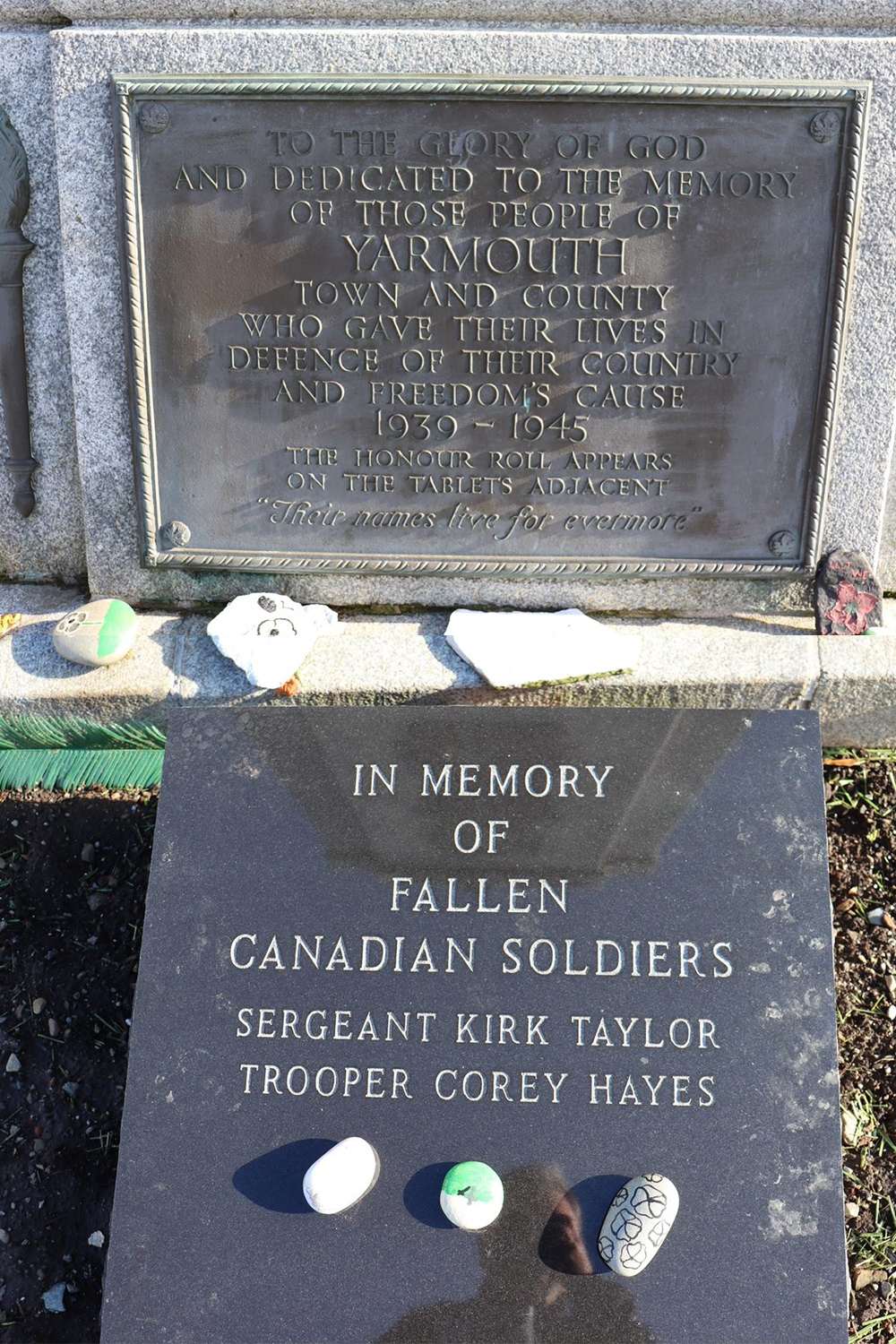
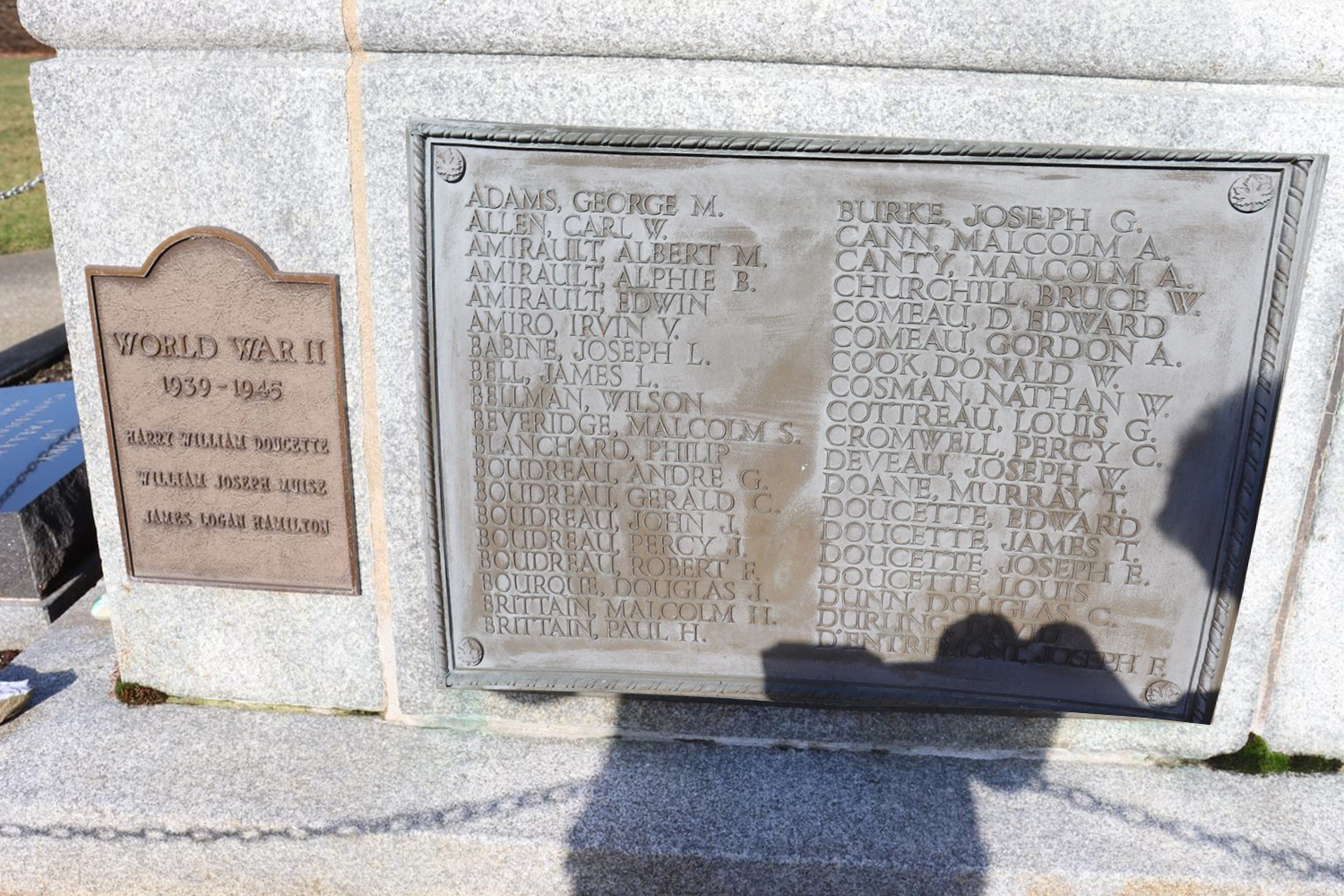
Following the end of the Second World War, bronze plaques with the names of those who had lost their lives were added around the base of the monument. After the Korean War, a separate granite marker was placed next to the base to commemorate those lost in that war.