
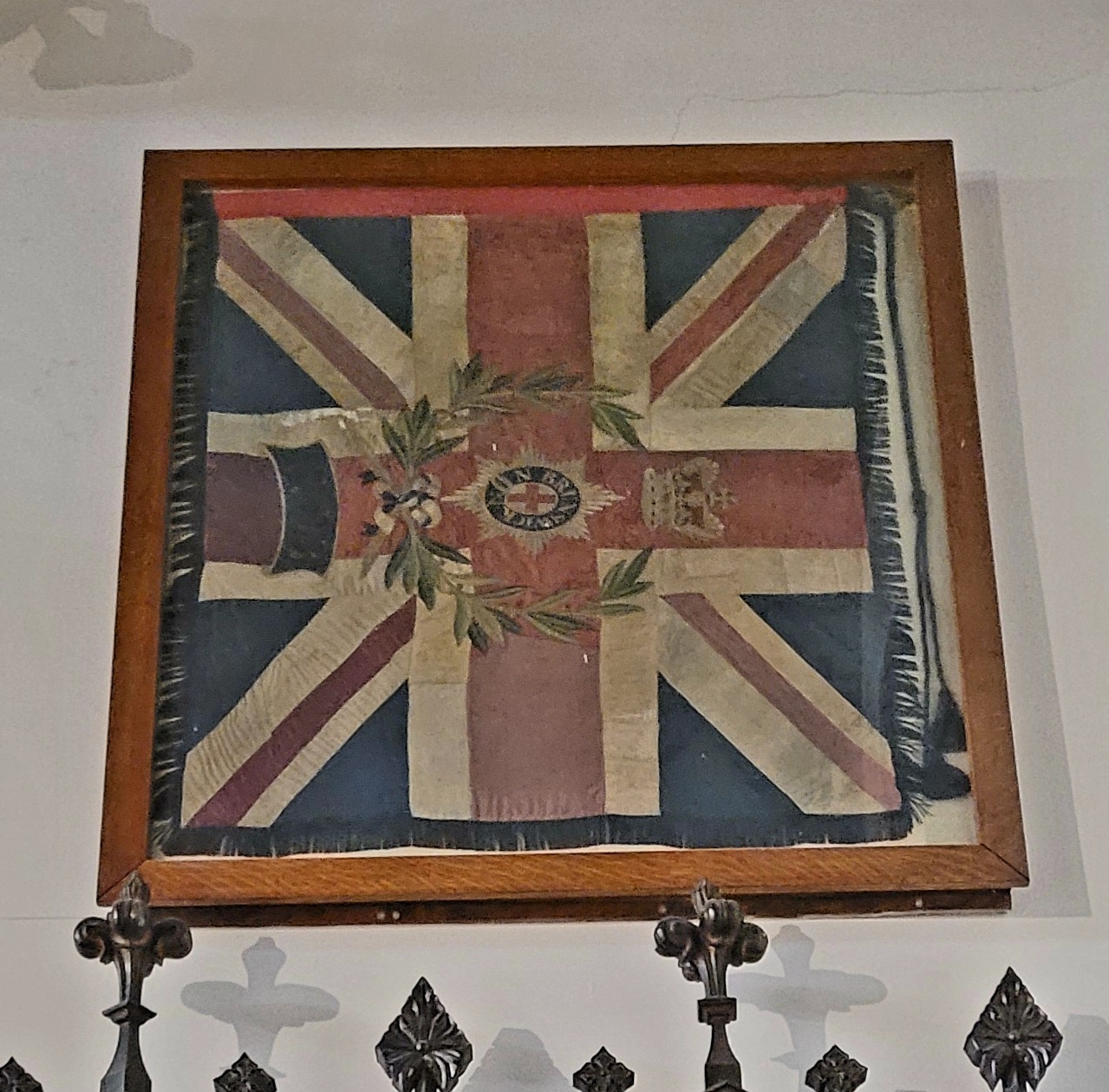
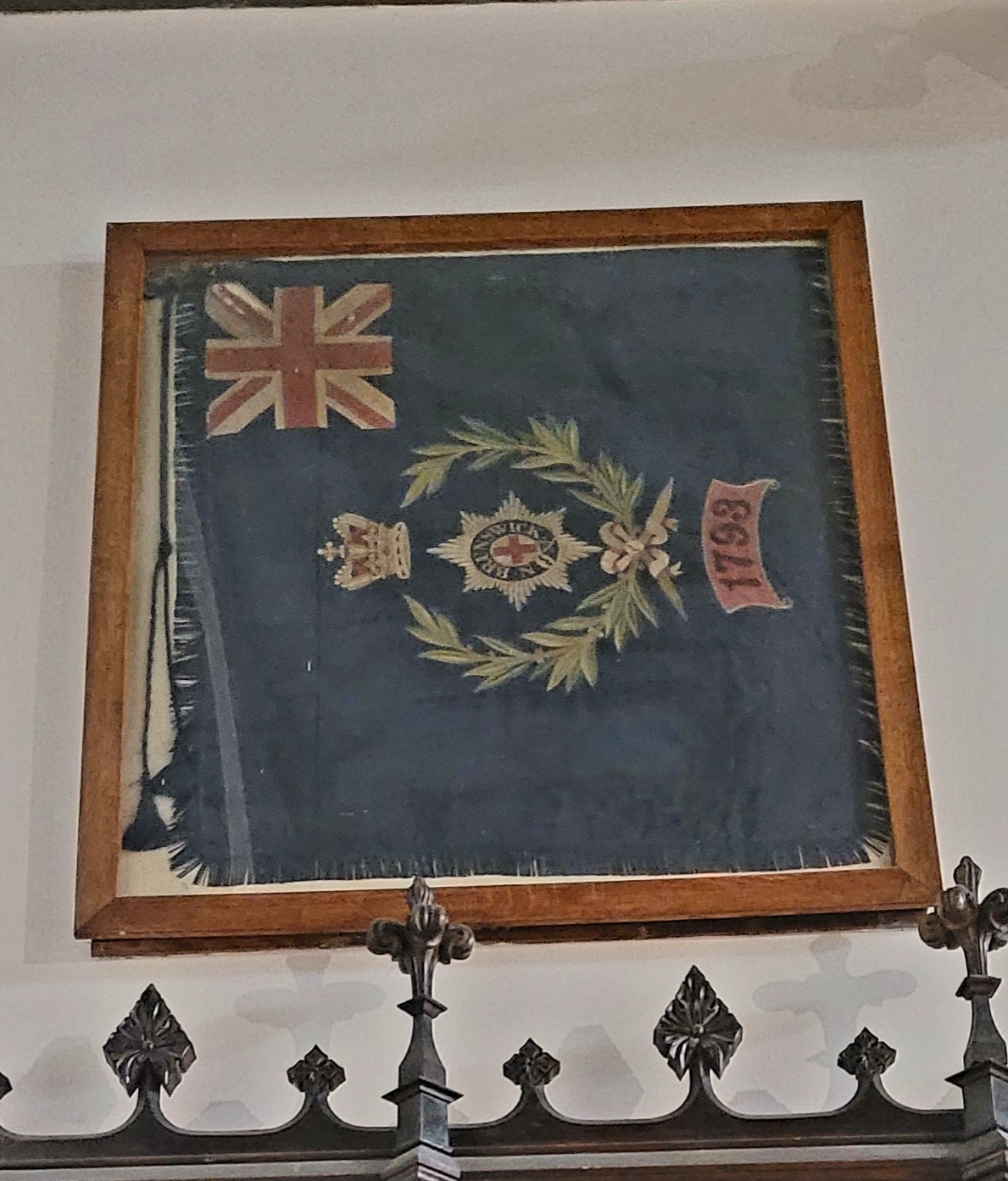
The 3rd Field Artillery Regiment Colours hang behind the altar of St. John’s (Stone) Church. Their Colours were emblazoned with “1793", the year the New Brunswick Militia unit was organized. The Napoleonic Wars were raging and in 1793 a ten-gun French privateer was reported cruising the Bay of Fundy. In defence, the Saint John Militia formed this unit as coastal artillery. Normally an artillery regiment's Colours are considered their guns. These Colours are an anomaly, as artillery regiments do not normally have Colours. They were laid up in the church in 1925 and, maintaining artillery tradition, were never replaced. The Colours presented in 1861 were not presented on behalf of the Sovereign, which is the current principle, but by the Ladies of Saint John.
The 3rd Field Artillery Regiment, Royal Canadian Artillery originated in Saint John, New Brunswick on 28 May 1869, when the New Brunswick Brigade of Garrison Artillery was authorized to be formed. “Heritage”, allows the current 3rd Field Artillery Regiment to celebrate the existence of an artillery unit in Saint John since 1793. If firm documentary evidence were found establishing an unbroken record of service by the unit, the lineage could be pushed back. The 3rd Field Artillery Regiment Colours were presented on 18 December 1861 – when the unit was part of the New Brunswick Militia, not the Canadian Militia.
In earlier times, Colours played a prominent part in many battles. They served to identify units in battle, often marking the focal point of a struggle. Captured Colours were a prized trophy and attracted enemy attention and inspired much gallantry. By the late 19th and 20th Century, however, they were no longer carried in battle, but their status as the heart and soul of a Regiment continued, and the laying up of Colours signifies and helps keep holy the memories of the men who sacrificed their lives.