
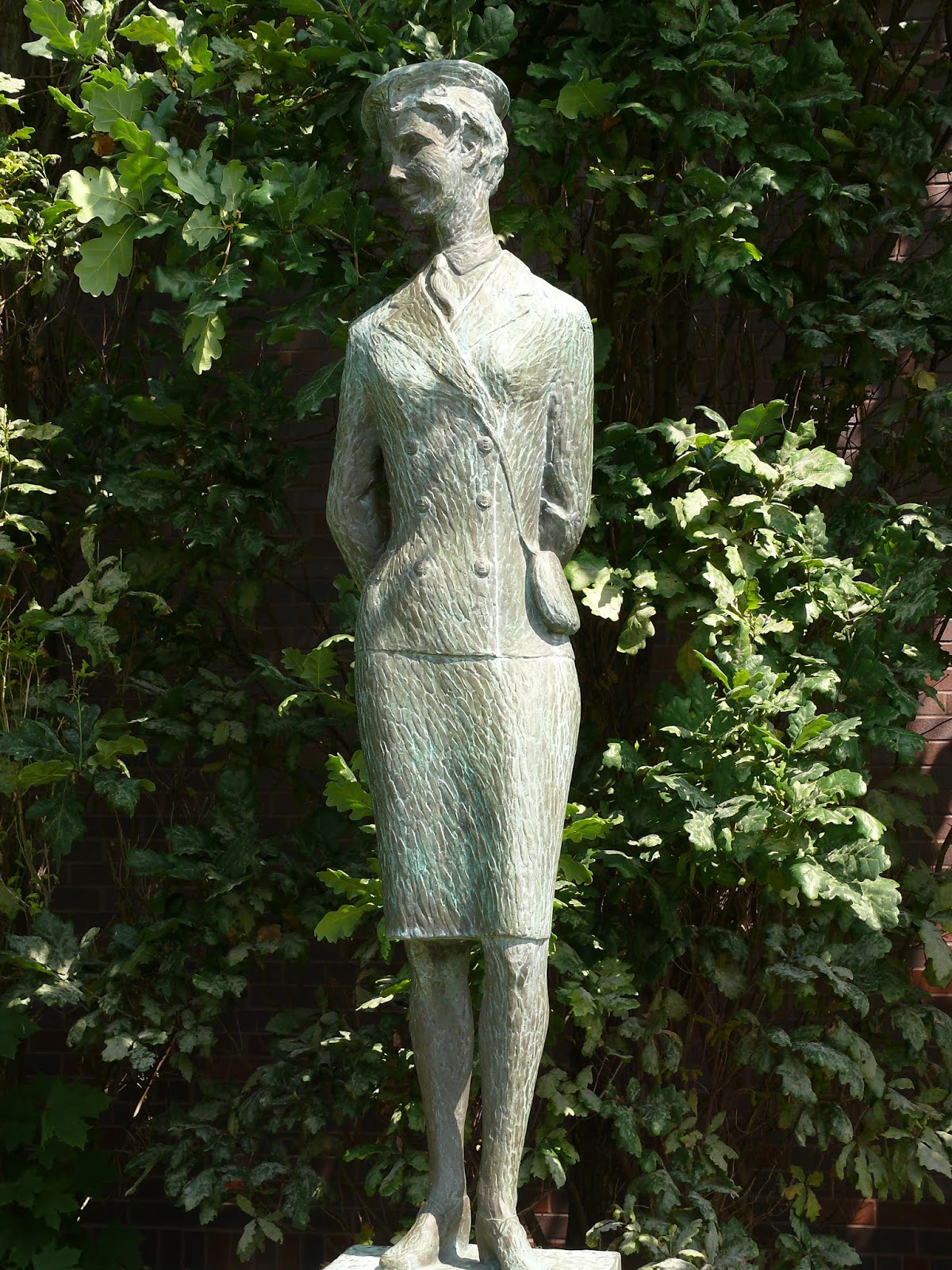

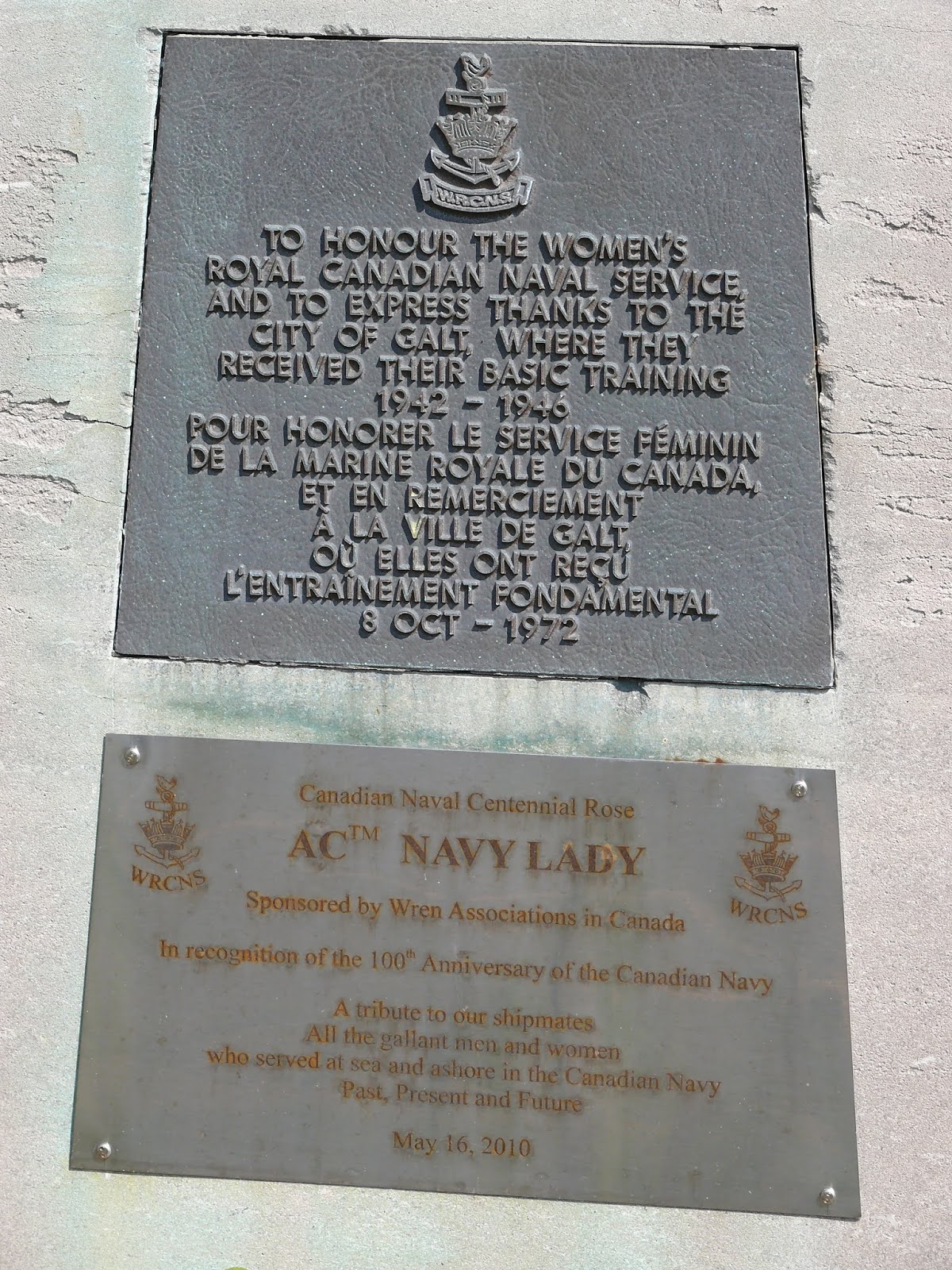
Sculpted by Wren Frances Gage (1924-2017), the Jenny Wren statue was given to the city of Galt in October 1972 by Veterans of the Women's Royal Canadian Naval Service. “Jenny Wren” or just “Jenny” was naval slang used in both the Royal Navy and the Royal Canadian Navy to refer to female sailors, mainly during the Second World War. It is suspected this term originated from the English reference to individual wrens (the bird) as “Jenny Wren”. The memorial honours more than 6,000 women who completed a three-week basic training in Galt during the Second World War. The Galt facility, HMCS Conestoga, was established for the duration of hostilities on 31 July 1942. In June 1943, Lieutenant-Commander Isabel Macneill became commanding officers of HMCS Conestoga.
The model for the ‘Wrens’, as they were affectionately known, was based on the Women’s Royal Naval Service in Britain, from which they had inherited the nickname. The goal was for women to take over crucial, non-combat roles to free up men for the fighting. The establishment of the Women's Royal Canadian Naval Service was the first time that women served in the Canadian Navy in any capacity other than nursing. While no Wren served in a combat role, or even at sea, by the end of the war Wrens worked in 49 naval trades and had earned an international reputation for conscientious efficiency. Unlike the Women’s Royal Naval Service, Women's Royal Canadian Naval Service officers were the first women in the Empire and Commonwealth to carry the King’s Commission in naval service, holding the same ranks and entitled to the same salutes and marks of respect as male officers.
HMCS Conestoga was located in the former Grandview School for Girls, a detention centre for ‘wayward’ girls in Galt. That past quickly became a running joke, but the facility, with existing residences, teaching space, an administration building, and cafeteria, was perfectly suited to its new purpose, and the Wrens quickly made it their home. Basic training at Conestoga lasted three weeks, after which the women would move on to specialist training at other facilities.
The original plan had called for 2,850 Wrens to be enlisted, but by 1945 more than 6,500 women had signed up. HMCS Conestoga was paid off on 31 March 1945, and the Women's Royal Canadian Naval Service was disbanded in August 1946.