
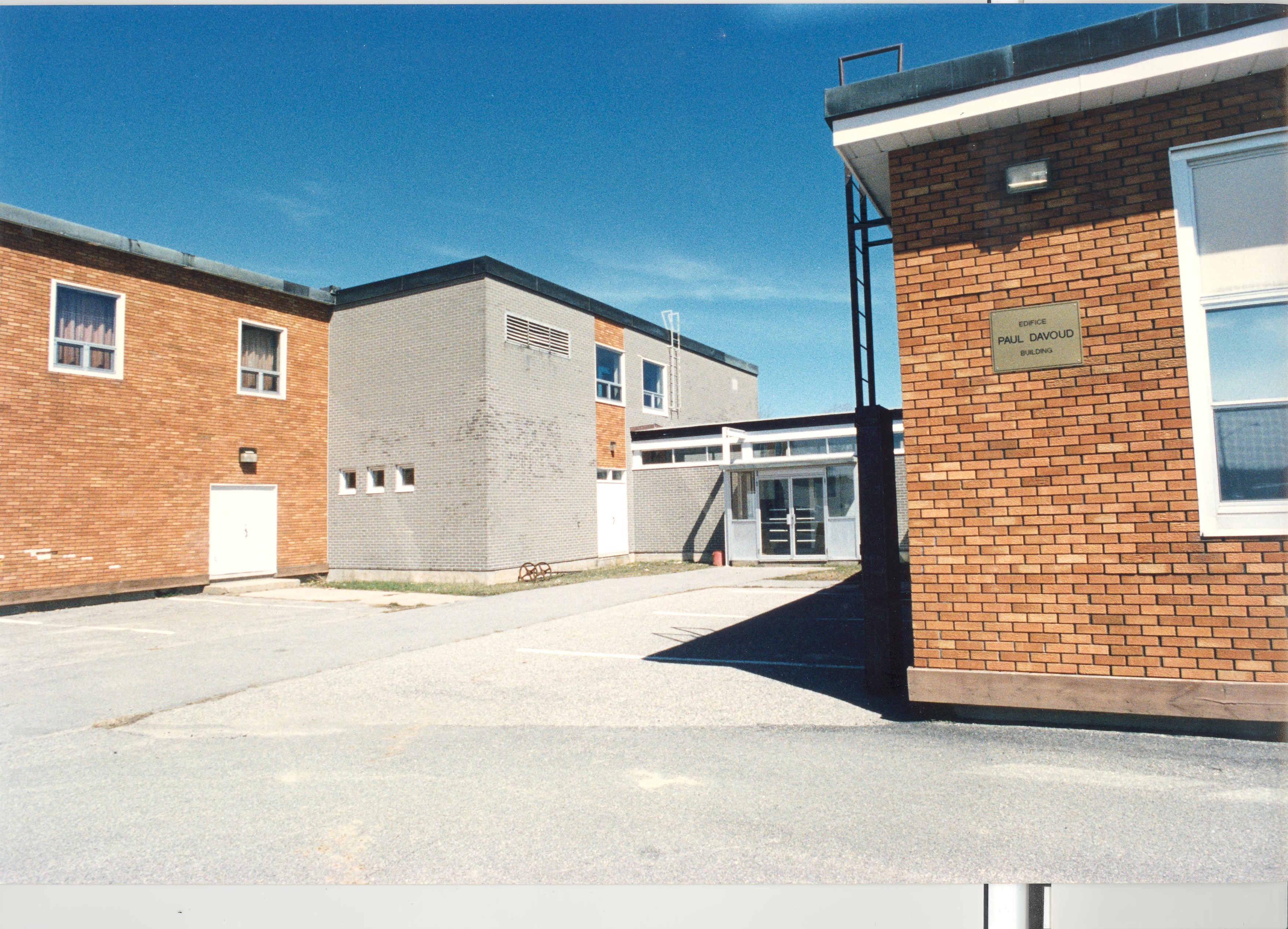
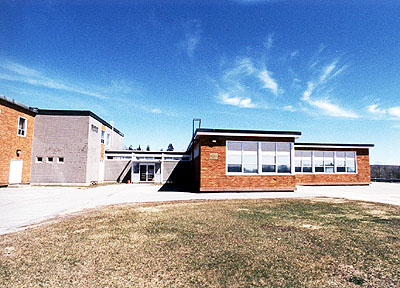
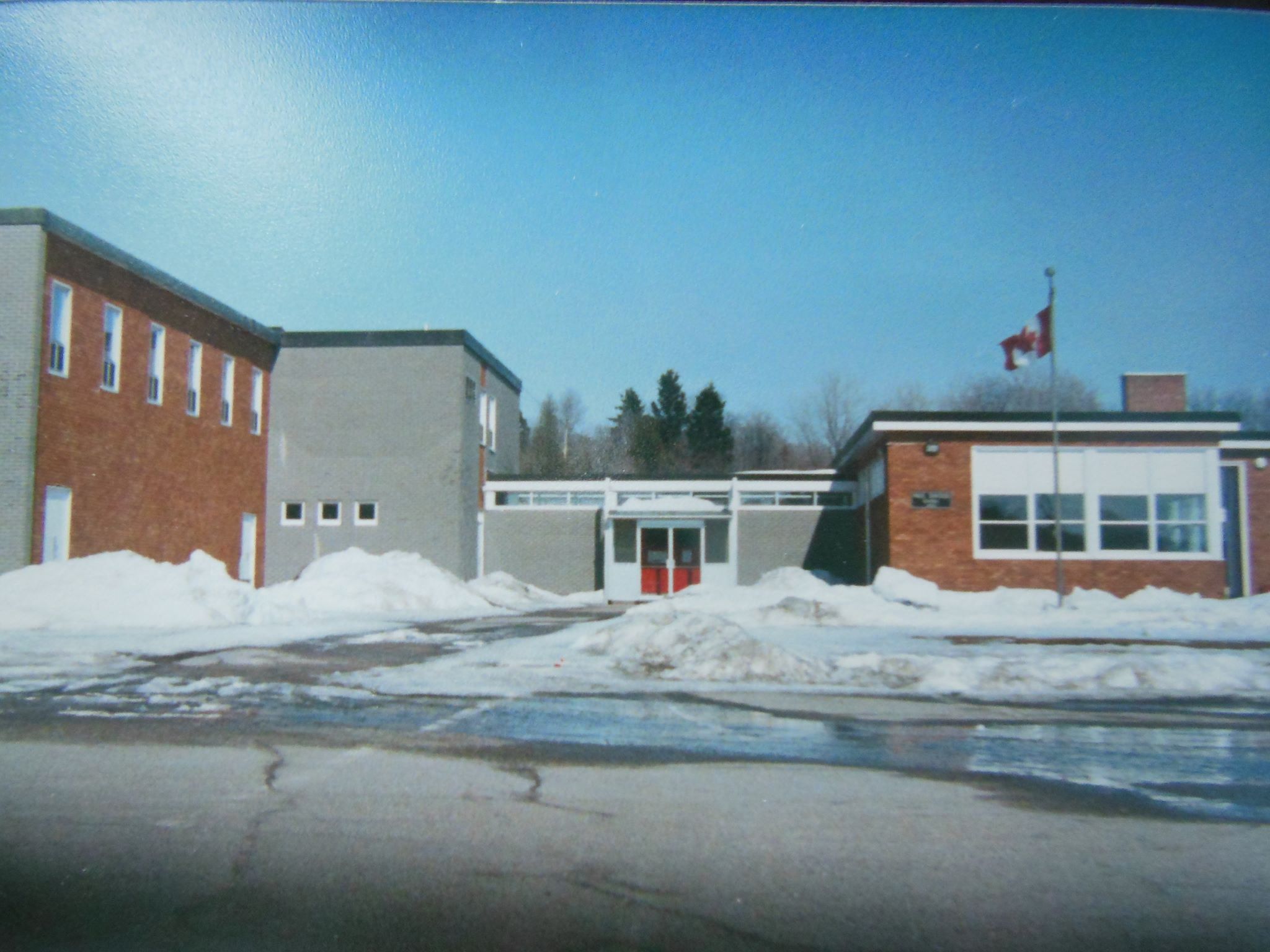
22 Wing was founded as RCAF Station North Bay on 1 September 1951, a fighter base in Canada’s new, growing Cold War nation-wide air defence network. The station’s location northwest of the City of North Bay limited access to the city’s educational system. Measures were available to transport high school age children living in the PMQs to city schools. For elementary age kids, it was deemed simpler to build a school on the station.
The facility opened on 7 January 1952. Originally called the Dependents School, it was a member of the Department of National Defence school system. The Dependents School proved quite the darling attraction. The brand new institution drew visits from 270 teachers and educators from the Northern Ontario region and Province of Ontario, as well the famous Dionne Quintuplets, who brought along their classmates who were eager to see the facility.
The date when first classes took place isn’t stated in 22 Wing/Canadian Forces Base North Bay archives. In fact because the station was deep in construction, office and training space were in short supply--so immediately after its opening a portion of the Dependents School was taken over by the Station Education Officer, Protestant Chaplain and the Trade Advancement School (which trained the station’s Other Ranks) until their own facilities were ready.
The first official school term started on 2 September 1952, with a staff of six and 158 students. In the intervening weeks between the opening and first term, a name had been sought for the school appropriate to the nature of the base. RCAF Station North Bay was much more than a fighter installation. It was home to No. 3 All-Weather (Fighter) Operational Training Unit, the most advanced air defence school in the world. Drawing instructors and students from as far away as New Zealand, No. 3 AW(F) OTU taught flying, interception of aircraft, and air combat in all types of weather, night and day—in 1952, cutting edge, state-of-the-art techniques in aerial warfare.
Simultaneously, North Bay had been selected as the national training site and first fighter station for the Avro Canada CF-100 Canuck jet interceptor, the first warplane designed and built solely in Canada. The CF-100 was a remarkable feat of engineering; at its debut it was equal to, in some cases better than, interceptors of the world’s other air forces, including the United States, Soviet Union and Britain.
Meanwhile the station had been assigned the air defence of southern Ontario—no less than the urban and industrial heartland of the province.
The eminence of these three aspects demanded a name of formidable stature related to Canada’s air defence. In 1952, Paul Davoud was selected. Born in Utah, Davoud’s family moved to Canada in the 1920s. He attended Royal Military College 1928 to 1932, and in the summer of 1931 was awarded the Sword of Honour as the best all-around cadet during flying training with the RCAF.
In the Second World War, he commanded two RCAF night fighter squadrons, hunting Nazi bombers attacking Britain, then was posted as CO of 418 Squadron, turning the unit into the highest scoring fighter squadron, night or day, in the Royal Canadian Air Force. He then formed the first 22 Wing, a pack of fighter bomber squadrons assigned to lay waste to everything German in sight on the ground and water, in preparation for the Allied 6 June 1944 Normandy invasion—activities it continued for the liberation of France, following the invasion, as 22 Sector, until disbanded in July 1944.
For the above and subsequent work in the Allied forces, Davoud was awarded the Distinguished Service Order, Order of the British Empire and Distinguished Flying Cross from Britain; made a Knight of the Legion of Honour by France, plus received the French Croix de Guerre, and bestowed the award Commander, Order of Orange-Nassau with Swords by the Netherlands—making Paul Davoud one of the most decorated officers in the history of the RCAF.
Davoud didn’t just lend his name to the North Bay school. For 35 years, until his death in 1987, he frequently visited its teachers and students, and in 1971 donated his memorabilia to the school, including a display case adorned with his 1931 Sword of Honour and the incredible array of medals he received in the Second World War. He was a popular, inspiring man, who showed a curious, sharp mind during his visits and an enthusiastic interest in everything the kids and teachers were doing.
After he passed away, his relatives continued visits until DND closed the school in 1990. The station, now called Canadian Forces Base North Bay, retained the building’s name to continue the honour, and converted a section into a library for military members and their dependents, and rest of the facility into a military school which trained Canadian and American NORAD personnel in different aspects of air defence.
In 1993 (the base now known by its current title of 22 Wing/Canadian Forces Base North Bay), the air defence school was disbanded. A few years later the library moved, leaving the Paul Davoud Building unused.
Finally in 2002, no chance of its re-occupation foreseeable, the Paul Davoud Building was demolished.