
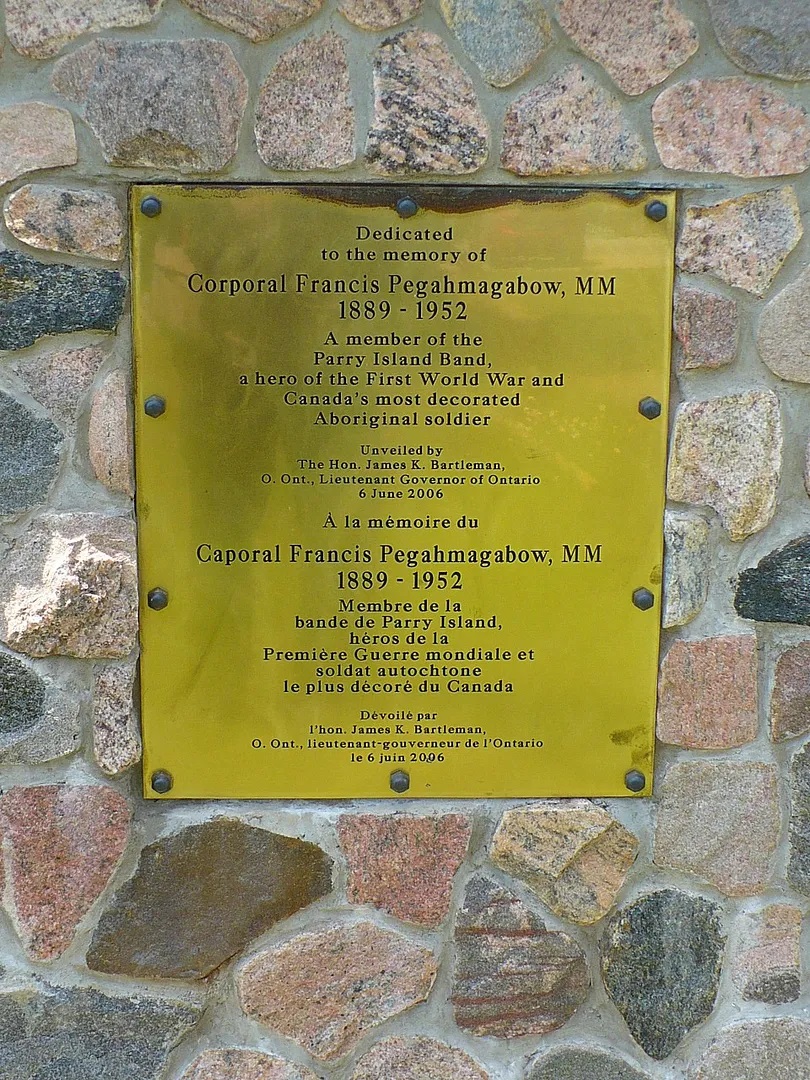

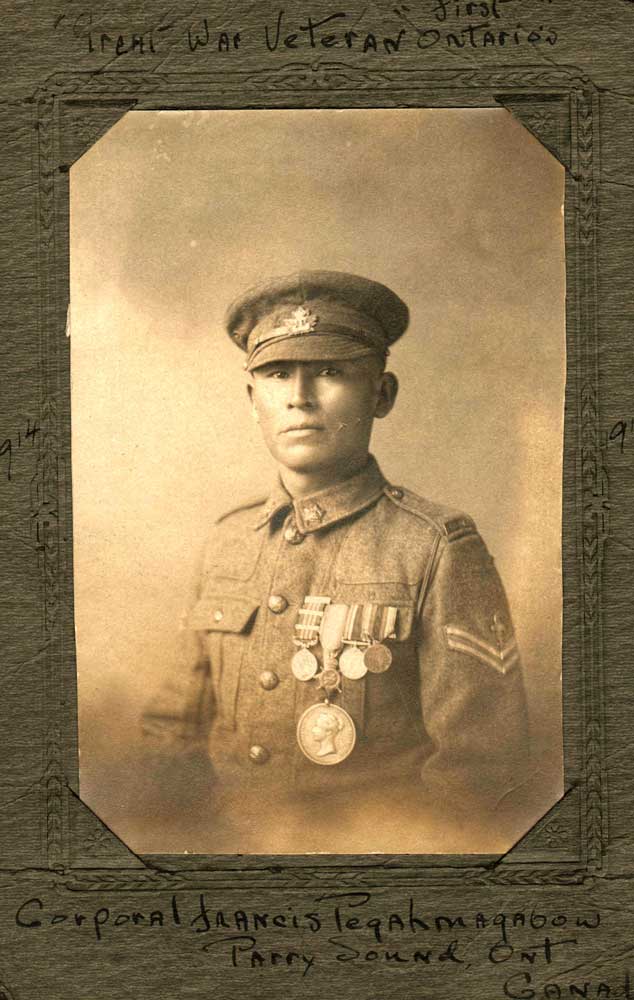
Corporal Francis Pegahmagabow, the Ojibwe soldier from Wasauksing First Nation, was not only one of the most effective snipers and scouts in the Canadian Expeditionary Force, but of the Indigenous peoples in the First World War, he is the most decorated. Recognized three times for bravery and devotion under fire in Belgium and France, he is one of only 38 Canadians to earn the Military Medal with two bars, each bar representing an act of valour.
Francis Pegahmagabow was born on March 9, 1889. His father, a member of Wasauksing First Nation on Parry Island, died of an illness when Pegahmagabow was just a baby. His mother also fell ill, so he was raised by his Shawanaga relatives. As a young man, he worked as a seaman on boats in Georgian Bay. At 21, he learned to read and write English, a rare skill of Pegahmagabow’s generation. He was among the first recruits in the First World War, signing up on August 13, 1914, despite an early prohibition against the enlistment of Indigenous peoples.
Pegahmagabow served with the 23rd Northern Pioneers Regiment, based in Parry Sound, which amalgamated into the 1st Battalion of the Canadian Expeditionary Force. He fought on the Western Front during all four years of the Great War, attaining the rank of Corporal on November 1, 1917. Nicknamed “Peggy” by his Army buddies, he soon proved that his courage and abilities were second to none. In 1916, he was one of the first Canadians to be awarded the Military Medal. He received the first of his three commendations for facing enemy fire repeatedly while carrying vital messages along the lines during the battles at Ypres, Festubert and Givenchy.
A spiritual man, Pegahmagabow carried an Ojibwe medicine pouch which he believed would help keep him safe. He faced constant danger, including being present at the Second Battle of Ypres, where the German Army first used chlorine gas as a weapon. Dr. McInnes said after the war, his great-grandfather developed breathing issues which became so severe he eventually had to sit up to sleep.
Wounded in the leg while fighting in France in September 1916, he returned to action in time to take part in the bloody assault on Passchendaele. During a battle so intense the Allies lost some 16,000 men, he earned his first bar to his Military Medal. His commendation reads:
“At Passchendaele Nov. 6th/7th, 1917, this NCO [non-commissioned officer] did excellent work. Before and after the attack he kept in touch with the flanks, advising the units he had seen, this information proving the success of the attack and saving valuable time in consolidating. He also guided the relief to its proper place after it had become mixed up.”
Following his actions during the Battle of Scarpe in August 1918, Pegahmagabow received his second bar. This commendation reveals again his courage under fire:
“During the operations of August 30, 1918, at Orix Trench, near Upton Wood, when his company were almost out of ammunition and in danger of being surrounded, this NCO went over the top under heavy MG [machine gun] and rifle fire and brought back sufficient ammunition to enable the post to carry on and assist in repulsing heavy enemy counter-attacks.”
His record as a sniper is equally impressive. Although difficult to substantiate as he worked alone, the expert marksman is credited with 378 kills. His great-grandson, Dr. McInnes pointed out his great-grandfather never spoke of his record as a sniper to his family.
Pegahmagabow’s great-grandfather fought for the British in the War of 1812 and he hoped his willingness to serve in the First World War would help change perceptions about Indigenous peoples. Pegahmagabow made the point himself in a 1919 interview with the Toronto Evening Telegram, saying, “I went to war voluntarily just as quick as the white man.” Ending the war at the rank of corporal, the Veteran returned home in 1919 to a political landscape that was as restrictive for Indigenous peoples as it had been before the war.
Pegahamagabow, married Eva Nanibush Tronche, had eight children, became a political activist and served as councilor and band chief for Wasauksing First Nation. He was elected the Supreme Chief of the National Indian Government and was also a member of the National Indian Brotherhood, an early precurser to the current Assembly of First Nations.
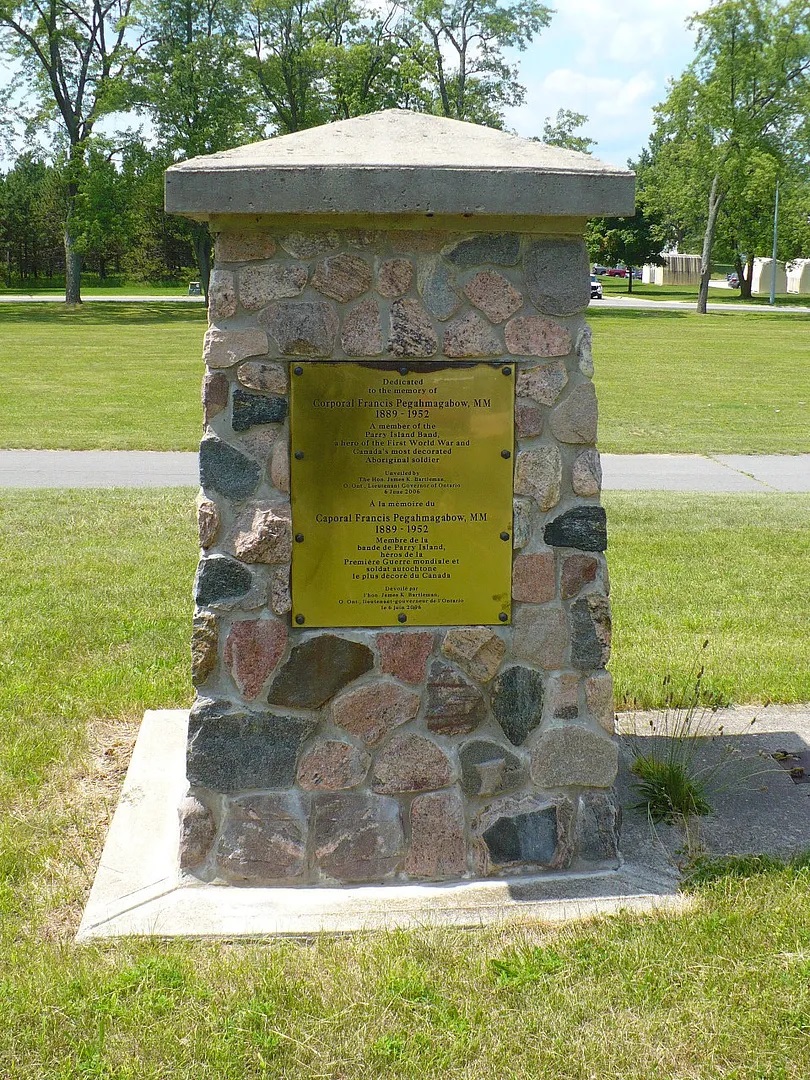
In the mid-1920s, he re-enlisted in the Militia and served in “A” Company of the 23rd Northern Pioneers Non-Permanent Active Militia (NPAM). The decorated Veteran died in the community of Wasauksing on August 5, 1952 of a heart attack. He has been honoured by being entered into the Indian Hall of Fame, as well as having the 3rd Canadian Ranger Patrol Group’s headquarters at Canadian Forces Base Borden in Ontario renamed in his honour in 2006.