
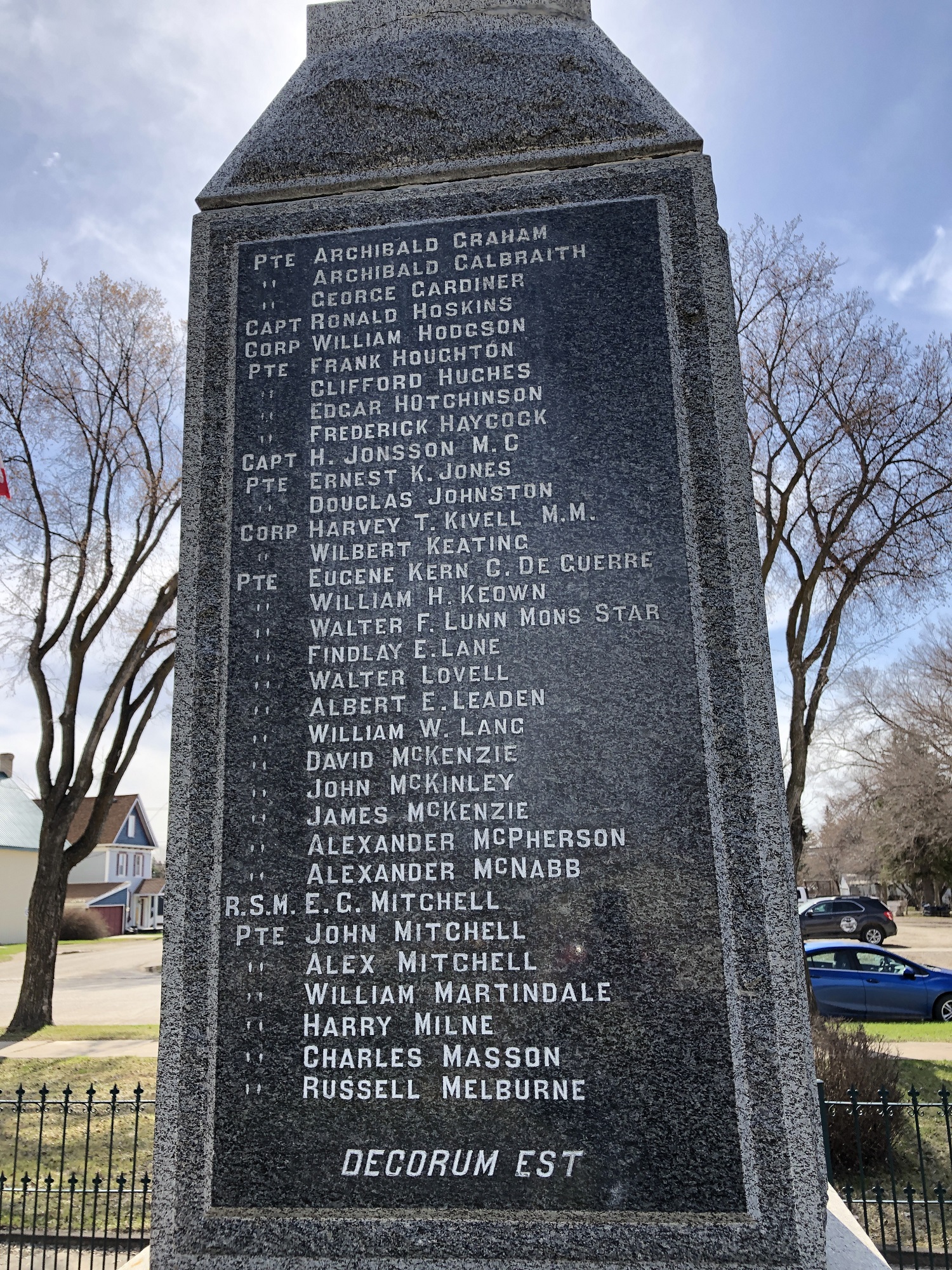
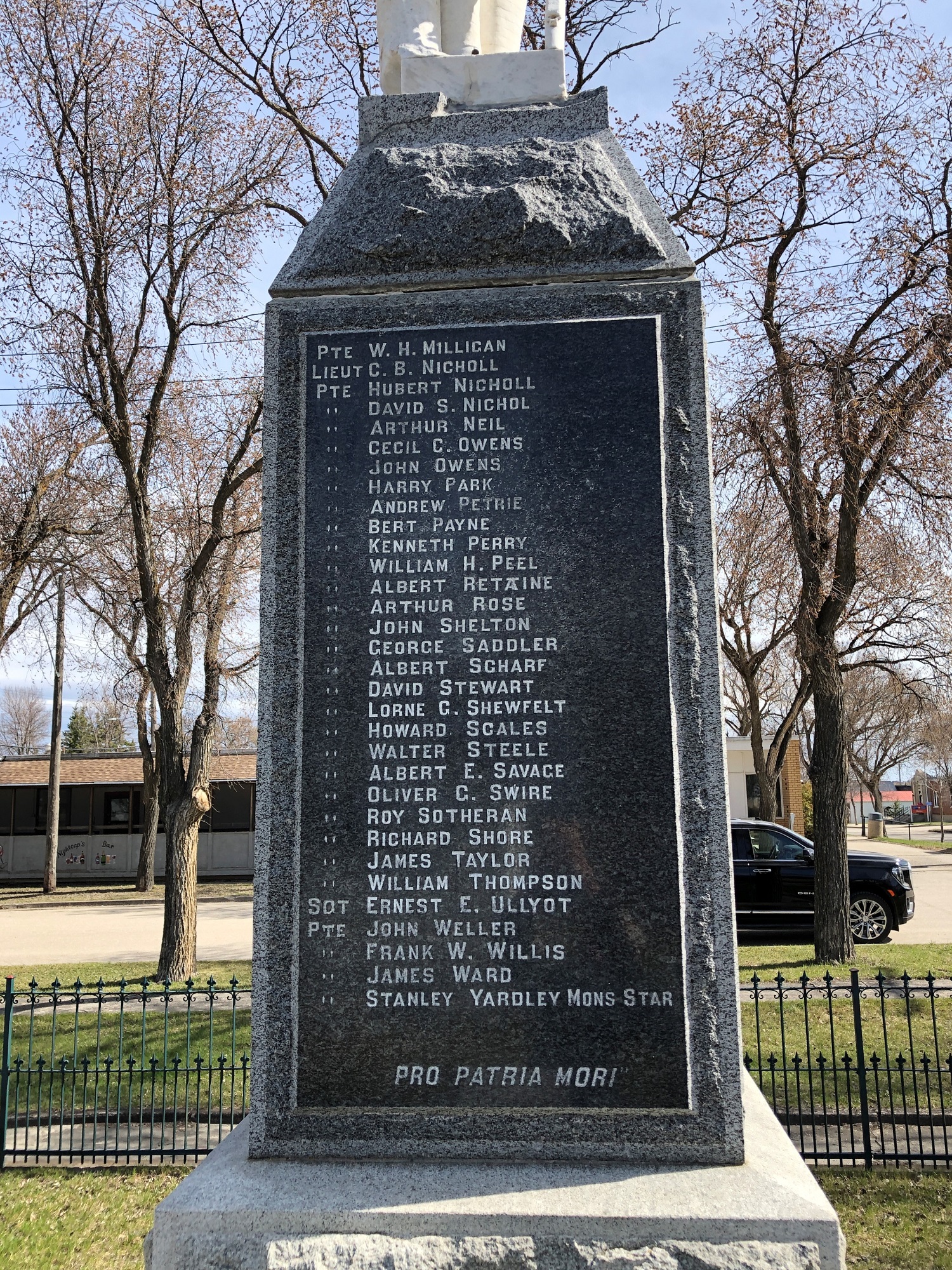
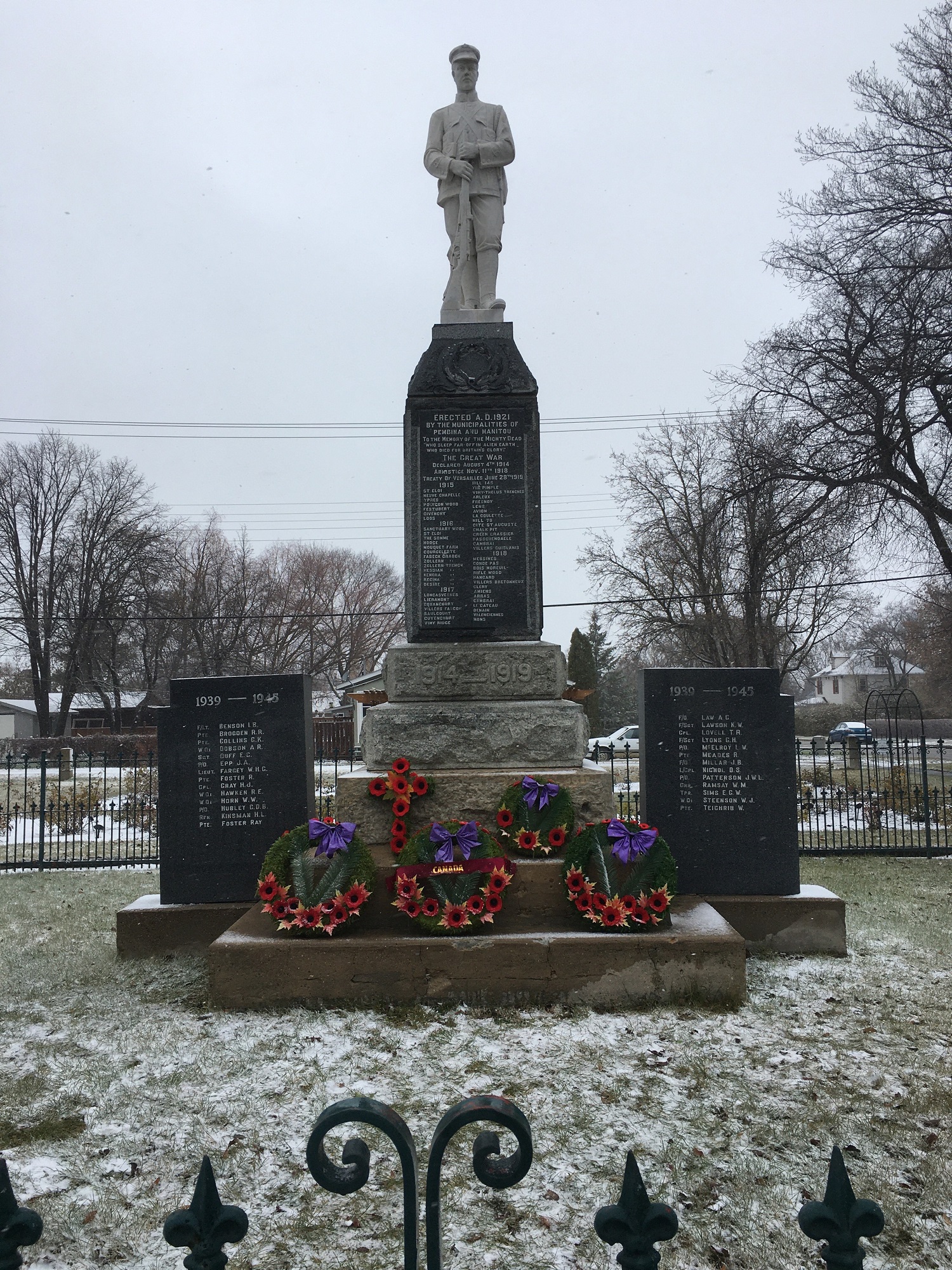
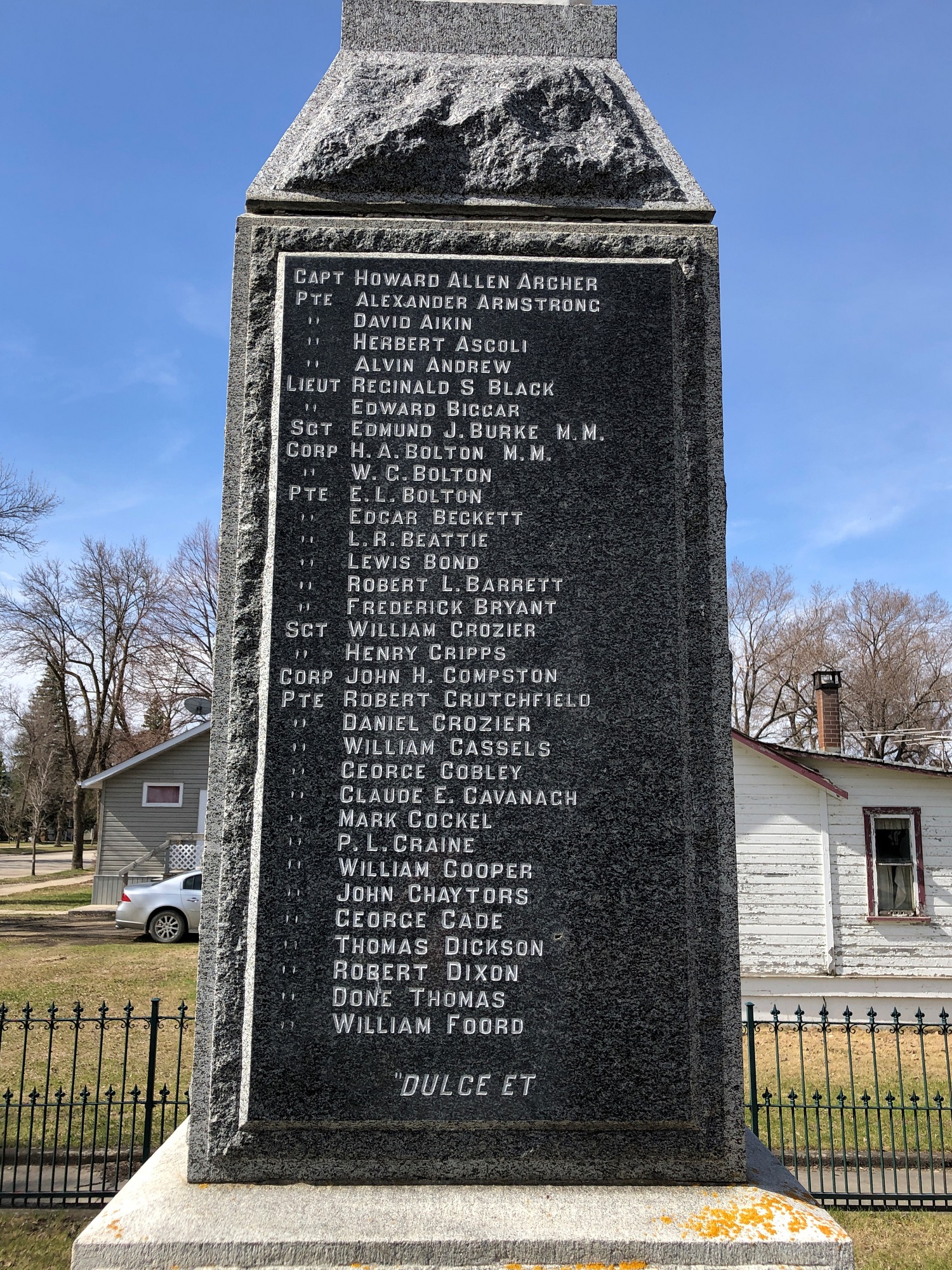
In 1920, Reeve J. D. Sothern and Mayor J. A. Swanson formed a committee and decided on the erection of a suitable and lasting memorial to their 98 dead soldiers of the First World War. It was a joint venture of the two municipalities of Pembina and Manitou with the costs shared equally. The Pembina-Manitou War Memorial was unveiled on October 2, 1921, with over 2,000 people in attendance
Consisting of five tiers, the foundation's first two tiers are concrete, the next is Tyndall stone and the top two are granite. The foundation stones were built locally by A.C. Henneberg. The secondary foundation stones were from Manitoba quarries and the next two stone levels were from Quebec quarries. The inscription stone is made of Scotch granite from Scotland quarries. Atop the memorial the figure of a soldier in full marching order is of Carrara marble from Italy, where the figure was designed and made. The statue is a cast figure of a serviceman in uniform, standing at ease and staring forever in the distance. A.G. Selley of Morden set up and inscribed the memorial.
The memorial is surrounded by a mound, enclosed in an iron fence, and a cement walk has been built entirely around. On the base of stone, is the Latin motto: “Dulce et decorum est pro patia mori” (It is sweet and glorious to die for one’s country). From each corner of the stone, a captured machine gun has been emplaced and at the rear the captured field gun rested. There is no record of when the artillery was removed. The pedestal stone has a large circlet of laurel leaves.
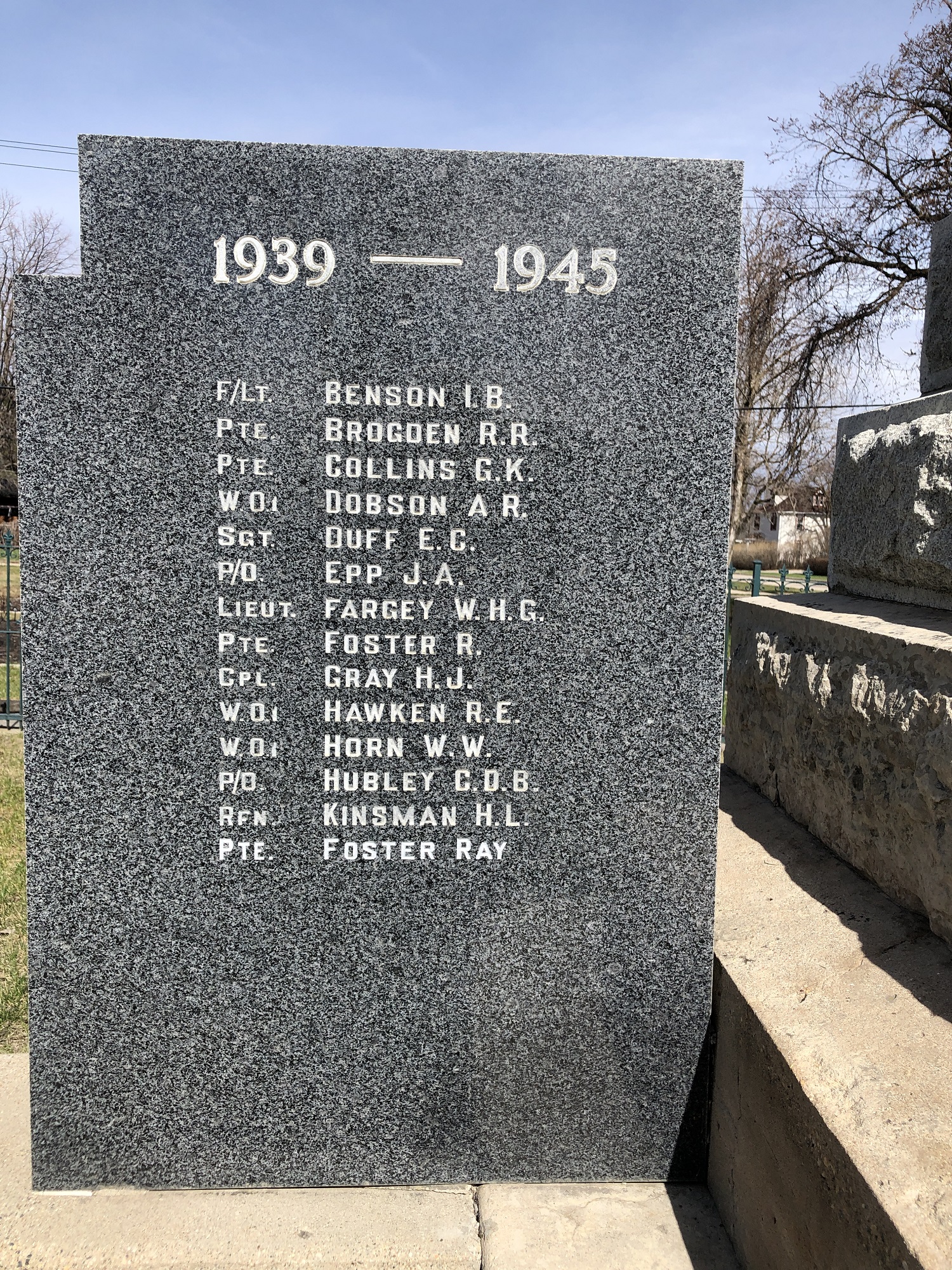
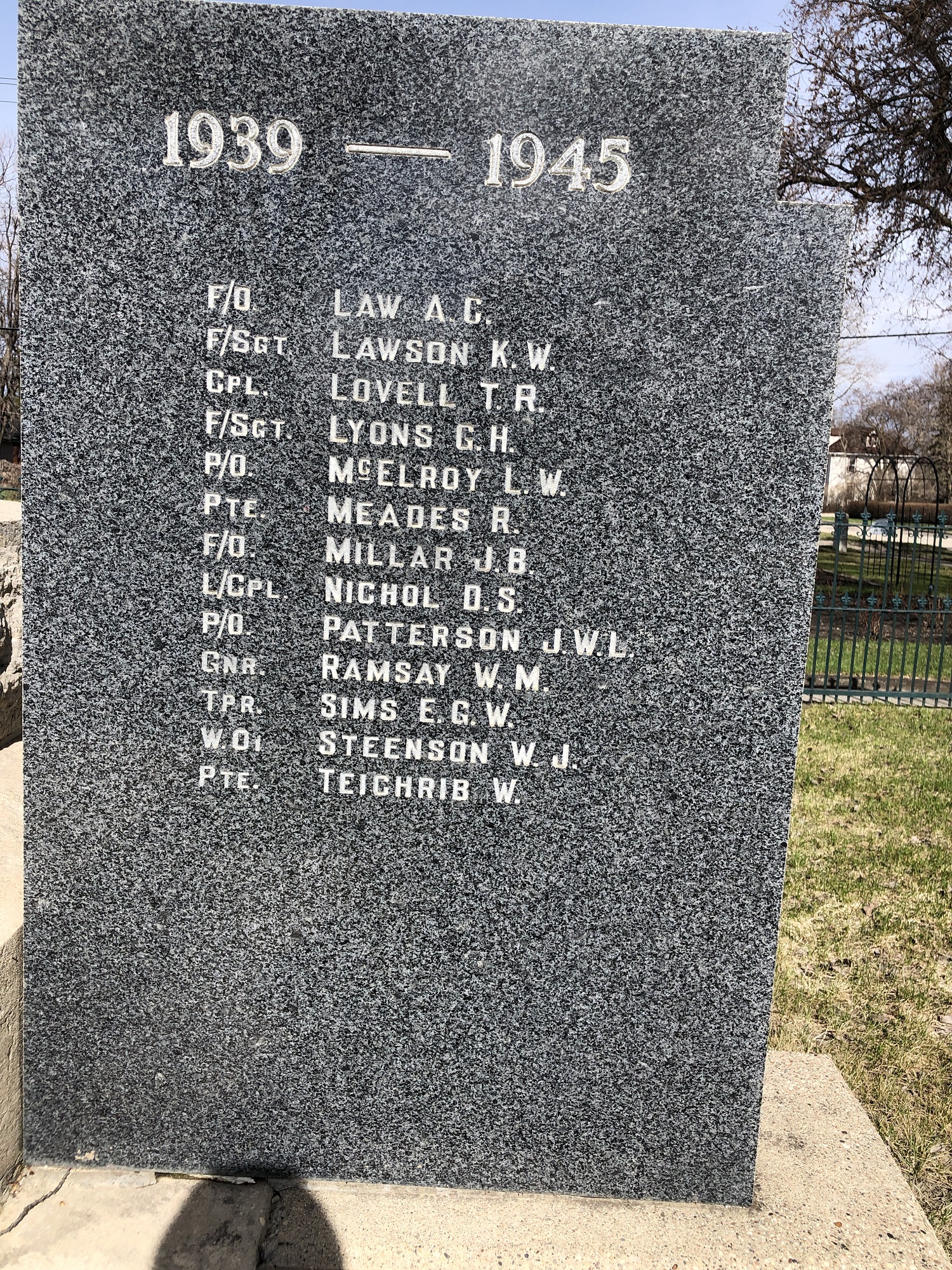
Two black tablets were added in 1956 to honour the local losses of the Second World War. Carman Granite and Marble Works completed this work.