
Chalk it up to Remembrance
Age group: 6 - 18
Aim
To increase youth awareness of the 100th anniversary of the Battle of Vimy Ridge in the First World War and to engage youth in active commemoration of Veterans while remembering the sacrifices and achievements made by Canadians.
Objectives
Youth will be expected to:
- develop a basic understanding of the Canadian efforts at the Battle of Vimy Ridge;
- develop an awareness of the importance of remembering the sacrifices and achievements of those who served and died in service.
Target Audience
This activity is suitable for ages 5 - 18.
Materials
- Chalk it up to Remembrance handout
- Chalk
- Chalkboard (or whiteboard or electronic board)
- Chalk brush
- World Map showing Canada and France
- Battle of Vimy Ridge Historical Sheet
- Chalk it up to Remembrance Image Gallery
Background
Chalk it up to Remembrance is a learning activity in which youth write messages of thanks or appreciation, or thoughts about remembrance on a classroom “chalkboard”.
April 2017 marks the 100th anniversary of the Battle of Vimy Ridge that took place in France during the First World War. Why not take this opportunity to be active in remembrance with your students? Create a classroom chalkboard wall of remembrance and share with others through social media.
First, provide your students with a bit of an understanding about the First World War. Talk about how the war began more than 100 years ago, well before their parents and even their grandparents were born! You can mention that the war was such an important historical event that people often call it “The Great War”. Look at a world map and locate the continent of Europe, then point out France. Discuss how far away Europe is from Canada, and how far Canadians travelled away from family and friends to serve in that war. Ask if students have visited Europe and First World War battlefields.
Depending on reading levels, you may wish to provide students with the Battle of Vimy Ridge Historical Sheet.
Chalk it Up To Remembrance Handout
Share with your students the handout Chalk it up to Remembrance to help students understand how Canadians served in the Battle of Vimy Ridge, and that in the hours before the attack, Canadian soldiers huddled in the trenches and in tunnels dug in the ground under the ridge at Vimy. Since the tunnels were dug in a former chalk quarry, the walls were soft and easy to carve with a sharp object like a pocket knife. The soldiers passed time writing letters home, and creating carvings in the chalk walls.
After the reading, discuss with your students some of the things they imagine the soldiers might have been writing. Were they thinking of life back at home? Writing about loved ones? After the discussion, take time to explore the photos of some of the Vimy chalk carvings on the Chalk it Up to Remembrance Image Gallery. You may wish to search the name of the soldier who carved the pig on the Canadian Virtual War Memorial.
Create Your Chalkboard Wall of Remembrance
Get out the chalk and start writing on the chalkboard! Using good old dusty chalk is a great way to connect with the soldiers who were “trapped” between the chalk walls of the tunnels during the stressful hours before the battle.
Students may wish to take a moment to consider what to write or draw. You could also give them ideas:
- Thank a Veteran
- Remember a relative who may have served in war
- Write a personal thought of remembrance
- Draw a poppy
Once your chalkboard wall of Remembrance is completed, you may invite other classes to visit and maybe they could add their own Remembrance messages. Then, you could take a picture and share it on social media, such as the Canada Remembers Facebook page and Instagram VAC account! What a great chalkboard tribute of Remembrance!
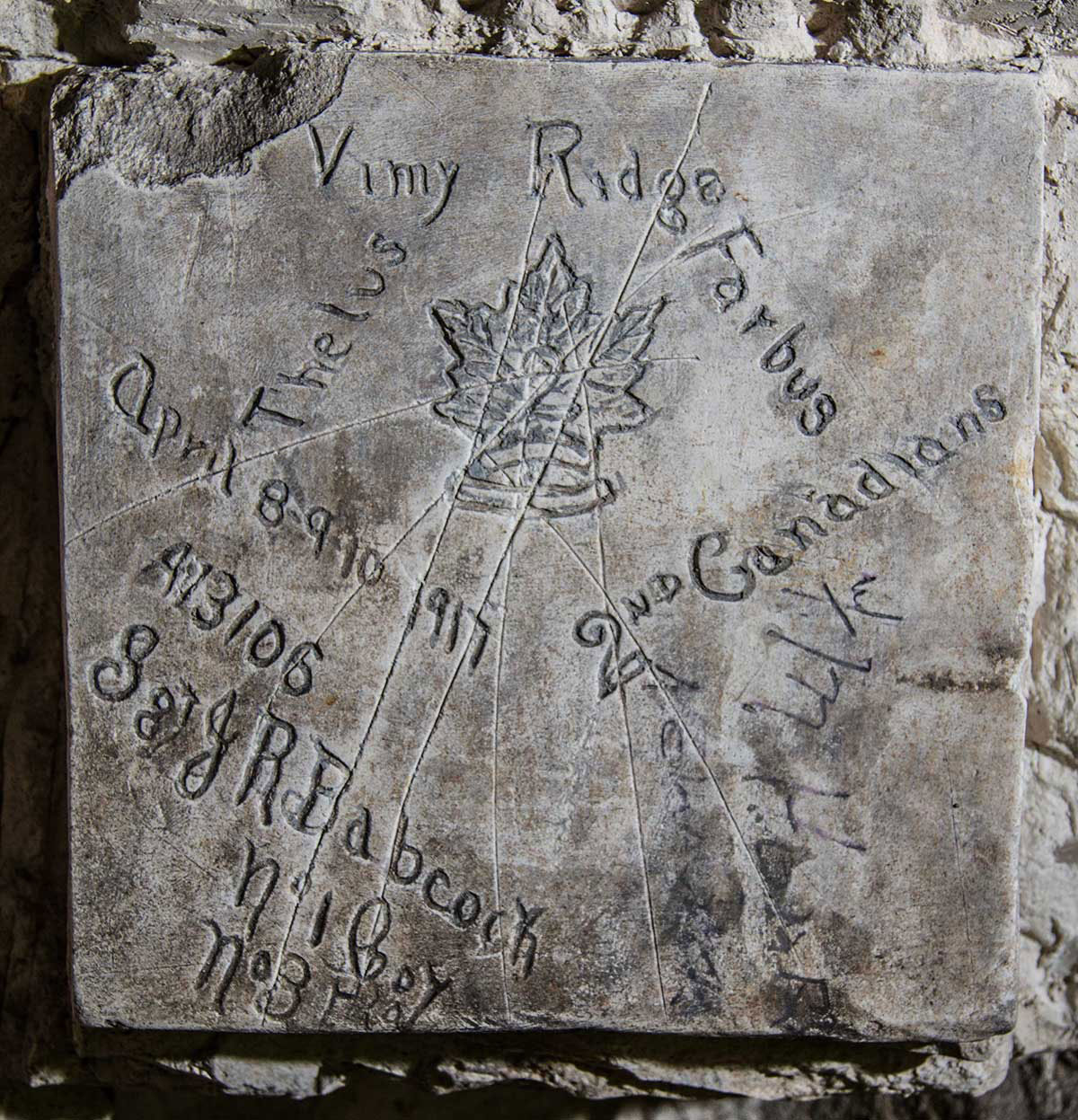
Carving of a maple leaf emblem with the number 2 in the centre. Regimental number 413106 and name of J. R. Babcock are inscribed below.
© Canadigm and the Durand Group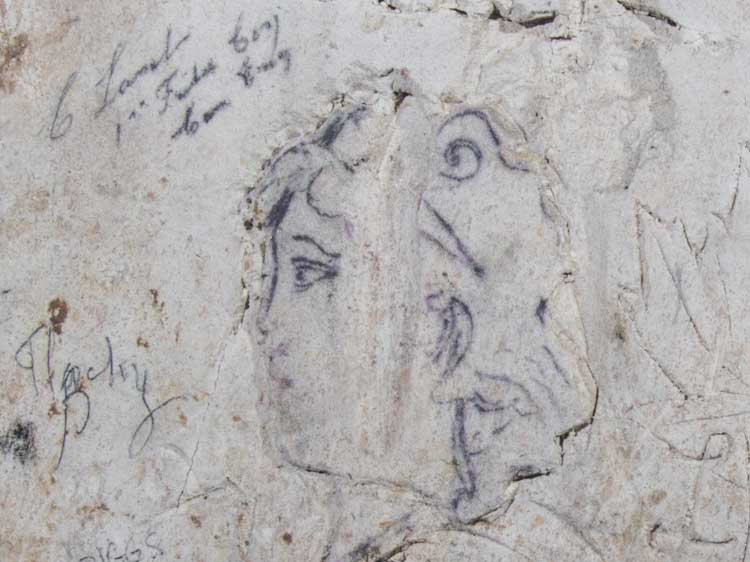
Carving of a side profile of a face, possibly a woman, with the name G. Lamb in the upper left hand corner.
© Canadigm and the Durand Group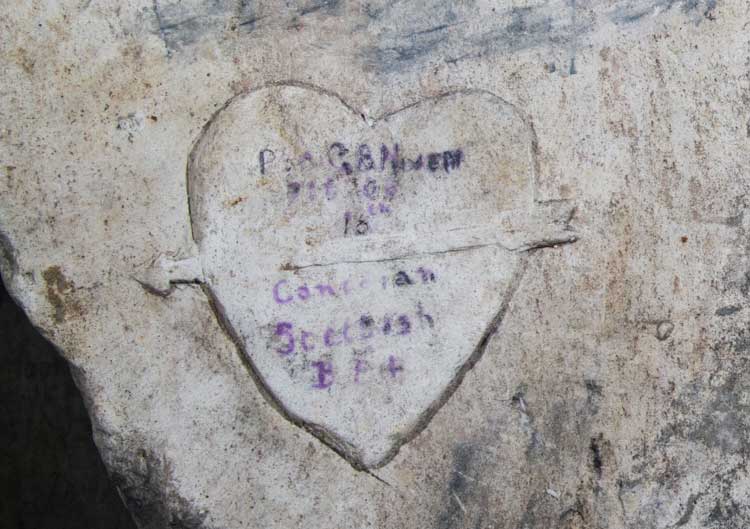
Carving of a heart pierced by an arrow with the name G. Diven and “Canadian Scottish Bttn” inscribed inside.
© Canadigm and the Durand Group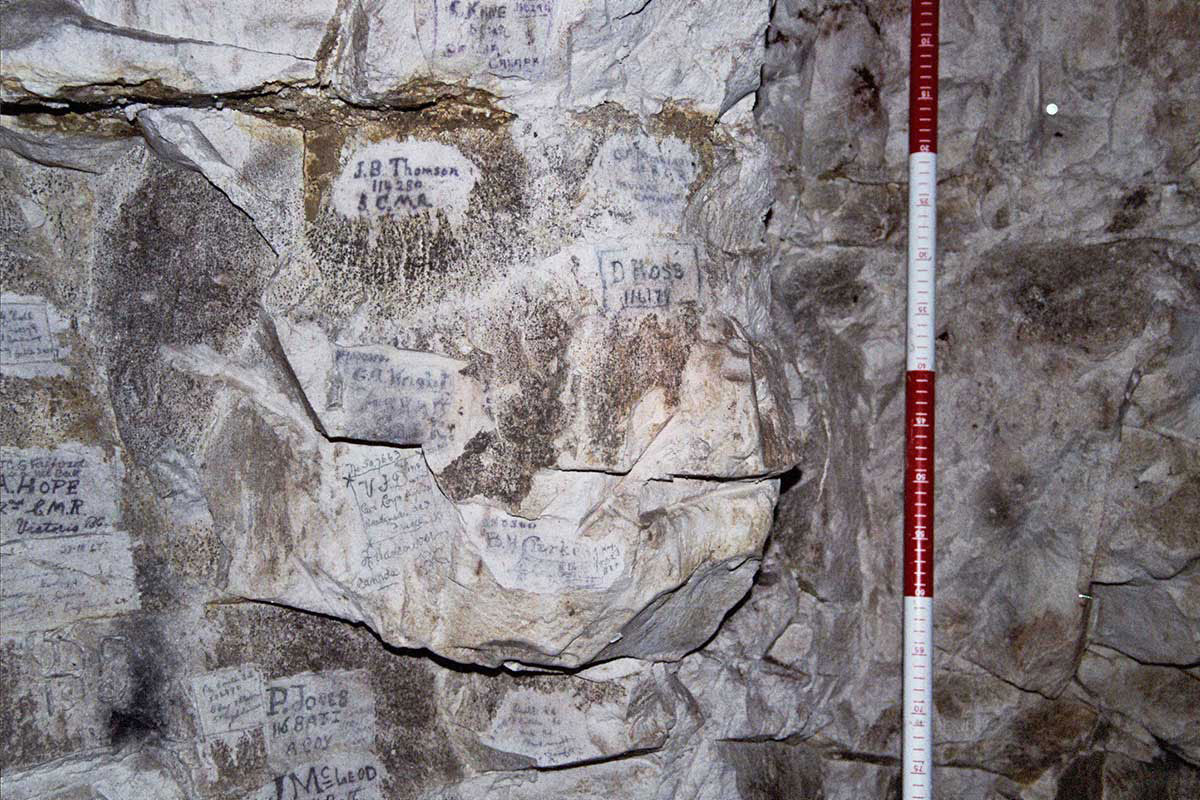
Collage of names of soldiers engraved on a tunnel wall.
© Canadigm and the Durand Group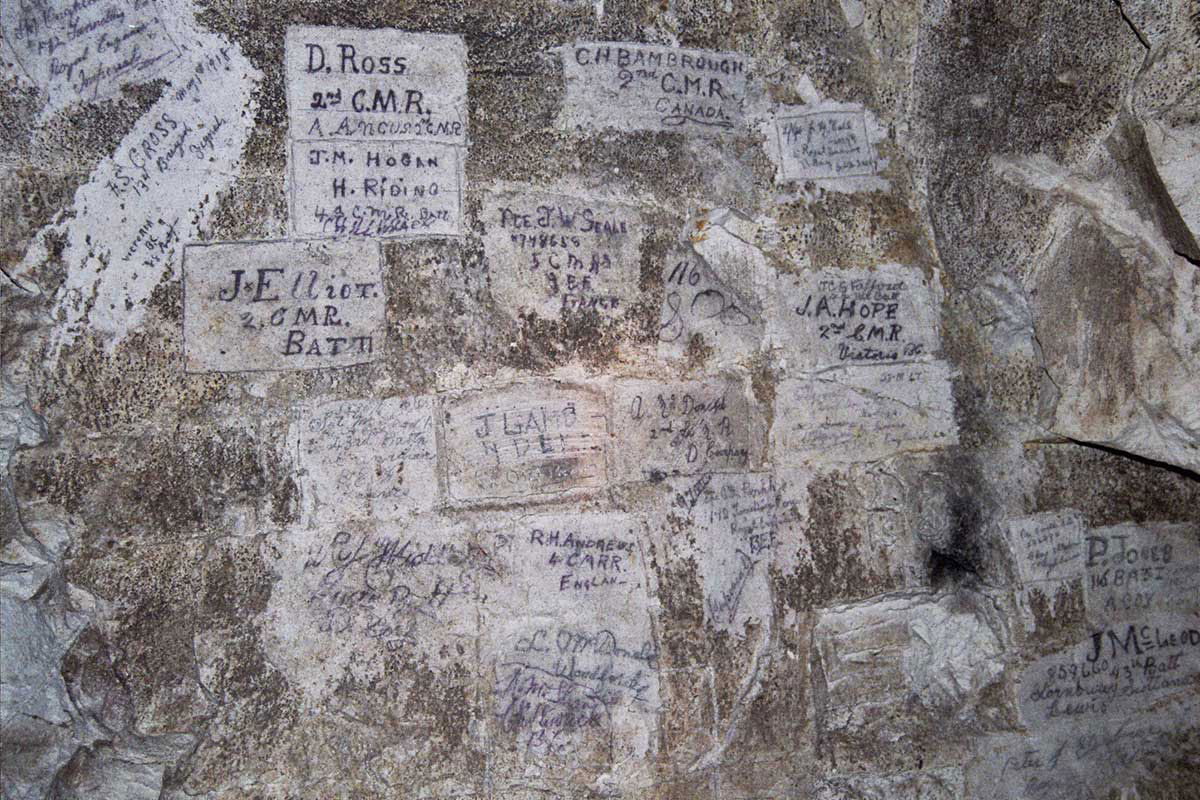
Collage of names of soldiers engraved on a tunnel wall.
© Canadigm and the Durand Group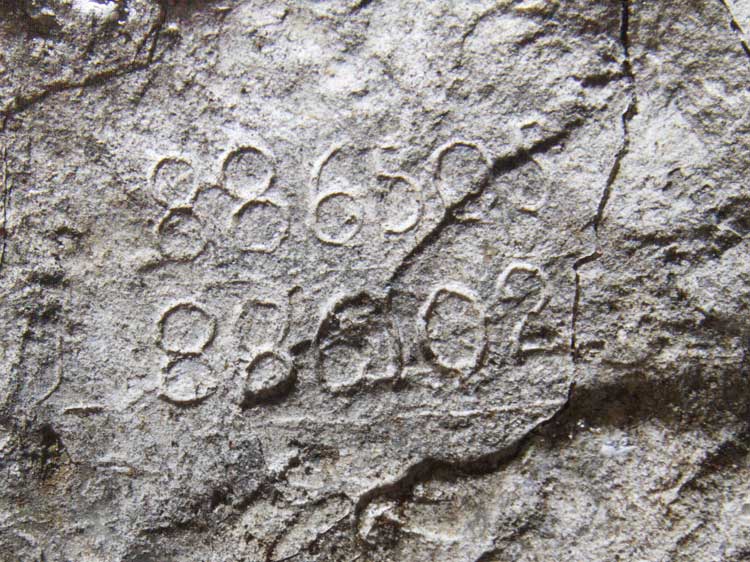
Carving of regimental numbers 886505 and 886102.
© Canadigm and the Durand Group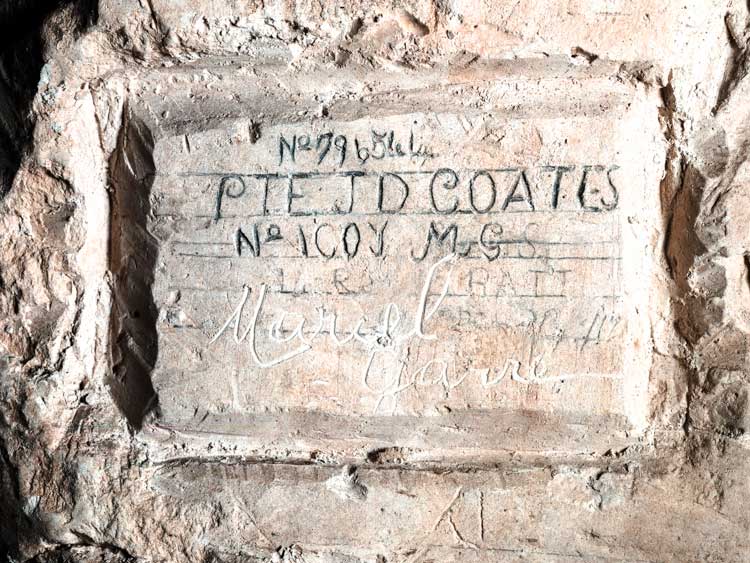
Inscription of the name of Private J. Coates with regimental number 796544.
© Canadigm and the Durand Group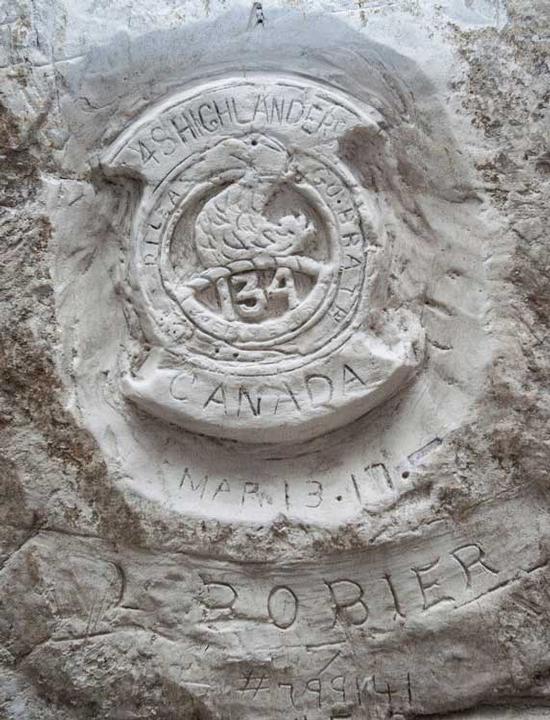
Carving of regimental badge of the 48th Highlanders of Canada with the date of March 13, 1917. The name inscribed below is L. Bobier with regimental number 799141.
© Canadigm and the Durand Group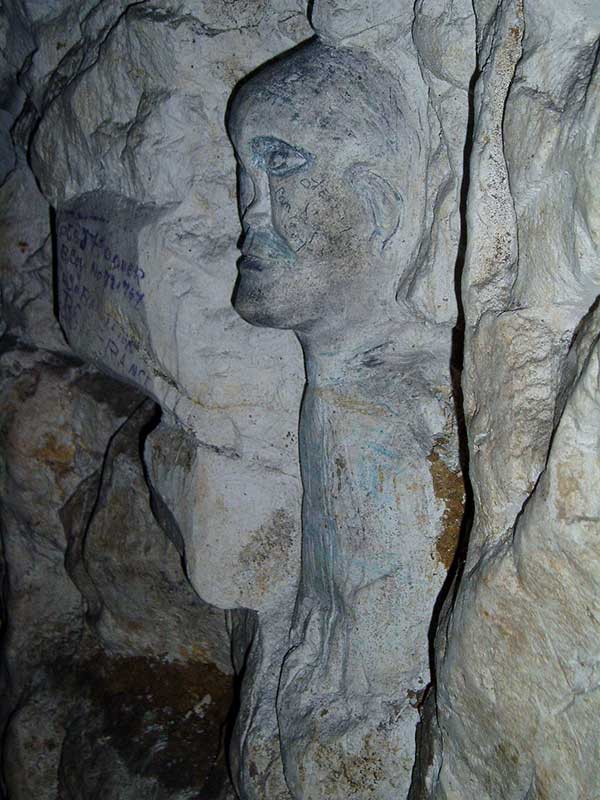
Side view of a face carving protruding from the wall of an underground tunnel.
© Canadigm and the Durand Group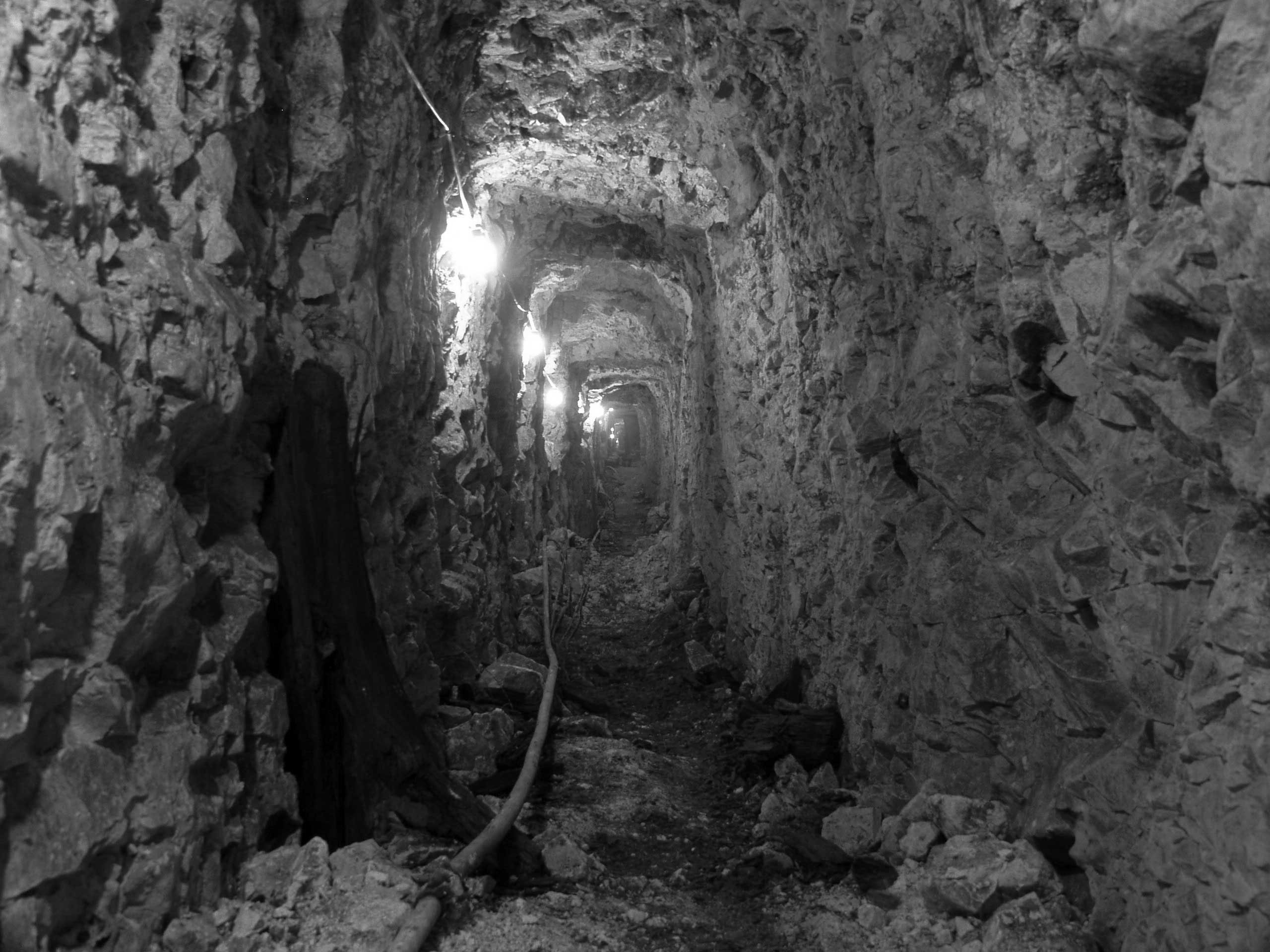
An underground tunnel hallway.
© Canadigm and the Durand Group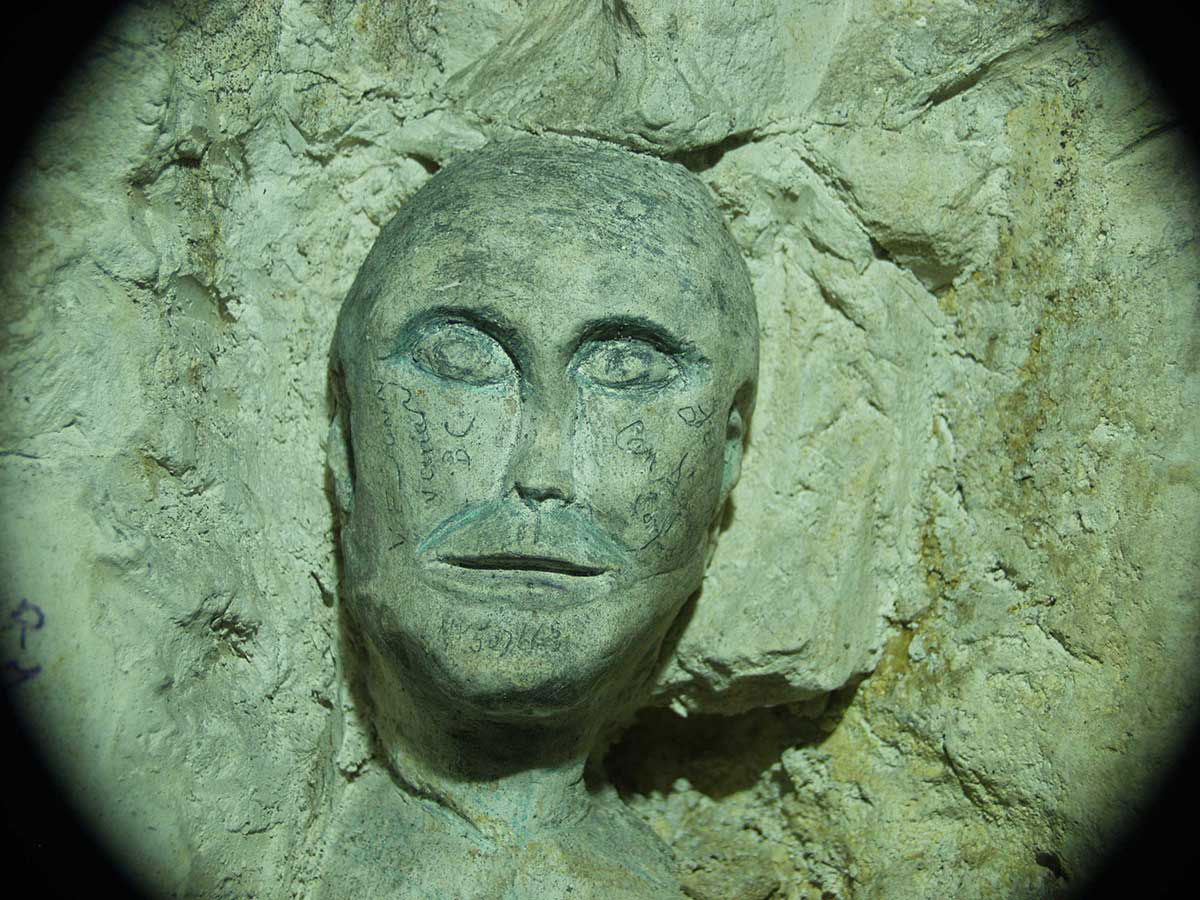
Front view of a face carving protruding from the wall of an underground tunnel.
© Canadigm and the Durand Group
Carving of a maple leaf with the number 2 in the centre and the latin words “semper paratus.” The name P. Parker appears below with regimental number 8605. The words “Oh Canada” are inscribed in the upper right-hand corner.
© Canadigm and the Durand Group
Carving of a letter box in a tunnel wall with “Toronto Ont Canada” at the top and “France 1917 Letter Box” in the middle. The regimental numbers 802293 and 799610, the names W.P. Beckett and T. Mason and “2 Company 15 Battn, 48 Highlanders, Mar 15.17” are inscribed below.
© Canadigm and the Durand Group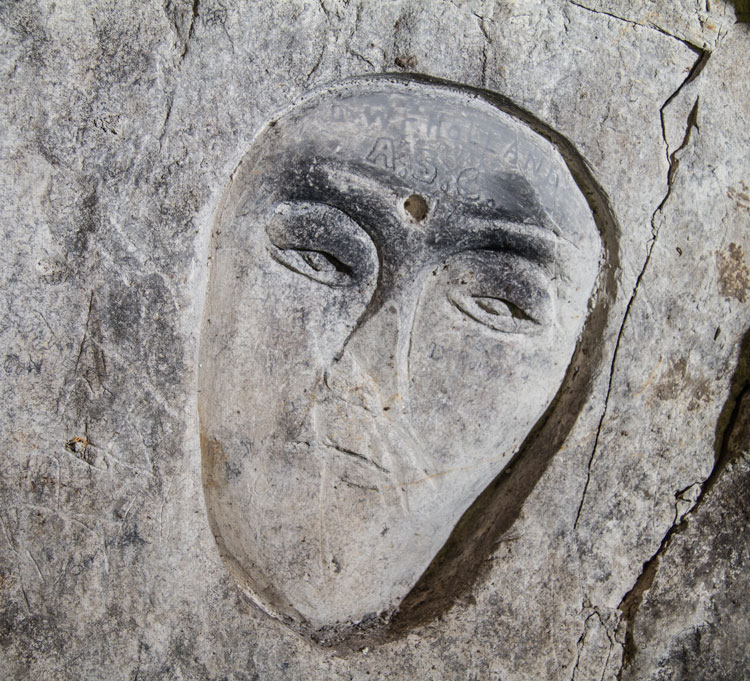
Carving of a face in the wall of an underground tunnel.
© Canadigm and the Durand Group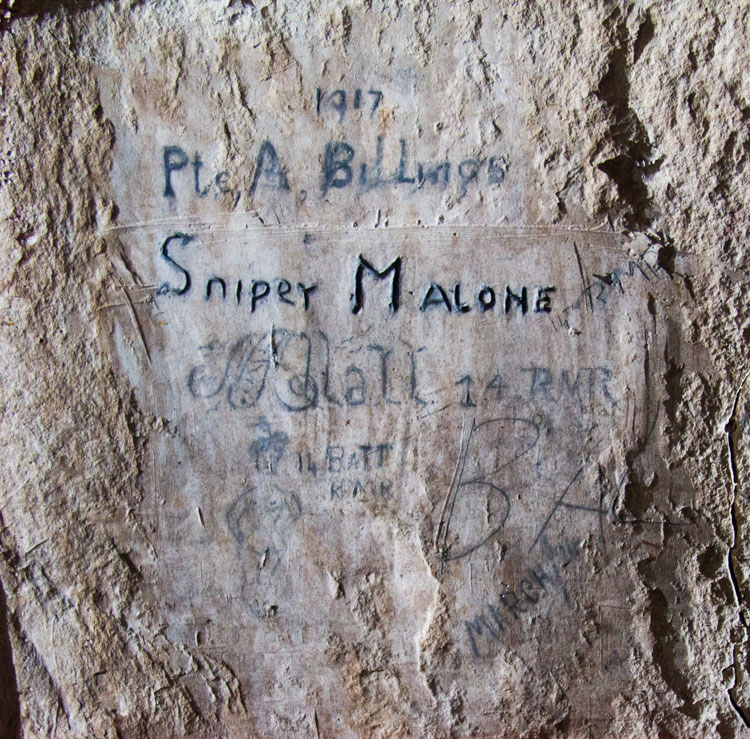
Inscription of the names of Private A Billings and Sniper Malone with the date 1917 on top. Just below the names to the right is the inscription “14 RMR.”
© Canadigm and the Durand Group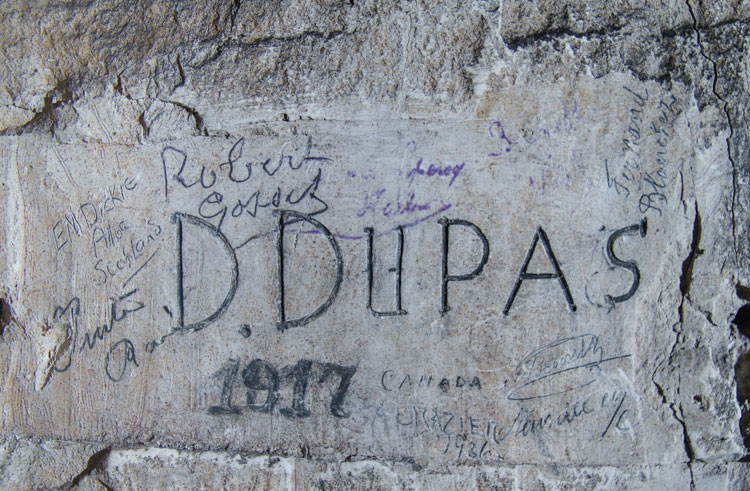
Inscription of the name D. Dupuis with the year 1917 inscribed below and other names inscribed around.
© Canadigm and the Durand Group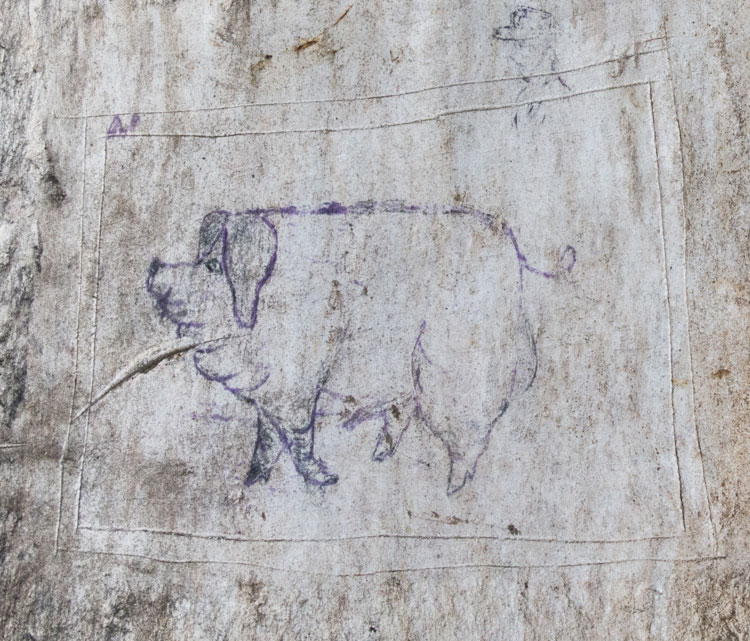
Carving of a pig in the wall of an underground tunnel.
© Canadigm and the Durand Group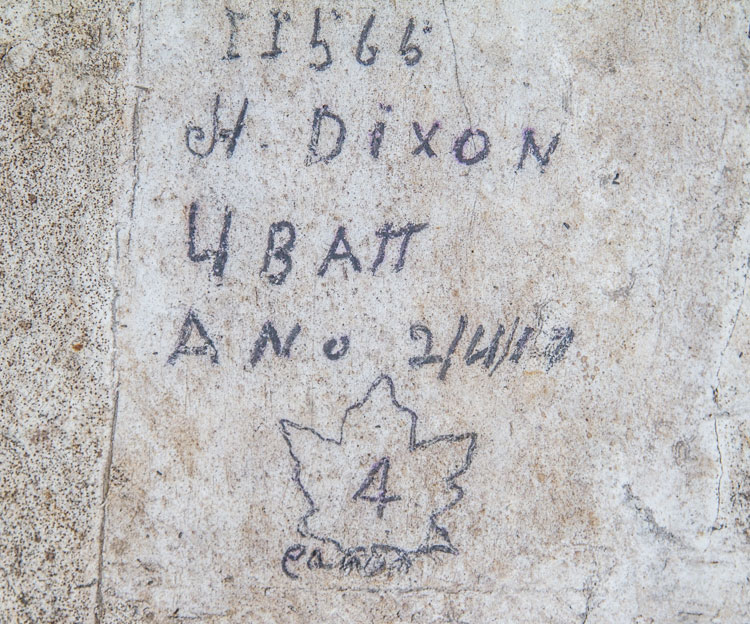
Inscription of regimental number 11565 with the name H. Dixon. Below is inscribed the date 2/4/17 and a maple leaf with the number 4 in the centre.
© Canadigm and the Durand Group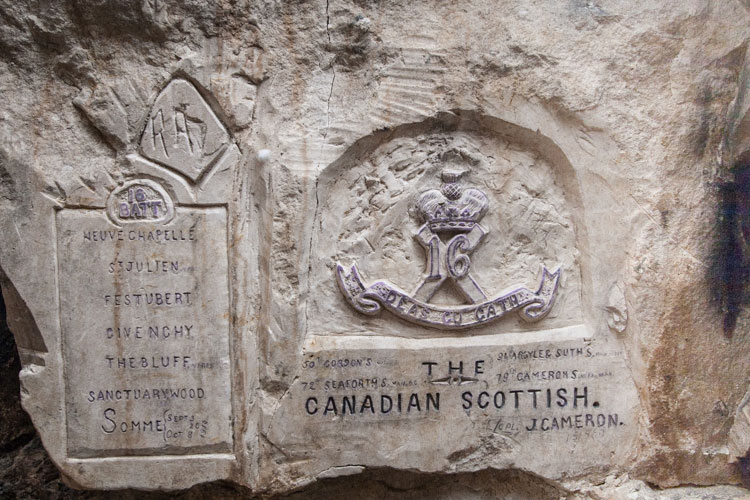
Carving of emblem for the 16th Battalion of the Canadian Scottish Regiment. To the left is a list of areas where Canadians saw combat.
© Canadigm and the Durand Group
Carving of the regimental badge of the 48th Highlanders of Canada. The name O. Green and regimental number 77711 are inscribed below.
© Canadigm and the Durand GroupYouth Remember the Battle of Vimy Ridge “Chalk it up to Remembrance”