
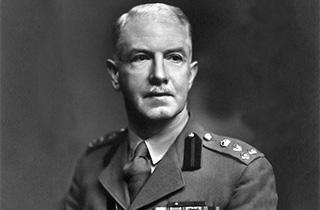
On January 21, 1916, Sinton was attending to the wounded during a fierce battle near the Orah Ruins in Mesopotamia (modern day Iraq). Despite being injured himself, he continued his efforts as the battle raged around him.
“For most conspicuous bravery and devotion to duty. Although shot through both arms and through the side, he refused to go to hospital, and remained as long as daylight lasted, attending to his duties under very heavy fire. In three previous actions Captain Sinton displayed the utmost bravery.”
- Victoria Cross citation, The London Gazette, June 21, 1916
Sinton was mentioned in Dispatches four times during the same campaign, and was also awarded the Russian Order of St. George.
After the war, Sinton transferred to the civil branch of the Indian Medical Service and would go on to a distinguished career as an expert in tropical diseases. He enlisted again in the Second World War before retiring with the honourary rank of Brigadier in 1943, although he spent the rest of the war continuing his work as a consultant on combatting malaria in various tropical areas. Dr. Sinton died at his home in Cookstown, Northern Ireland, on March 25, 1956, and was buried there with full military honours at Claggan Presbyterian cemetery.