
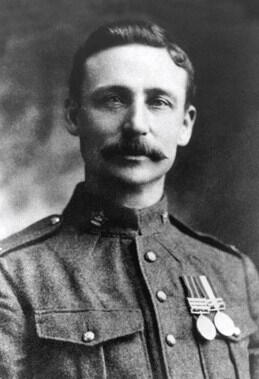

Military service
Burial/memorial information
Husband of Louise Hobson.
An extract from "The London Gazette," dated October 17, 1917, records the following:
During a strong enemy counter-attack a Lewis gun in a forward post in a communication trench leading to the enemy lines, was buried by a shell, and the crew, with the exception of one man, was killed. Sergt. Hobson, though not a gunner, grasping the great importance of the post, rushed from his trench, dug out the gun, and got it into action against the enemy who were now advancing down the trench and across the open. A jam caused the gun to stop firing. Though wounded, he left the gunner to correct the stoppage, rushed forward at the advancing enemy and, with bayonet and clubbed rifle, single-handed, held them back until he himself was killed by a rifle shot. By this time however, the Lewis gun was again in action and reinforcements shortly afterwards arriving, the enemy were beaten off. The valour and devotion to duty displayed by this non-commissioned officer gave the gunner the time required to again get the gun into action, and saved a most serious situation.
Digital gallery of Sergeant Frederick Hobson
-
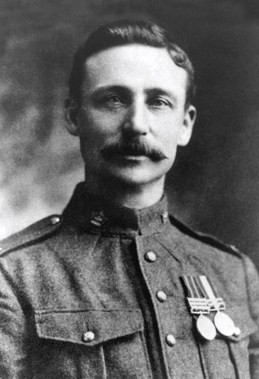
Photo of Frederick Hobson
-

VC Presentation
-
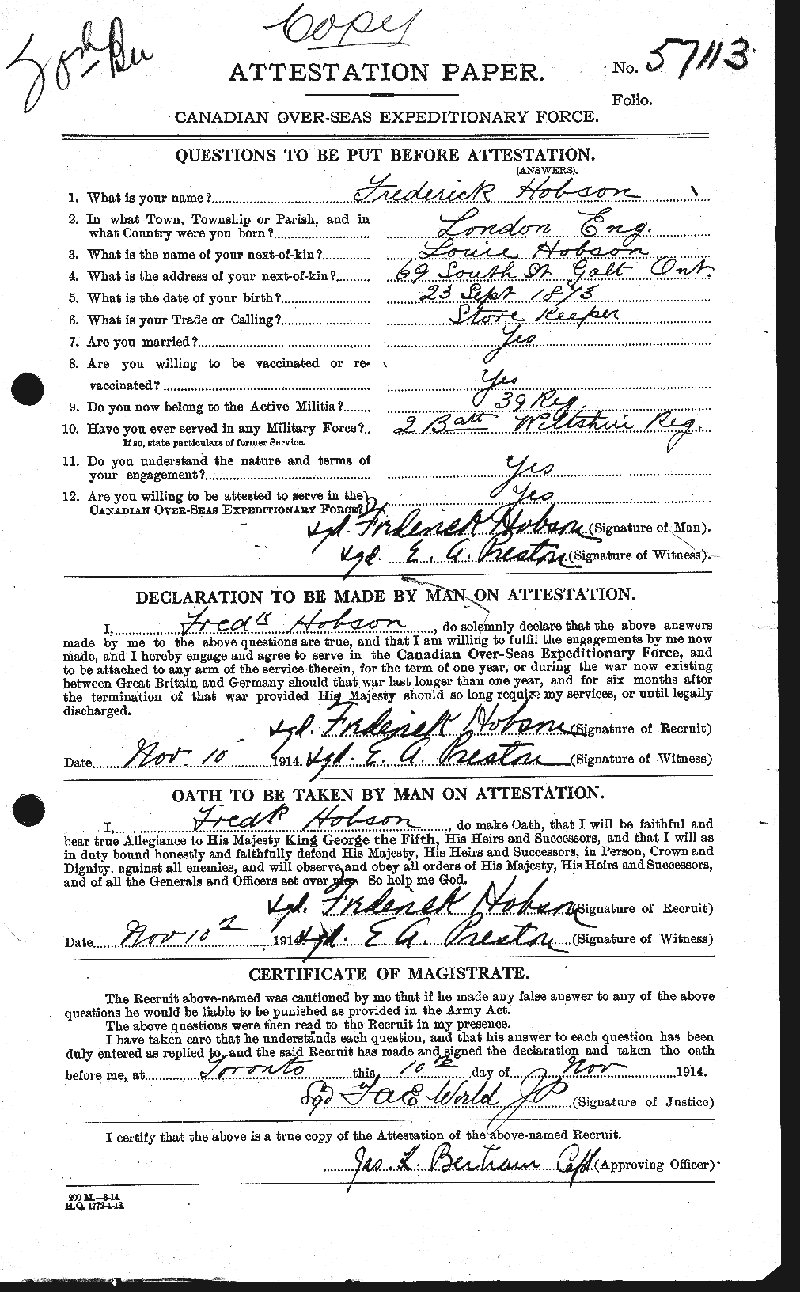
Attestation Paper (front)
-

Attestation Paper (back)
-
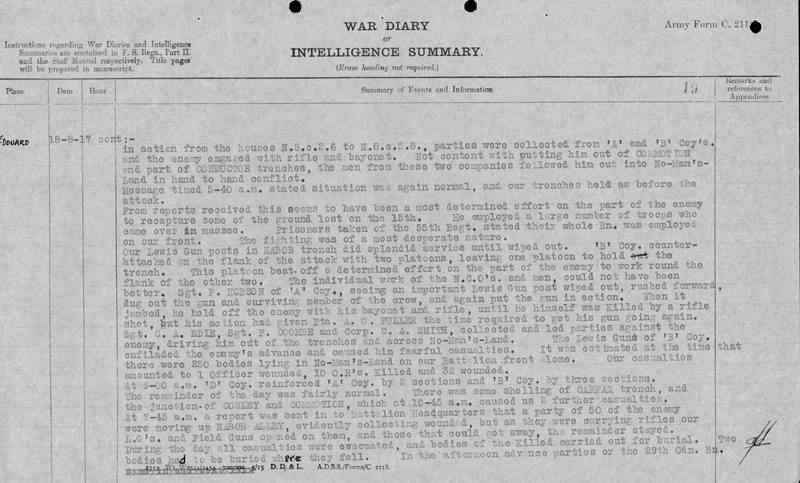
War Diary
Extract from 20th Battalion War Diary for August 1917 -
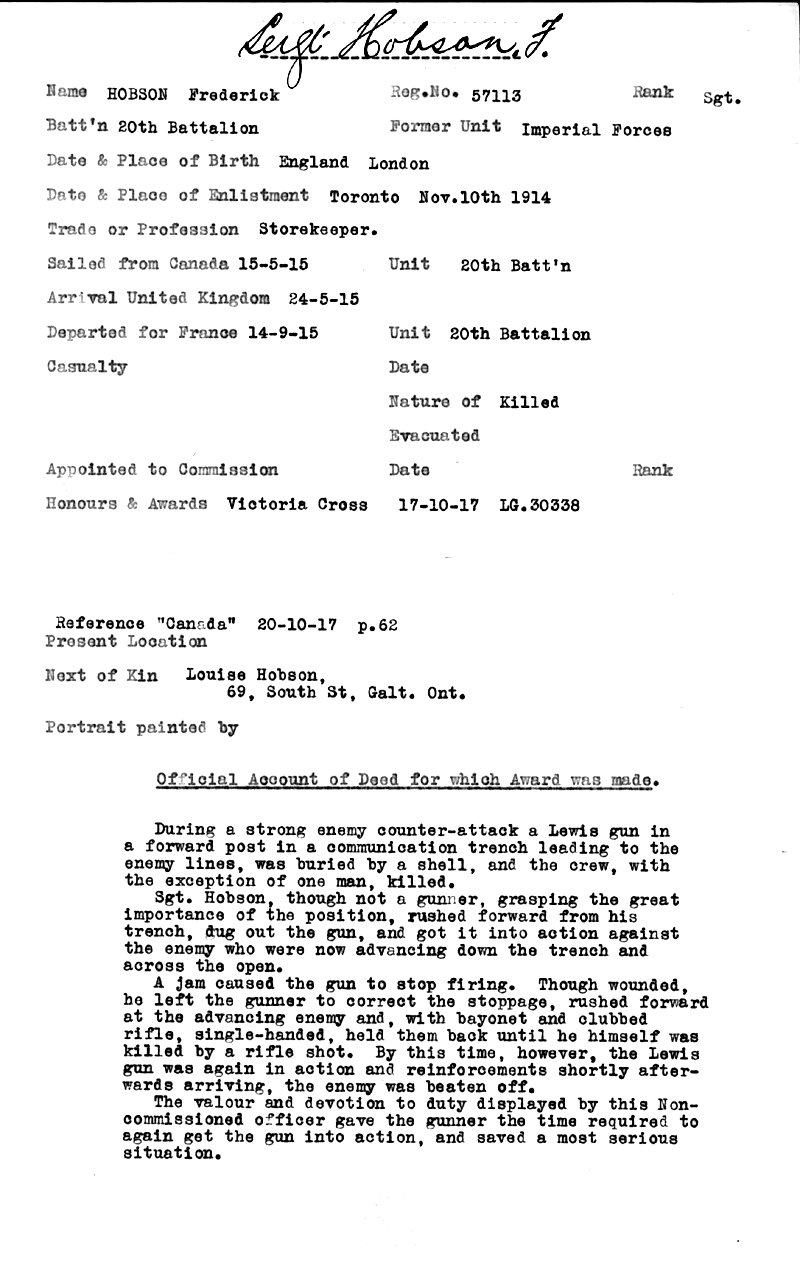
Award Citation
Personal Information Sheet -
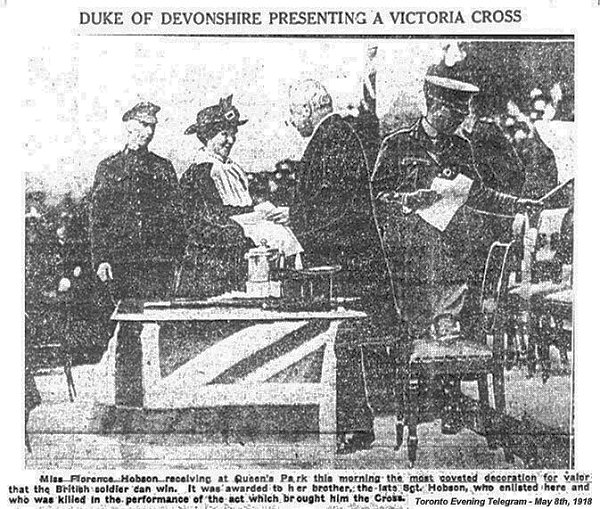
Newspaper Clipping
-
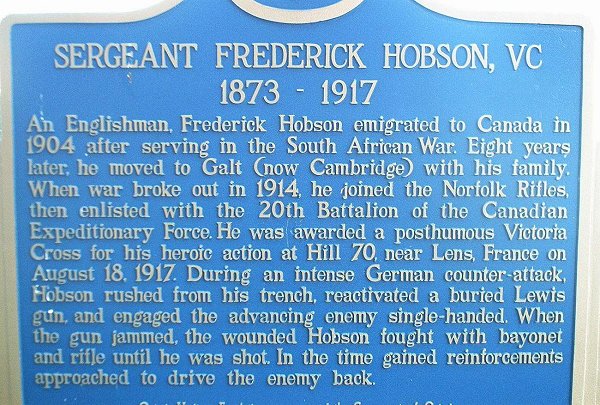
Plaque
Hobson's Ontario Historical plaque outside the Armoury in Galt (Cambridge), ON. -
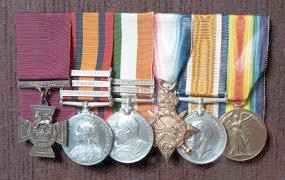
Medals
Submitted by Operation Picture Me -

Plaque
Submitted by Operation Picture Me -
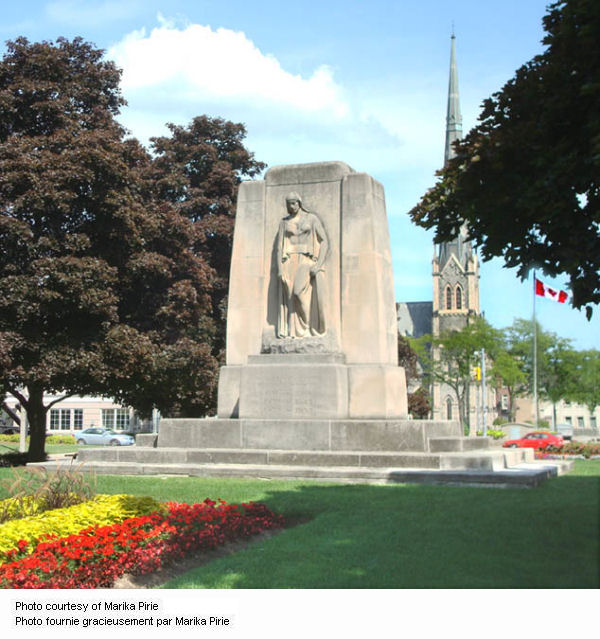
Galt War Memorial
The Cambridge (Galt) War Memorial, Queen's Square, Cambridge, Ontario. Circa 1930. Frances Loring and William Lyon Somerville.<P> Inscribed:"TO THEM ALL HONOUR / GUARD YE THEIR VICTORY / 1914-1918 / 1939-1945 / 1950-1953." -
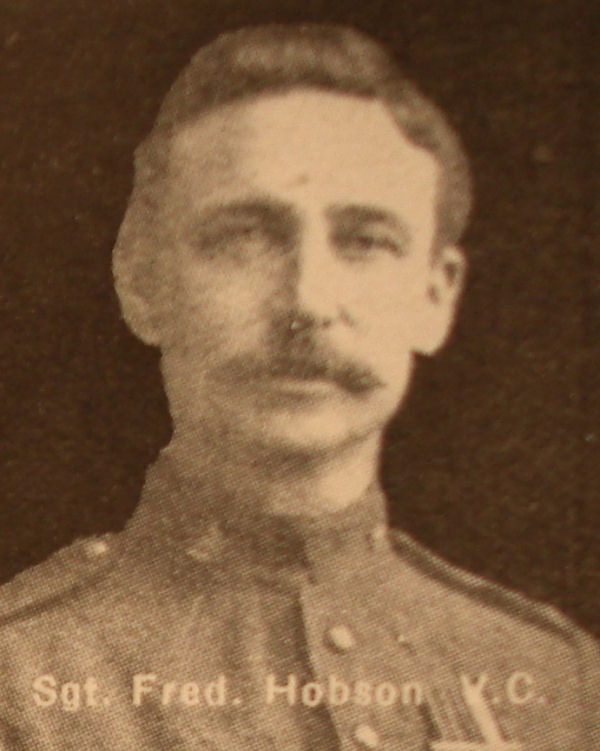
Photo of Frederick Hobson
In memory of the men and women from the Waterloo area who went to war and did not come home. From the booklet, Peace Souvenir – Activities of Waterloo County in the Great War 1914 – 1918. From the Toronto Public Library collection. Submitted for the project, Operation: Picture Me. -
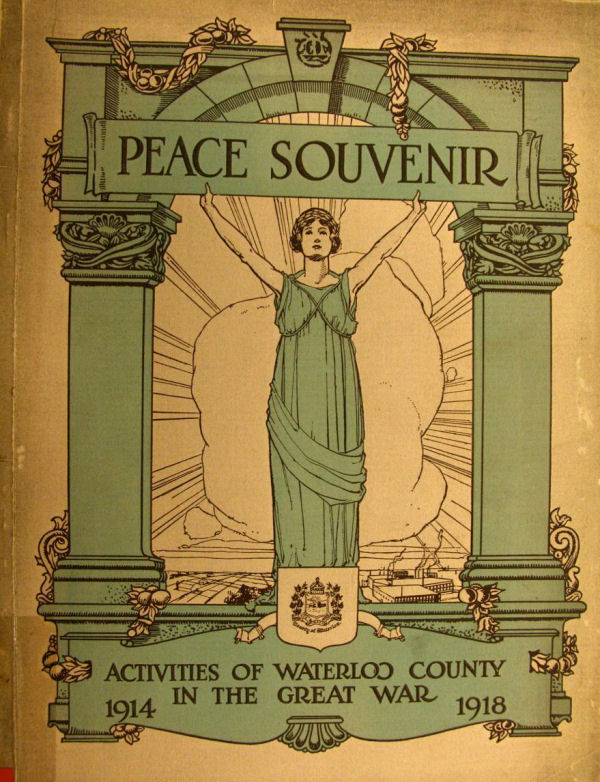
Waterloo Memorial Booklet
In memory of the men and women from the Waterloo area who went to war and did not come home. From the booklet, Peace Souvenir – Activities of Waterloo County in the Great War 1914 – 1918. From the Toronto Public Library collection. Submitted for the project, Operation: Picture Me. -

Inscription
His name as it is inscribed on the Vimy Memorial. Over 11,000 fallen Canadians having no known place of burial in France, are honoured on this Memorial. May they never be forgotten. (J. Stephens) -
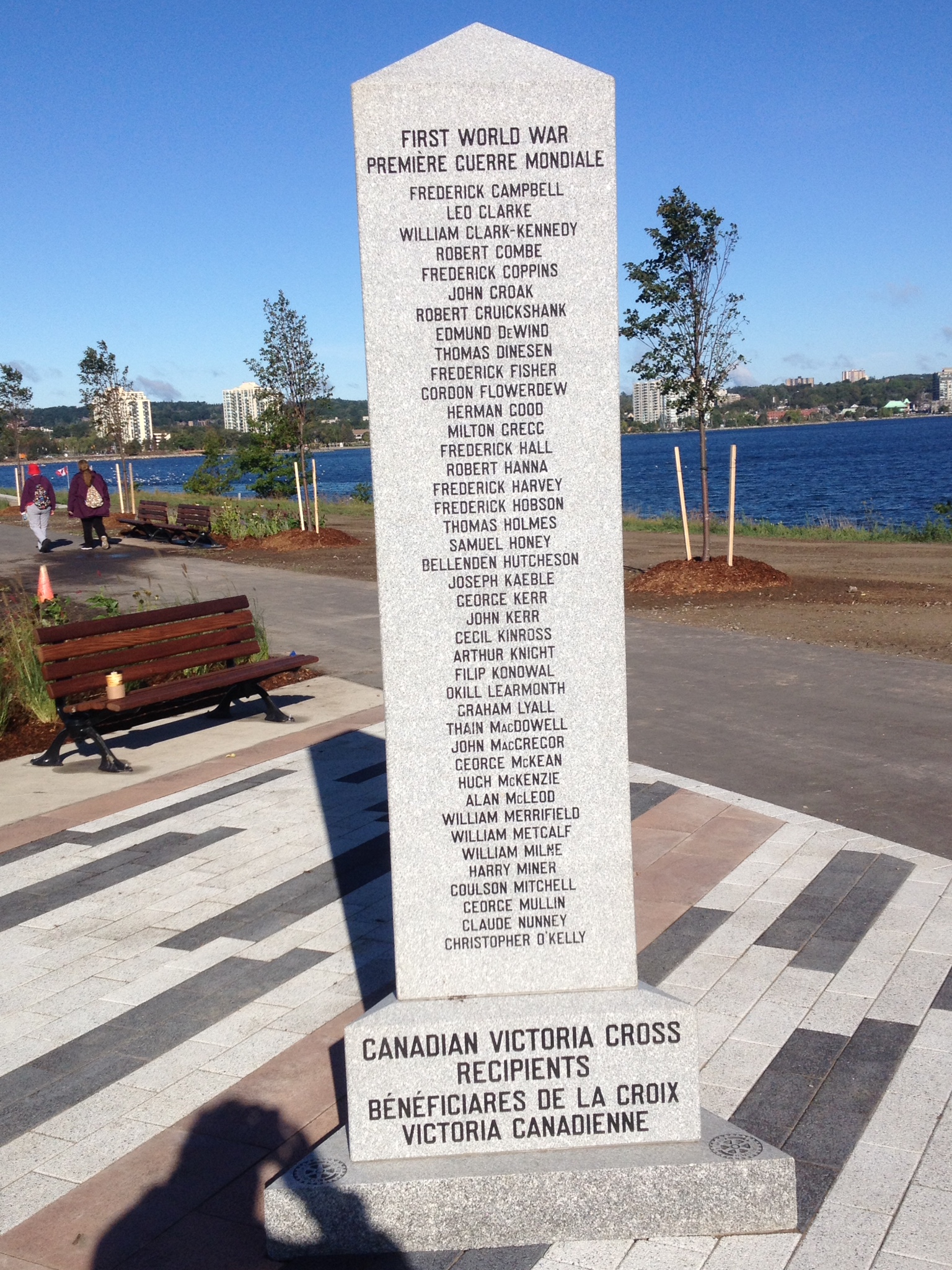
Cenotaph
Barrie Military Park, Canadian Victoria Cross Recipients, Cenotaph -
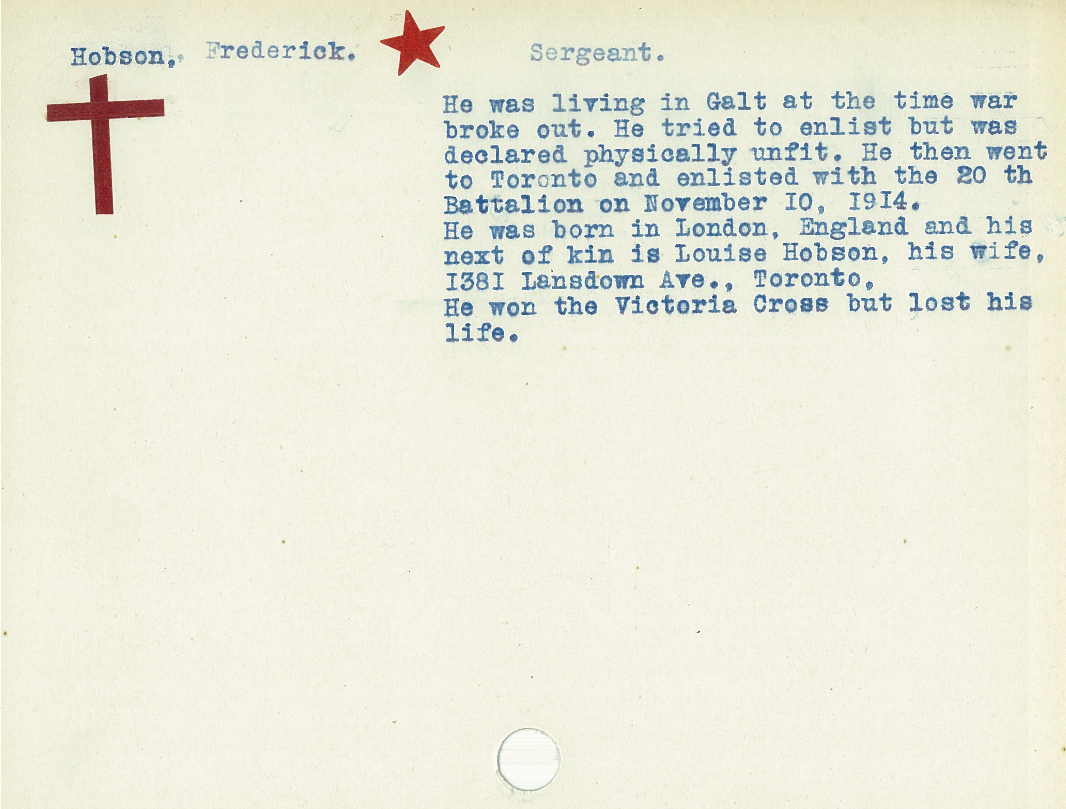
Biography
From the Kitchener Public Library collection of World War One Soldier Information Cards, Submitted for the project Operation Picture Me -
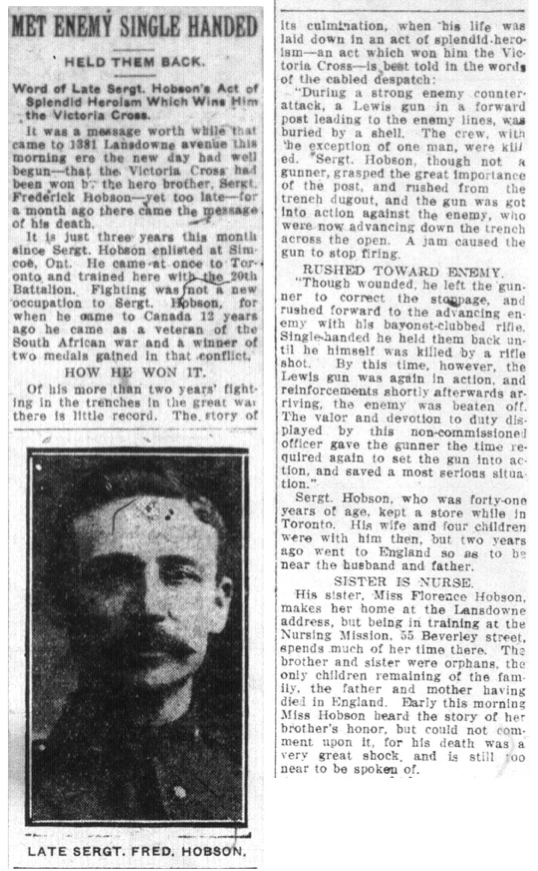
Newspaper clipping
From the Toronto Telegram October 1917. Submitted for the project Operation Picture Me -
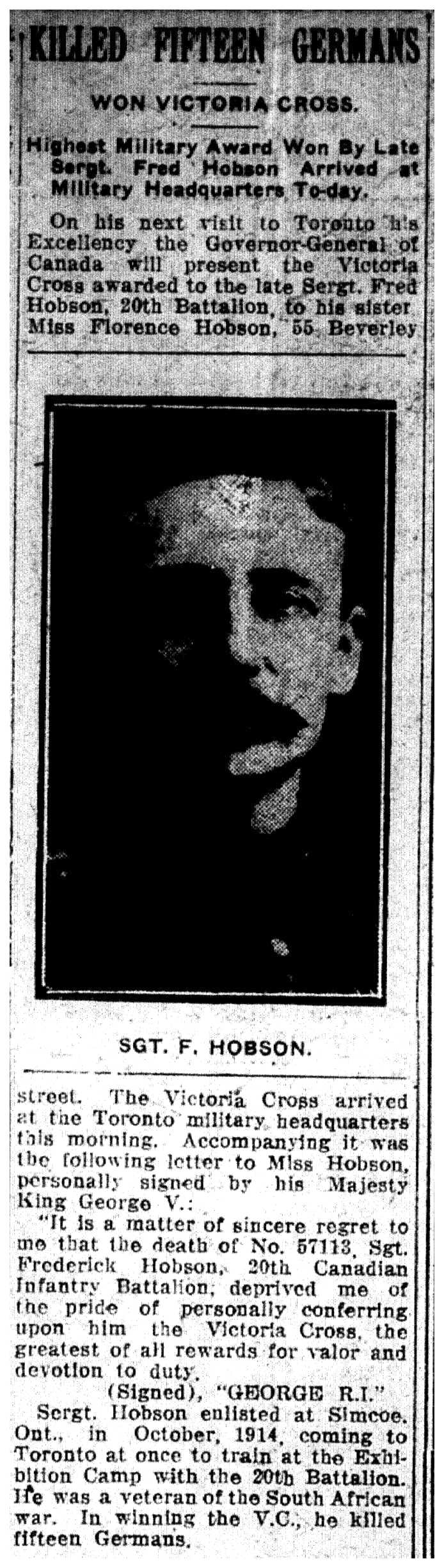
Newspaper clipping
From the Toronto Telegram March 1918. Submitted for the project Operation Picture Me -

Newspaper clipping
From the Toronto Telegram May 1918. Submitted for the project Operation Picture Me -
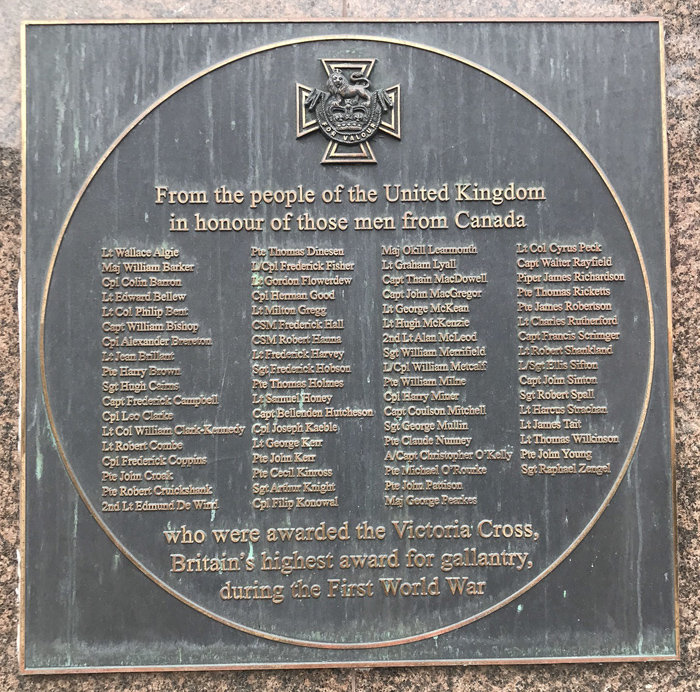
Honour roll
Memorial plaque in front of the United Kingdom High Commission in Ottawa to commemorate Canadians who have been awarded the Victoria Cross.
Digital gallery of
Sergeant Frederick Hobson
Digital gallery of
Sergeant Frederick Hobson
Digital gallery of
Sergeant Frederick Hobson
Digital gallery of
Sergeant Frederick Hobson
Digital gallery of
Sergeant Frederick Hobson
Digital gallery of
Sergeant Frederick Hobson
Digital gallery of
Sergeant Frederick Hobson
Digital gallery of
Sergeant Frederick Hobson
Digital gallery of
Sergeant Frederick Hobson
In the Books of Remembrance
Commemorated on:
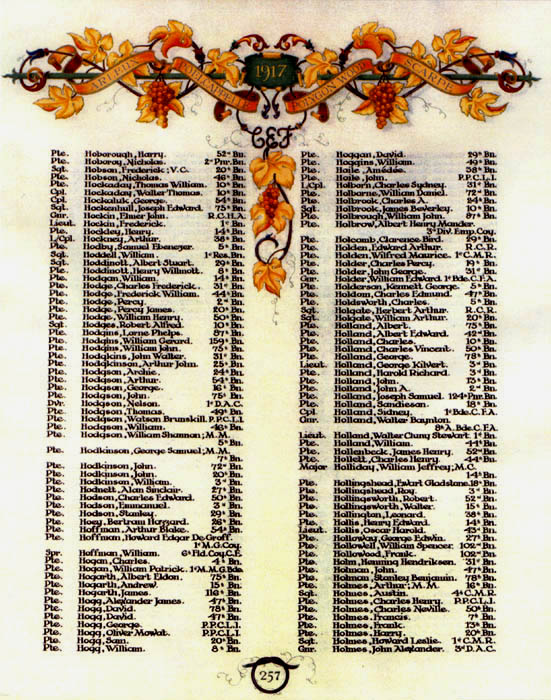
Page 257 of the First World War Book of Remembrance.
Request this page
Download this page
The Poppy Design is a trademark of The Royal Canadian Legion (Dominion Command) and is used with permission. Click here to learn more about the poppy.
Did we miss something?
Contribute information to this commemorative page
Do you have photographs, information or a correction relating to this individual’s virtual memorial? Learn more about the CVWM and the information we collect.