

Introduction
For Chastity Koosees, being a Canadian Ranger is more than just a job, it’s a calling rooted in service to her community. Originally from Kashechewan First Nation and now living in Timmins, Ontario, Koosees brings heart and resilience to everything she does.
Canadian Rangers stand on the front lines of emergency response—located in 200 remote, isolated, and coastal communities across Canada. They are part-time reservists who are responsible for protecting Canada's sovereignty as well as defending our coastal interests. Most Canadian Ranger patrols are located north of 60 and along Canada's east and west coasts. Approximately 5,000 Rangers patrol these coasts, helping to train members of our military by providing local knowledge and expertise, and participating in search and rescue operations.
From junior Ranger to leader
Koosees’ journey began when she joined the Junior Canadian Rangers (JCR) program at the age when she was about 12 years old. “I never really heard of the JCR program until my friend introduced me.”
She was drawn to the Rangers’ community-focused mandate. “What made me want to become [a Ranger] was seeing what they did in our communities,” says Koosees. “Like help people and all the cool stuff they got to do, like the survival skills going out on the land.”
Those early experiences laid the foundation for her adult service.
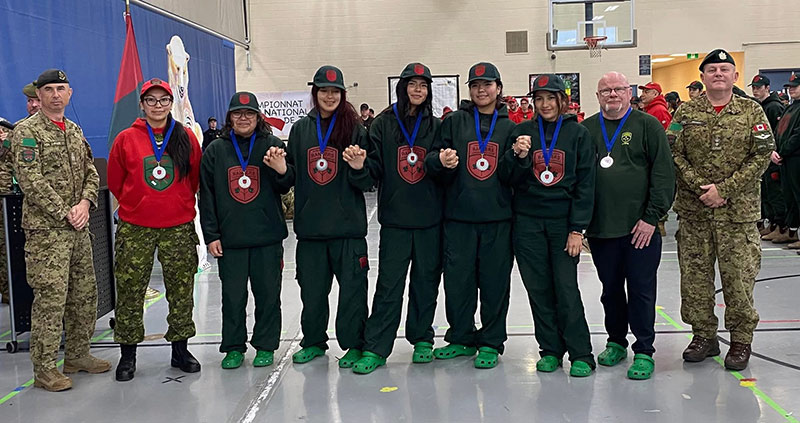
Chastity Koosees is committed to passing on her knowledge to the next generation of Canadian Rangers
Passing on knowledge
For Koosees, Camp Loon, an annual summer program, was one of her more memorable adventures with the Junior Rangers. “It happens every summer around June or July. And we do a lot of different skills training there, like canoeing, ATV, boating, rifles, archery and first aid training. One of the main goals with Camp Loon is to build leadership and confidence within the juniors and ourselves.”
Today, Koosees likes to give back by working with Junior Rangers in Timmins, Ontario. “With the Junior Rangers, I help out with a lot of programs … we do programs after school … and we do the three learning circles.”
These programs allow young people to stay connected to their culture, their land, and each other, while gaining skills they can use for the rest of their lives.
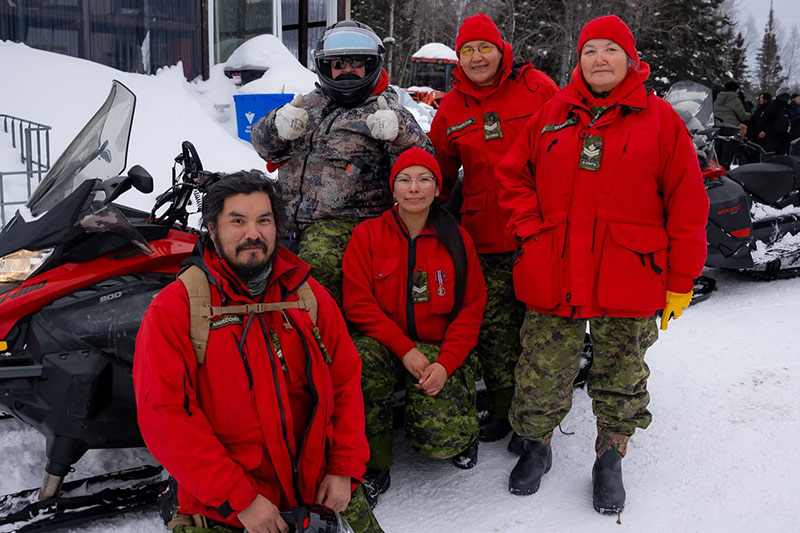
Koosees and her fellow Rangers are proud of the work they do. They are committed to keeping their communities and country safe.
Skills that matter
Koosees says the skills she gained working with the Canadian Rangers have shaped her life. These skills are not only useful in everyday life but critical when remote communities face danger.
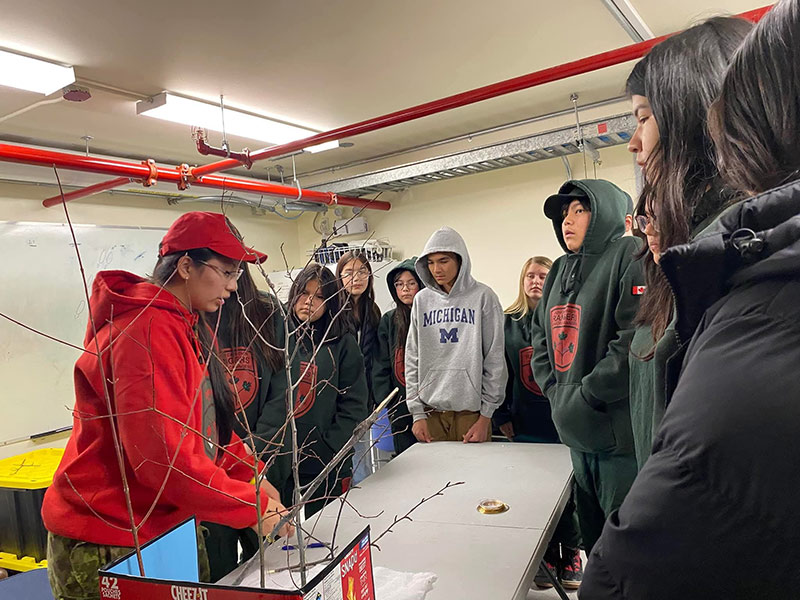
Koosees enjoys passing her knowledge on to the Junior Rangers.
From wildfires to floods, the Rangers are often the first to respond. Koosees has seen this firsthand. “In my community, most of the emergencies we face are floods. So, the Canadian Rangers in that area help with the evacuation, like helping guide people to the planes with their belongings … because the airport support group is not big enough to handle that many people in such little time.”
Mentorship and inspiration
Koosees says she has also been inspired by leaders within the Rangers. One of them is Sergeant Janet Butt, a warrant officer she first met at Camp Loon when Butt was a medic. “She’s been like a mother, a friend.”
Mentorship like this shows how the Rangers are not just about survival skills—they are about building relationships, trust, and community.
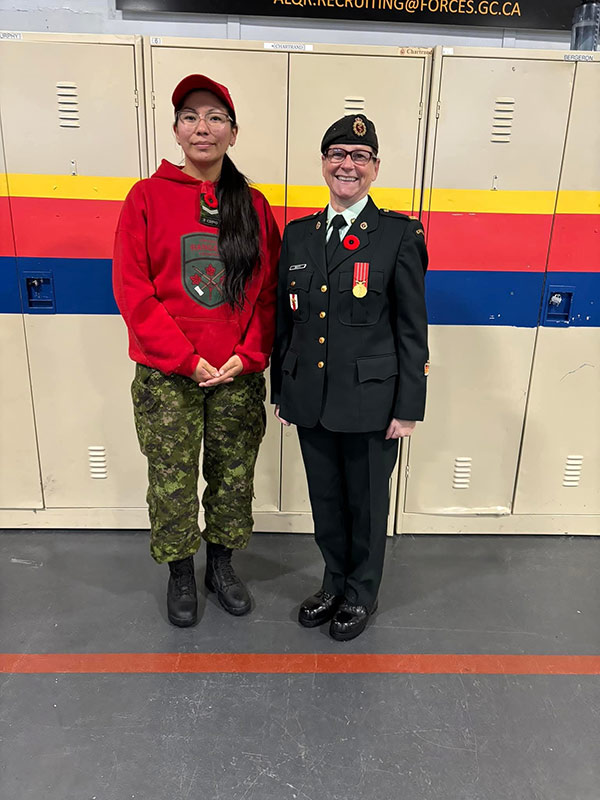
Koosees standing with Sergent Butt, the first female Canadian Ranger instructor in Ontario. Koosees credits Butt with giving her the confidence to become a Ranger.
Serving Canada at home
The role of Canadian Rangers is critical. They provide a military presence in support of Canada's sovereignty. They report unusual activities, collect data of significance in support of military operations, and conduct surveillance and sovereignty patrols as required. They also support their communities during emergencies and pass on knowledge to young people.
As Koosees explains, the work may start with fun, but it grows into something much bigger. She also notes that there is no compulsory retirement age for Canadian Rangers. They can continue to serve as long as they are physically and mentally capable of doing so.
For Chastity Koosees, serving as a Ranger is both personal and patriotic. It means keeping her community safe, teaching the next generation, and helping strengthen Canada’s most remote regions.
Her story is a reminder that military service does not always take place overseas. It is also lived out here at home, along rivers, through forests, and across the vast northern landscapes of Canada.
With courage, integrity, and loyalty, Koosees is leaving her mark. She is a Canadian Ranger. Discover more stories.
Video
The well-being of Canadian Veterans is at the heart of everything we do. As part of this, we recognize, honour and commemorate the service of all Canadian Veterans. Learn more about the services and benefits that we offer.
If you are a Veteran, family member or caregiver, the support of a mental health professional is available any time at no cost to you. Call 1-800-268-7708.