
Introduction
In 1971, the editors of Tekawennake newspaper paid Gilbert Monture the following tribute:
It's a long way from a two-roomed cabin on the Six Nations Reserve shared with eight brothers and sisters to the position of world citizen.
Monture was a Mohawk from the Six Nations of the Grand River near Brantford, Ontario. He was a descendant of Joseph Brant, and like his famous ancestor, he was twice drawn into international conflict.
First World War
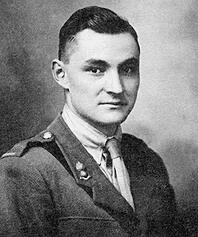
When the First World War began, Monture was studying mining and metallurgy at Queen's University in Kingston, Ontario. In late 1917, he postponed his studies to enlist, becoming a gunner with the Royal Canadian Field Artillery.
A few months later, he transferred to the Royal Canadian Engineers (RCE) and received his commission as an officer. He sailed overseas in July 1918, however Lieutenant Monture would not see any battlefield action as illness kept him in England past war's end that November. He returned to Canada the following July.
Return to Canada
Monture resumed his studies at Queen's and, in 1921, received his Bachelor of Science degree in mining engineering. Two years later, he accepted a post in Ottawa with the Department of Mines and Resources. He worked for this department for 33 years, becoming Chief of the Mineral Resources Division in the Mines and Geology Branch.
In 1933, the 38-year-old public servant joined the militia and served for five years as a Lieutenant in the RCE's munitions and supply company.
Second World War
When the Second World War broke out, it seemed natural he would join the active force. However, a hand injury suffered in a mining accident years earlier prevented him from being accepted for overseas duty, a turn of events that he found very disappointing.
In the end, the army's loss proved to be the Allied forces' gain. In early 1944, Monture was named Canadian Executive Officer of what was known as the Combined (Canadian-American-British) Production and Resources Board. He put his education and experience to use in Washington, helping to allocate strategic minerals for the war effort.
Following the war
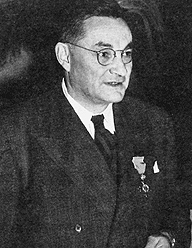
In 1946, Gilbert Monture was named an Officer of the Order of the British Empire (OBE) for his work with the Production and Resources Board. Yet, his reputation as a strategic minerals planner was only just beginning. Monture would conduct similar planning during the Korean War and for the North Atlantic Treaty Organization (NATO).
He also sat on several worldwide committees dealing with mineral-economic matters as the Canadian representative on the British Commonwealth and in the United Nations.
In 1958, in recognition of his many significant achievements, the Six Nations of the Grand River made him an honorary chief, naming him Ohstoserakówa —Big Feather.
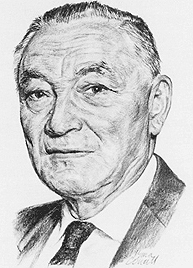
For his many contributions throughout his lifetime, he received several honours and awards, including:
- Honorary Doctor of Science, University of Western Ontario, 1966.
- Vanier Medal, Institute of Public Administration of Canada, 1966.
- Officer, Order of Canada, 1967.