
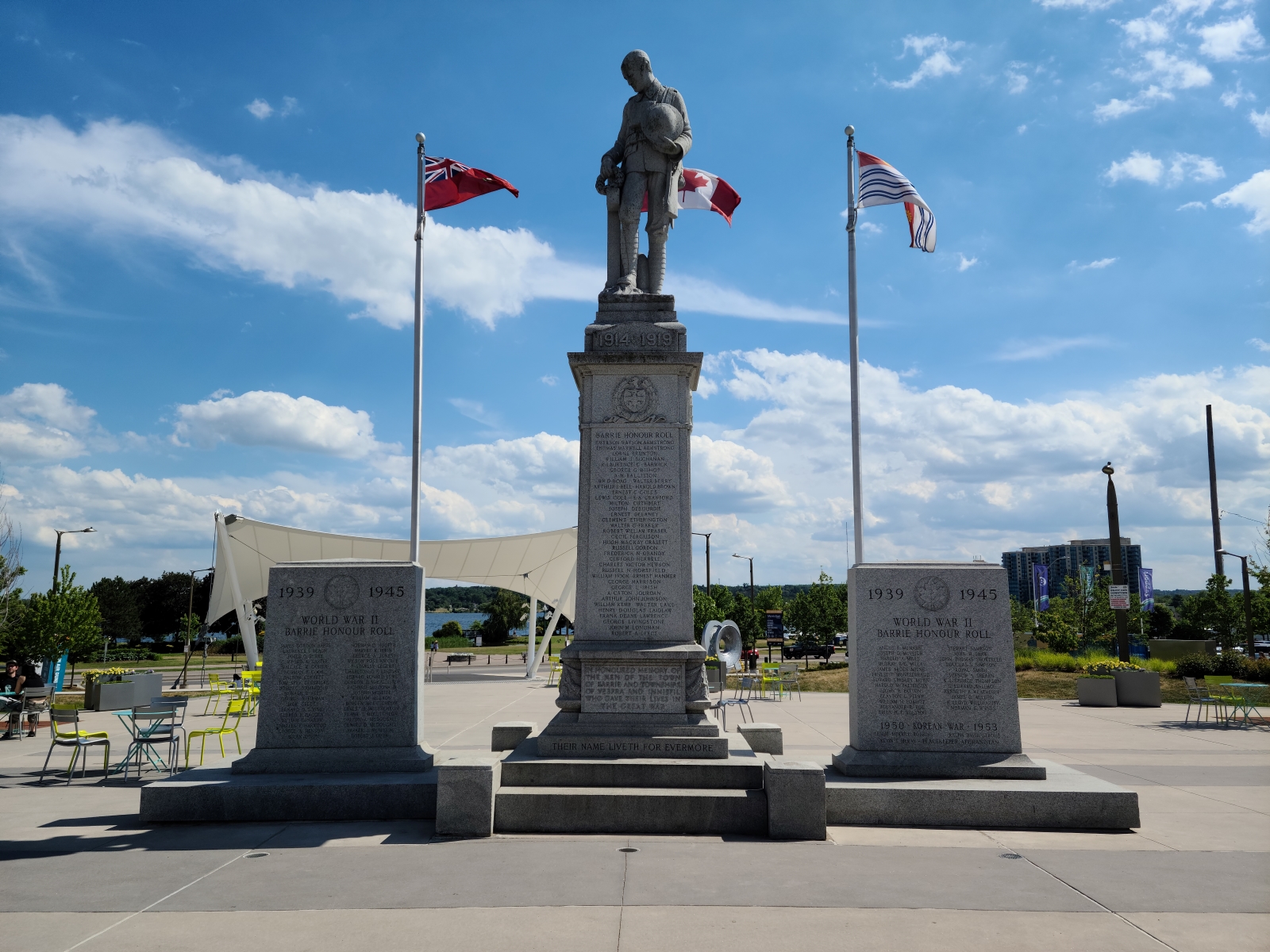

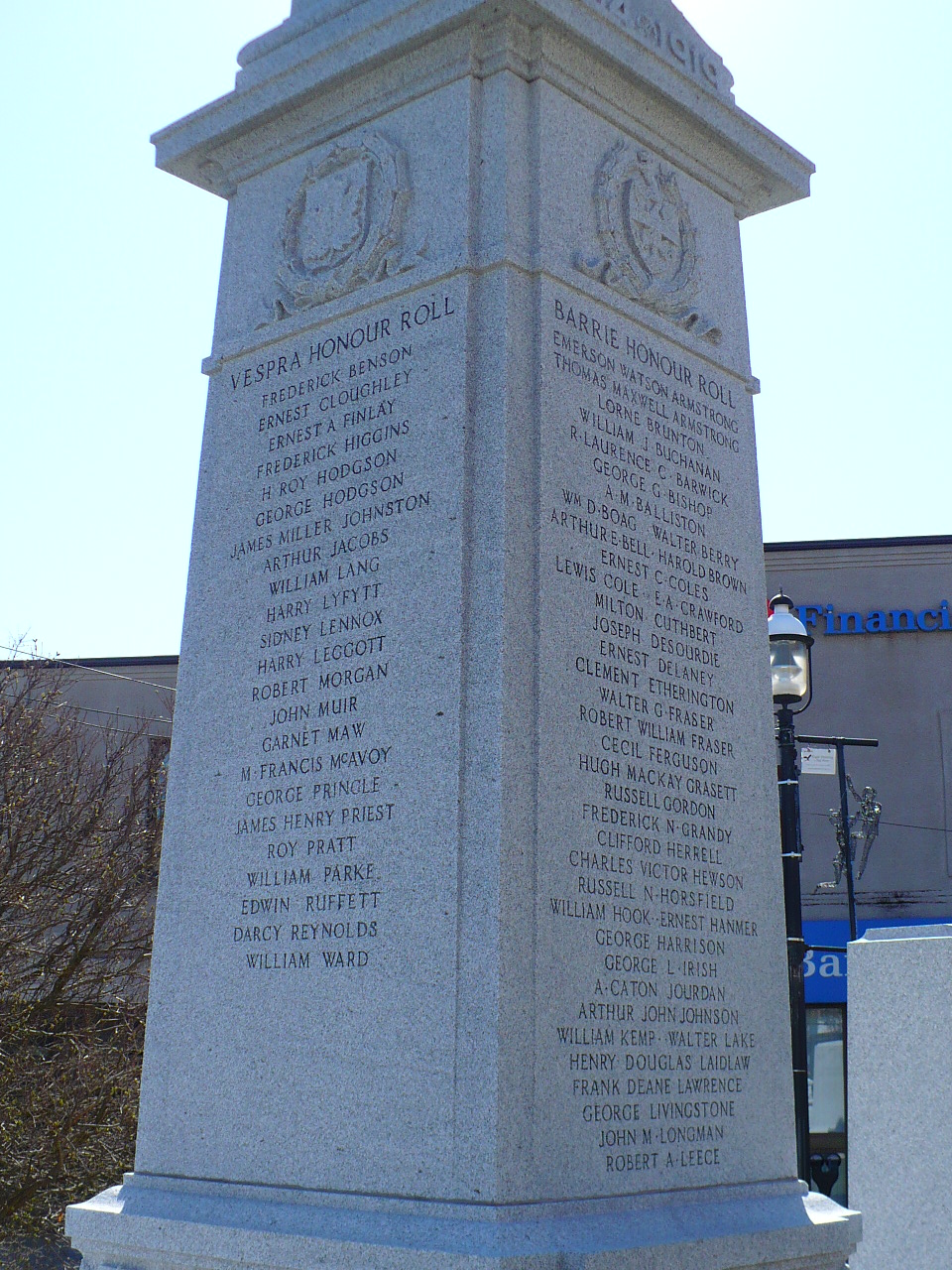


The Barrie Cenotaph was constructed in memory of Simcoe County fallen heroes of the First World War and dedicated on June 28, 1922. The cenotaph is unique in that it lists the end of the war as 1919 rather than 1918. While fighting ceased after German surrender in 1918, those responsible for the monument consider the formal end of the war to be the signing of the Treaty of Versailles - June 28, 1919. The cenotaph was dedicated on this same day in 1922.
Eleven designs were submitted and the design by McIntosh Co., of Toronto, in conjunction with J.F. Murphy, of Barrie was selected. The cenotaph is 23 feet high, with a nine foot statue on the top. The statue is a soldier in uniform, his helmet removed as he places a floral wreath on a crucifix grave that represents a fallen comrade. The main monument is made of Stanstead, Quebec granite and the statue is of Barrie granite.
Etched on the sides of the cenotaph are emblems significant to the soldiers that include insignia's of Canada's Military Engineers Branch, Royal Canadian Medical Services, Artillery Branch and Air Operations Branch. There are also two numbers, 157 and 177. These are the numbers of two Simcoe County based battalions raised by the Grey and Simcoe Foresters. This group, a Canadian Infantry Regiment, combing groups based in the Owen Sound and Barrie Regions holds a storied history dating back to its formation in September of 1866. They were active in both World Wars and are still operating to this day, maintaining a small museum near the cenotaph.
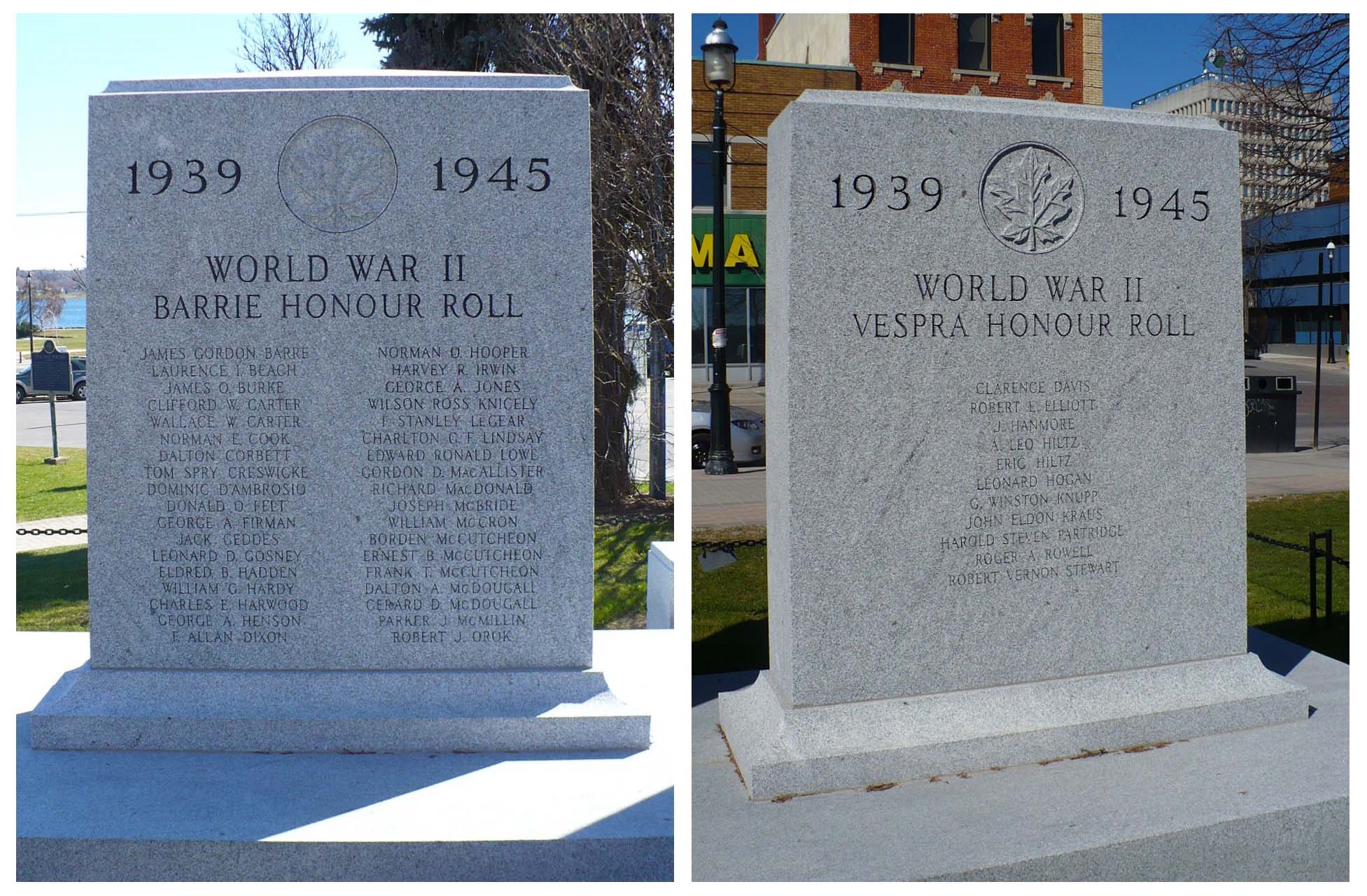
Two slabs were later added commemorating the fallen heroes of the Second World War, Korean War, and peacekeeping missions in Afghanistan. In 2018, the cenotaph was refurbished and a new base was installed. It was moved a few feet over to sit in the center of the newly constructed platform.