
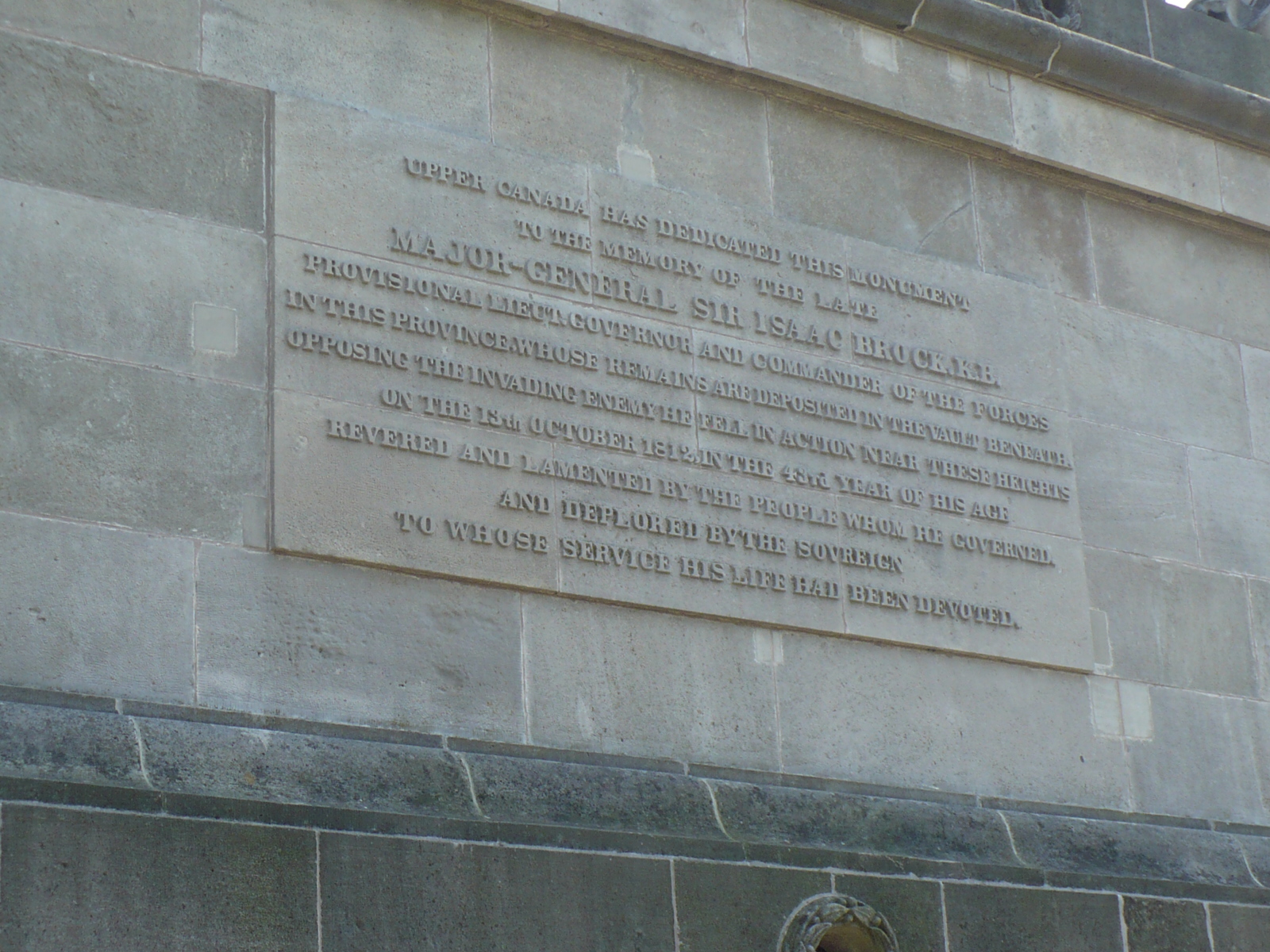
Sir Isaac Brock was killed at the Battle of Queenston Heights on October 13, 1812, at the defeat of the invading American forces. Construction of the first monument to Brock began on June 1, 1824. On October 13, 1824, Brock's body was removed from the bastion at Fort George and interred under the monument. Over 8,000 spectators gathered for the procession along the route from Fort George to Queenston. By 1827, the tower was completed and measured 40 metres in height.
On April 17, 1840, the monument was damaged by a bomb set off at the base of the stairs. It was suspected that the charge was detonated by Benjamin Lett, an American sympathiser who was part of the Upper Canada Rebellion. The monument's architect, Francis Hall, insisted that it could be restored. However, many felt that a new tower should be erected to highlight their respect for Brock, and the indignation they felt towards the vandalism.
Construction on the second monument began in 1853. Designed by William Thomas, the monument was built entirely out of Queenston limestone and measured 56 metres in height. It was opened to the public in 1859. The 1853 monument was funded by public subscription from all parts of upper Canadian society.
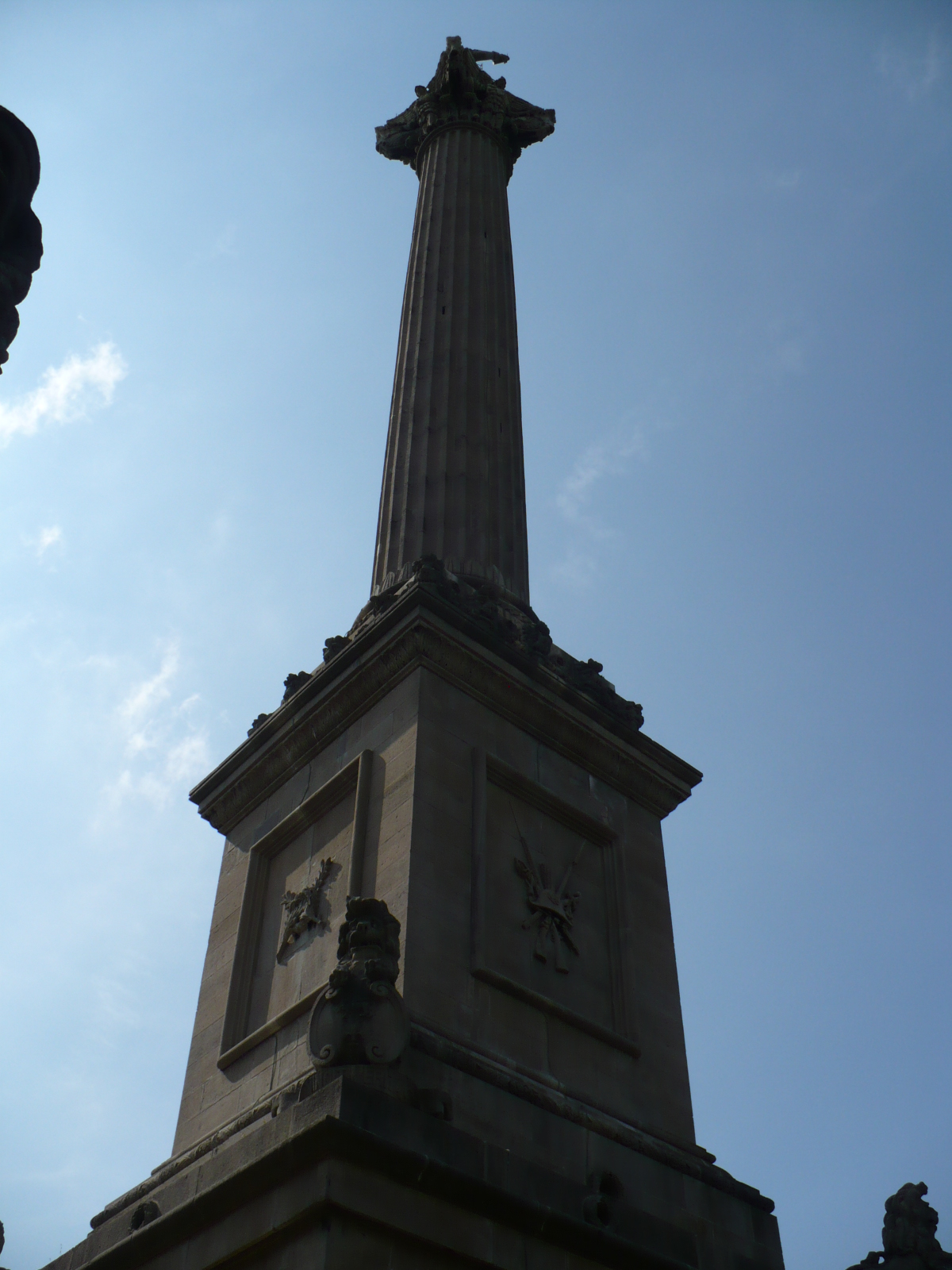
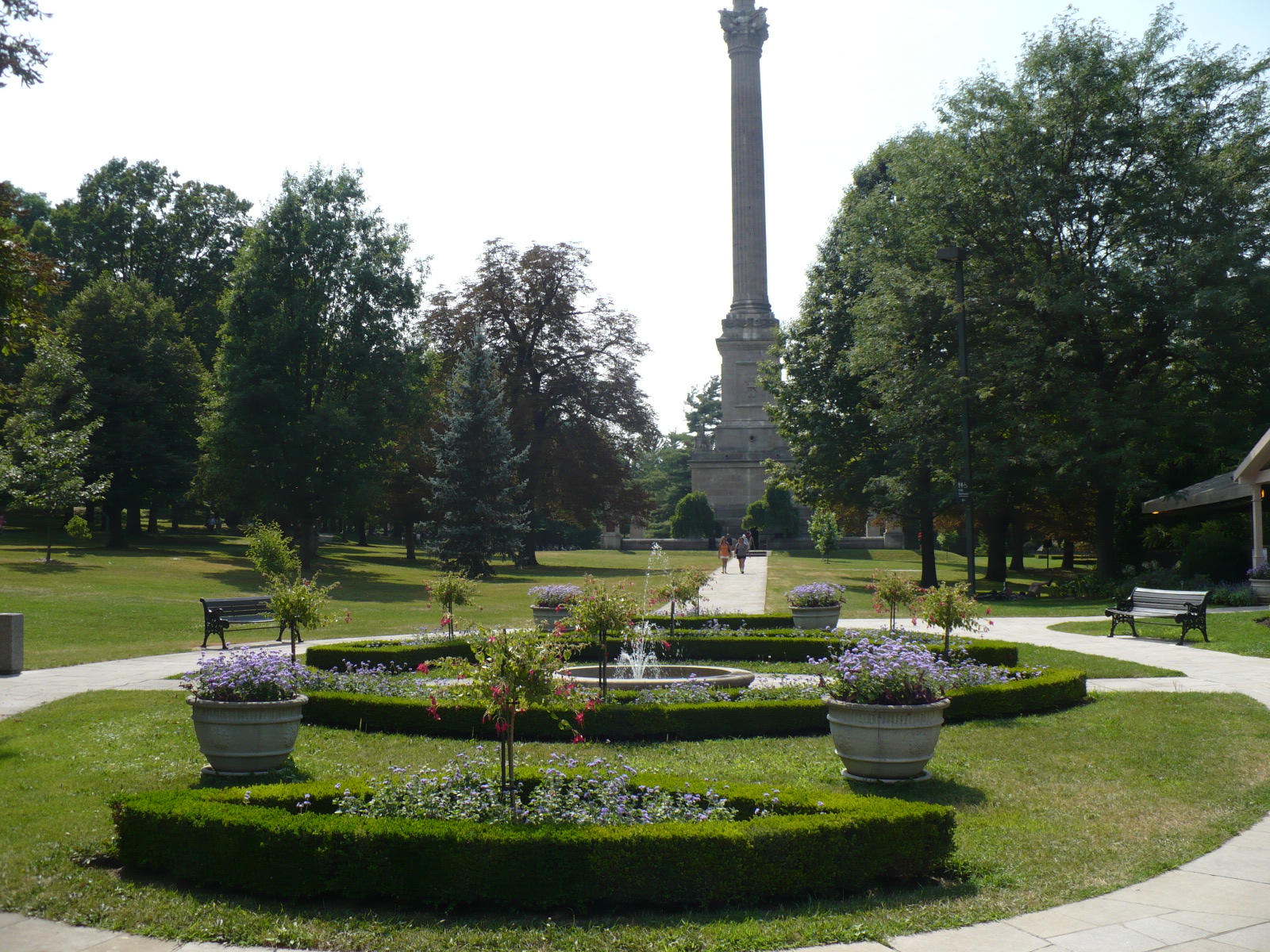
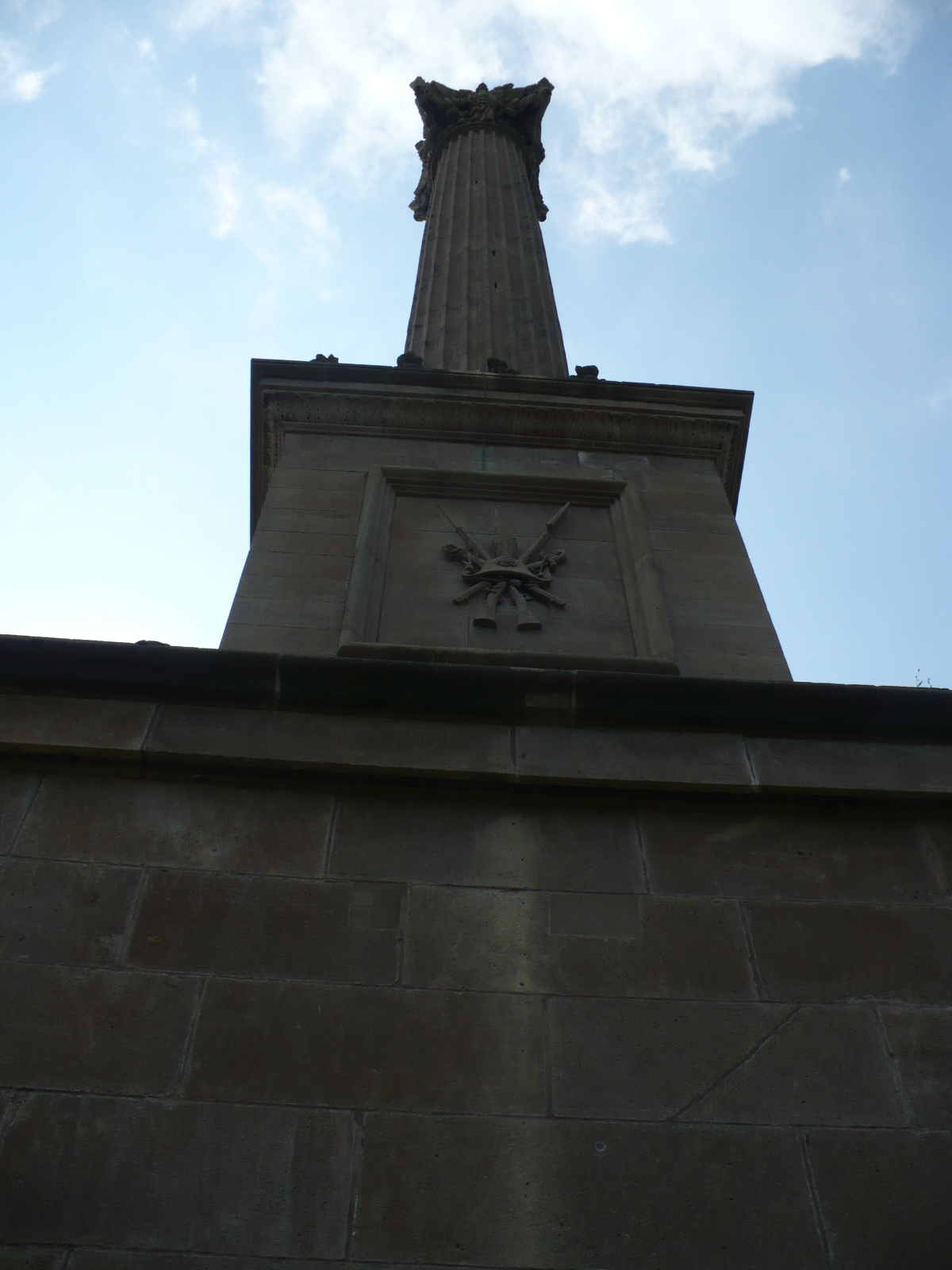
Brock’s Monument is a Neoclassical design constructed of stone, featuring a 4,8 metre (16 foot) statue of Major General Sir Isaac Brock atop a fluted column. The column rises from an elaborate pedestal anchored on a rusticated square base. Trophies of classical armour stand at the corners of a low enclosing wall and four figures symbolizing victory adorn the column’s capital. An interior stone staircase leads to a viewing deck at the top. A crypt beneath the monument contains the bodies of General Brock and Colonel MacDonnell.
Brock’s Monument is a Classified Federal Heritage Building because of its historical associations, and its architectural and environmental values.