
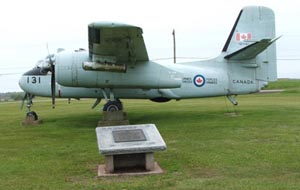
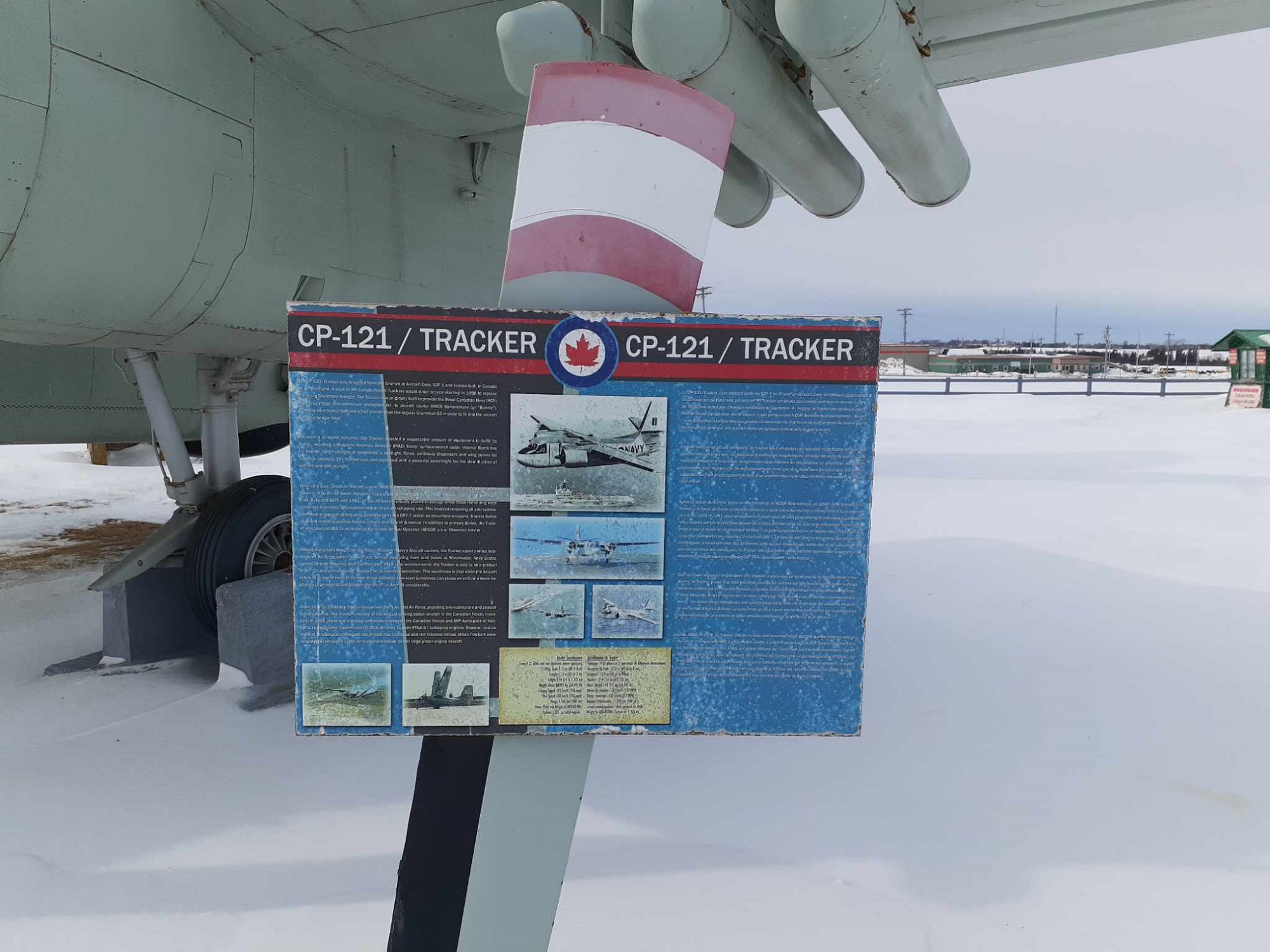
The aircraft known as the Canadian Tracker was designed from the Grumman Aircraft Corp. S2F-1 and license-built in Canada by de Havilland Canada. 99 Canadian-built Trackers entered service starting from 1956 replacing the older Grumman Avengers. The purpose of the Tracker was to provide long-range anti-submarine protection for the HMCS Bonaventure aircraft carrier, also known as “Bonnie”. The trackers were also built a foot and a half shorter than a regular Grumman S2 so they could fit into the hanger bays of the carrier.
The Canadian Tracker had an impressive amount of equipment including: Magnetic Anomaly Detector boom, surface-search radars, internal bomb bays, torpedoes, power spotlight for identifying surface contacts in the dark, flares, sonobuoy dispensers and rockets.
Canadian Tracker 131 was the 30th built by De Havilland in the late 1950s and had the serial number 1531. In the year 1969 the Air Force took over the Trackers and re-rolled the aircraft to have an anti-shipping role. They re-designated the plane CP-121 and the serial number 1531 was changed to 12131. This change involved removing all anti-submarine electronics and adding wing pylons equipped with CRV-7 rocket air-to-surface weapons. Common duties included anti-drug patrols, fishery patrols as well as search and rescue operations. The Tracker was also used as an Airborne Electronic Sensor Operator trainer during the time it spent with the 880 Maritime Reconnaissance Squadron at CFB Summerside. In 1990, Tracker 12131 was retired from service, and application was made to the Department of National Defence to have the Tracker added to the Air Force Heritage Park P.E.I.
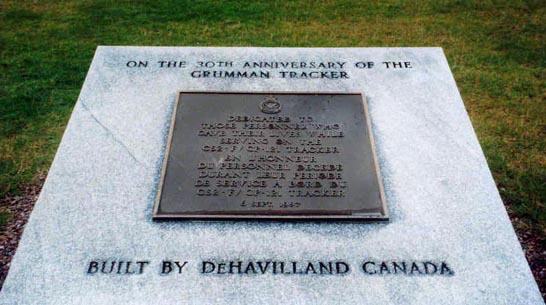
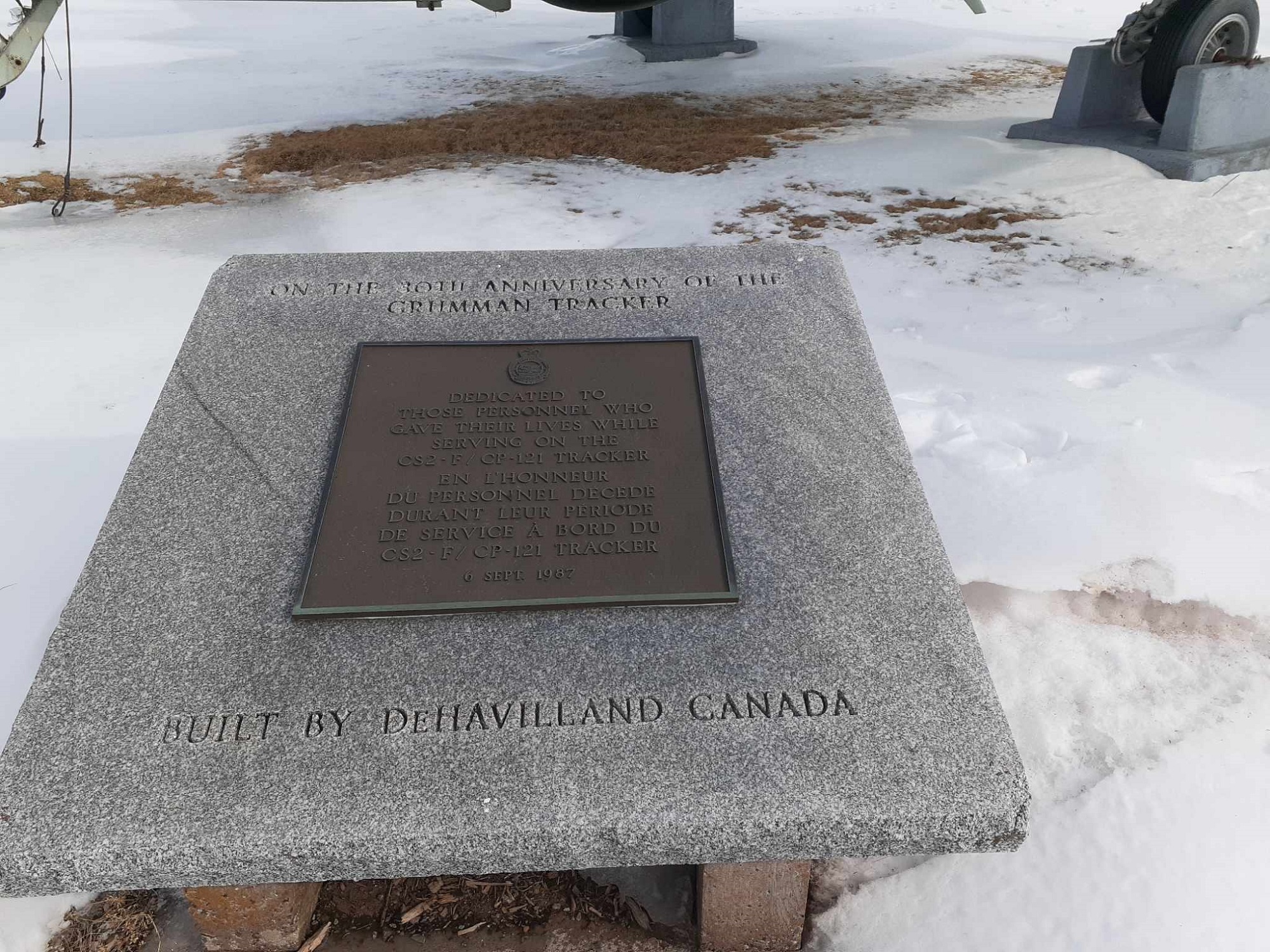
This memorial, a Grumman Tracker aircraft, is marked by a plaque erected on 6 September 1987.