
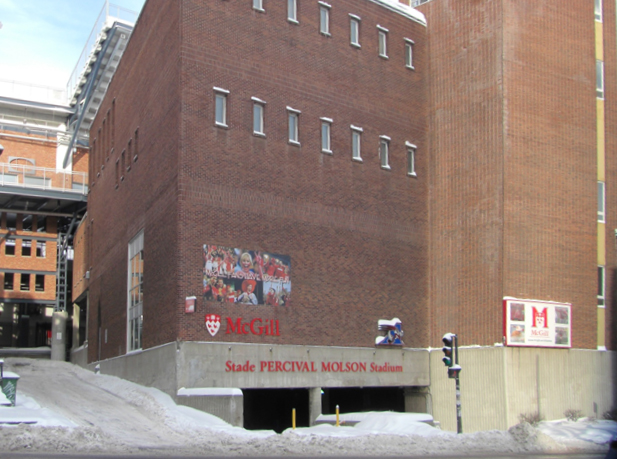
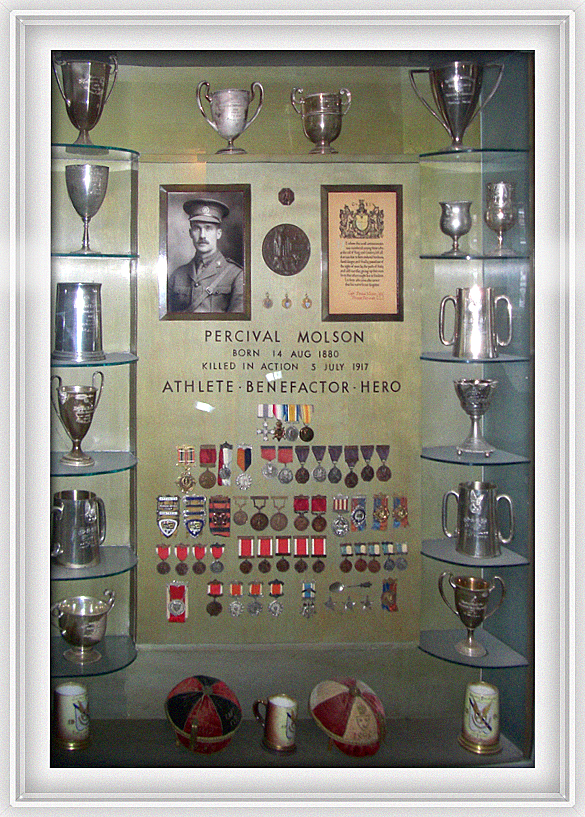
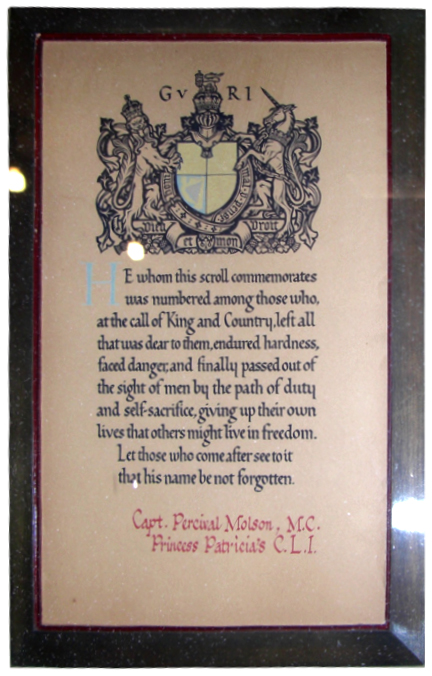
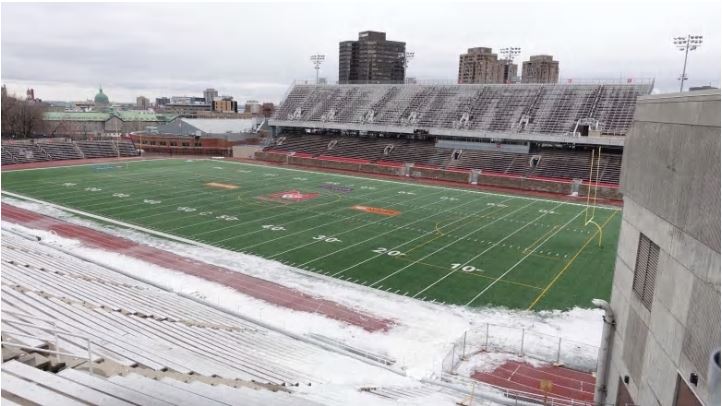
Construction was completed in 1914 on what was then known as McGill Graduates stadium. The stadium sat dormant through the First World War with the ending of football from 1914 to 1918. On 5 July 1917, Captain Percival Molson, a McGill University alumnus and sports star who had been instrumental in getting the stadium plan approved, was killed in action in France. His will left $75,000 to the university to help pay for the completion of the stadium. Designed by Percy Erskine Nobbs, the stadium was officially renamed in honour of Molson on 25 October 1919.
Born in 1880, Percival Molson soon became a gifted athlete and by the age of sixteen, he had participated in several sports and as an ice hockey player, was a member of the Montréal Victorias that won the 1897 Stanley Cup championship. In track and field he competed in several events including the long jump in which he set a world record at the American Athletics Meet in 1900 and went on to participate in the 1904 Summer Olympics in St. Louis, Missouri.
After an outstanding sports career with McGill University, Molson joined its administration. With the onset of the First World War, he was instrumental in establishing the University (infantry) Companies at McGill and other Canadian campuses to reinforce the Princess Patricia’s Canadian Light Infantry. Captain Molson joined the Patricia’s in the field in October 1915. In June 1916, he was badly wounded in the Battle of Mont Sorrel at Sanctuary Wood near Hoge, Belgium. He received the Military Cross for his valour. After recovering from his wounds, he returned to the front lines and on 5 July 1917, on the outskirts of Avion, Pas-de-Calais near Vimy Ridge, Captain Percival Molson was killed by a direct hit from a German howitzer.