
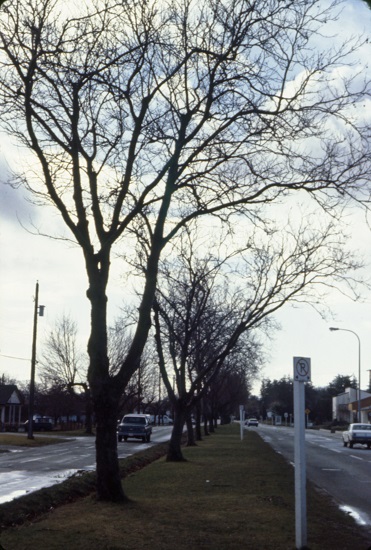
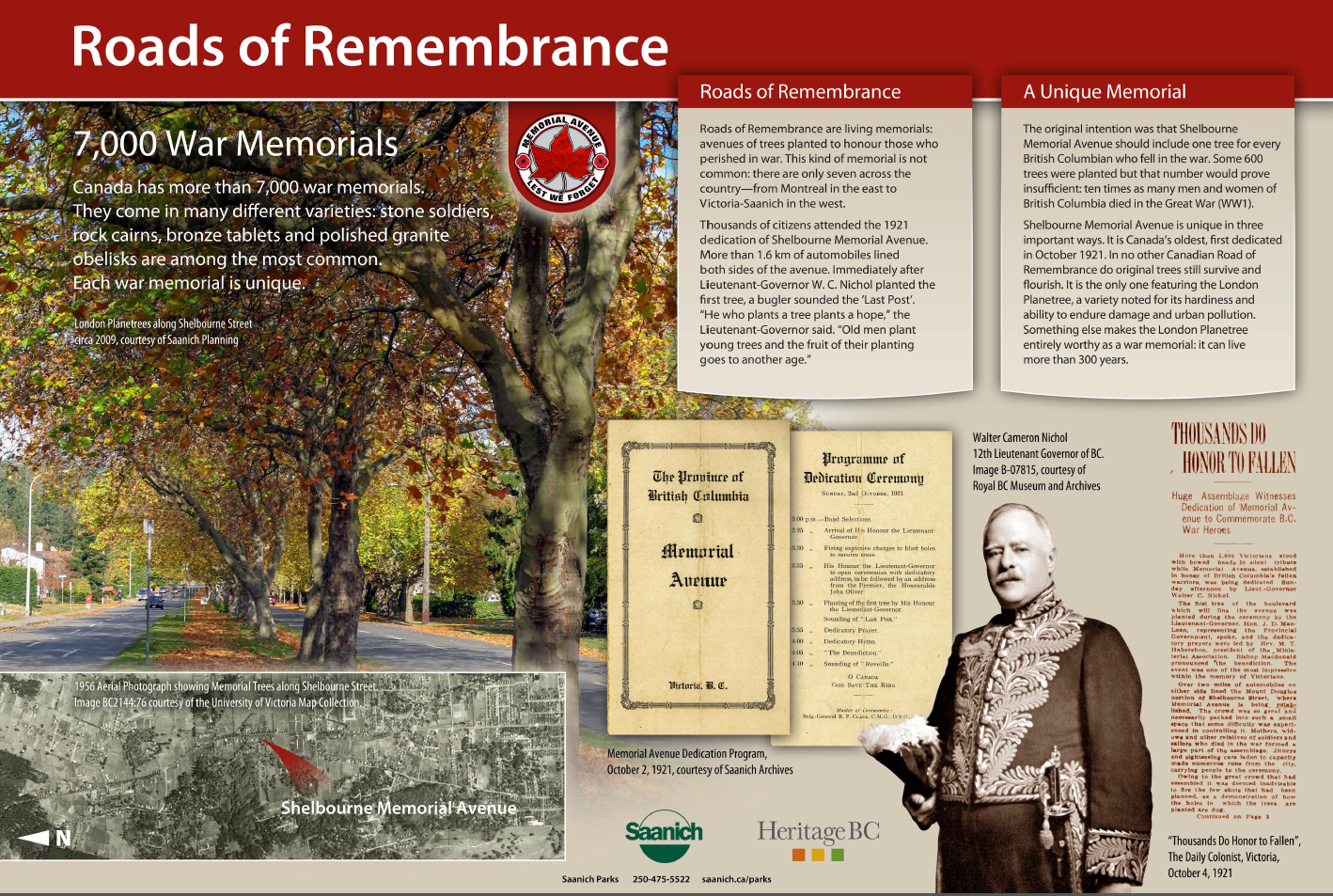

Shelbourne Street became Canada’s first Road of Remembrance on October 2, 1921. Some 5,000 people, including then-premier John Oliver and Lieutenant-Governor Walter Nichol, attended the planting ceremony, which also commemorated British Columbians who died in the Boer War. Original plans were for this to be a British Columbia memorial and to plant one memorial London Planetree for each for each soldier that did not come home. A goal eventually rendered unfeasible by the number of British Columbian soldiers killed (6,000) and there was only space for 800 trees. Other communities were developing their own memorials, so the memorial trees on Shelbourne became a memorial for the greater Victoria area.
A total of 600 trees were planted, running from Mount Douglas Park to Cedar Hill Cross Road in Saanich, and from Hillside to Bay Street in Victoria. Of those, 500 trees stood in Saanich. There were wrought-iron fences with commemorative plaques put around the trees to protect them.
In 1918, Canadians turned to the duty of commemorating the dead. Some promoted practical memorials like Roads of Remembrance. These linear tree-lined avenues had trees that were typically a single species, regularly spaced along each side of the avenue that would grow tall and stately. American elms were chosen for many of these avenues. A small plaque was used to assign a particular tree to a specific fallen soldier. In some cases, the next-of-kin was involved in purchasing the tree and/or plaque for the deceased soldier.
Roads of Remembrance were based on two symbol-laden images. The first was France’s tree-lined country avenues: long straight roads, with large elms on either side, beautiful and useful, and loved by the Canadians overseas. The second symbol was a living memorial: trees represented the victory of life over death. Memorial trees became living symbols of the sacrifices made in France and Belgium.
In October 1918, the Road of Remembrance project was supported by the Women’s Canadian Club, Imperial Order Daughters of the Empire, Great War Veterans Association, British Empire Service League, Rotary and Kiwanis Clubs, Victoria Chamber of Commerce, and the Good Roads Association.
On April 1, 1960, the District of Saanich’s Council unanimously approved the renaming of Shelbourne Street to Memorial Avenue. The renaming was never completed and today the name legally remains Shelbourne Street. During the 1960’s, the memorial trees from Cedar Hill Cross Road to Torquay were cut down so Shelbourne could be widened from two to four lanes. In 1961, at Gore Memorial Peace Park a small monument was erected in a renewed plan to complete the planting of London Planetrees on Shelbourne.
In the summer of 1971, trees were cut down at the corner of Shelbourne and MacKenzie to make room for a shopping mall. A petition started by two 12 year old girls, Stephanie Gould and Margo Tudman, was sent to the mayor to protest the trees that were cut and to stop more cutting.
In 1976 the Municipality of Saanich, the Heritage Tree Committee and the Victoria Horticultural Society established a small monument with a plaque where Elnido and San Juan meet Shelbourne.
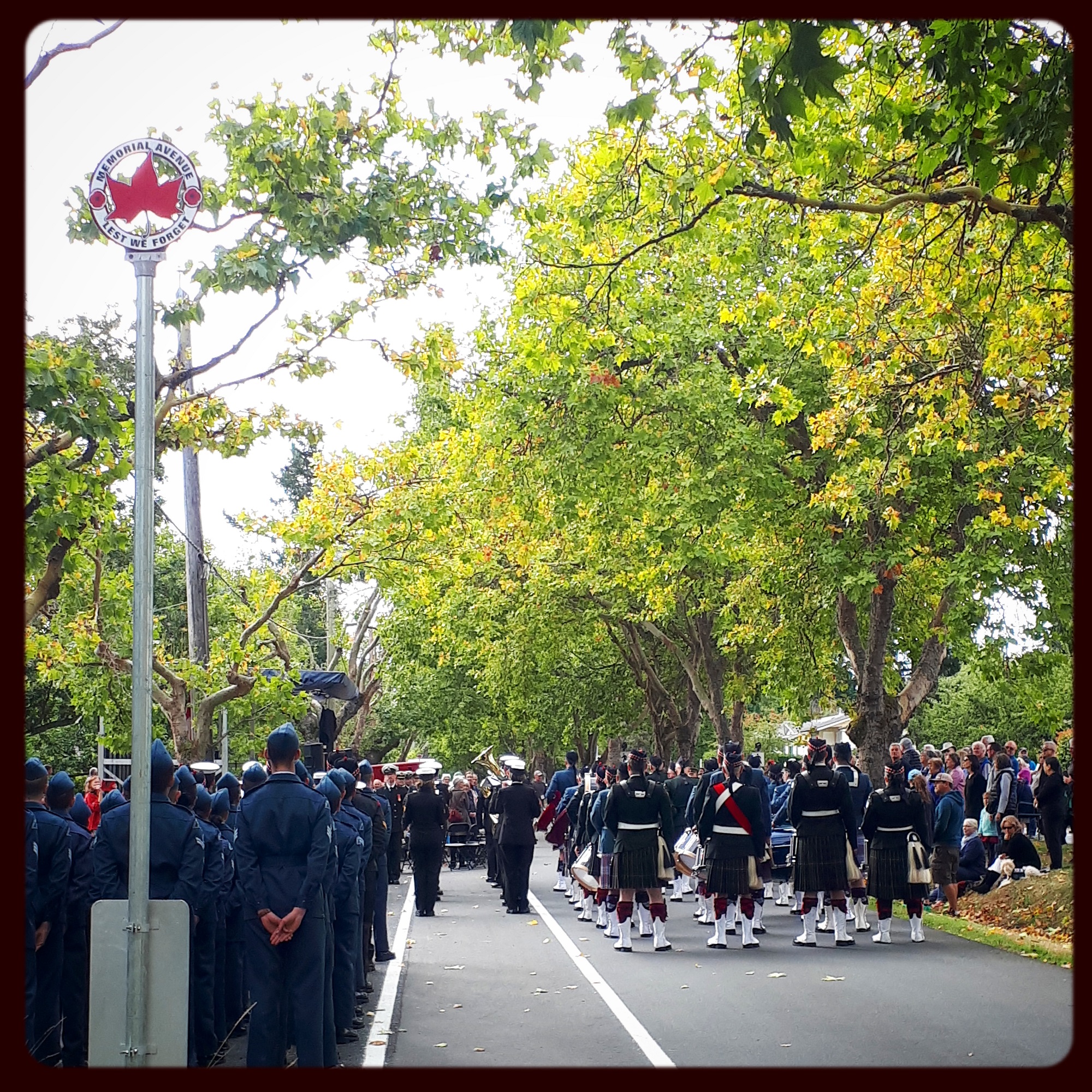
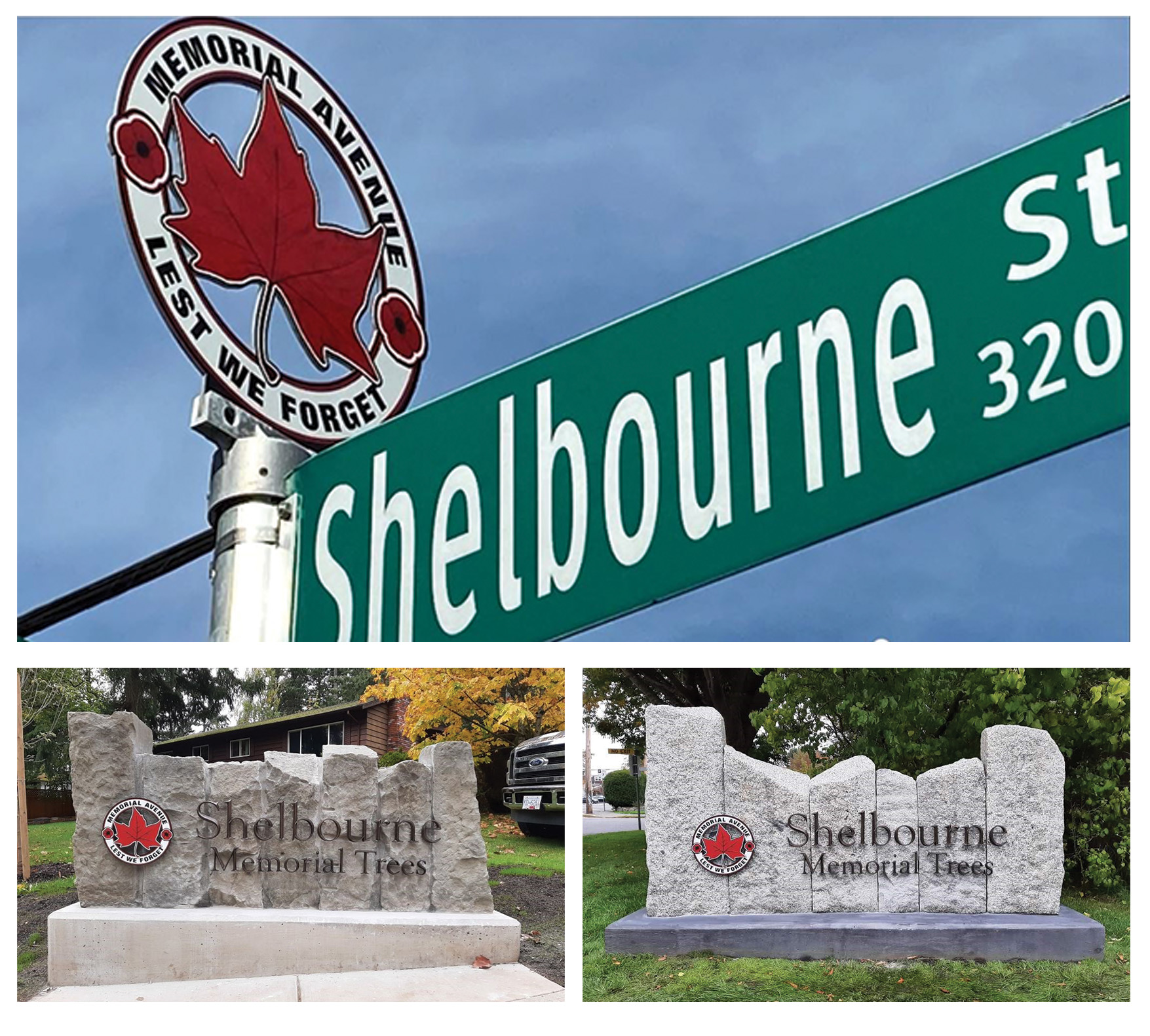
The District of Saanich and the Memorial Avenue Committee rededicated Memorial Avenue on Shelbourne to commemorate the 100th anniversary of the 1918 Armistice and the 1921 Dedication of the Memorial London Planetrees. Saanich installed 30 sign toppers to recognize Memorial Avenue on Shelbourne. The sign toppers were placed on top of existing signs along Shelbourne Street between North Dairy Road and Mount Douglas Park.
The signs depict the leaf of a London Planetree, which represents the memorial trees planted along Shelbourne. The leaf is coloured red, symbolizing the deep respect for the many who gave their lives for Canada, British Columbia and Greater Victoria. The leaf is flanked by two poppy symbols, which area registered trademark of The Royal Canadian Legion, Dominion Command. The memorial trees have come to represent those lost in all the wars that Canada participated in.
The trees now represent loss in all of Canada's wars. In 2010, the Grade 7 students at Gordon Head Middle School and their teacher Alex de Medeiros organized the planting of trees to commemorate two local soldiers killed in Afghanistan.
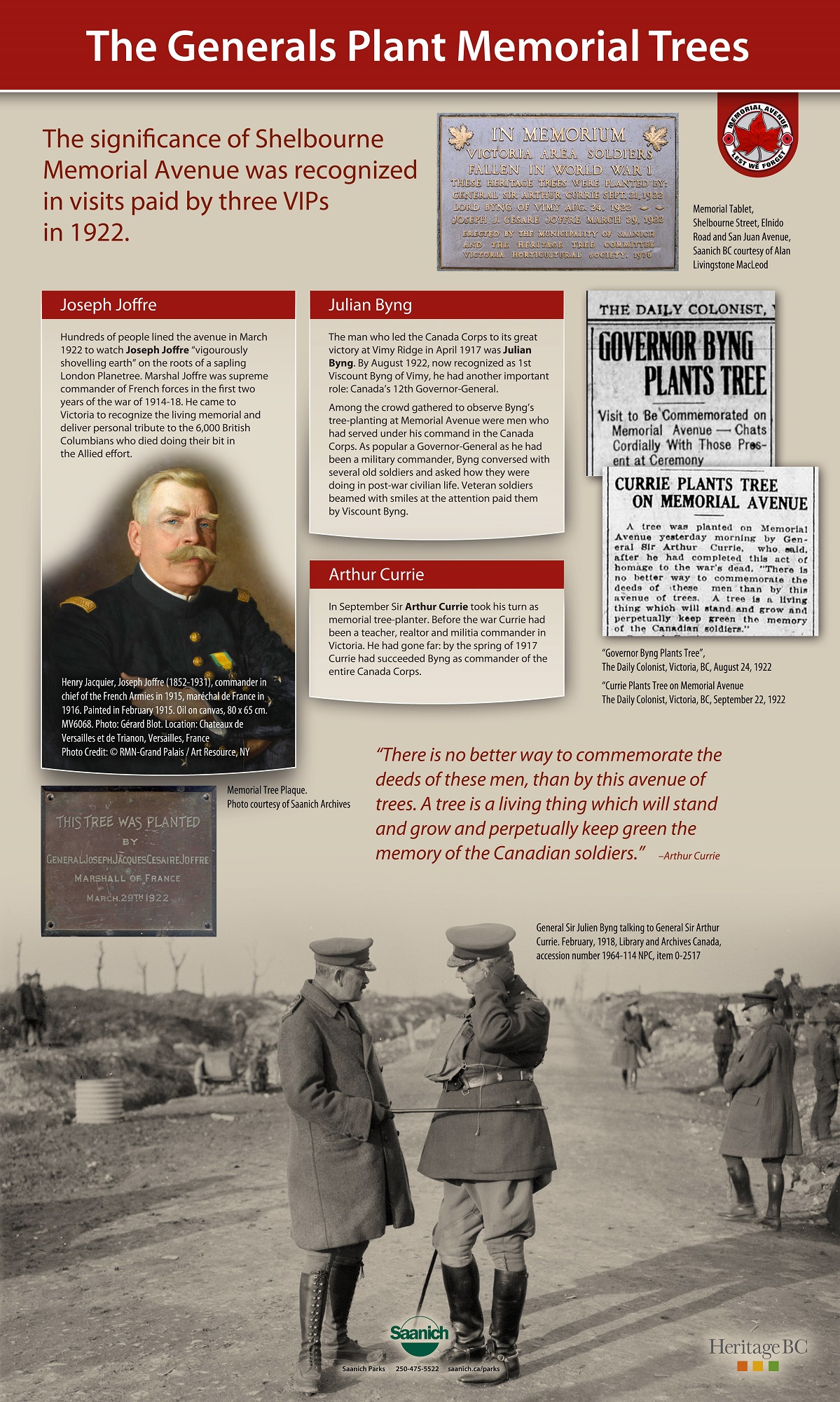
In 2018, The Generals Plant Memorial Trees interpretive panel at San Juan and Shelbourne Streets and the Roads of Remembrance interpretive panel at Gore Peace Memorial Park were installed.