[front/devant]
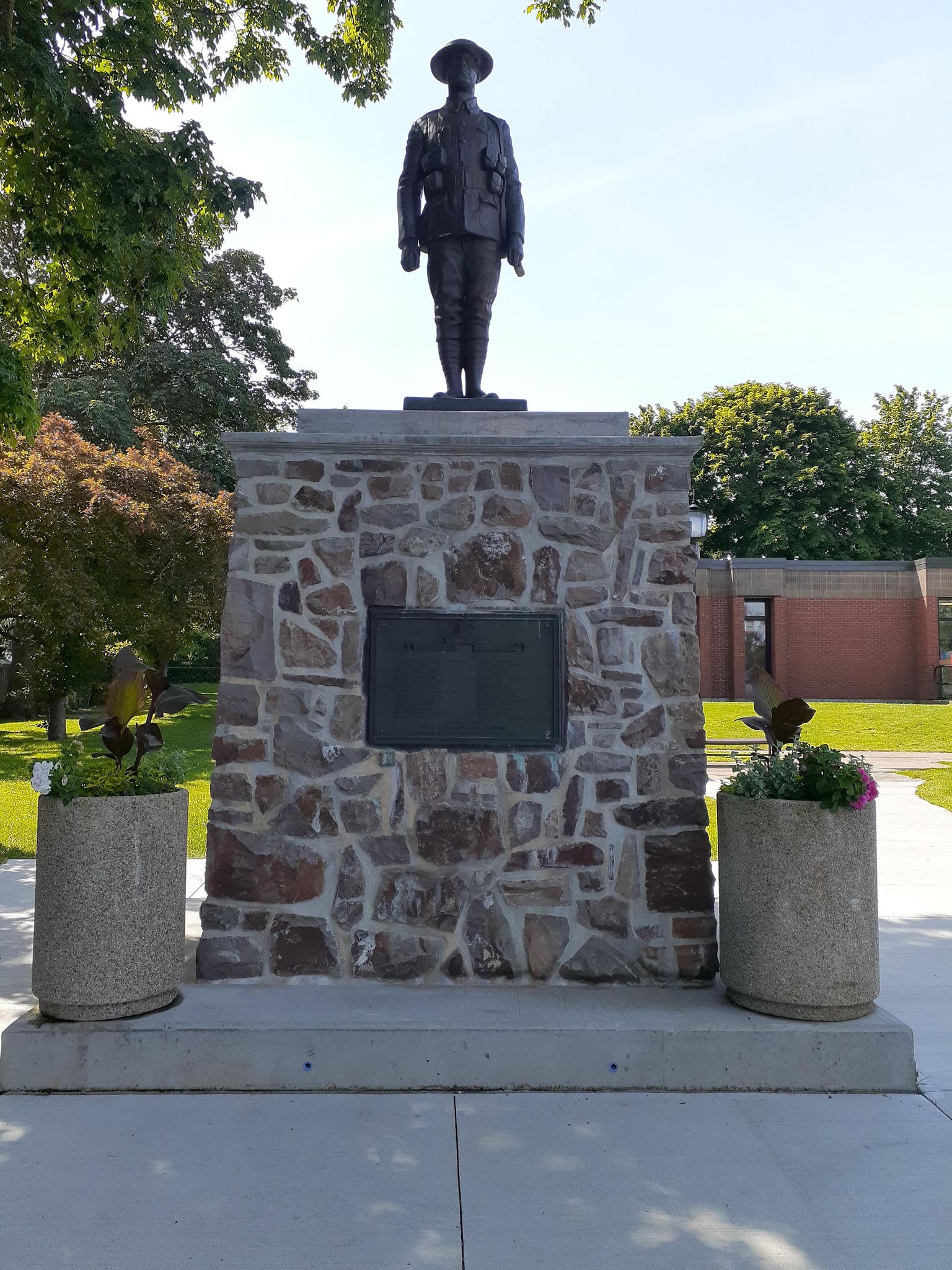
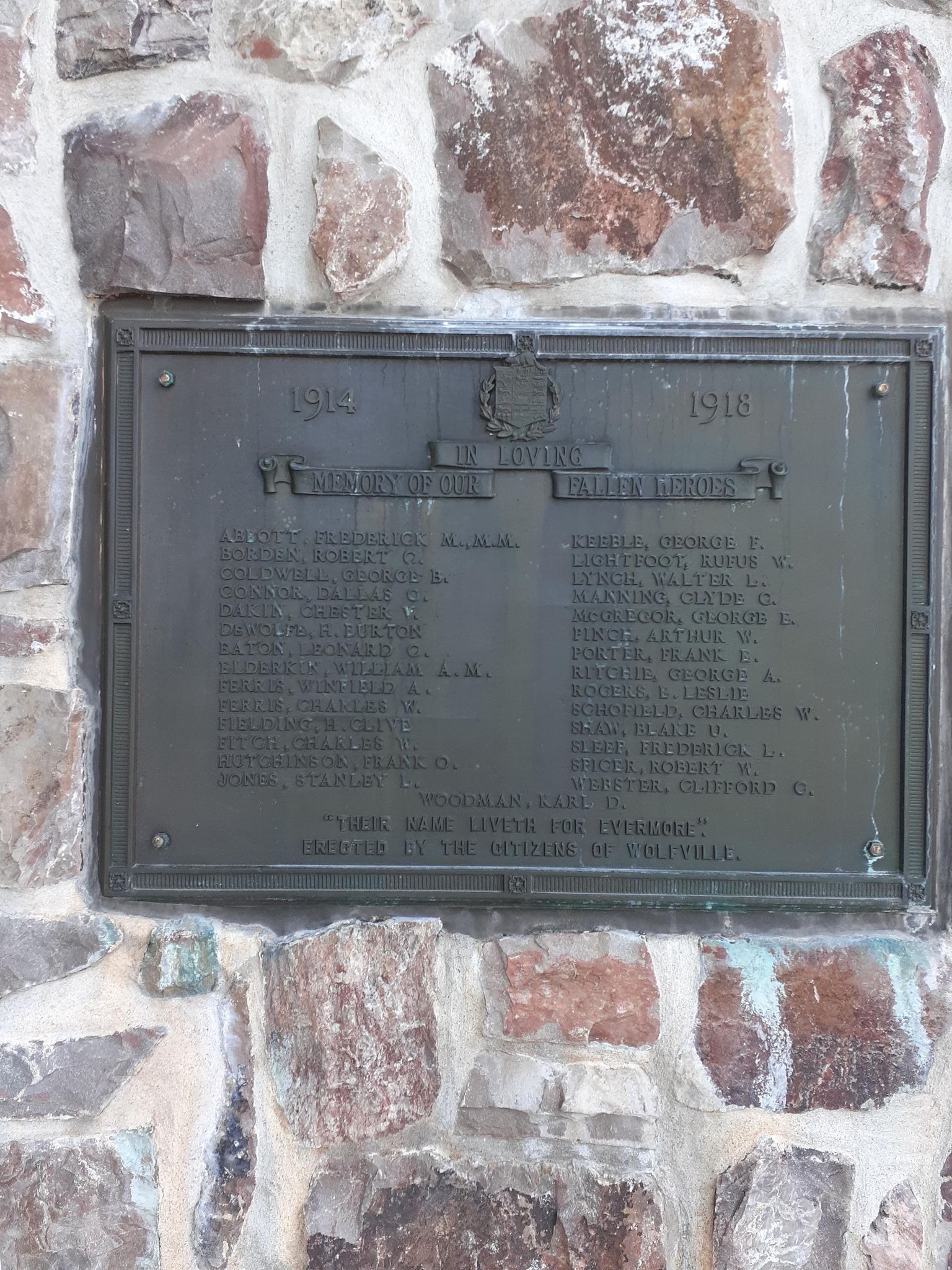
1914 - 1918
IN LOVING
MEMORY OF OUR FALLEN HEROES
- ABBOTT, FREDERICK M.,M.M.
- BORDEN, ROBERT O.
- COLDWELL, GEORGE B.
- CONNOR, DALLAS, O.
- DAKIN, CHESTER V.
- DEWOLFE, H. BURTON
- EATON, LEONARD C.
- ELDERRIN, WILLIAM A.M.
- FERRIS, WINFIELD A.
- FERRIS, CHARLES W.
- FIELDING, H. CLIVE
- FITCH, CHARLES W.
- HUTCHINSON, FRANK O.
- JONES, STANLEY L.
- KEEBLE, GEORGE F.
- LIGHTFOOT, RUFUS W.
- LYNCH, WALTER L.
- MANNING, CLYDE C.
- McGREGOR, GEORGE E.
- PINCH, ARTHUR W.
- PORTER, FRANK E.
- RITCHIE, GEORGE A.
- ROGERS, E. LESLIE
- SCHOFIELD, CHARLES W.
- SHAW, BLAKE U.
- SLEEP, FREDERICK L.
- SPICER, ROBERT W.
- WEBSTER, CLIFFORD C.
WOODMAN, KARL D.
”THEIR NAME LIVETH FOR EVERMORE”.
ERECTED BY THE CITIZENS OF WOLFVILLE
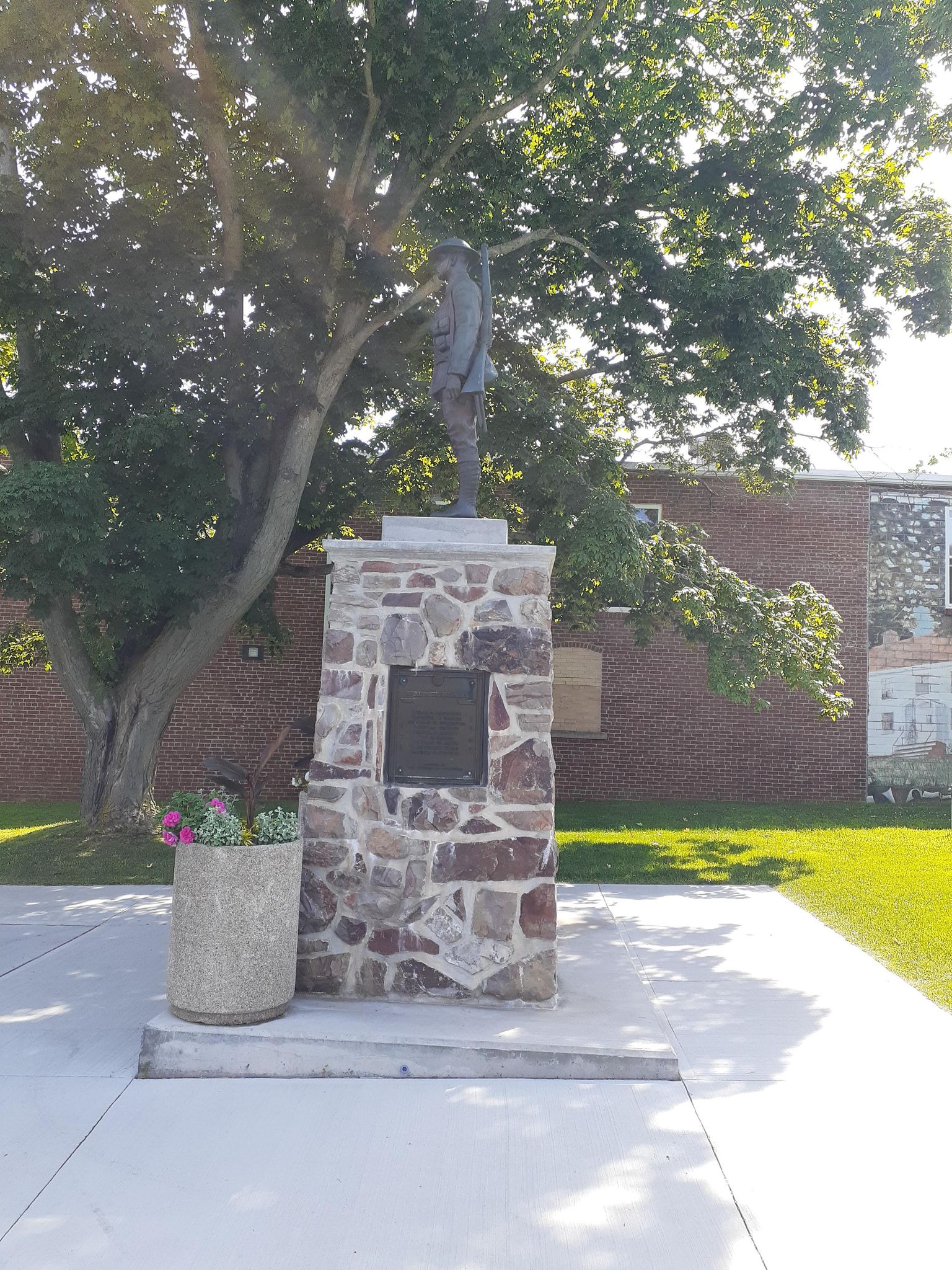
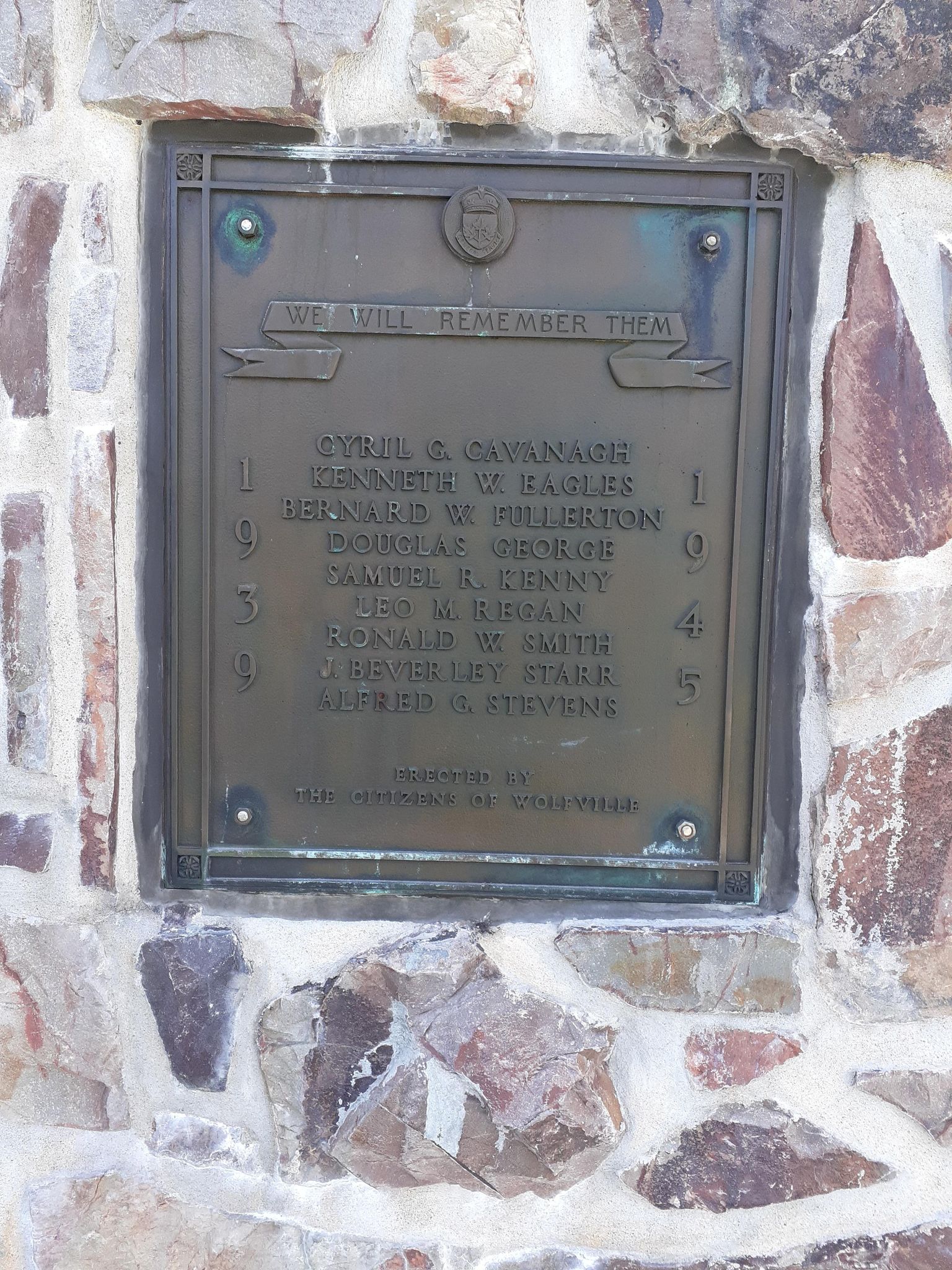
[right side/côté droit]
WE WILL REMEMBER THEM
1939 - 1945
CYRIL G. CAVANAGH
KENNETH W. EAGLES
BERNARD W. FULLERTON
DOUGLAS GEORGE
SAMUEL R. KENNY
LEO M. REGAN
RONALD W. SMITH
J. BEVERLEY STARR
ALFRED G. STEVENS
ERECTED BY
THE CITIZENS OF WOLFVILLE
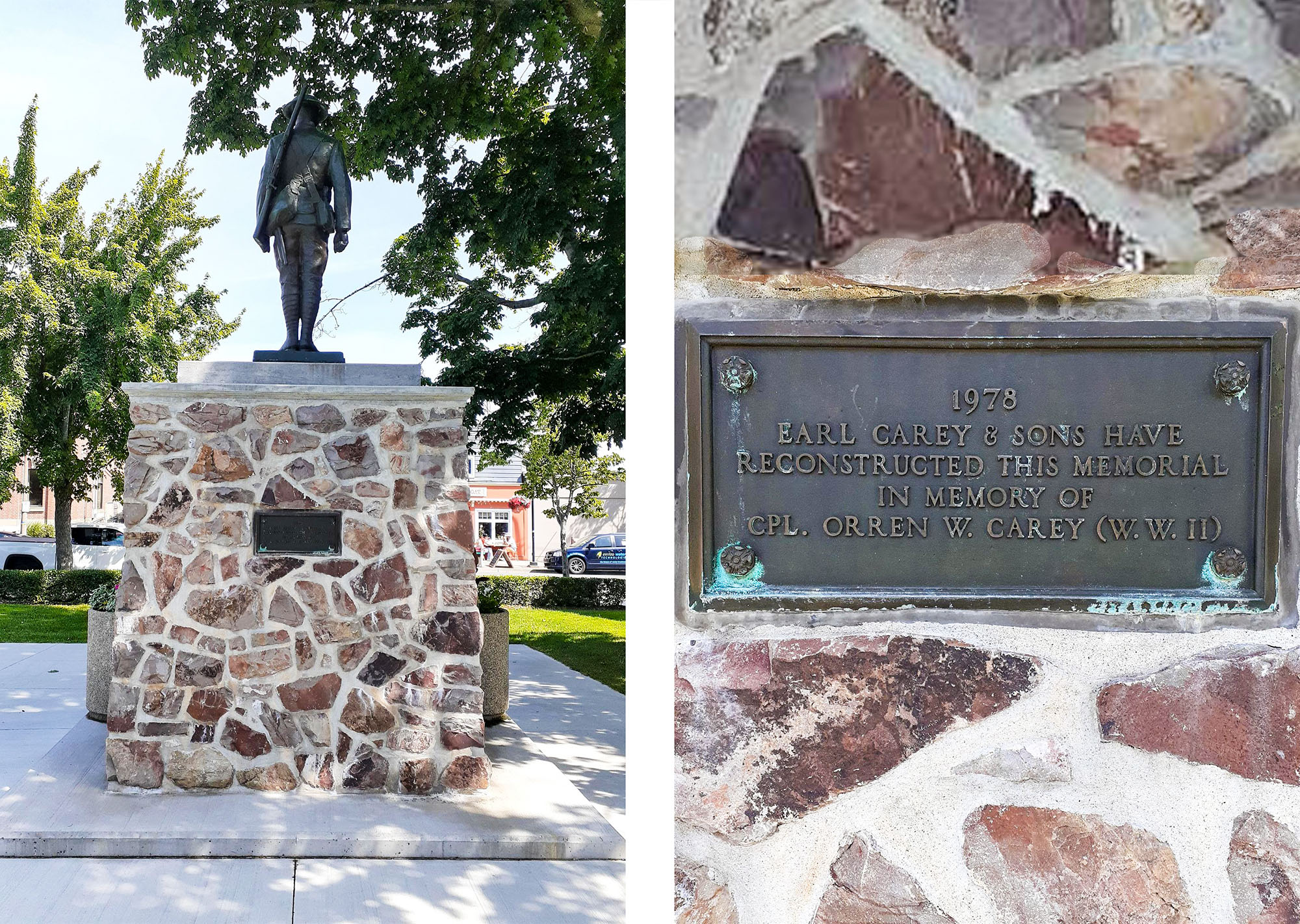
[back/arrière]
1978
EARL CAREY & SONS HAVE
RECONSTRUCTED THIS MEMORIAL
IN MEMORY OF
CPL. ORREN W. CAREY (W.W.II)
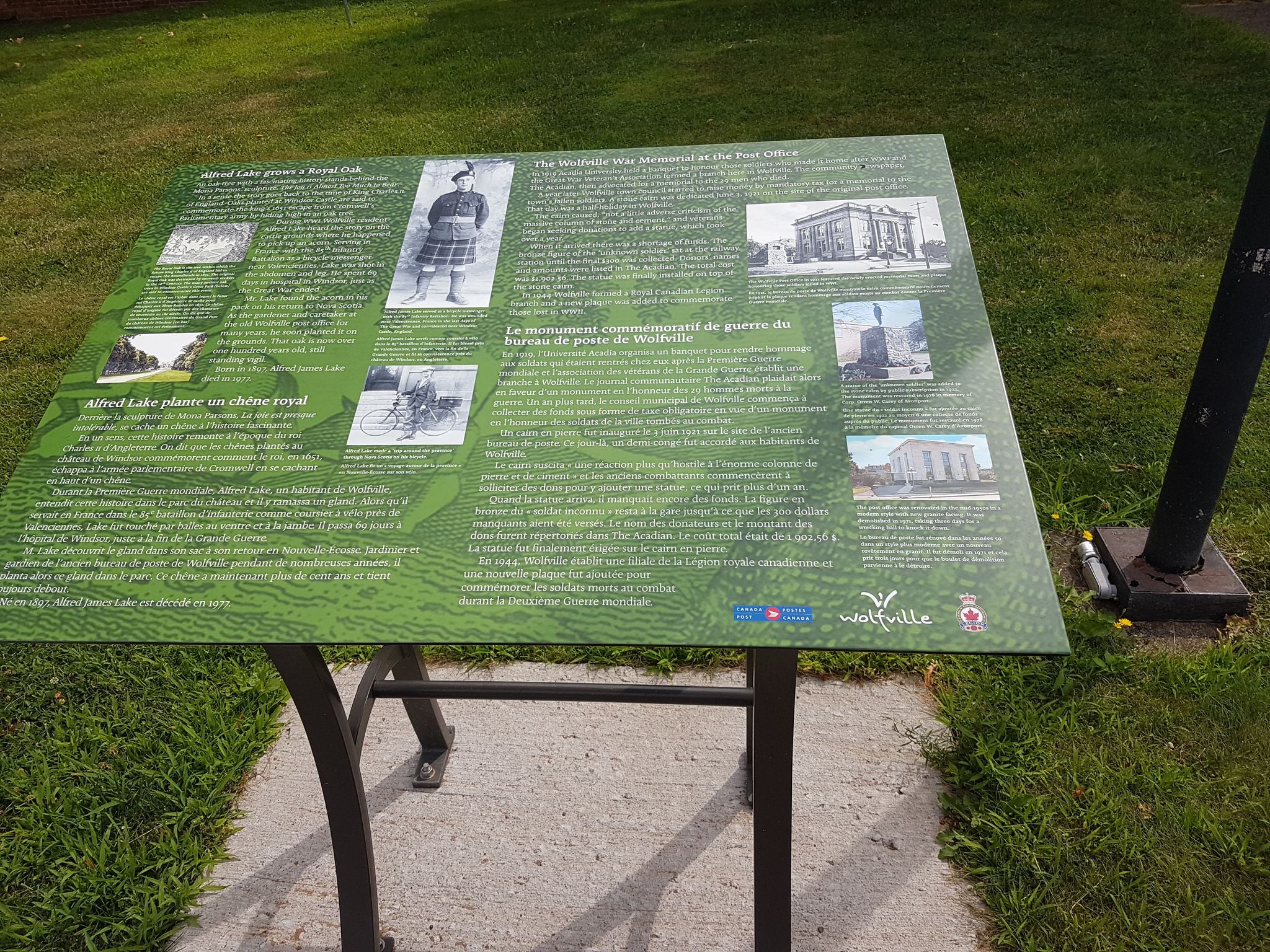
[interpretive panel/panneau d’interprétation]
Alfred Lake grows a Royal Oak
An oak tree with a fascinating history stands behind the Mona Parsons' sculpture, The Joy is Almost Too Much to Bear.
In a sense the story goes back to the time of King Charles II of England. Oaks planted at Windsor Castle are said to commemorate the king's 1651 escape from Cromwell's Parliamentary army by hiding high in an oak tree.
During WWI Wolfville resident Alfred Lake heard the story on the castle grounds where he happened to pick up an acorn. Serving in France with the 85th Infantry Battalion as a bicycle messenger near Valenciennes, Lake was shot in the abdomen and leg. He spent 69 days in hospital in Windsor, just as the Great War ended.
Mr. Lake found the acorn in his pack on his return to Nova Scotia. As the gardener and caretaker at the old Wolfville post office for many years, he soon planted it on the grounds. That oak is now over one hundred years old, still standing vigil.
Born in 1897, Alfred James Lake died in 1977.
The Royal Oak is the tree within which the future King Charles II of England hid to escape the Roundheads in 1651. The original Royal Oak was destroyed by souvenir seekers in the 18th Century. The many ancient oak trees in Windsor Castle's Great Park are said to commemorate this event.
Alfred James Lake served as a bicycle messenger with the 85th Infantry Battalion. He was wounded near Valenciennes, France in the last days of The Great War and convalesced near Windsor Castle, England.
Alfred Lake made a 'trip around the province' through Nova Scotia on his bicycle.
The Wolfville War Memorial at the Post Office
In 1919 Acadia University held a banquet to honour those soldiers who made it home after WW1 and the Great War Veteran's Association formed a branch here in Wolfville. The community newspaper, The Acadian, then advocated for a memorial to the 29 men who died.
A year later Wolfville town council started to raise money by mandatory tax for a memorial to the town's fallen soldiers. A stone cairn was dedicated June 3, 1921 on the site of the original post office. That day was a half-holiday in Wolfville.
The cairn caused, "not a little adverse criticism of the massive column of stone and cement," and veterans began seeking donations to add a statue, which took over a year.
When it arrived there was a shortage of funds. The bronze figure of the 'unknown solider' sat at the railway station until the final $300 was collected. Donors' names and amounts were listed in The Acadian. The total cost was $1,902.56. The statue was finally installed on top of the stone cairn.
In 1944 Wolfville formed a Royal Canadian Legion branch and a new plaque was added to commemorated those lost in WWII.
A statue of the "unknown soldier" was added to the stone cairn by public subscription in 1922. The monument was restored in 1978 in memory of Corp. Orren W. Carey of Avonport.
The post office was renovated in the mid-1950s in a modern style with new granite facing. It was demolished in 1971, taking three days for a wrecking ball to knock it down.
Alfred Lake plante un chêne royal
Derrière la sculpture de Mona Parsons, La joie est presque intolérable, se cache un chêne à l'histoire fascinante.
En un sens, cette histoire remonte à l'époque du roi Charles II d'Angleterre. On dit que les chênes plantés au château de Windsor commémorent comment le roi en 1651 échappa à l'armée parlementaire de Cromwell en se cachant en haut dans d'un chêne.
Durant la Première Guerre mondiale, Alfred Lake, un habitant de Wolfville, entendit cette histoire dans le parc du château et il y ramassa un gland. Alors qu'il servait en France dans le 85e bataillon d'infanterie comme coursier à vélo près de Valenciennes, Lake fut touché par balles au ventre et à la jambe. Il a passa 69 jours à l'hôpital de Windsor, juste à la fin de la Grande Guerre.
M. Lake découvrit le gland dans son sac à son retour en Nouvelle-Écosse. Jardinier et gardien de l'ancien bureau de poste de Wolfville pendant de nombreuses années, il planta alors ce gland dans le parc. Ce chêne a maintenant plus de cent ans et tient toujours debout.
Né en 1897, Alfred James Lake est décédé en 1977.
Le chêne royal est l'arbre dans lequel le futur roi Charles II d'Angleterre se cacha pour échapper aux Tetes-Roundes en 1651. Le chêne royal d'origine fut détruit par des chasseurs de souvenirs au 18e siècle. On dit que de nombreux chênes centenaires du Grand Parc du château de Windsor commémorent cet événement.
Alfred James Lake servit comme coursier à vélo dans le 85e bataillon d'infanterie. Il fut blessé près de Valenciennes, en France, vers la fin de la Grande Guerre et fit sa convalescence près du château de Windsor, en Angleterre.
Alfred Lake fit un « voyage autour de la province » en Nouvelle-Écosse sur son vélo.
Le monument commmémoratif de guerre du bureau de poste de Woflville
En 1919, l'Université Acadia organisa un banquet pour rendre hommage aux soldats qui étaient rentrés chez eux après la Première Guerre mondiale et l'association des vétérans de la Grande Guerre étabalit branche à Wolfville. Le journal communautaire The Acadian plaidait alors en faveur d'un monument en l'honneur des 29 hommes morts à la guerre. Un an plus tard, le conseil municipal de Wolfville a commença à collecter des fonds sous forme de taxe obligatoire en vue d'un monument en l'honneur des soldats de la ville tombés au combat.
Un cairn en pierre fut inauguré le 3 juin 1921 sur le site de l'ancien bureau de poste. Ce jour-là, un demi-congé fut accordé aux habitants de Wolfville.
Le cairn suscita « une réaction plus qu'hostile à l'énorme colonne de pierre et de ciment » et les anciens combattants commencerent à solliciter des dons pour y ajouter une statue, ce qui prit plus d'un an.
Quand la statue arriva, il manquait encore des fonds. La figure en bronze du « soldat inconnu » resta à la gare jusqu'à ce que les 300 dollars manquants aient été versés. Le noms des donateurs et le montants des furent répertoriés dans The Acadain. Le coût total était de 1 902,56 $. La statue fut finalement érigée sur le cairn en pierre.
En 1944, Wolfville établit une filiale de la Légion royale canadienne et une nouvelle plaque fut ajoutée pour commémorer les soldats morts au combat durant la Seconde Guerre mondiale.
Une statue du « soldat inconnu » fut ajoutée au cairn de pierre en 1922 au moyen d'une collecte auprès du public. Le monument fut restauré en 1978 à la mémoire du caporal Orren W. Carey d'Avonport.
Le bureau de poste fut rénové dans les années 50 dans un style plus moderne avec un nouveau revètement en granit. Il fut démoli en 1971 et cela prit trois jours pour que le boulet de démolition parvienne à le détruire.