Capturing the island of Walcheren
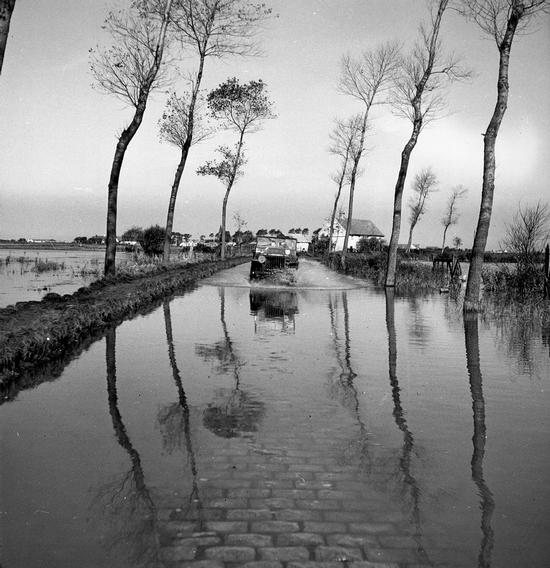
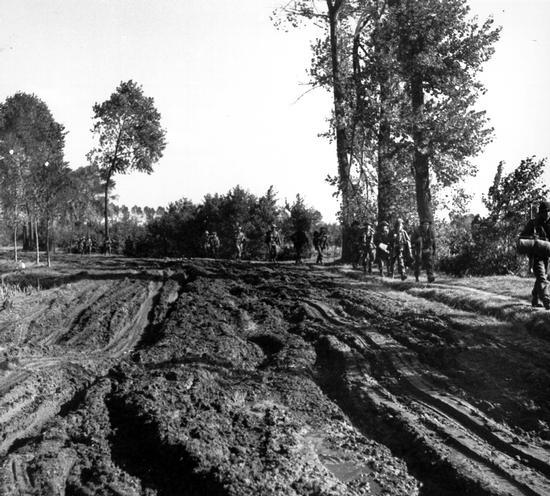
This left the island of Walcheren as the last obstacle to securing the port of Antwerp for Allied use. However, the Germans had fortified their position on the island and the only land approach was the long narrow causeway from South Beveland. To make matters worse, the flats that surrounded this causeway were too saturated with sea water for movement on foot but with too little water for an assault in storm boats.
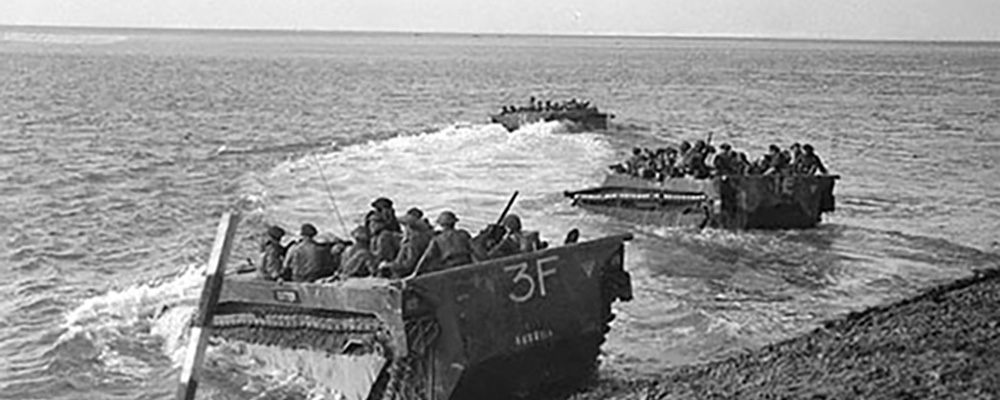
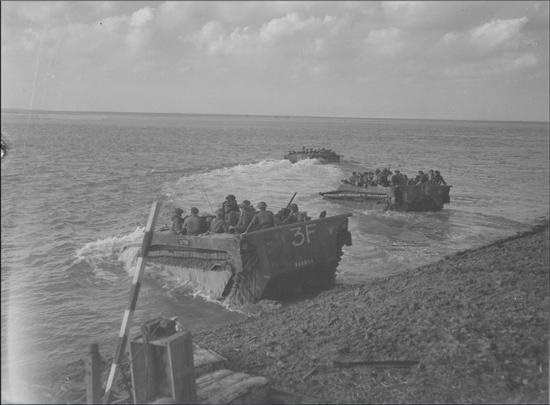
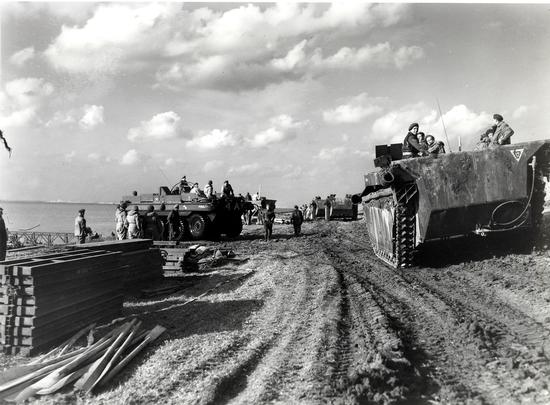
The island was attacked from three directions: across the causeway from the east, across the Scheldt from the south, and from the west by sea. To hamper German defence, the island's dykes were breached by heavy Royal Air Force bombing, which flooded the central area and allowed the use of amphibious vehicles.
The Canadians attacked the causeway on October 31, and, after a costly struggle, established a foothold. Then, in conjunction with the waterborne attacks, the 52nd British Division continued the advance. On November 6, the island's capital Middelburg was secured, and by November 8 all enemy opposition ended.

Column of 'Alligator' amphibius vehicles passing 'Terrepin' amphibious vehicles on the Scheldt River. 13 Oct. 1944 / Neuzen, Belgium (vicinity). Photo: Donald I. Grant/Canada. Dept. of National Defence/Library and Archives Canada/PA-114754