
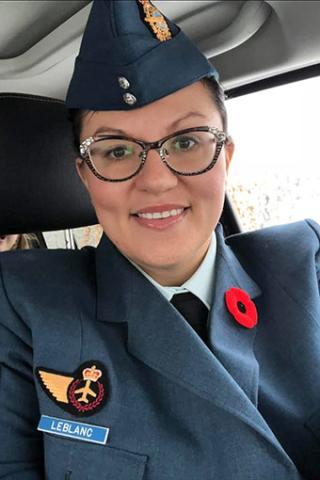

Joined
2001

Postings
- 435 Squadron (CFB Winnipeg)
- 413 Squadron (CFB Greenwood)
- 1AMS, Cold Lake, Alberta
- Transition Centre, Winnipeg
A new oath of service
Flames blazed high and fire crackled as Sergeant (Retired) Cheryl LeBlanc stood beside a bonfire in Woodlands, Manitoba. LeBlanc and her family are Métis but her upbringing didn’t include a lot of Métis traditions. It wasn’t until she joined the military—and after release—that she made that connection.
That moment around the fire was the second—and last time—she would recite the Canadian Forces Oath of Allegiance. When she was done, LeBlanc declared the oath null and void.
“When we join the military, we take this oath—and we don’t undo it,” she said, referring to releasing members.
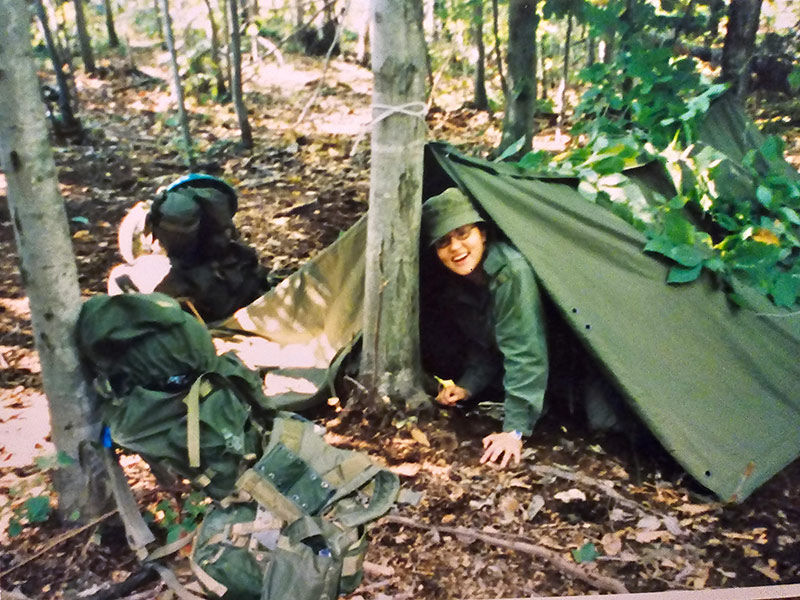
Joining the military gave LeBlanc a new perspective on her heritage and traditions.
LeBlanc says the Oath of Allegiance, which all Canadian Armed Forces (CAF) members take when they join, is something they live by. Members build their whole lives around the values set out in it, in some cases only to lose their sense of identity after leaving the forces. This is why, as part of her transition out of the military, LeBlanc decided to write her own oath to update the code by which she’d been living. She wanted to commit herself to those who mattered most in her life—her family, friends and community.
Signing up
LeBlanc was born and raised just outside of Winnipeg. She joined the military through the Canadian Forces Aboriginal Entry Program. LeBlanc was 21 when she recited the Canadian Forces Oath of Allegiance.
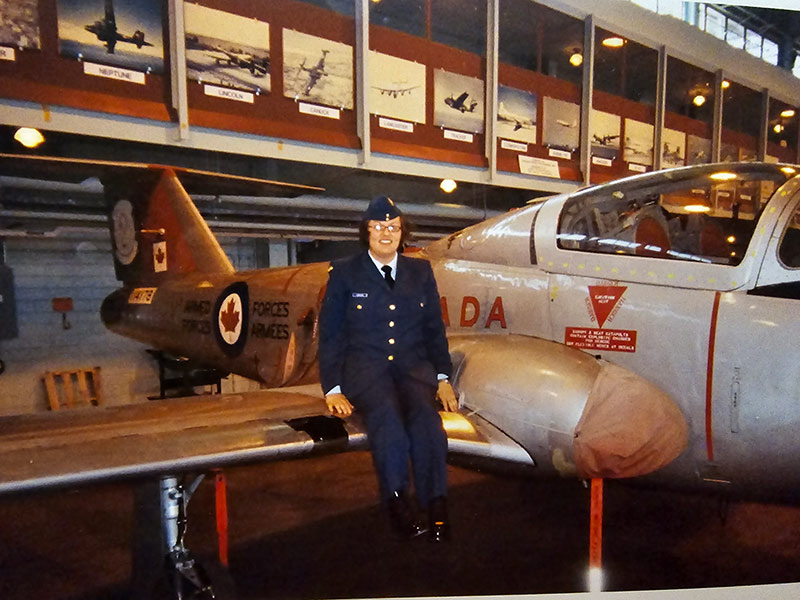
LeBlanc appreciated the stability that the CAF offered.
LeBlanc worked as an aviation systems technician for a decade. She was stationed in Winnipeg 435 Squadron and Greenwood 413 Squadron Search and Rescue units and eventually Cold Lake, Alberta. In 2010, she became interested in the oil and gas industry and decided to leave the CAF.
“I got out in Cold Lake, and I thought I had this figured out. The grass was greener on the other side. I did not utilize any resources available to me at the time, and I wasn’t very prepared,” she remembered.
When the oil industry in Canada fell on hard times in 2016, LeBlanc was married and had a young daughter to provide for, so she returned to the CAF where the work was steady. She signed up as a full-time reservist with 41 Signals Regiment in Edmonton.
Her time working at the Regiment would come to an abrupt end, when her husband died suddenly. She was now a single parent with no family support in Alberta. Through her grief, LeBlanc realized quickly that she had to make some changes if she was going to make it as a single parent.
“I started saying ‘No. No, I can’t go out into the field,’ or ‘No, I can’t do this because I have no one to watch my daughter,” she recalled.
Experiencing you
LeBlanc learned a lot during her time in the military and credits her service as the catalyst for a lot of personal growth—especially in connecting with her Métis heritage.
She experienced her first sweat lodge on base while serving in the CAF. She participated in an Indigenous Veterans Retreat, where she connected with an Elder and the land and learned about the importance of a quality diet and plant medicine.
“(The sweat lodge is) so dark, you don’t know whether their eyes are open or closed. It’s so hot. For me personally, you kind of have that question like, ‘what’s left to experience this?’ and it’s a moment to experience you.”
The loss of her husband led to her finding faith in her life. She became more open-minded (and open-hearted) to the idea of spirituality and the importance of culture.
“I started embracing faith in all different ways, shapes and forms. I’m like this weird hybrid of a million different things going on, but things like connecting to the land, using the medicine wheel. That was really great. I spent some time with the Elder there. That was a wonderful experience. It kind of just worked its way into my life.”
Transitioning to the Transition Centre Winnipeg
LeBlanc says transitioning out of the military is not a quick process. You need to move from the idea of leaving, find the belief in yourself, think about what’s next, and then ultimately make that final decision. While she was figuring all of these things out, LeBlanc also had to decide where she fit in the organization. She wanted to help people if she could, but she also wanted to be closer to family.
“The only place I think I belong inside the organization now is at the Transition Centre, helping others as best I can from inside the organizational lines. There, your mission is the people. It’s not this outside bigger mission. Your mission is your members.”
When a three-year Class B position opened up at Transition Centre Winnipeg, she jumped at it. She was able to return home to her family.
Through her work at Transition Centre Winnipeg, LeBlanc supported anywhere between 25 to 30 members at a given time. She often used what she learned from her own experiences to help others who were struggling. By making genuine conversations and connections, LeBlanc helped transitioning members sort through what is authentically theirs and find answers to their own “big life questions.” Like her, many of her peers found the experience grounding, giving them the opportunity to look at their next steps more clearly.
“When people saw that I came with a story, it really helped develop those relationships.”
She stayed at the transition centre for the duration of her contract before leaving the military for good in 2022. Through VAC, she receives support from the Operation Stress Injury (OSI) clinic.
“Getting out of the military has been a little challenging for me …to find that place I belong now. Employment-related, or community, or trusting that community, and, in a weird way, always looking for permission,” she recalled, before a brief pause.
“I don't know if ‘permission’ is the word, but you’ve been told what to do, where to be for so long. Your career has always been directed for you. Directing yourself now…you have to start to trust yourself, and that’s been a little bit of a journey for me.”
Today, LeBlanc is successfully released from the military and living in a rural area just outside Winnipeg. She is in the process of completing courses with the goal of opening a business of her own someday. She has some advice for other releasing members who might be struggling:
“[Transition] is not a destination. It’s a journey. You don’t arrive there. You’re always working on it. You need new experiences to help you find YOU again. You can honour your time of service but also think about what service looks like now. Have some grace with yourself and fun in the process”
With courage, integrity and loyalty, Cheryl LeBlanc is leaving her mark. She is a Canadian Armed Forces Veteran. Discover more stories.
The well-being of Canadian Veterans is at the heart of everything we do. As part of this, we recognize, honour and commemorate the service of all Canadian Veterans. Learn more about the services and benefits that we offer.
If you are struggling with your transition out of the military, supports are available on our transition services page.
If you are a Veteran, family member or caregiver, the support of a mental health professional is available anytime at no cost to you. Call 1-800-268-7708.