This street commemorates those who fought at Falaise in the Second World War.
Ontario
Korean War Commemoration
Falaise Avenue
needs further research/recherche incomplète
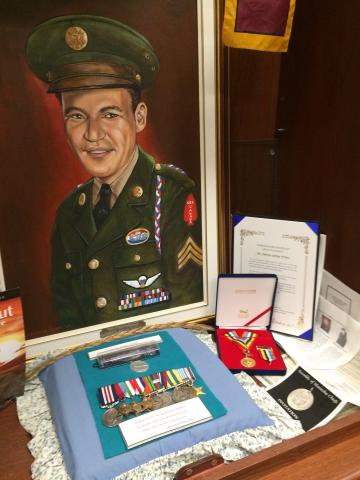
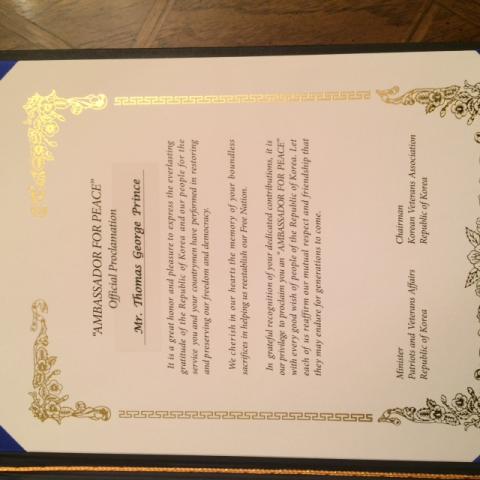
Sergeant Tommy Prince Display
In 2002, a display of Sergeant Tommy Prince's medals, pictures and other memorabilia was set up in the main lobby by 7 First Nations and Brokenhead Ojibway Nation. The painting of Prince was commissioned by John Stempken, a fellow First Special Service Force (Devil’s Brigade).
Sergeant Tommy Prince was a prominent Anishinaabe activist who served in the Second World War and Korean War. His story is one of the most widely known examples of the wartime contributions of Indigenous soldiers in the mid-20th century and the poor treatment they received upon their return to civilian life in Canada. His accomplishments attracted national media attention during his lifetime and earned him a great many posthumous tributes.
Prince was born in October 1915 in St. Peter's Reserve, Manitoba. He was the great-grandson of respected Ojibwa Chief Peguis, and one of eleven children born to Elizabeth and Henry Prince. In 1920, they moved to Brokenhead Ojibway Nation in Scanterbury, Manitoba. At age five, Prince was forced to leave his community and attend Elkhorn Residential School, where he joined the Cadet Corps. He suffered from post-traumatic stress disorder from the residential school before he joined the military.
In 1940, he volunteered to fight for Canada in the Second World War. He rose from sapper to lance corporal with the Royal Canadian Engineers before volunteering for the 1st Canadian Parachute Battalion in 1942. Soon after, he was assigned to the elite 1st Canadian Special Service Battalion, which was attached to the First Special Service Force (Devil’s Brigade). He reached the rank of sergeant by war’s end, and was one of three Canadians to receive both the Silver Star (United States) and the Military Medal. King George VI presented him with both honours during a ceremony at Buckingham Palace in 1945, shortly before Prince’s discharge from the army.
He wanted to prove his people were as good as any white man and restore their good name. One way to achieve this was to acquire as many medals as possible and he did so without putting his men at risk. Before any patrols he would ensure they were camouflaged and everything was secured. Often he would patrol alone because there would be less noise. Prince was a natural warrior and he excelled as the military developed the skills he learned on the reserve while living off the land. He loved the Devil's Brigade and was always praising his men, "If it wasn't for my men, I wouldn't be who I am today." He was a caring man who loved to joke around and make people laugh.
He was a prominent leader in the Indigenous rights movement of the 1940s. After the war, he served as spokesperson and vice-president of the Manitoba Indian Association, and appeared on its behalf before a Special Joint Committee of the Senate and House of Commons, tasked with studying the Indian Act. During his testimony in 1947, he advocated for the abolition of the Indian Act and respect for existing treaties, and presented submissions from Indigenous in Manitoba, which called for improved schools, better living conditions, and expanded hunting, trapping, and fishing rights.
In 1950, Prince re-enlisted in the Korean War. He contributed to the defence of Hill 677 in the Battle of Kapyong in 1951, for which the United States awarded the Princess Patricia’s Canadian Light Infantry the Distinguished Unit Citation—the only time a Canadian unit has received this honour. Military service took a heavy toll on his health and, following his honourable discharge from the army, he faced a difficult return to civilian life in Manitoba. Prince endured discrimination, illness, and poverty in the years that followed and died in 1977. He fought many demons after residential school and the horrors of combat, but he never lost his humility, self-worth, sense of humour and pride of being Anishinaabe.
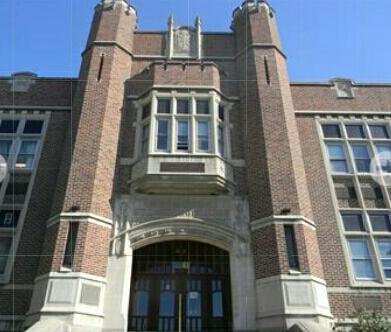
York Memorial Collegiate
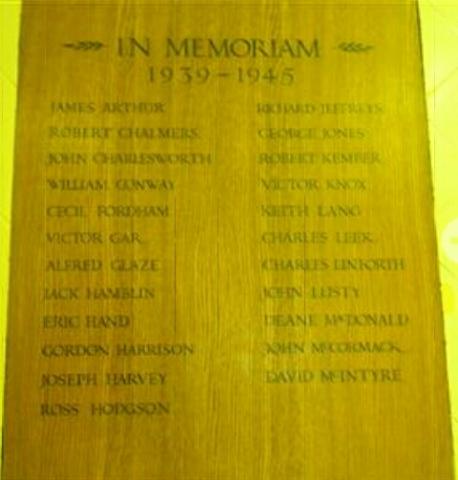
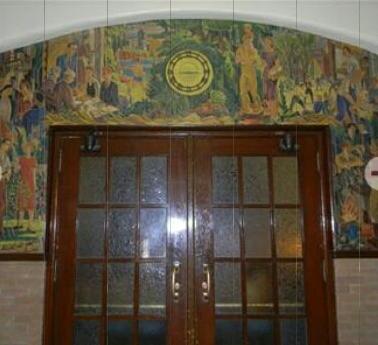
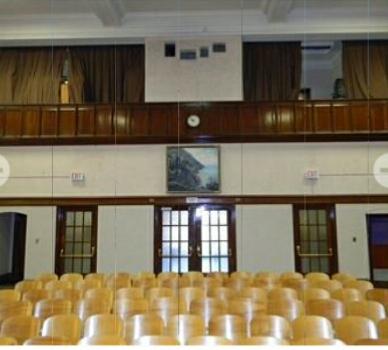
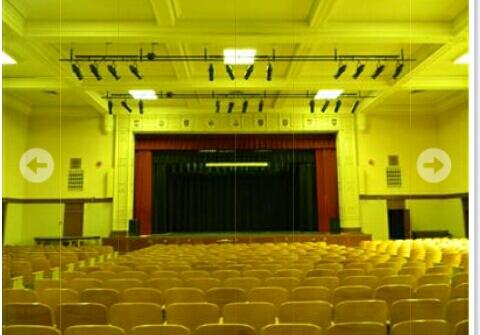
York Memorial Collegiate was erected in 1929 in memory of youth killed in the Great War. The architect Charles Wellington Smith's memorial elements include foyer, auditorium and steps. The memorial mural in the auditorium was painted by John Hall in 1949. The Second World War honour roll lists students who served and in particular were lost in service.
Memorial 35103-001 Toronto (York-West), ON
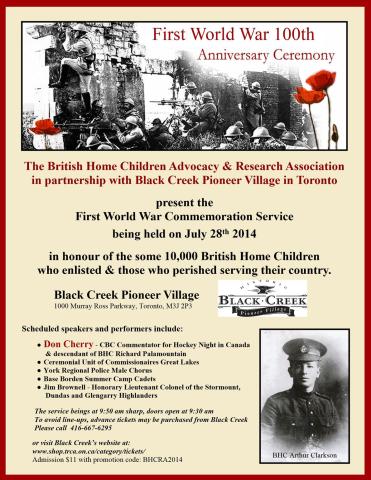
This roll of honour plaque was erected by the Black Creek Pioneer Village and the British Home Children Advocacy and Research Association on July 28th, 2014. It is dedicated to the 10,000 British Home Children who served and the almost 1000 who gave their lives during the First World War.
From 1863 – 1939, approximately 118,000 children were sent to Canada from the UK. Known as the British Home Children, they ranged in age from toddlers to adolescents, and were sent abroad by institutions such as Barnardo’s, Quarrier’s, The Salvation Army, and the Church of England to become indentured farm workers and domestics. Some were welcomed into homes – many more endured the harshest of conditions. When war broke out in 1914, many BHC saw an opportunity to return to their home country and enlisted as soldiers in an attempt to reunite with the families from whom they were taken. Almost 1000 British Home Children lost their lives in this war serving as Canadian soldiers.
Memorial 35102-007 Toronto, ON
[front/devant]
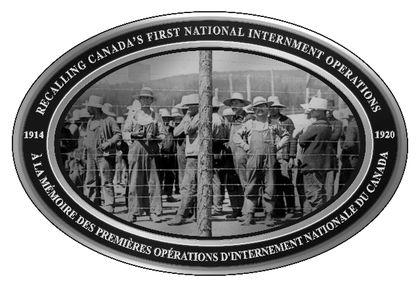
Recalling Canada's First National Internment Operations 1914-1920
A la mémoire des premières opérations d’internement nationale du Canada 1914-1920
This memorial recalls a historic injustice Canadians should pause to remember, as we recall the First World War and the valour of all those Canadian men, and some women, who served. It is a tribute to mark the memory of the thousands of "enemy aliens" who had their civil rights stripped, and were subsequently imprisoned during Canada's first national internment operations of 1914-1920, following the implementation of the War Measures Act. 2014 marks the 100th anniversary of the War Measures Act - adopted on August 22, 1914 during the First World War. It was used to imprison Ukrainian-Canadians, and other ethnic groups, including German, Hungarian, Serbian, Croatian, and Armenian communities, into one of Canada's 24 internment camps.
Dr. Lubomyr Luciuk, a professor at the Royal Military College of Canada and former chair of the Ukrainian Canadian Civil Liberties Association (UCCLA), had taken it upon himself to lead the way and organize the memorial. In the CTO ("One Hundred") project, 100 aluminum plaques were simultaneously unveiled at 100 different locations across the country at 11:00am local time on August 22, 2014. The first plaque was unveiled in Amherst, Nova Scotia, followed by a wave of plaque unveilings moved west, from province to province, culminating in Nanaimo, British Columbia. The plaques, which cost $1,000 to make, were funded by the generosity of the Endowment Council of the Canadian First World War Interment Recognition Fund.
Each plaque features a photo of internment prisoners confined behind a wire fence at the Castle Mountain Internment Camp in Banff, Alberta. The Castle Camp, which was built in 1915 at the base of Castle Mountain, was a Canadian internment camp which held immigrant prisoners of Ukrainian, Austrian, Hungarian, and German descent.
Memorial 35102-006 Toronto, ON
[front/devant]
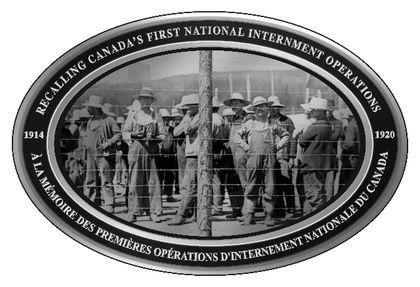
Recalling Canada's First National Internment Operations 1914-1920
A la mémoire des premières opérations d’internement nationale du Canada 1914-1920
This memorial recalls a historic injustice Canadians should pause to remember, as we recall the First World War and the valour of all those Canadian men, and some women, who served. It is a tribute to mark the memory of the thousands of "enemy aliens" who had their civil rights stripped, and were subsequently imprisoned during Canada's first national internment operations of 1914-1920, following the implementation of the War Measures Act. 2014 marks the 100th anniversary of the War Measures Act - adopted on August 22, 1914 during the First World War. It was used to imprison Ukrainian-Canadians, and other ethnic groups, including German, Hungarian, Serbian, Croatian, and Armenian communities, into one of Canada's 24 internment camps.
Dr. Lubomyr Luciuk, a professor at the Royal Military College of Canada and former chair of the Ukrainian Canadian Civil Liberties Association (UCCLA), had taken it upon himself to lead the way and organize the memorial. In the CTO ("One Hundred") project, 100 aluminum plaques were simultaneously unveiled at 100 different locations across the country at 11:00am local time on August 22, 2014. The first plaque was unveiled in Amherst, Nova Scotia, followed by a wave of plaque unveilings moved west, from province to province, culminating in Nanaimo, British Columbia. The plaques, which cost $1,000 to make, were funded by the generosity of the Endowment Council of the Canadian First World War Interment Recognition Fund.
Each plaque features a photo of internment prisoners confined behind a wire fence at the Castle Mountain Internment Camp in Banff, Alberta. The Castle Camp, which was built in 1915 at the base of Castle Mountain, was a Canadian internment camp which held immigrant prisoners of Ukrainian, Austrian, Hungarian, and German descent.
Memorial 35102-005 Toronto, ON
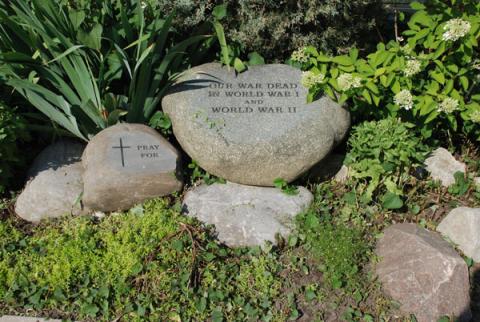
[left stone/pierre gauche]
PRAY
FOR
[right stone/pierre droite]
OUR WAR DEAD
IN WORLD WAR I
AND
WORLD WAR II
This memorial is dedicated to the St. Michael's College School's war dead for the First and Second World Wars, unveiled 8 May 1995. This memorial was created in conjunction with the Tulip Tribute promoted by Canada Remembers to commemorate the 50th Anniversary of VE Day on 8 May 1995. The tulips were planted by Fr. C. Zinger C. S. B. and student volunteers as part of the "Tulip Tribute: Shore to Shore" promoted by Canada Remembers in 1994. The memorial was created at the instigation of Fr. W. O'Brien, C. S. B., himself a veteran and the school's founding archivist. (Refer to memorial number 35102-004)
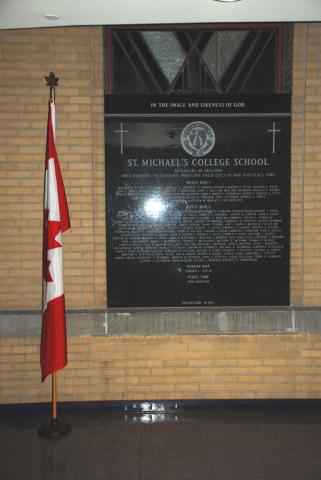
Memorial 35102-004 Toronto, ON
[plaque/plaque]
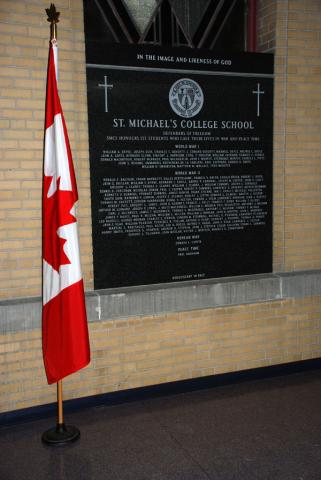
IN THE IMAGE AND LIKENESS OF GOD
[school crest/crête d'école]
ST. MICHAEL'S COLLEGE SCHOOL
DEFENDERS OF FREEDOM
SMCS HONOURS ITS STUDENTS WHO GAVE THEIR LIVES IN WAR AND PEACE TIME
WORLD WAR I
WILLIAM A. DEFOE, JOSEPH DICK, CHARLES E. DOHERTY, C. EDWARD DOHERTY, MAXWELL DOYLE, WILFRID L. DOYLE
JOHN A. GATES, BERNARD GLYNN, VINCENT J. HARRISON, CYRIL T. HOUSTON, WILLIAM JACKMAN, CHARLES E. KEEMLE
DONALD MCARTHUR, ROBERT MCBRADY, PAUL MCLAUGHLIN, JOHN F. MURPHY, STERNDALE MURPHY, CHARLES L. PITTS
JOHN S. REAUME, EMMAUNEL ROCHEREAU DE LA SABLIERE, PAUL SHEPPARD, HAROLD A. SMITH
WILLIAM H. SWAINSTON, MATTHEW M. WALLACE, FRED WEBSTER
WORLD WAR II
RONALD E. BALFOUR, FRANK BARDGETT, GILLES BERTHIAUME, FRANCIS V. BREEN, GERALD BREEN, ROBERT E. BRICK
JOHN G. BRISLAN,WILLIAM F. BYRNE,BERNARD C. CAHILL,BARRIE P. CARDINAL,JOSEPH W. CARTER, JOHN H. CASEY
GREGORY J. CLANCY, THOMAS E. CLARKE, WILLIAM J. CLARKE, J. WILLIAM CONNORS, JOSEPH C. CORBALLY
DENNIS B. CORCORAN, NICHOLAS COWAN, PAUL J. COZENS, ROBERT P. CUMMINS, LAWRENCE A. DOHERTY, ALFRED DRENNAN
KENNETH V. DUNNING, STEWART DUNNING, JAMES DURKIN, FRANK ETIENNE, IAN S. FAIRLEY, MELVILLE FULLERTON
SARTO GAIN, RAYMOND P. GARVIN, JOSEPH E. GELINAS, ROBERT J. GRIFFIN, EDWARD G. GILMORE, WALTER J. GUSTAR
THOMAS M. HACKETT, GORDON HANDRAHAN, DONAL K. HECTOR, EDQWARD J. HELM, LAWRENCE HORAHAN, IVAN J. HUGHES
ROBERT IVES, GREGORY L. JONES, JOHN H. KEARNEY, FRANCIS J. KELLY, FRANCIS F. KIRBY, WILLIAM T. KLERSY
ARTHUR M/ LEONARD, JOSEPH P. LYNES, J. MILES MCDONELL, WILLIAM G. MADDEN, PAUL MCALLISTER, ANTHONY J. MCCANN
CARL J. MCCONVEY, JAMES F. MCCORMICK, THOMAS G. MCGERAGLE, ANTHONY E. MCGRAW, THOMAS P. MCHALE
JAMES F. MCKEE, PAUL R. MCLEAN, WILLIAM E. MCLEAN, WILLIAM J. MORGAN, JOHN D. MORTON, JOHN L. MURDOCH
LEO NARDILLI, GEORGE NOONAN, CHARLES E. O'BRIEN, EDMUN M,. O'DONNELL, MICHAEL B. O'GORMAN, LAWRENCE O'LAUGHLIN
JOHN F. PEAK, WILLIAM PEARSON, TERRENCE B. PHELAN, ARTHUR V. PLANT, HERBERT J. POUPORE, THOMAS A. PURVIS
MARTIAL C. ROBITAILLE, PAUL ROCHE, LEO A. ROGER, ALFRED H. ROQUE, JOHN H. RYAN, LAWRENCE J. SEXTON
HARRY SMITH, FREDERICK G. SPANNER, ANDREW A. STEPHEN, JOHN J. STEPHEN, EDGAR SULLIVAN, FRANK C. SUMMERS
GERARD J. TILLMAN
JOHN WHELAN, VICTOR J. WINTZER, MAURICE D. ZIMMERMAN
KOREAN WAR
EDWARD L. CURTIN
PEACE TIME
PAUL RACKHAM
REQUIESCANT IN PACE

This memorial is dedicated to the St. Michael's College School's war dead from the First and Second World Wars, Korea and in peace time, unveiled 10 June 2000. The memorial lists the name of each student killed. Some served with other Allied forces but all attended St. Michael's College School. Not all were graduates of St. Michael's College School. This memorial was created in conjunction with the Tulip Tribute promoted by Canada Remembers to commemorate the 50th Anniversary of VE Day on 8 May 1995. The tulips were planted by Fr. C. Zinger C. S. B. and student volunteers as part of the "Tulip Tribute: Shore to Shore" promoted by Canada Remembers in 1994. The memorial was created at the instigation of Fr. W. O'Brien, C. S. B., himself a veteran and the school's founding archivist. (Refer to memorial number 35102-005)