Ontario

Province Code
ON
City/Municipality
Onaping
Memorial Number
35053-004
Type
Address
3 Saint James Street
Location
Royal Canadian Legion, Branch 503
in Canada
Yes
GPS Coordinates
46.6278566, -81.4042888
Inscription

1939 - 1945

IN LOVING MEMORY
OF THESE MEN OF
LEVACK AND THEIR
COMRADES WHO GAVE THEIR
LIVES IN WORLD WAR II

L. BOLTON
S.N. ENDLEMAN
R. GREENTREE
E. NEUMAN
B. PIASKOSKI
G. TILT

GREATER LOVE HATH NO MAN

At The Going Down Of the Sun
And In The Morning,
We Will Remember Them

Quand Viendra L'Heure Du Crépuscule
Et Celle De L'Aurore,
Nous Nous Souviendrons D'Eux

Image
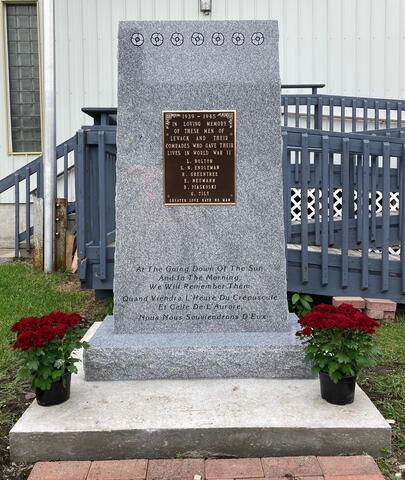
Photo Credit
Sharon Getchell
Caption
Onaping Cenotaph
1 of 2 images
Image
Caption
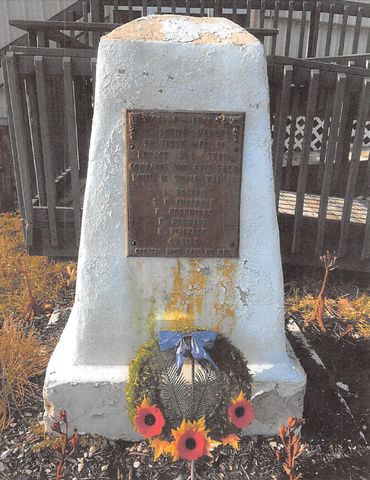
old cenotaph
1 of 2 images
War or Conflict Term
Province
!4v1729791840298!6m8!1m7!1swrQvjaCOG7jq47QJyJGKWQ!2m2!1d46.62785661570057!2d-81.40428884327254!3f236.9099936453475!4f-7.255750938745976!5f0.7820865974627469
Body Content

Dedicated to the war dead of Levack during the Second World War, a concrete memorial was erected by Royal Canadian Legion Branch No. 503 in the 1960s. It was removed in 2021, the plaques were restored to be used on the new marble cenotaph which was installed and unveiled on November 11, 2021.

City
Onaping
Country
Type Description
Stele - marble
Memorial CF Legacy ID
1822
City/Municipality
Onaping
Memorial Number
35053-003
Type
Address
3 Saint James Street
Location
Inside the Royal Canadian Legion, Branch 503
in Canada
Yes
GPS Coordinates
46.6278551, -81.4042956
Inscription

[top/haut]

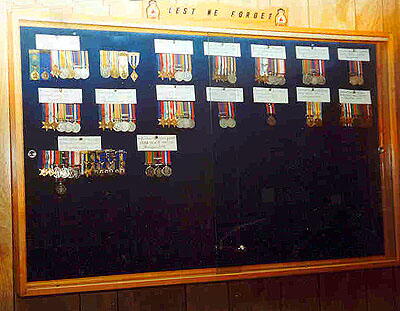
LEST WE FORGET

Image
Photo Credit
George H. Lockhart
Caption
display (front)
Province
!4v1630679190559!6m8!1m7!1swrQvjaCOG7jq47QJyJGKWQ!2m2!1d46.62785511923828!2d-81.40429558030196!3f228.11567635500103!4f5.626723061531237!5f1.1924812503605782"
Body Content

This display was constructed by members of Royal Canadian Legion Branch No. 503 and is dedicated to deceased veterans.

City
Onaping
Country
Type Description
Display (medals behind glass)
Memorial CF Legacy ID
1824
City/Municipality
Onaping Falls
Memorial Number
35053-002
Type
Address
595 Simmons Road
Location
Onaping Falls Cemetery
in Canada
Yes
GPS Coordinates
46.5714002, -81.3671453
Inscription

[top/haut]

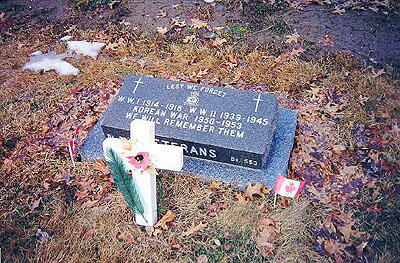
LEST WE FORGET

W.W.I 1914-1918, W.W.II 1939-1945, KOREAN WAR 1950-1953

WE WILL REMEMBER THEM

[side/côté]

BR. 503 VETERANS BR. 553

Image
Caption
top
Province
!4v1630681188784!6m8!1m7!1sBzx8ecNmxk6QnuXUbldnww!2m2!1d46.57140020530042!2d-81.36714525707019!3f207.76903083718008!4f2.717941178707534!5f1.3378513129378597"
Body Content

This memorial, erected by Royal Canadian Legion Branches Nos. 503 and 553, is dedicated to the local war dead of the First and Second World Wars and the Korean War.

City
Onaping Falls
Country
Type Description
Granite tablet
Memorial CF Legacy ID
1823
City/Municipality
Levack
Memorial Number
35053-001
Type
Address
51 Levack Drive
Location
Across from the TD Bank
in Canada
Yes
GPS Coordinates
46.6400097, -81.3882263
Inscription

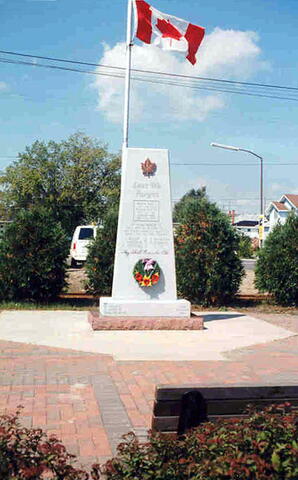
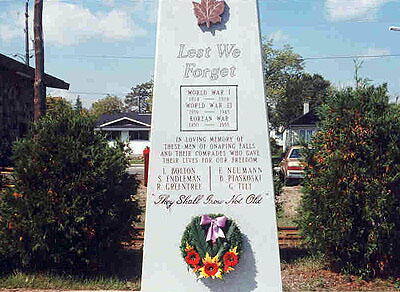
LEST WE FORGET

WORLD WAR I
1914 - 1918
WORLD WAR II
1939 - 1945
KOREAN WAR
1950 - 1953

IN LOVING MEMORY OF
THESE MEN OF ONAPING FALLS
AND THEIR COMRADES WHO GAVE
THEIR LIVES FOR OUR FREEDOM

"They Shall Grow Not Old"

Image
Photo Credit
George H. Lockhart
Caption
front
1 of 2 images
Image
Caption
inscription
1 of 2 images
Province
!4v1624899444183!6m8!1m7!1sxohyVx26tztvz3IezHIaRg!2m2!1d46.64000973953302!2d-81.388226326291!3f306.63458383289407!4f-0.1940139644783443!5f1.9587109090973311
Body Content

Constructed by Elloro Monuments for Royal Canadian Legion Branch No. 503, this memorial is dedicated to the war dead from Onaping Falls of the First and Second World Wars and the Korean War.

City
Levack
Country
Type Description
Stele - granite
Memorial CF Legacy ID
1825
City/Municipality
Niagara Falls
Memorial Number
35052-060
Type
Address
9249 Niagara River Parkway
in Canada
Yes
GPS Coordinates
43.0440598, -79.017673
Inscription

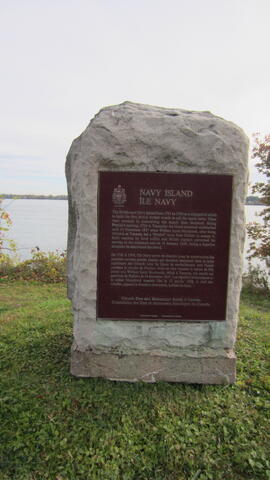
NAVY ISLAND
ÎLE NAVY

The British used Navy Island from 1761 to 1764 as a shipyard in which
to build the first British decked vessels to sail the upper lakes. These
were essential in maintaining the supply lines westward during
Pontiac's uprising, 1763-4. Thereafter the island remained undisturbed
until 14 December 1837 when William Lyon Mackenzie, after being
defeated at Toronto, led a "Patriot" army from Buffalo to occupy it.
Swift reaction by local militia and British regulars prevented his
moving to the mainland and on 14 January 1838, facing a hopeless
situation, he abandoned the island.

De 1761 à 1764, l'île Navy servi de chantier pour la construction des
premiers navires pontés anglais qui devaient maintenir dans la zone
supérieure des Gand Laces les lignes de favitaillement vers l'ouest
pendant la révolte de Pontiac. Rien ne vint troubler le calme de l'île
avant que William Lyon Mackenzie, défait à Toronto, n'y menât ses
patriotes de Buffalo, le 14 décembre 1837. Les réguliers britanniques et
la milice bloquèrent aussitôt l'île; le 14 janvier 1838, le chef des
rebelles jugeant la situation désespérée, quittait les lieux.

Historic Sites and Monuments Board of Canada
Commission des lieux et monuments historiques du Canada

Government of Canada/Gouvernement du Canada

Image
Caption
Navy Island Plaque
Province
!4v1718295052088!6m8!1m7!1sgiRRvTp4VNAFw44QQ_07hA!2m2!1d43.044059771011!2d-79.01767298937567!3f73.60621684568204!4f0.42856360971055096!5f1.452197460506286
Body Content

Navy Island was designated a national historic event by the federal government on the recommendation of the Historic Sites and Monuments Board of Canada.

City
Niagara Falls
Country
Type Description
Slab, plaque
Photo Credit
Lucille Coleman
Memorial CF Legacy ID
12567
City/Municipality
Niagara Falls
Memorial Number
35052-051
Type
Address
6110 Lundy's Lane
Location
Drummond Hill Cemetery
in Canada
Yes
GPS Coordinates
43.0884986, -79.0966029
Inscription

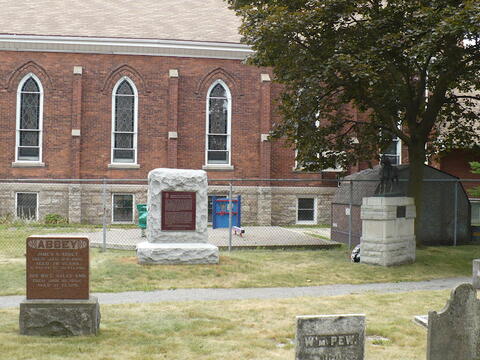
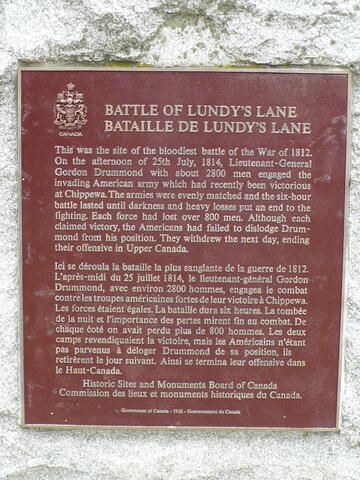
BATTLE OF LUNDY'S LANE
BATAILLE DE LUNDY'S LANE

This was the site of the bloodiest battle of the War of 1812.
On the afternoon of 25th July, 1814, Lieutenant-General
Gordon Drummond with about 2800 men engaged the
invading American army which had recently been victorious
at Chippawa. The armies were evenly matched and the six-hour
battle lasted until darkness and heavy losses put an end to the
fighting. Each force had lost over 800 men. Although each
claimed victory, the Americans had failed to dislodge Drum-
mond from his position. They withdrew the next day, ending
their offensive in Upper Canada

Ici se déroula la bataille la plus sanglante de la guerre de 1812.
L'après-midi du 25 juillet 1814, le lieutenant-général Gordon
Drummond, avec environ 2800 hommes, engagea le combat
contre les troupes américaines fortes de leur victoire à Chippawa.
Les forces étaient égales. La bataille dura six heures. La tombée
de la nuit et l'importance des pertes mettent fin au combat. De
chaque côté on avait perdu plus de 800 hommes. Les deux
camps revendiquaient la victoire, mais les Américains n'étant
pas parvenus à déloger Drummond de sa position, ils
retirèrent le jour suivant. Ainsi se termina leur offensive dans
le Haut-Canada.

Historic Sites and Monuments Board of Canada
Commission des lieux et monuments historiques du Canada

Government of Canada - 1938 - Gouvernement du Canada

Image
Caption
Battle of Lundy's Lane Memorial
1 of 2 images
Image
Caption
inscription
1 of 2 images
Province
!4v1700590569954!6m8!1m7!1sqPXpVzvU51PxhBNiIsfSKg!2m2!1d43.08849857370063!2d-79.0966028653583!3f67.66410282426276!4f0.12762665260052586!5f1.1242053394446303
Body Content

The Battle of Lundy's Lane was designated a national historic event by the federal government on the recommendation of the Historic Sites and Monuments Board of Canada in 1938.

City
Niagara Falls
Country
Type Description
Stone, plaque
Photo Credit
Tim Laye, Ontario War Memorials
Memorial CF Legacy ID
12082
City/Municipality
Niagara-on-the-Lake
Memorial Number
35052-050
Type
Address
85 Byron Street
Location
Polish World War I Military Cemetery
in Canada
Yes
GPS Coordinates
43.2548992, -79.0677589
Inscription

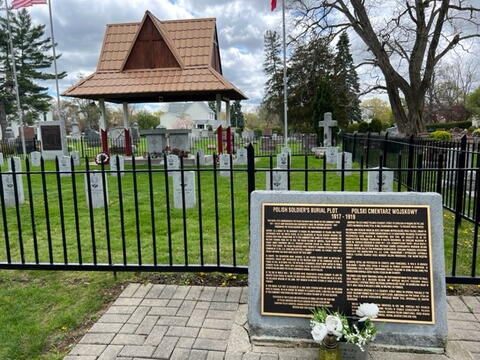
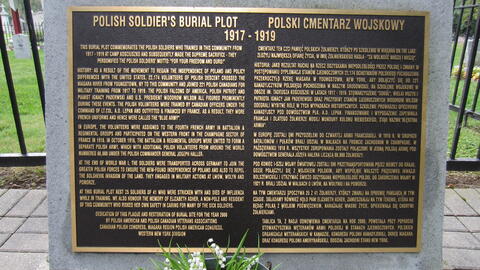
POLISH SOLDIER'S BURIAL PLOT
1917 - 1919

THIS BURIAL PLOT COMMEMORATES THE POLISH SOLDIERS WHO TRAINED IN THIS COMMUNITY FROM 1917 – 1919 AT CAMP KOSCIUSZKO AND SUBSEQUENTLY MADE THE SUPREME SACRIFICE – THEY PERSONIFIED THE POLISH SOLDIERS’ MOTTO: “FOR YOUR FREEDOM AND OURS!”

HISTORY: AS A RESULT OF THE MOVEMENT TO REGAIN THE INDEPENDENCE OF POLAND AND POLICY DIFFERENCES WITH THE UNITED STATES, 22,174 VOLUNTEERS OF POLISH DESCENT CROSSED THE NIAGARA RIVER FROM YOUNGSTOWN, NY TO THIS COMMUNITY AND JOINED 221 POLISH CANADIANS FOR MILITARY TRAINING FROM 1917 TO 1919. THE POLISH FALCONS OF AMERICA, POLISH PATRIOTS AND PIANIST IGNACY PADERWSKI AND U.S. PRESIDENT WOODROW WILSON ALL FIGURED PROMINENTLY DURING THESE EVENTS. THE POLISH VOLUNTEERS WERE TRAINED BY CANADIAN OFFICERS UNDER THE COMMAND OF LT. COL. A.D. LEPAN AND OUTFITTED & FINANCED BY FRANCE. AS A RESULT, THEY WORE FRENCH UNIFORMS AND HENCE WERE CALLED THE “BLUE ARMY.”

IN EUROPE, THE VOLUNTEERS WERE ASSIGNED TO THE FOURTH FRENCH ARMY IN BATTALION & REGIMENTAL GROUPS AND PARTICIPATED ON THE WESTERN FRONT IN THE CHAMPAGNE SECTOR OF FRANCE IN 1918. IN OCTOBER 1918, THE BATTALION & REGIMENTAL GROUPS WERE UNITED TO FORM A SEPARATE POLISH ARMY, WHICH WITH ADDITION POLISH VOLUNTEERS FROM AROUND THE WORLD NUMBERED 80,000 UNDER THE POLISH COMMANDER GENERAL JOSEPH HALLER.

AT THE END OF WORLD WAR I, THE SOLDIERS WERE TRANSPORTED ACROSS GERMANY TO JOIN THE GREATER POLISH FORCES TO ENSURE THE NEW-FOUNDED INDEPENDENCE OF POLAND AND ALSO TO REPEL THE BOLSHEVIK INVASION OF THE LAND. THEY ENGAGED IN MILITARY ACTION AT LWOW, WOLYN AND POMORZE.

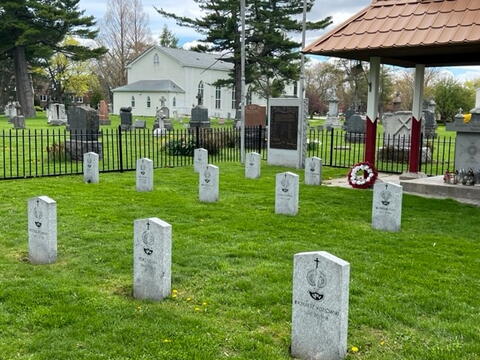
AT THIS BURIAL PLOT REST 25 SOLDIERS OF 41 WHO WERE STRICKEN WITH AND DIED FROM INFLUENZA WHILE IN TRAINING. WE ALSO HONOUR THE MEMORY OF ELIZABETH ASHER, A NONPOLE AND RESIDENT OF THIS COMMUNITY WHO RISKED HER OWN SAFETY IN CARING FOR MANY OF THE SICK SOLDIERS.

DEDICATION OF THIS PLAQUE AND RESTORATION OF BURIAL SITE FOR THE YEAR 2000 BY POLISH AMERICAN AND POLISH CANADIAN VETERAN ASSOCIATIONS, CANADIAN POLISH CONGRESS, NIAGARA REGION POLISH AMERICAN CONGRESS, WESTERN NEW YORK DIVISION.

Image
Caption
Polish Soldier's Burial Plot Plaque
1 of 3 images
Image
Caption
Polish World War I Military Cemetery
1 of 3 images
Image
Caption
Polish Soldier's Burial Plot Plaque
1 of 3 images
Province
!4v1693310310393!6m8!1m7!1sptQ4G20Zlm6LDFlCTYp-7g!2m2!1d43.25489918852108!2d-79.06775887439458!3f212.14523232525187!4f-2.5224685152693382!5f0.7820865974627469
Body Content

In 1918, Niagara-on-the-Lake was home to a military training camp called Niagara Camp. One of its two facilities, opened in May 1918, housed mostly Canadian Army conscripts. The other, known as Camp Kosciuszko and established in fall 1917, was for North American Polish volunteers who had enlisted to help their homeland, which had been partitioned by Russian, Prussia, and Austria-Hungary in the late 1700s; they fought in a separate force, under the French flag. By 1919, 21,000 Polish soldiers had trained there under Canadian officers.

City
Niagara-on-the-Lake
Country
Type Description
Plaque
Photo Credit
Sharon Costello-Thomas
Memorial CF Legacy ID
11982
City/Municipality
Niagara Falls
Memorial Number
35052-049
Type
Address
5275 Victoria Avenue
Location
Bell Canada
in Canada
Yes
GPS Coordinates
43.0979999, -79.0728982
Inscription

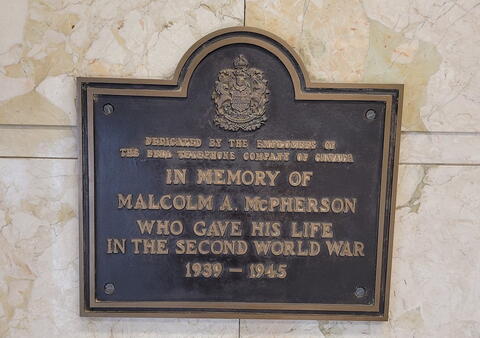
DEDICATED BY THE EMPLOYEES OF
THE BELL TELEPHONE COMPANY OF CANADA
IN MEMORY OF

MALCOLM A. MCPHERSON

WHO GAVE HIS LIFE
IN THE SECOND WORLD WAR
1939 — 1945

Image
Caption
Private Malcolm Allen MacPherson Plaque
Province
!4v1690287375453!6m8!1m7!1sQy0aH6MQkVuS_e2U64ax0A!2m2!1d43.09799994292484!2d-79.07289824750194!3f267.60129809506856!4f7.474872585534669!5f0.7820865974627469
Body Content

This plaque was dedicated by Niagara Falls employees of the Bell Telephone Company of Canada in honour of their comrade who gave his life in the Second World War. The plaque is not available to the public.

City
Niagara Falls
Country
Type Description
Plaque
Photo Credit
Bell Canada
Memorial CF Legacy ID
11869
City/Municipality
Niagara On The Lake
Memorial Number
35052-048
Type
Address
51 Queen's Parade
Location
Fort George National Historic Site
in Canada
Yes
GPS Coordinates
43.2519496, -79.0622602
Inscription
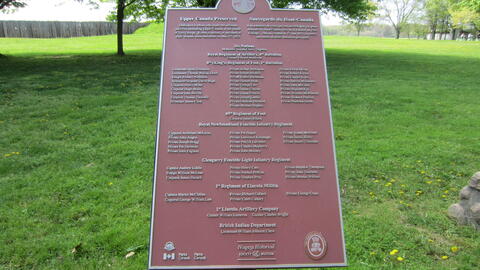
  • Upper Canada Preserved
  • Dedicated to those who made the ultimate
    sacrifice defending Upper Canada at the Battle
    of Fort George. Killed in action, or perished of
    their wounds soon thereafter on May 27, 1813
  • Sauvegarde du Haut-Canada
  • à la mémoire de ceux qui ont sacrifié leur vie pour
    défendre le Haut-Canada lors de a bataille du Fort
    George. Tué au combat le 27 mai 1813 ou morts
    des suites de leurs blessures peu après

Six Nations
Mohawks: Joseph Claws, Tsigotea

Royal Regiment of Artillery, 4th Battalion
Gunner Edward Mulhoran


8th (King's) Regiment of Foot, 1st Battalion

  • Lieutenant Joseph Drummie
  • Lieutenant Thomas Waring Lloyd
  • Ensign Richard Nicholson
  • Armourer/Sergeant David Bligh
  • Corporal Henry Miller
  • Corporal Hugh Moore
  • Corporal John Neville
  • Corporal Thomas Thornely
  • Drummer James Cook
  • Private Arthur Atchinson
  • Private Joseph Bradley
  • Private Robert Buchanan
  • Private Samuel Bush
  • Private George Carr
  • Private James Crayton
  • Private James Francis
  • Private Joseph Gaddis
  • Private Obadiah Hartford
  • Private Michael Hughes
  • Private Edward King
  • Private Robert Kirton
  • Private Charles Lowe
  • Private Patrick McInarney
  • Private John McGuire
  • Private Hugh McKey
  • Private William McWheeny
  • Private Richard Pearson
  • Private Nicholas Smith


49th Regiment of Foot
Corporal James Efford

Royal Newfoundland Fencible Infantry Regiment

  • Corporal Archibald McLaren
  • Private John Anglin
  • Private Joseph Bragg
  • Private Pat Dermody
  • Private John England
  • Private Pat Hagan
  • Private Lawrence Kavanagh
  • Private Patrick Larimore
  • Private Charles Mayberry
  • Private John Mooney
  • Private Joseph Mortimer
  • Private James Rocks
  • Private James Truesdale
  • Glengarry Fencible Light Infantry Regiment
  • Captain Andrew Liddle
  • Ensign William McLean
  • Corporal James Hazard
  • Private Henry Cato
  • Private Nathan Perkins
  • Private Stephen Pray
  • Private Matthew Thompson
  • Private Jean Tournelle
  • Private Martin Wallace


1st Regiment of Lincoln Militia

  • Captain Martin McClellan
  • Corporal George William Law
  • Private Richard Collard
  • Private Caleb Cudney
  • Private George Grass


1st Lincoln Artillery Company

  • Gunner William Cameron Gunner Charles Wright
  • British Indian Department
  • Lieutenant William Johnson Chew

Parks Canada Parcs Canada

Niagara Historical
SOCIETY MUSEUM

THE FRIENDS OF FORT GEORGE

Image
Caption
Battle of Fort George Plaque
Province
!4v1685972877089!6m8!1m7!1sRdS7Llv5NSoSqaQTLjcdrw!2m2!1d43.25194959558993!2d-79.06226019472938!3f157.11764668103882!4f-9.19833347454896!5f0.7820865974627469
Body Content

Following the attack on York, American strategy calls for an immediate amphibious landing at the mouth of the Niagara River to seize Fort George and Fort Erie, destroy the defending army, and roll up the peninsula. For this task the Americans have sixteen warships and seven thousand men. The British have eighteen hundred regulars dispersed along the Niagara Frontier; most of the militia have returned to their farms. The Americans attack on May 27, 1813.

A scene of singular carnage follows. Two lines of men face each other at a distance of no more than ten yards and for the next fifteen minutes fire away at point-blank range. On the British side, every field officer and most junior officers are casualties. The British fighting against odds of four to one are forced back leaving more than one hundred corpses piled on the bank. 

During the War of 1812, Fort George served as the headquarters for the Centre Division of the British Army. These forces included British regulars, local militia, Indigenous warriors, and 'Runchey's company of coloured men'. Major General Sir Isaac Brock, the saviour of Upper Canada served here until his death at the Battle of Queenston Heights in October 1812. Brock and his aide-de-camp John Macdonell were initially buried within the fort. Fort George was destroyed by American artillery fire and captured during the Battle of Fort George in May 1813. The U.S. forces used the fort as a base to invade the rest of Upper Canada, however, they were repulsed at the Battles of Stoney Creek and Beaver Dams. After a seven month occupation, the fort was retaken in December and remained in British hands for the remainder of the war. After the war, the fort was partially rebuilt, and by the 1820's it was falling into ruins. It was finally abandoned in favour of a more strategic installation at Fort Mississauga and a more protected one at Butler's Barracks.

City
Niagara On The Lake
Country
Type Description
Plaque
Photo Credit
Lucille Coleman
Memorial CF Legacy ID
11783
City/Municipality
Niagara Falls
Memorial Number
35052-047
Type
Address
4501 Stanley Avenue
Location
Fairview Cemetery
in Canada
Yes
GPS Coordinates
43.1068607, -79.0859274
Inscription

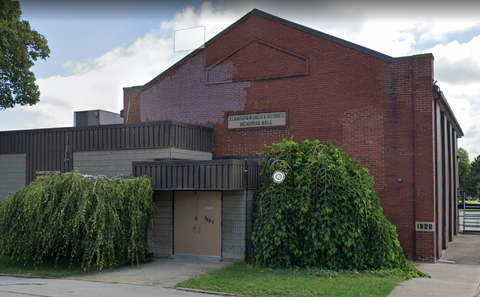
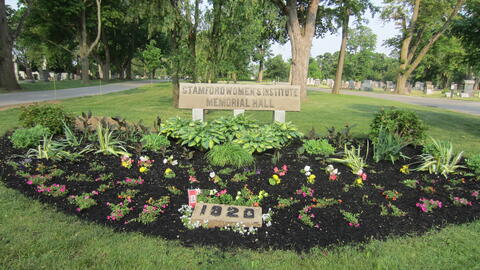
STAMFORD WOMEN`S INSTITUTE 
MEMORIAL HALL

1920

Image
Photo Credit
Google Maps
Caption
Stamford Women's Institute Memorial Hall, 2019.
1 of 2 images
Image
Caption
Engraved building name block from Stamford Women's Institute Memorial Hall
1 of 2 images
War or Conflict Term
Province
!4v1680627344181!6m8!1m7!1sk6jEjbTvykeex-488fCJFQ!2m2!1d43.10686066352233!2d-79.08592744887007!3f269.28!4f5.780000000000001!5f0.4000000000000002
Body Content

Stamford Memorial Hall was a project undertaken by the Stamford Women's Institute beginning in 1919. They raised money through fund-raising events, public donations, several grants and a bank loan. The memorial hall, opened in 1920 at 3846 Portage Road, was dedicated to the men and women of Stamford who served in the First World War.

In the 1970s, Stamford Lion's Club purchased the building from the Stamford Women's Institute. The building was subsequently demolished in June 2021 and the hall's engraved name block that was on the facade of the building was moved to Fairview Cemetery.  

City
Niagara Falls
Country
Type Description
Building - hall
Photo Credit
Lucille Coleman
Memorial CF Legacy ID
11666