Ontario

Province Code
ON
City/Municipality
London
Memorial Number
35042-063
Type
Address
701 Oxford Street East
Location
On the grounds of the Royal Canadian Regiment Museum
in Canada
Yes
GPS Coordinates
43.0001664, -81.2343014
Inscription

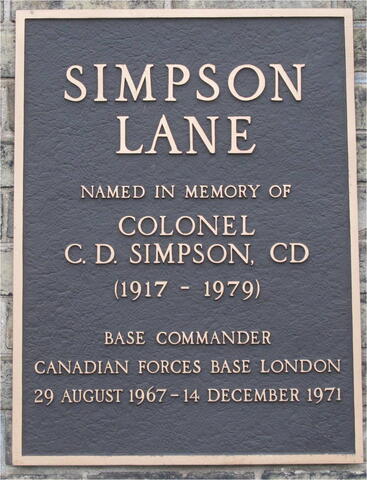
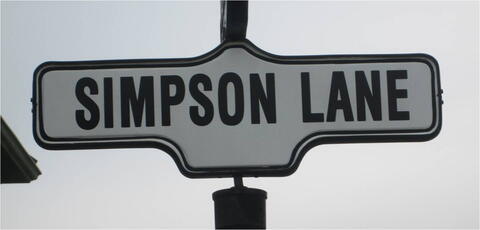
Street sign: Simpson Lane


Plaque:

Simpson

Lane

Named in memory of

Colonel

C.D. Simpson, CD

(1917 - 1979)

Base Commander

Canadian Forces Base London

29 August 1967 - 14 December 1971

Image
Photo Credit
Richard Turcotte
Caption
Photo 1- Wolseley Barracks- Simpson Lane- sign (photo by R. Turcotte)
1 of 2 images
Image
Caption
Photo 2- Wolseley Barracks- Simpson Lane- plaque (photo by R. Turcotte)
1 of 2 images
Province
!4v1629384506885!6m8!1m7!1sXqc0rBvbpo6QNTro2oMhZg!2m2!1d43.00016635668759!2d-81.23430138548208!3f78.5508404564877!4f10.290588505948051!5f0.7820865974627469"
Body Content

This street is named in memory of Colonel C.D. Simpson, former Base Commander at Canadian Forces Base London.

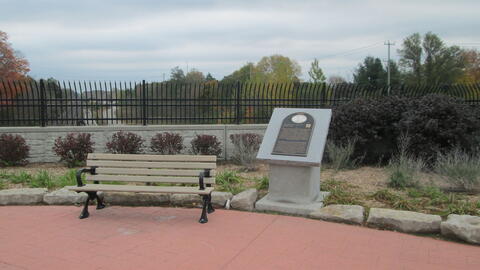
The memorial consists of the street itself and the accompanying street sign, as well as a plaque that was placed on the north-east corner of "A" Block or Wolseley Hall.

City
London
Country
Type Description
Street sign
Memorial CF Legacy ID
9515
City/Municipality
London
Memorial Number
35042-062
Type
Address
701 Oxford Street East
Location
On the grounds of the Royal Canadian Regiment Museum
in Canada
Yes
GPS Coordinates
43.0001664, -81.2343014
Inscription

Crowe Ave.

Image
Photo Credit
Richard Turcotte
Caption
Photo- Wolseley Barracks- Crowe Avenue- sign (photo by R. Turcotte)
War or Conflict Term
Province
!4v1629384506885!6m8!1m7!1sXqc0rBvbpo6QNTro2oMhZg!2m2!1d43.00016635668759!2d-81.23430138548208!3f78.5508404564877!4f10.290588505948051!5f0.7820865974627469"
Body Content

Crowe Avenue is named in honour of Lieutenant-Colonel Ralph Marston Crowe who commanded the Royal Canadian Regiment during the landing in Sicily and its initial push inland.

Ralph Marston Crowe was born in Guelph in 1911. He grew up in a military family, his father a Lieutenant-Colonel in the Canadian Army, and his three brothers also members of the military. Ralph attended the Royal Military College in Kingston, graduating in 1931. He served with the British Army in India from 1936 to 1938 as part of an officer exchange program, and was promoted to captain shortly afterwards.

When the Second World War broke out in September 1939, Crowe was sent overseas to join the staff of the Canadian Military Headquarters in England. Promoted to major in 1940 and Lieutenant-Colonel in March 1943, he was appointed Commanding Officer of the Royal Canadian Regiment.

Crowe landed with his Regiment at Pachino on 10 July 1943 as part of OPERATION HUSKY. After taking their initial objective, Crowe led the Regiment further inland toward Nissoria where they encountered mined roads and crack German troops who took full advantage of the mountainous terrain and inflicted heavy casualties on the Canadians.

A week after landing in Sicily, the Canadians pushed the Germans out of several strategic hilltop towns and villages. But the enemy dug in to make a determined stand at the town of Agira. The struggle for Agira would be the Canadians' toughest fight in the Sicilian Campaign.

On July 24, Crowe led his men along a railway line. They were making good headway, until they came under heavy fire from German positions on the mountain slopes. In the confusion of battle, the RCR's advance unit became separated from the main body and contact with it was lost.

Realizing that those men could be wiped out or captured, Crowe decided to personally lead a rescue party. Crowe's column had advanced about 100m toward the crest of a hill when German machine guns opened up from two sides, catching the Canadians in a crossfire. Crowe was at the head of the column and was cut down in a hail of bullets. Lieutenant-Colonel Ralph Marston Crowe was buried at the Agira Canadian War Cemetery.

City
London
Country
Type Description
Street
Memorial CF Legacy ID
9514
City/Municipality
London
Memorial Number
35042-061
Type
Address
701 Oxford Street East
Location
On the grounds of the Royal Canadian Regiment Museum
in Canada
Yes
GPS Coordinates
43.0001664, -81.2343014
Inscription

Maunsell St.

Image
Photo Credit
Richard Turcotte
Caption
Photo 1- Wolseley Barracks- Maunsell Street- sign (photo by R. Turcotte)
Province
!4v1629384506885!6m8!1m7!1sXqc0rBvbpo6QNTro2oMhZg!2m2!1d43.00016635668759!2d-81.23430138548208!3f78.5508404564877!4f10.290588505948051!5f0.7820865974627469"
Body Content

George Joseph Maunsell was born on 25 August 1836 near Rathkeale, 30 km SW of Limerick, Republic of Ireland. He was educated at the Royal Military College, in England and in May 1855 joined the 15th Foot as an Ensign. His Regiment sailed for New Brunswick (NB) in 1862 and Maunsell joined them as a Captain two years later.

He was seconded to the American Union Army in spring 1865, but returned to New Brunswick a few months later and was promoted to Lieutenant-colonel in November. In the spring of 1866, NB braced itself for the Fenian Raids and Maunsell helped organize the defences. He remained in Canada after Confederation and when the new national militia system was created in January 1869, he was named the deputy adjutant general of NB, effectively becoming the commander of the NB militia. For the next few years he devoted himself to building well-trained and efficient militia units.

In 1881, he was transferred to Ottawa, but returned to NB a few years later, when the government established an Infantry School Corps company in Fredericton as the basis for a permanent military force in Canada. In 1893, the Infantry School Corps was renamed the Royal Regiment of Canadian Infantry (which eventually became the Royal Canadian Regiment).

In 1896, Maunsell was appointed its Commanding Officer, taking command of the companies in Fredericton, St. Jean, Toronto and London. The following two years saw him create a uniform regimental system for these geographically distant and disparate companies. In 1898, he relinquished command of the Regiment and shortly afterwards retired from the military. He died in England where he had returned after his retirement.

City
London
Country
Type Description
Street sign
Memorial CF Legacy ID
9513
City/Municipality
London
Memorial Number
35042-060
Type
Address
Hale Street & Trafalgar Street
Location
In the traffic circle of Hale Street & Trafalgar Street
in Canada
Yes
GPS Coordinates
42.9857812, -81.1924635
Inscription

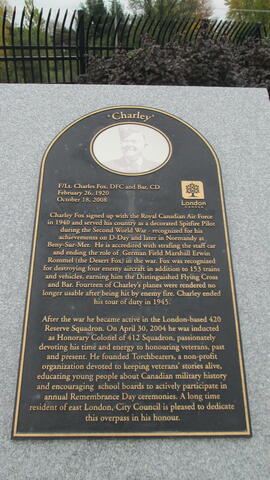
“Charley”

F/Lt. Charles Fox, DFC and Bar, CD
February 26, 1920
October 18, 2008

Charles Fox signed up with the Royal Canadian Air Force in 1940 and served his country as a decorated Spitfire Pilot during the Second World War- recognized for his achievements on D-Day and later in Normandy at Beny-sur-Mer. He is accredited with strafing the staff car and ending the role of German Field Marshall Erwin Rommel (The Desert Fox) in the war. Fox was recognized for destroying four enemy aircraft in addition to 153 trains and vehicles, earning him the Distinguished Flying Cross and Bar. Fourteen of Charley’s planes were rendered no longer usable after being hit by enemy fire. Charley ended his tour of duty in 1945.
After the war he became active in the London-based 420 Reserve Squadron. On April 30, 2004 he was inducted as Honoray Colonel of 412 Squadron, passionately devoting his time and energy to honouring veterans, past and present. He founded Torchbearers, a non profit organization devoted to keeping veterans’ stories alive, educating young people about Canadian military history and encouraging school boards to actively participate in annual Remembrance Day ceremonies. A long time resident of east London, City Council is pleased to dedicate this overpass in his honour.

Image
Photo Credit
Richard Turcotte
Caption
Photo 1- F/Lt Charles Fox overpass (photo by R. Turcotte)
1 of 2 images
Image
Caption
Photo 2- Close up of plaque (photo by R. Turcotte)
1 of 2 images
War or Conflict Term
Province
!4v1629384129293!6m8!1m7!1sIeis_wiBv7x0Fw8Nes9J9g!2m2!1d42.98578120602267!2d-81.19246348920126!3f113.51194104612551!4f4.505766999999452!5f1.3345339393214029"
Body Content

This overpass is named in honour of F/Lt Charles Fox, DFC and Bar, CD.

Charles Fox was born in February 1920 in Guelph ON. He attended Guelph Collegiate Vocational Institute and joined the military soon after the start of the Second World War. He completed pilot training in 1941, graduating near the top of his class. His training success and his natural abilities led him to being assigned as a flight instructor in Dunnville ON from October 1941 to March 1943 after which he was transferred to an operational training school at Bagotville QC to undertake combat training.


In August 1943, he was transferred to Europe and trained on Spitfires. In January 1944, Charley Fox was assigned to 412 Squadron, RCAF and over the next few months, undertook numerous escort, armed recce and dive-bombing sorties. On D-Day alone, he flew three missions. On 18 June, 412 Squadron began flying operations from an airstrip at Beny-sur-Mer in Normandy and on 17 July 1944, Fox completed a mission that would garner world-wide attention. On this occasion, he undertook an armed reconnaissance mission and strafed an unknown black staff car; he later learned that one of the passengers was German Field Marshal Erwin Rommel, who was seriously injured in the attack. Two other pilots (RAF and RAAF) also claimed responsibility but a 2004 study concluded that Fox had most likely delivered the damaging blow. He flew numerous missions during the 1944 summer offensive and was awarded the DFC for his "exceptional courage and skill in pressing home his attacks against the enemy".


Fox concluded his operational tour in January 1945 having flown 224 operational sorties and in February he was awarded a Bar to his DFC. He returned to Canada in August and after his wartime experience, Fox continued to serve with 420 Squadron (Reserve), flying Harvards, Mustangs and the early jet fighters. He later transferred to fighter controller duties, finally completing his service in May 1961. Fox was appointed Honorary Colonel of 412 Squadron in April 2004. He died in a car accident near Tillsonburg, Ontario, on 18 October 2008.


City
London
Country
Type Description
Street/ overpass
Memorial CF Legacy ID
9497
City/Municipality
London
Memorial Number
35042-059
Type
Address
472 Richmond Street
Location
Inside the St. Paul's Cathedral
in Canada
Yes
GPS Coordinates
42.985534, -81.2504349
Inscription

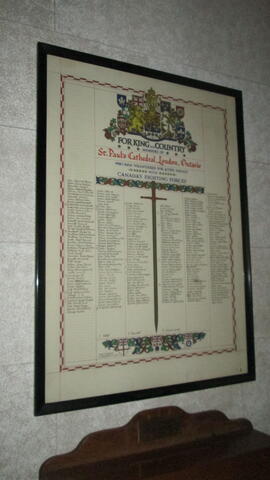
For King and Country

members of

St. Paul's Cathedral, London, Ontario

who have volunteered for active service

with

Canada's Fighting Forces

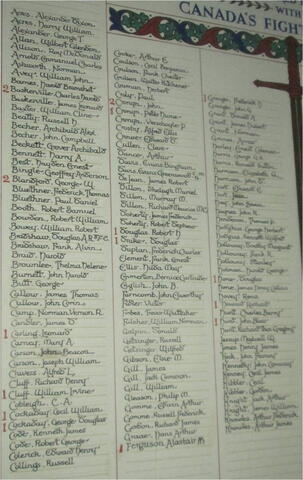
Acres, Alexander Dixon

Cooke, Arthur E.

1 Granger, Frederick H.

Acres, Harry William

Coulson, Cecil Benjamin

Granger, John G.

Alexander, George T.

Coulson, Frank Chester

Grant, Donald, A.

Allan, Wilbert Glendon

Coulson, Walter Kitchener

Grant, James Herbert

Allison, Roy McDonald

Couman, Herbert

Grant, Norman

Arnold, Emmanuel Charles

Croly, Paul

Grimes, Arrus

Ashworth, Norman

2 Cronyn, John

Harley, Ernest Coleman

Avery, William John

1 Cronyn, Peter Hume

Harris, George G.R.

Barnes, Harold Bamshot

Cronyn, Verschoyler P.

Harris, Ronald Sutton

2 Baskerville, Charles Harold

Crosby, Alfred Ellis

Harrison, Elizabeth Q.

Baskerville, James Leonard

Crowe, Edward D.

Harrison, John D.

Baxter, William Cline

Cullen, Clare

Hart, Edward E.

Beatty, Russell H.

Dance, Arthur

Hart, Jean

Becher, Archibald Alex

Davis, Evans Bigham

Hay, John Bevan

Becher, John Campbell

Davis, Evans Greenwood C.M.G.

Haynes, John R.

Beckett, Grover Archibald

DeJean, James Robert

Henderson, Thomas P.

Bennett, Harry A.

Dillon, Shelagh Muriel

Hodgkiss, George Herbert

Best, Hayden Ernest

Dillon, Murray M.

Hodgins, Kenneth Wilfred

Bingle, Geoffrey Anderson

Dillon, Richard Maurice, M.C.

Holloway, Dorothy Margaret

2 Blandford, George W.

Doherty, James Frederick

Holloway, Frank R.

Bluethner, Frederick Thomas

Doherty, Robert Dephew

Holloway, Stanley

Bluethner, Paul Daniel

1 Douglas, Robert H.

Holman, Harold George

Booth, Robert Samuel

1 Draker, Douglas

1 Hone, Douglas

Bowden, Robert William

Duplan, Frederick Charles

Hone, James Henry Collins

Bowey, William Robert

Element, Frank Ernest

Hovey, Rena

Bradshaw, Douglas A.R. & F.C.

Ellis, Hilda May

1 Howard, Richard

Bradshaw, Frank Alvin

Emmerton, Bernice Gertrude

Hunt, Charles Barry

Braid, Harold

English, John B.

1 Hunt, John Blair

Brownlee, Thelma Helene

Farncomb, John Elworthy

Hunt, Richard Thomas Gregory

Burnett, John Harold

Fidler, Victor

Jessup, Maxwell W.

Burr, George

Forbes, Trevor Whittacker

Jones, Henry James

Callow, James Thomas

Fulcher, William Norman

Keck, John Fresnoy

Callow, John Corin

Galpin, Donald

Kennedy, John Conway

Camp, Norman Vernon R.

Getsinger, Russell

Kenney, Cecil James

Candler, James D.

Getsinger, Wilfred

Kibbler, Cecil

1 Carling, Leonard

Gibson, Elsie M.

Kibbler, Gordon

Carney, Mary A.

Gill, James

Knight, Jack Arthur

Carson, John Beacon

Gill, Jack Cameron

Knight, James William

Carson, Joseph William

Gill, William

Knowles, Arthur Frederick

Chivers, Alfred L.

Gleason, Philip M.

Knowles, Arthur James

Cluff, Richard Henry

Gomme, Edwin Arthur


1 Cluff, William Irvine

Gomme, Russell Frederick


Cobleigh, C.A.

Gordon, Richard James


1 Cockaday, Cecil William

Graae, Hans Arthur


1 Cockaday, George Douglas

1 Ferguson, Alastair M.


Code, Kenneth James


Code Robert George


Colerick, Edward Henry


Collings, Russell


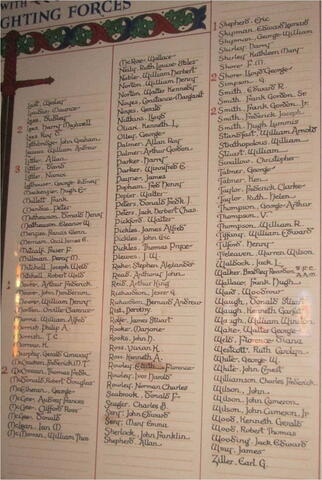
Lest, Wesley

McRae, Wallace

1 Shepherd, Eric

Laudier, Maurice

Neilly, Ruth Louise Stiles

Shipman, Edward Leonard

Lees, Dudley

Noble, William Herbert

Shipman, George William

2 Lees, Harry Maxwell

Norton, William Henry

Shirley, Harry

Lees, Roy O.

Norton, Walter Kennedy

Shirley, Kathleen Mary

Lethbridge, John Graham

Noyes, Constance Margaret

Shore, F.M.

Lewars, William Andrew

Noyes, Gerald

2 Shore, Lloyd George

Little, Allan

Nittkins, Lloyd

Simpson, G.

3 Little, David

Oliari, Kenneth L.

Smith, Edward R.

Little, Namoi

Olley, George

Smith, Frank Gordon Sr.

Lofthouse, George Sidney

Palmer, Allan Roy

2 Smith, Frank Gordon Jr.

Mackenzie, Hugh E.

Palmer, Arthur Gordon

Smith, Federick Joseph

Mallett, Frank

Parker, Harry

Smith, Hugh Lummis

Mandas, Peter

Parker, Winnifred E.

Standfast, William Arnold

Mathewson, Donald Henry

Payne, James

Strathopolous, William

Mathewson, Eleanor W.

Popham, Fred Henry

Stuart, William

Menzies, Francis Glenn

Pepler, Walter

Swallow, Christopher

Merriam, Cecil James E.

Peters, Donald Fredk J.

Tabner, George

Metcalf, Fraser F.

Peters, Jack Herbert Chas.

Tabner, Ken

Millman, Percy M.

Pickford, Walter

Taylor, Frederick Clarke

Mitchell, Joseph Weld

Pickles, James Alfred

Taylor, Ruth Helen

Mitchell, Robert Weld

Pickles, John Eric

Thompson, George Arthur

1 Moore, Arthur Frederick

Pickles, Thomas Pryce

Thompson, V.

Moore, John Henderson

Pleures, J.W.

Thompson, William R.

Moore, William Henry

Raker, Stephen Alexander

Tiffany, William Edward

Morten, Orville Clarence

Read, Anthony John

Tilford, Henry

Morris, William Alfred

Reid, Arthur King

Treleaven, Warren Wilson

Morrish, Philip A.

Richardson, Jesse G.

Waldock, Jack L.

Morrish, T.C.

Richardson, Bernard Andrew

Walker, Bradley Readon, DFC, AAM

Morrow, K.

Rist, Dorothy

Wallace, Frank Hugh

Murphy, Gerald Conway

Rolfe, James Stewart

Ward, Woodrow

McCracken, Frederick M.T.

Rooke, Marjorie

Waugh, Donald Stewart

2 McCrossan, Thomas Fredk.

Rooks, John H.

Waugh, Kenneth Garfut

McDonald, Robert Douglas

Ross, Vivian K.

Waugh, William Winston

McEtheran, George

Ross, Kenneth, A.

Wake, Walter George

McGee, Audrey Frances

Rowley, Edith Florence

Weld, Florence Diana

McGee, Clifford Ross

Rowley, Ivor Harold

Westcott, Ruth Carolyn

McGee, Donald

Rowley, Norman Charles

White, George W.

McLean, Ian M.

Seabrook, Donald F.

White, John Ernest

McMorran, William Thos.

Seager, Charles B.

Williamson, Charles Frederick


Sery, John Edward

Wilson, John


Sery, Mary Emma

Wilson, John Cameron


Sherlock, John Franklin

Wilson, John Cameron Jr.


Shepherd, Allan

Wood, Kenneth Gerald


Wood, Robert Thomas


Wooding, Jack Edward


Wray, James


Ziller, Earl G.


1 Killed     2  Wounded     3  Prisoner of War

Image
Photo Credit
Richard Turcotte
Caption
Photo 1- St Paul's Cathedral- WW II scroll (photo by R. Turcotte)
1 of 3 images
Image
Caption
Photo 2- St Paul's Cathedral- WW II scroll- Close up left (photo by R. Turcotte)
1 of 3 images
Image
Caption
Photo 3- St Paul's Cathedral- WW II scroll- Close up right (photo by R. Turcotte)
1 of 3 images
War or Conflict Term
Province
!4v1628788648795!6m8!1m7!1sSA8bnYAgtoCKFjnsSw9qHw!2m2!1d42.98553397861292!2d-81.25043486445803!3f71.4473391701606!4f14.387629844886646!5f1.6016771963104697"
Body Content

This scroll was placed at St. Paul's Cathedral to honour the members of the congregation who served in the Second World War

City
London
Country
Type Description
Scroll
Memorial CF Legacy ID
9496
City/Municipality
London
Memorial Number
35042-058
Type
Address
472 Richmond Street
Location
Inside the St. Paul's Cathedral
in Canada
Yes
GPS Coordinates
42.985534, -81.2504349
Inscription

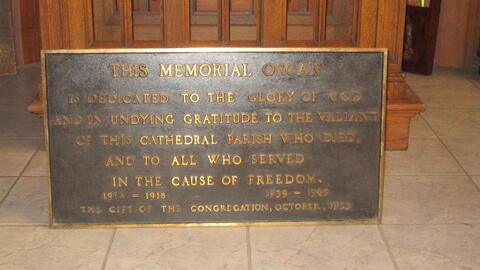
This memorial organ

is dedicated to the glory of God

and in undying gratitude to the Valiant

of this Cathedral parish who died,

and to all who served

in the cause of freedom

1914-1918          1939-1945

the gift of the congregation, October, 1953

Image
Photo Credit
Richard Turcotte
Caption
Photo- St Paul's Cathedral- Memorial organ and plaque (photo by R. Turcotte)
War or Conflict Term
Province
!4v1628788413722!6m8!1m7!1sSA8bnYAgtoCKFjnsSw9qHw!2m2!1d42.98553397861292!2d-81.25043486445803!3f70.75727510401016!4f14.767234759689103!5f1.5378071705447987"
Body Content

This memorial is dedicated to the members of St Paul's Cathedral parish who gave their lives during the First and Second World Wars and all those who served.

City
London
Country
Type Description
Memorial organ and plaque
Memorial CF Legacy ID
9495
City/Municipality
London
Memorial Number
35042-057
Type
Address
472 Richmond Street
Location
Inside the St. Paul's Cathedral
in Canada
Yes
GPS Coordinates
42.985534, -81.2504349
Inscription

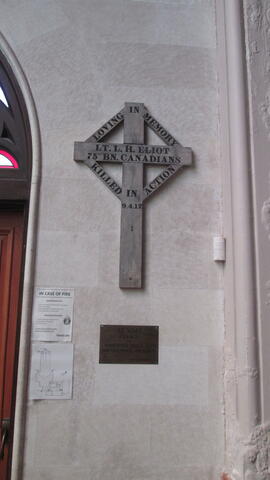
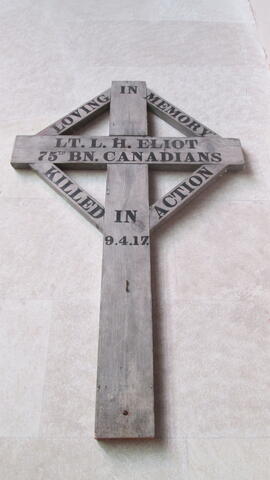
On cross:

In loving memory

Lt. L.H. Eliot

75th Bn. Canadians

Killed in Action

9.4.17.


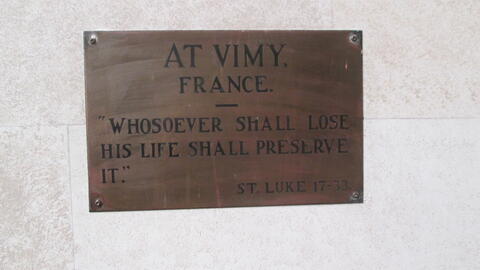
On plaque:

At Vimy,

France

"Whoever shall lose

his life shall preserve

it."     St. Luke 17-33.

Image
Photo Credit
Richard Turcotte
Caption
Photo 1- Lt Eliot cross memorial (photo by R. Turcotte)
1 of 4 images
Image
Caption
Photo 2- Close up of cross (photo by R. Turcotte)
1 of 4 images
Image
Caption
Photo 3- Close up of plaque (photo by R. Turcotte)
1 of 4 images
Image
Caption
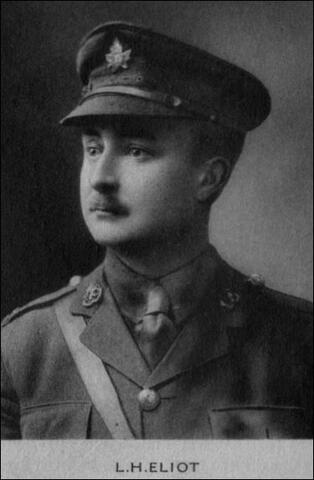
Photo 4- Lt LH Eliot
1 of 4 images
War or Conflict Term
Province
!4v1628787911573!6m8!1m7!1sSA8bnYAgtoCKFjnsSw9qHw!2m2!1d42.98553397861292!2d-81.25043486445803!3f72.53232957199137!4f15.33640722602145!5f1.4786395179072644"
Body Content

This memorial is dedicated to the memory of Lieutenant Lionel Hyman Eliot, who was killed during the Battle of Vimy Ridge.

Lionel Hyman Eliot was born on 16 September 1887 in London, Ontario. After completing his education, he obtained a position with the Bank of Montreal. He enlisted in June 1915 with the 58th Battalion, though records show he was on the 91st Canadian Highlanders quota. His service attestation papers also indicate that he had previous service with the 9th Mississauga Horse. He remained with the 58th Battalion for several months before being "stricken off strength" to take his commission as a Lieutenant with the 75th Battalion.

He sailed with the 75th Battalion in spring 1916, arriving in England on 09 April. By August, the 75th was in the trenches of Belgium and within the month, was at the Somme, fighting with great distinction in the battles at Regina trench and Desire trench. In December 1916, the Battalion was transferred to Vimy where it awaited the upcoming spring battle for the Ridge. The months leading to the battle were not without its dangers; on 01 March 1917, a large phosgene gas raid took place in which the 75th ‘s Commanding Officer was killed.

On the morning of 9th April 1917, the attack for Vimy Ridge commenced. Lt Lionel Eliot was killed within the early actions as he lead his platoon to their objective. He is buried at Canadian Cemetery No. 2 Neuville-St. Vast.

City
London
Country
Type Description
Cross
Memorial CF Legacy ID
9494
City/Municipality
London
Memorial Number
35042-056
Type
Address
701 Oxford Street East
Location
Wolseley Barracks, east end of site.
in Canada
Yes
GPS Coordinates
43.002167, -81.2300649
Inscription

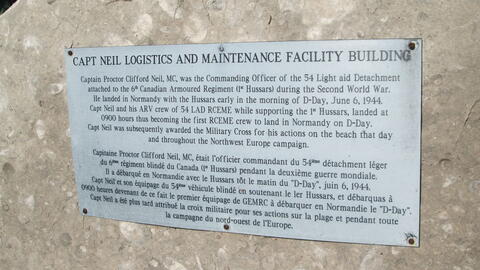
Capt Neil Logistics and Maintenance Facility Building

Captain Proctor Clifford Neil, MC, was the commanding officer of the 54 Light Aid Detachment attached to the 6th Canadian Armoured Regiment (1st Hussars) during the Second World War. He landed in Normandy with the Hussars early in the morning of D-Day, June 6, 1944. Capt Neil and his ARV crew of 54 LAD, RCEME while supporting the 1st Hussars, landed at 0900 hours thus becoming the first RCEME crew to land in Normandy on D-Day. Capt Neil was subsequently awarded the Military Cross for his actions on the beach that day and throughout the Northwest Europe campaign.

Capitaine Proctor Clifford Neil, MC, était l’officier commandant du 54ième détachement léger du 6ième régiment blindé du Canada (1st Hussars) pendant la deuxième guerre mondiale. Il a débarqué en Normandie avec le Hussars tôt le matin du ‘’D-Day’’, juin 6, 1944. Capt Neil et son équipage du 54ième véhicule blindé en soutenant le 1er Hussars, et débarquas à 0900 heures devenant de ce fait le premier équipage de GEMRC à débarquer en Normandie le ‘’D-Day’’. Capt Neil a été plus tard attribué la croix militaire pour ses actions sur la plage et pendant toute la campagne du nord-ouest de l’Europe.

Image
Photo Credit
Richard Turcotte
Caption
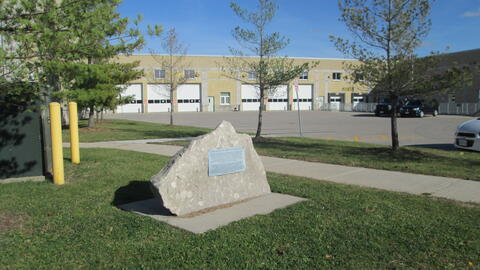
Photo 1- Wolseley Barracks- Capt Neil Building- Surroundings (photo by R. Turcotte)
1 of 2 images
Image
Caption
Photo 2- Wolseley Barracks- Capt Neil Building- Close up of dedication plaque (photo by R. Turcotte)
1 of 2 images
Province
!4v1639600038792!6m8!1m7!1sszF6VfDkUGC3wP38LLoeDQ!2m2!1d43.00216704016627!2d-81.23006493553477!3f157.88485471127206!4f0.8563472646017516!5f3.325193203789971"
Body Content

This building is named in honour of Captain Proctor Clifford Neil, MC. 

Proctor Clifford Neil was born in August 1914 at Cobalt ON. As a young boy, his family moved to North Bay where he completed his schooling. A gifted pupil, he also excelled in athletics. He joined the military soon after the declaration of the Second World War and was assigned to the Royal Canadian Electrical Mechanical Engineers (RCEME). He holds the distinction of being a member of the first RCEME crew to land in Normandy on D-Day. He would go on and serve throughout the North-West European campaign where his courage under fire became commonplace. During a particularly difficult advance through muddy fields, Capt Neil and his crew recovered 51 tanks that had become mired in a heavily mined area subjected to enemy artillery, machinegun and sniper fire. For his leadership demonstrated during this perilous instance and his courageous actions throughout the campaign, he was awarded the Military Cross in February 1945.

After the war, he returned to school and obtained a degree in metallurgical engineering from McGill University in Montreal. He relocated to Niagara Falls where he worked in industry for many years. After his first retirement, he continued on with consulting work for another 10 years. Proctor Clifford Neil died in August 1991 at the age of 76.

City
London
Country
Type Description
Building
Memorial CF Legacy ID
9493
City/Municipality
London
Memorial Number
35042-055
Type
Address
196 Dufferin Avenue
Location
St. Peter's Cathedral Basilica
in Canada
Yes
GPS Coordinates
42.9866435, -81.249821
Inscription

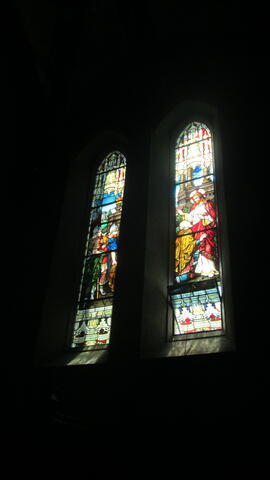
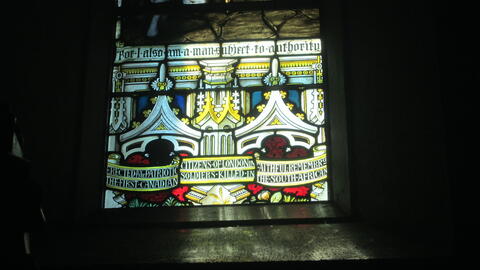
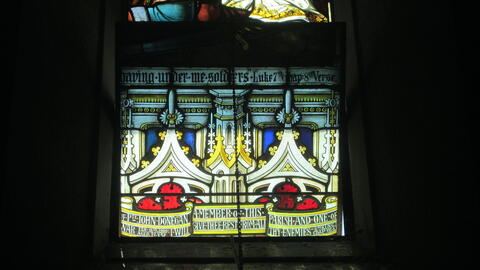
Inscription at the bottom of the left and right stained glass windows: 

“For I also am a man subject to authority, having under me soldiers” Luke, 7 Chap, 8th Verse.

Erected by the patriotic citizens of London in faithful remembrance of Pte John Donegan a member of this Parish and one of the first Canadian soldiers killed in the South African War, Feb 18, 1900. Aged 21 years.

 “I will give thee rest from all thy enemy” 2nd Kings, Chap VII, Verse XI.

Image
Photo Credit
Richard Turcotte
Caption
Photo 1- Pte Donegan stained glass window (photo by R. Turcotte)
1 of 4 images
Image
Caption
Photo 2- Pte Donegan stained glass window- left inscription (photo by R. Turcotte)
1 of 4 images
Image
Caption
Photo 3- Pte Donegan stained glass window- right inscription (photo by R. Turcotte)
1 of 4 images
Image
Caption
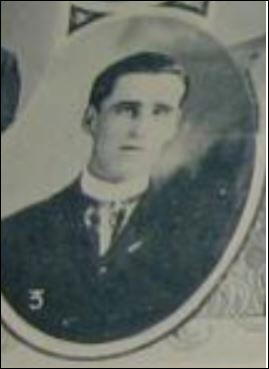
Photo 4- Photo of Pte John Donegan (photo from Canadian Virtual War Memorial- VAC)
1 of 4 images
War or Conflict Term
Province
!4v1628785626734!6m8!1m7!1si09keen3V5WtyjXl1cTmOw!2m2!1d42.98664347304122!2d-81.24982098923279!3f342.2653276710499!4f15.236431007407305!5f1.443429206830113"
Body Content

This stained glass window is dedicated to the memory of Private John Andrew Donegan, one of the first Canadian soldiers to be killed in the South African War. 

John Andrew Donegan was born on 17 December 1878 at Perth ON, west of Ottawa. His father was an “engine driver” on the Perth and Smith Falls railway before being promoted to Inspector of Locomotives in the Canadian Pacific Railway shops at London ON. John Donegan was educated at Perth and, after his family had moved to London, at St. Peter’s School and the Collegiate Institute in London. On completing his education, he worked at a boot and shoe store before working at the CPR freight office in Chatham ON. Donegan was a member of the 26th Middlesex Light Infantry Active Militia when he volunteered for the Boer War. He sailed for South Africa on 30 October 1899 with B Company of the Royal Canadian Regiment, arriving in Cape Town on 20 Nov.

The British had suffered a number of surprising set-backs in the 1899 opening battles of the Boer War but with the arrival of reinforcements, they put in place a new strategy. In February 1900, they sent troops marching across the plains towards the Boer capitals rather than use the vulnerable railway lines. On 17 February, British forces reached the banks of the Modder River at Paardeberg Drift where a 5000 strong Boer commando awaited them. On the morning of 18 February, the RCR were ordered across the river and once the crossing completed, were ordered to advance down Gun Hill. They had barely started their advance when they came under murderous fire from the dug-in Boers. It is during this action that Private John Andrew Donegan was killed. He is buried at the Vendusie Drift Garden of Remembrance, Paardeberg, South Africa.

City
London
Country
Type Description
Stained Glass Window
Memorial CF Legacy ID
9492
City/Municipality
London
Memorial Number
35042-054
Type
Address
472 Richmond Street
Location
Inside the St. Paul's Cathedral
in Canada
Yes
GPS Coordinates
42.985534, -81.2504349
Inscription

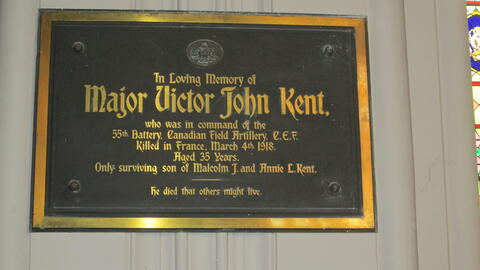
In loving memory of

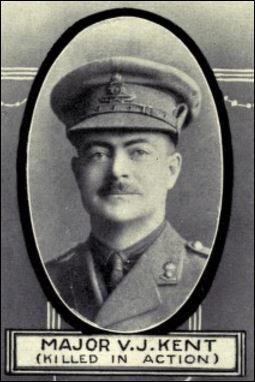
Major Victor John Kent,

who was in command of the

55th Battery, Canadian Field Artillery, C.E.F.

Killed in France, March 4th, 1918

Aged 35 years

Only surviving son of Malcolm J. and Annie L. Kent

He died that others might live.

Image
Photo Credit
Richard Turcotte
Caption
Photo 1- St Paul's Cathedral- Maj Kent plaque (photo by R. Turcotte)
1 of 2 images
Image
Caption
Photo 2- St Paul's Cathedral- Maj Kent plaque- photo of Maj Kent (photo from Canadian Virtual War Memorial- VAC)
1 of 2 images
War or Conflict Term
Province
!4v1628785096192!6m8!1m7!1sSA8bnYAgtoCKFjnsSw9qHw!2m2!1d42.98553397861292!2d-81.25043486445803!3f74.23717158300873!4f15.19327070167607!5f1.5926975984848561"
Body Content

This plaque is dedicated to the memory of Major Victor John Kent. 

Victor John Kent was born on 21 January 1883 in London Ontario. Following his studies, he entered the Royal Military College in Kingston and graduated in 1902 with a degree in civil engineering. He worked in this field for a number of years before enlisting on 6 March 1916 in Guelph where he was appointed Officer Commanding 56th Battery. The latter unit recruited primarily from the Ontario Agricultural College and was often called the OAC Battery.

The 56th Battery embarked for England on 13 September 1916, arriving 9 days later. Stationed at Witley Camp, near Aldershot, on 22 January 1917 the battery was absorbed into the 55th Battery and 66th Battery as the Canadian field artillery batteries were reorganized from 4 guns to 6 guns each. As a result, Major Victor Kent became the Officer Commanding 55th Battery. After months of training, 55th Battery arrived in France in August 1917 where it was attached to 13 Brigade, Canadian Field Artillery, part of the 5th Division artillery.

On 4 March 1918, Major Victor John Kent was hit by shrapnel while directing his men to take cover during an artillery barrage. He is buried at Aix-Noulette Communal Cemetery Extension, west of Lens, France.


City
London
Country
Type Description
Plaque
Memorial CF Legacy ID
9491