Other

City/Municipality
Edmonton
Memorial Number
48011-023
Type
Address
Topham Street
Location
Village of Griesbach
in Canada
Yes
GPS Coordinates
53.6009374, -113.5016205
Inscription

TOPHAM ST

Province
!4v1615384510639!6m8!1m7!1sa7FKJQcYlMb3vVikt9iICg!2m2!1d53.60093878127211!2d-113.5016185179609!3f121.59885355507224!4f3.9638139679451996!5f3.325193203789971"
Body Content

Topham Street was dedicated to Victoria Cross recipient Corporal Frederick G. Topham by the Canada Lands Company on January 18, 2006, as part of their redevelopment of Edmonton’s former Canadian Forces Base (Griesbach Barracks).

Frederick George Topham was born in Toronto, Ontario, on 10 August 1917. In March 1945, Corporal Topham was serving as a medical orderly in the 1st Canadian Parachute Battalion. At that time, the battalion was part of the 3rd Parachute Brigade of the British Army’s 6th Airborne Division. On the morning of 24 March 1945, parachute and glider-borne troops of the 6th Airborne Division landed on the east bank of the Rhine River, not far from the city of Wesel in Germany. These landings were carried out in support of assault operations begun the night before by the 1st Canadian and 2nd British Armies to cross to the East bank of the river. After the 1st Canadian Parachute Battalion landed just north of Diersfordt Wood, Corporal Topham heard a cry for help from a wounded man who was in the open. Two medical orderlies who went out in succession to treat the wounded man were killed. Immediately afterward and on his own initiative, Topham went forward through intense German fire to assist the casualty. As he treated the wounded man, Topham was himself shot through the nose, but continued to give first aid despite the severe bleeding and pain of his own injury. He was then able to carry the wounded man to shelter through continuous fire. Refusing treatment for his wound, Corporal Topham continued to assist the wounded for two more hours, by which time all casualties had been evacuated to safety. Although he finally consented to have his nose dressed, he refused to be evacuated with the other wounded. Later, alone and again under enemy fire, Topham rescued three soldiers from a burning machine gun carrier that threatened to explode, brought them to safety, and arranged for the evacuation of the two men who survived.

For his courageous and selfless devotion to his comrades, Corporal Topham was awarded the Victoria Cross. He died in Toronto on 31 May 1974.

City
Edmonton
Country
Type Description
Street
Memorial CF Legacy ID
8188
City/Municipality
Edmonton
Memorial Number
48011-022
Type
Address
Stan Waters Avenue
Location
Village of Griesbach
in Canada
Yes
GPS Coordinates
53.6009153, -113.5040296
Inscription

STAN WATERS AV

War or Conflict Term
Province
!4v1695840081828!6m8!1m7!1ss-eyHLK40pI14AjsHqRmmg!2m2!1d53.60091528999374!2d-113.5040296294069!3f222.8646812251425!4f-0.7042483130533697!5f2.970382006940998
Body Content

Stan Waters Avenue was dedicated to Lieutenant-General Stanley Charles Waters by the Canada Lands Company on January 18, 2006, as part of their redevelopment of Edmonton’s former Canadian Forces Base (Griesbach Barracks).

Lieutenant-General Waters began his military career as one of Canada’s first paratroopers and retired 34 years later as Commander of the Canadian Forces Mobile Command. Waters first enlisted in 1941 as a trooper with the 14th Army Tank Battalion, and immediately departed for Europe. He returned the following year for officer training and volunteered for the 2nd Canadian Parachute Battalion shortly after receiving his commission. From 1942 to 1944, Waters’ unit formed part of the 1st Special Service Force, a joint Canada-United States commando unit that became known as the Devil’s Brigade. Waters fought in Italy, where he won the United States Silver Star for his efforts at the Battle of Anzio and in southern France.

When the 1st Special Service Force was disbanded, Major Waters transferred to the 1st Canadian Parachute Battalion as a company commander. He participated in the Battalion’s six-week, 500-kilometre dash across Germany that ended at the strategic Baltic Sea port of Wismar just hours ahead of the Russian army. In his postwar career, Waters served at many postings in Canada and abroad until his retirement in 1975. He then returned to Calgary, where he had commanded the 1st Canadian Infantry Brigade from 1966 to 1968.

Waters joined a successful oil development firm, held a number of corporate executive positions, and served as president of the Calgary Chamber of Commerce before retiring from business in 1989. That year, Waters won a special election held to choose Alberta’s nominee for a vacant Senate seat. On his appointment in 1990, Waters became the first Canadian Senator to have been elected by his constituents. Waters died in office in 1991.

City
Edmonton
Country
Type Description
Street
Memorial CF Legacy ID
9223
City/Municipality
Edmonton
Memorial Number
48011-021
Type
Address
Rochester Avenue
Location
Village of Griesbach
in Canada
Yes
GPS Coordinates
53.6001178, -113.5041398
Inscription

ROCHESTER
AV

Image
Photo Credit
Ryan Davidson, Alfred Zangao
Caption
Rochester Avenue street sign
War or Conflict Term
Province
!4v1695825167412!6m8!1m7!1s6RAEFJqAJbA9HlhHSLgx4g!2m2!1d53.60014429860878!2d-113.50189523776!3f18.581437576349053!4f2.0566084125986066!5f3.325193203789971
Body Content

Rochester Avenue was dedicated to Colonel Don Rochester by the Canada Lands Company on January 18, 2006, as part of their redevelopment of Edmonton’s former Canadian Forces Base (Griesbach Barracks).

Colonel Rochester enlisted in the Royal Canadian Engineers in 1941. During the Second World War, he commanded the 24 Field Company in the Aleutian Islands in Alaska and was later transferred to the 8 Field Squadron in Germany as Second-in-Command. In 1949, Rochester became Chief Instructor at the Royal Canadian School of Military Engineering. When the Korean War broke out in 1950, he was chosen to command 57 Independent Field Squadron, the first Royal Canadian Engineers unit to serve in Korea. For this service, Rochester was awarded the Order of the British Empire.

Rochester commanded the Canadian contingent of the United Nations Emergency Force in the Gaza Strip following the Sinai War of 1956. In 1964, he became Commandant of the Royal Canadian School of Military Engineering at Chilliwack, British Columbia, and Commander of Camp Chilliwack. Rochester acted as Chief Engineer of the Canadian Army. In the late 1960s, he became involved in the planning and creation of a permanent airborne commando regiment. In 1968, Rochester became the first commander of the Canadian Airborne Regiment based at Griesbach Barracks, Edmonton. Before he retired in 1969, Rochester helped build the Regiment into one of the most respected fighting units in the Canadian Armed Forces.

City
Edmonton
Country
Type Description
Street
Memorial CF Legacy ID
8186
City/Municipality
Edmonton
Memorial Number
48011-019
Type
Address
2540 Pegasus Boulevard NW
Location
Village of Griesbach
in Canada
Yes
GPS Coordinates
53.6026804, -113.5043702
Inscription

(needs further research/recherche incomplète)

Province
!4v1696334601120!6m8!1m7!1supYRvT1z1g4Q9mnEz4oPIg!2m2!1d53.60268038538018!2d-113.5043701948087!3f275.99541795121377!4f7.383677300262548!5f0.7820865974627469
Body Content

Canadian Airborne Regiment Plaza was dedicated by the Canada Lands Company on January 18, 2006, as part of their redevelopment of Edmonton’s former Canadian Forces Base (Griesbach Barracks).

The Canadian Airborne Regiment had its roots in two fighting units, the 1st and 2nd Canadian Parachute Battalions. The 1st, established in 1942, took part in the D-Day invasion. The 2nd fought in Italy; its members were the first Allied troops to enter Rome in 1944. The Canadian Airborne Regiment was established in 1968 at Canadian Forces Base Edmonton (Griesbach Barracks).

City
Edmonton
Country
Type Description
Plaza
Memorial CF Legacy ID
8184
City/Municipality
Edmonton
Memorial Number
48011-018
Type
Address
Pegasus Boulevard
Location
Village of Griesbach
in Canada
Yes
GPS Coordinates
53.6031313, -113.5043584
Inscription

PEGASUS
BLVD

Image
Caption
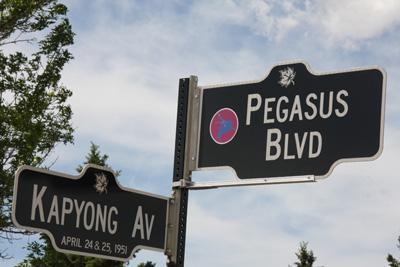
Pegasus Boulevard street sign
Province
!4v1615383797826!6m8!1m7!1s4osXpCdF5-yRPyXCWwyJXQ!2m2!1d53.60313129173539!2d-113.5043584491703!3f301.50048183329227!4f2.8460675141435842!5f3.325193203789971"
Body Content

Pegasus Boulevard was dedicated by the Canada Lands Company on June 23, 2004, as part of their redevelopment of Edmonton’s former Canadian Forces Base (Griesbach Barracks).

During the Second World War, the winged horse Pegasus became the symbol of paratroopers throughout the Commonwealth. The emblem of the wartime 1st Canadian Parachute Battalion depicted Bellerophon, mythology’s first airborne warrior, riding Pegasus into battle. Pegasus Boulevard reflects the airborne tradition at Griesbach Barracks, where the Canadian Airborne Regiment was based from 1968 to 1977. Edmontonians developed a warm relationship with the Regiment, and in a 1975 parade and ceremony, the Airborne received the Freedom of the City. Pegasus Boulevard leads to the center of Griesbach, once the site of the “Mock Tower” which was used for training paratroopers until 1996.

City
Edmonton
Country
Type Description
Street, plaque
Memorial CF Legacy ID
8183
City/Municipality
Edmonton
Memorial Number
48011-017
Type
Address
At the North-East edge of Bedford Basin Lake.
Location
Navy memorial plaza
in Canada
Yes
GPS Coordinates
53.60232, -113.50602
Inscription

[Storyboard/Tableau d'histoire]

(The Second World War and the Battle of The Atlantic (1939 -1945))
RCN SHIPS LOST DURING THE SECOND WORLD WAR

NAVIRES DE LA MARINE ROYALE CANADIENNE PERDUS
DURANT LA DEUXIEME GUERRE MONDIALE

HMCS FRASER
LOST JUNE 25, 1940

HMCS BRAS D`OR
LOST OCTOBER 19, 1940

HMCS MARGAREE
LOST OCTOBER 22, 1940

HMCS OTTER
LOST MARCH 26, 1941

HMCS LEVIS
LOST SEPTEMBER 19, 1941

HMCS WINDFLOWER
LOST DECEMBER 7, 1941

HMCS SPIKENARD
LSOT FEBRUARY 10, 1942

HMCS RACCOON
LOST SEPTEMBER 7, 1942

HMCS CHARLOTTETOWN
LOST SEPTEMBER 11, 1942

HMCS OTTAWA
LOST SEPTEMBER 13, 1942

HMCS LOUISBURG
LOST FEBRUARY 6,1943

HMCS WEYBURN
LOST FEBRUARY 22, 1943

HMCS ATHABASKAN
LOST APRIL 29, 1944

HMCS VALLEYFIELD
LOST MAY 7, 1944

HMCS REGINA
LOST AUGUST 8, 1944

HMCS ALBERNI
LOST AUGUST 21, 1944

HMCS SKEENA
LOST OCTOBER 25, 1944

HMCS SHAWINIGAN
LOST NOVEMBER 24, 1944

HMCS CLAYOQUOT
LOST DECEMBER 24, 1944

HMCS TRENTONIAN
LOST FEBRUARY 22, 1945

HMCS GUYSBOROUGH
LOST MARCH 17, 1945

HMCS ESQUIMALT
LOST JUNE 16, 1945

MTB`s 459, 461, 462, 465 and 466

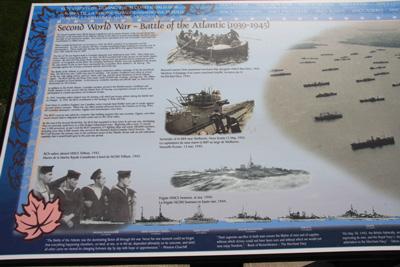
Second World War - Battle of the Atlantic (1939-1945)

The Royal Canadian Navy (RCN) played a significant role in various theatres of the Second World War.
However, in the protection of the Atlantic convoys in the effort to sustain Great Britain, the RCN made a
specialty of anti submarine warfare. Its convoy escort operations were one of Canada's most important
contributions to Allied victory.
When Canada declared war on Germany in 1939, the RCN consisted of six destroyers and five
minesweepers.In order to enhance this fleet, Canada immediately began building fx4 corvettes and 24
minesweepers. These small ships became the mainstay of the RCN's war against Germany's U-boats
from 1941 until the end of 1943.

the first of 70 new frigates built in Canadian shipyards were delivered in June 1943. These ships were
better suited to ocean-going duty. In 1943, the RCN provided half of the escorts on the North Atlantic convoys. by mid-1944 the entire North Atlantic convoy route was guarded almost exclusively by RCN
escorts. In recognition of this effort, the Canadian Northwest Atlantic Area was established and remains
the only theatre of war to have been commanded by a Canadian, Rear Admiral L.W. Murray. The
campaign against the U-boats continued until the end of the war.

The battle of the Atlantic is considered the longest continuous military campaign of the Second World
war. The RCN lost over 2,000 men and 24 warships. The weather conditions were often as vicious as the foe, with raging storms, pack ice, bitter cold, fog, and the dense blackness of North Atlantic
nights. The RCN and the Merchant Navy made nearly 26,000 safe crossings, carrying over 181 million tons of supplies to Great Britain. In the process, Canadian warships and aircraft sank, or shared in the
destruction of, 50 U-boats.
In addition to the North Atlantic, Canadian warships served in the Mediterranean, Caribbean and
Pacific theatres of war served with the British fleet off Norway, accompanied convoys to Russia, and
participated in coastal operations off northwest Europe.

In 1942, Canadian sailors helped man the landing craft which put troops ashore during the fateful raid
on Dieppe. In 1943, the RCN contributed to the landings in Sicily and Italy.

From bases in Southern England, two Canadian mortar torpedo boat flotillas took part in sorties against
German inshore convoys. When the vast allied armada advanced across the Channel on D-Day 1944,
60 Canadian destroyers, corvettes, frigates and minesweepers were there.

The RCN's success was aided by a massive ship-building program that saw corvettes frigates, and other
escort vessels built in shipyards on both coasts and on the Great Lakes.

By the end of the Second World War, the RCN had expanded to forty times its pre-war size, developing
from an extremely small force to a fully-fledged independent navy. Beginning with a mere 13 vessels and 3,500 personnel, at war's end the RCN comprised 373 fighting ships and nearly 100,000 members,
including more than 6,000 women who served in the Women's Royal Canadian Naval Services. The
RCN had become the primary navy in the northwest sector of the Atlantic Ocean with an anti-submarine capability that it would build upon in the post-war period.

(three first french paragraphs, need further research/trois premiers paragraphe français, recherche incomplète)

La Bataille de l`Atlantique fait partie des plus longues campagnes militaires continues
de la Deuxième guerre mondiale et durant cette période, 24 navires de la MRC
sont coulés, entrainant la mort de plus de 2,000 hommes. Ses violentes tempêtes,
ses banquises, son froid implacable, son brouillard et ses nuits très sombres rendent
l`Atlantique Nord tout aussi redoutable que l`ennemi. Malgré tout, la MRC et la marine
marchande réalisent près de 26,000 traversées et transportent plus de 181 millions de
tonnes de marchandises pour ravitailler la Grande-Bretagne. Durant cette campagne, la
marine et l`aviation canadiennes coulent ou détruisent 50 sous-marins allemands.

Outre l`Atlantique Nord, les navires de guerre canadiens servent en Méditerranée., dans les
caraïbes et le Pacifique. ils patrouillent aussi au large de la Norvège avec des navires de la
flotte britannique, accompagnent des convois en Russie et participent à des opérations au
large des côtes du nord-ouest de l`Europe.

En 1942, des Canadiens opèrent les péniches de débarquement qui servent à transporter
les troupes durant le raid de Dieppe, qui se solde par un échec. En 1943, la MRC
participe aux débarquements en Sicile et en Italie.

Depuis des bases du sud de l`Angleterre, deux flottes de vedettes lance-torpilles
participent aux sorties contre les convois côtiers allemands. Au jour 1 en 1944, 60
destroyers, corvettes, frégates et dragueurs de mines canadiens se joignent à la vaste flotte alliée qui franchis la Manche.

Le succès de la MRC résulte d`un programme intensifié de production de corvettes, frégates et autres bâtiments
d`escorte construits par des chantiers navals sur les deux côte et dans la région des Grands Lacs.

À la fin de la Deuxième guerre mondiale, l`envergure de la MRC se décuple pour atteindre quarante fois ses
effectifs d`avant-guerre, et devenant une marine complètement autonome. De ses 13 navires et 3,500 hommes
au début des hostilités, la MRC compte 373 navires et plus de 110, 000 membres, y compris plus de 6, 000
femmes du Service féminin de la Marine Royale du Canada (WRCNS) à la fin de la guerre. La MRC est devenu
la principale marine chargée du secteur nord-ouest de l`océan Atlantique, à l`aide des moyens de lutte aux sous-
marins qu`elle allait améliorer davantage durant l`après-guerre.

[buttom texts/texte au bas]

“The Battle of the Atlantic was the dominating factor all through the war. Never for one moment could we forget
that everything happening elsewhere, on land, at sea, or in the air, depended ultimately on its outcome, and amid
all other cares we viewed its changing fortunes day by day with hope or apprehension.” -Winston Churchill

Their supreme sacrifice in both wars ensure the lifeline of men and of supplies
without which victory could not have been ours and without which we would
not now enjoy freedom. - Book of Remembrance – The Merchant Navy

On May 10, 1945, the British Admiralty, sent a message
expressing its own, and the Royal Navy’s, thanks and
admiration to the Merchant Navy. - Valour at Sea

For more than five and a half years side by side with the Allied Merchant Navies in the face of continual and merciless attacks by the enemy you have
maintained the ceaseless flow of sea traffic on which the life and strength of this country depend… In this historic hour, we think with special gratitude
of the many merchant seamen who have fallen in the fight and whose service and sacrifice will always be a proud memory. - Valour at Sea.

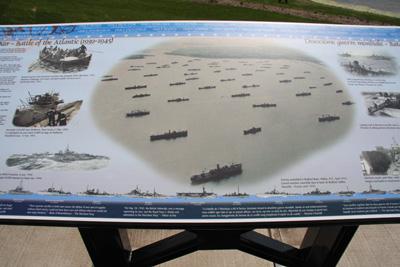
[Name of Canadian navy ships types under each ship image/nom du modèle de navire de la marine canadienne sous l' image de chaque navire]

V CLASS DESTROYER
2 IN SERVICE

ARMED MERCHANT CRUISERS
3 IN SERVICE

ARMED YACHTS
40 IN SERVICE

BANGOR MINESWEEPERS
64 IN SERVICE

CORVETTE
123 IN SERVICE

CRUISER
2 IN SERVICE

ESCORT CARRIER
2 IN SERVICE

FAIRMILE
80 IN SERVICE

FRIGATE
67 IN SERVICE

L.C.I.
24 IN SERVICE

L.C.M.
100 IN SERVICE

MOTOR TORPEDO BOATS
22 IN SERVICE

RIVER CLASS DESTROYER
14 IN SERVICE

TOWN CLASS DESTROYER
8 IN SERVICE

TRIBAL DESTROYER
4 IN SERVICE

V CLASS DESTROYER
2 IN SERVICE

[images descriptions/descriptions d'images]

RCN sailors aboard HMCS Trillium, 1942.
Marins de la Marine Royale Canadienne'a bord de NCSM Trillium, 1942.

Rescued seamen from torpedoed merchant ship alongside HMCS Red Deer, 1942.
Membres d'équipage d' un navire marchand torpillé, secourus par le
NCSM Red Deer, 1942.

Surrender of U-889 near Shelburne. Nova Scotia, 13 May, 1945.
La capitulation du sous-marin U-889 au large de Shelburne.
Nouvelle-Écosse, 13 mai, 1945.

Frigate HMCS Swansea, at sea, 1944.
La frégate NCSM Swansea en houte mer, 1944.

Convoy assembled in Bedford Basin, Halifax, N.S., Apr 1942.HMCS Kapuskasing refueling on convoy duty.
Le NCSM Kapuskasing effectue un ravitaillement en mer durant une mission ?? de convoie.

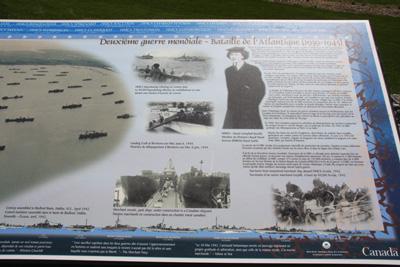
Landing Craft at Bernieres-sur-Mer, Jun. 6, 1944.
?? de d/barquement 'a Bernieres-sur-Mer, 6 juin, 1944

Merchant vessels, park ships, under construction in Canadian shipyard.
Navires marchands en construction dans un chantier naval canadien.

WRENS - Hazel ?? Juchli
Member de Women's Royal Naval Service (WREN) Hazel Juchli

Survivors from torpedoed merchant ship aboard HMCS Arvida, 1942.
Survivants d' un navire marchand torpil/, 'a bord du NCSM Arvida, 1942.

Image
Photo Credit
Don Stewart
Caption
Story board
1 of 4 images
Image
Caption
Left part of story board
1 of 4 images
Image
Caption
Centre part of story board
1 of 4 images
Image
Caption
Right part of story board
1 of 4 images
Province
!4v1615383597695!6m8!1m7!1sCAoSLEFGMVFpcE5TWHJUVXgtbTZOVHFhNEhlTEMzanBfUEFEOXN2ZTFhNXBiWFB2!2m2!1d53.6024156!2d-113.5054716!3f263.20923818473073!4f-1.8648357267185105!5f3.325193203789971"
Body Content

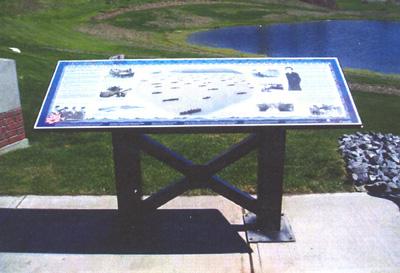
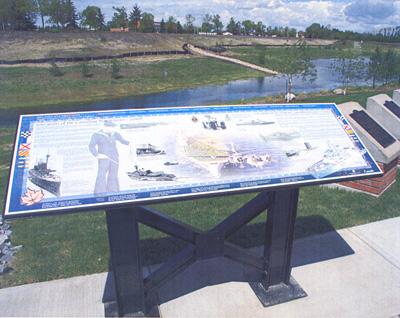
This memorial was erected by the Canada Lands Company, and unveiled on June 6th, 2010. This memorial is dedicated to the men and women who served in the Navy during "The Battle of the Atlantic". The story board include the history of the Second World War and the Battle of The Atlantic (1939 -1945).

City
Edmonton
Country
Type Description
Story Board
Memorial CF Legacy ID
8232
City/Municipality
Edmonton
Memorial Number
48011-015
Type
Address
At the North-East edge of Bedford Basin Lake.
Location
Navy memorial plaza
in Canada
Yes
GPS Coordinates
53.60235, -113.50609
Inscription

[Storyboard/Tableau d`histoire]

(100 years of the Canadian Navy - (1910-2010))

SHIPS NAMED AFTER ALBERTA TOWNS:
NAVIRES PORTANT LE NOM DE VILLES DE L`ALBERTA:
HMCS CALGARY (1ST + 2ND)
HMCS CAMROSE
HMCS DRUMHELLER
HMCS DUNVEGAN
HMCS EDMONTON
HMCS LETHBRIDGE
HMCS MEDICINE HAT
HMCS RED DEER
HMCS STETTLER
HMCS VEGREVILLE
HMCS WETASKIWIN

Early in the 20th Century, Canada had to decide to provide funds, support and manpower to the British Royal Navy, or it could form its
own navy. Canada chose the latter. On may 4, 1910, the Naval Service Act received royal assent and the Naval Service of Canada was
established. Canada was still part of the British Empire and its fleet was limited to coastal waters. By royal sanction, the name of Service
was charged in 1911 to the Royal Canadian Navy (RCN).

At the outbreak of the First World War in 1914, the RCN consisted of 350 men and two ships; HMCS Rainbow and HMCS Niobe.
Canadians could enlist in either the Royal Navy or the RCN. The RCN assumed responsibility for shipping from Canadian ports in 1916, when the threat of submarine warfare spread to North American waters, the Canadian government undertook to build a patrol force of
36 ships.

On September 5, 1918, the Royal Canadian Naval Air Service was formed with a main function to carry out anti-submarine
operations using flying boat patrol aircraft. By the end of the First World War, the RCN numbered more than 100 vessels
and about 5,500 officers and men - the nucleus of the future, effective naval force.

Following a draw down in the RCN after the war, the Royal Canadian Naval Volunteer Reserve was established in
1923. For the first time, citizens from all walks of life and from all across the country could participate in their navy
In 1931, the first custom-built RCN ships, destroyers, HMCS Saguenay and HMCS Skeena, were commissioned at
Portsmouth, England, However, at the outbreak of war in September 191331, the RCN still had only six destroyers
and a handful of smaller ships.

during the Second World War, the RCN was primarily identified with the bitter submarine war in the North
Atlantic, but Canadian warships also served in the Mediterranean, Arctic, Caribbean and pacific theatres of war
The RCN expanded greatly during the Second World War, Including substantial construction of warships and
merchant vessels by Canadian shipyards. The Women's Royal Canadian Naval Service was established in 1942.
by the end of the war the RCN was the third largest navy in the world.

The "Cold War" period saw a continuation of the RCN's focus
on anti-submarine warfare and support for United Nations
and NATO missions. RCN ship saw action in the Korean
War, including shore bombardment and North Korean train
destruction missions, The RCN maintained a force of three
destroyers in the theatre throughout the campaign. By the time
the armistice was signed, 3,621 officers and men of
the RCN had served in Korea.

On February 1, 1968, the RCN was merged with the
royal Canadian Air Force and the Canadian Army to
form the unified Canadian forces. The naval forces were
restructured as Canadian Forces Maritime Command.

During the Persian Gulf conflict, Canada's modern naval
resources allowed the government to honour its commitment
to the UN Through deployment of three Canadian ships as
part of a Multi-national Interception Force designed to enforce the UN trade Embargo of Iraq and to support an
assault to free Kuwait.

In its Centennial year, Canada's Navy has deployments
of ultra-modern Canadian-built warships serving halfway around the world in support of UN and NATO
missions.

Un siècle de la Marine Comedienne (1910-2010)

Au début du 20e siècle, le Canada doit prendre une décision importante, soit de contribuer financièrement à la Marine Royale britannique et de lui fournir des effectifs, ou de
créer ses propres forces navales. Le Canada choisit la deuxième solution, le 4 mai 1910, la Loi Royale obtient la sanction royale, créant ainsi une force navale canadienne. À
l`époque, le Canada fait encore partie de l`Empire britannique et sa flotte est restreinte aux eaux côtières. La "force navale" est nommée la Marine Royale du Canada (MRC) en
1911.

Au début de la Première Guerre mondiale, en 1914, la MRC compte 350 hommes et deux navires, le NCSM Rainbow et le NCSM Niobe. Les Canadiens peuvent s`enrôler dans la Royal Navy ou la MRC. La MRC est chargée de surveiller la navigation des ports canadiens. En 1916, lorsque les sous-marins ennemis menacent les eaux côtières de l`Amérique du nord, le gouvernement canadien décide de construire une flotte de patrouille de 36 navires.

Le 5 septembre 1918, la Royal Canadian Naval Air Service est formée et sa principale mission consiste à réaliser des raids contre les sous-marins ennemis, à l`aide d`hydravions de patrouille. À la fin de la Première Guerre mondiale, la MRC compte plus de 100 navires et près de 5,500 officiers et marins - le noyau d`une future force navale très efficace.

Après la guerre, suite à la réduction des effectifs, on forme la Réserve de volontaires de la Marine royale du canada. C`est la première fois que des citoyens de toutes origines
et de toutes les régions du pays peuvent s`enrôler dans la Marine. En 1931, la MRC commande de nouveaux navires, les destroyers NCSM Saguenay et NCSM Skeena d`un chantier naval de Portsmouth, en Grande-Bretagne. Pourtant, au début de la Deuxième Guerre mondiale en septembre 1939, la MRC ne dispose que de six destroyers et d`une poignée de petits navires.

Durant la Deuxième Guerre mondiale, la MRC se fait surtout remarquer durant la dure guerre livrée par les sous-marins dans l`Atlantique Nord, mais les navires de guerre canadiens voient aussi du service dans les théâtres de guerre de Méditerranée, des Caraïbes et du Pacifique, La MRC connait une expansion remarquable durant la Deuxième Guerre mondiale, avec la construction de nombreux navires de guerre et navires marchands par des chantiers navals canadiens. Le Service féminin de la Marine Royale du Canada (WRCNS) est fondé en 1942. À la fin de la guerre, la MRC est la troisième marine d`importance au monde.

Durant la "Guerre froide", la MRC continue de se concentrer sur la lutte contre les sous-marins, en plus d`appuyer les missions de l`ONU et de l`OTAN. Les navires de la MRC participent à la guerre de Corée, notamment durant les missions de bombardement des côtes de de destruction de trains de la Corée du Nord. Trois destroyers de la MRC sont d`ailleurs affectés à ce service durant tout le conflit. À la signature de l`armistice, 3,621 officiers et marins de la MRC avaient servi en Corée.

Le 1er février 1968, on intègre la MRC à l`Aviation Royale du Canada et à l`armée canadienne, pour former les Forces canadiennes unifiées. La force navale est alors restructurée sous le Commandement maritime des Forces Canadiennes.

Durant le conflit du golfe Persique, grâce à ses ressources navales modernes, le Canada fut en mesure de respecter son engagement
envers les Nations Unies et de déployer trois navires canadiens dans le cadre d`une force d`interception multinationale chargée
d`appliquer les sanctions économiques imposées à l`Iraq par l`ONU et d`appuyer l`assaut en vue de libérer le Koweït.

Durant son année du centenaire, la Marine canadienne a déployé autour du monde, des navires ultramodernes construits au Canada dans des missions de l`ONU et de l`OTAN.

[images descriptions/descriptions d'images]

The cruiser, HMCS Niobe 1911.
the first real warship of the Canadian Navy.
Le croiseur cuirassé NCSM Niobe, 1911:
le premier navire de guerre de la marine
canadienne.

RCN sailor in navy `blue`, 1911.
Marin de la Marine Royale Canadienne, 1911.

The sailing of the First Contingent, 1914.
Le Premier Contingent en haute mer, 1914.

HMCS Chilliwack under construction
Le NCSM Chilliwack durant sa construction.

HMCS Assiniboine and the navy`s Sea King helicopters, 1964.
Le NCSM Assiniboine et l`Hélicoptère de lutte anti sous-marine Sea King, 1964.

The end of an era, the White Ensign comes down on
HMCS Fraser, Feb 15, 1965.

Canadian Task Force, Persian Gulf, 1990.

HMCS Calgary
NCSM Calgary

HMCS Edmonton
NCSM Edmonton

[Text at bottom of board/texte en bas du tableau]

On October 21, 1910 - 105 years to the day after Nelson’s
great victory at Trafalgar, His Majesty’s Canadian Ship Niobe
arrived off Halifax harbour. Canada’s Navy – The First Century

For the first time, citizens from all walks of life
and from all across the country could participate in
their navy. - Canada’s Navy – The First Century

“Canada, as an autonomous nation within the empire,
should provide for the defence of her shores and
territorial waters” - Walter Hose

(french translation)

Image
Photo Credit
Don Stewart
Caption
Story Board
1 of 3 images
Image
Caption
Left side
1 of 3 images
Image
Caption
Right side
1 of 3 images
Province
!4v1615383310138!6m8!1m7!1sCAoSLEFGMVFpcE5TWHJUVXgtbTZOVHFhNEhlTEMzanBfUEFEOXN2ZTFhNXBiWFB2!2m2!1d53.6024156!2d-113.5054716!3f269.924203167338!4f-2.702061991224994!5f3.325193203789971"
Body Content

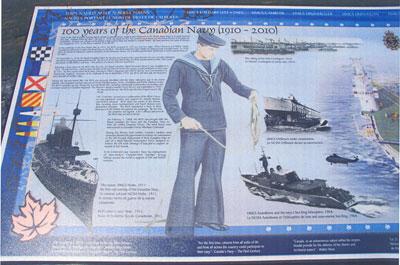
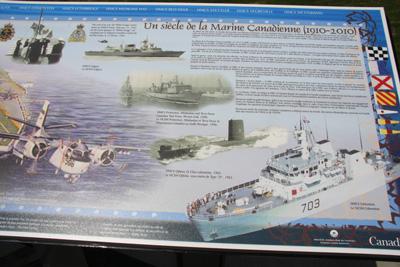
This memorial was erected by the Canada Lands Company, and unveiled on June 6th, 2010. This memorial is dedicated to the men and women who served in the Navy over the past 100 years. This story boards include the history of 100 years of the Canadian Navy - (1910-2010).

City
Edmonton
Country
Type Description
Story Board
Memorial CF Legacy ID
8231
City/Municipality
Edmonton
Memorial Number
48011-014
Type
Address
2534 Pegasus Boulevard NW
Location
Village of Griesbach
in Canada
Yes
GPS Coordinates
53.6022151, -113.5043713
Inscription

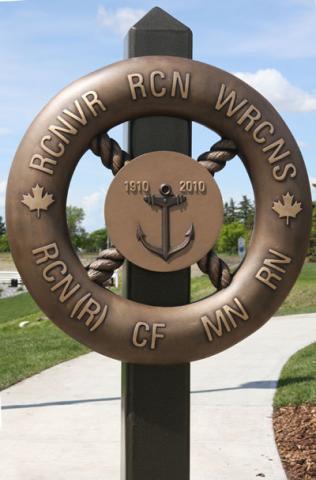
[front/devant]

RCNVR RCN WRCNS RCN(R) CF MN RN

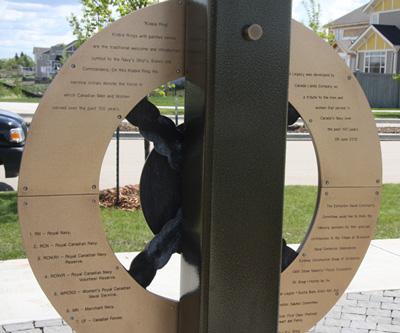
[back/arrière]

"Kisbie Ring"
Kisbie Rings with painted names
are the traditional welcome and introduction
symbol to the Navy's Ship's, Bases and
Commanders. On this Kisbie Ring the
service initials denote the force in
which Canadian Men and Women
served over the past 100 years.

1. RN - Royal navy.
2. RCN - Royal Canadian Navy.
3. RCN(R) - Royal Canadian Navy
Reserve.
4. RCNVR - Royal Canadian Navy
Volunteer Reserve.
5. WRCNS - Women's Royal Canadian
Naval Service.
6. MN - Merchant Navy.
7. CF - Canadian Forces.

(??)Legacy was developed by
Canada Lands Company as
a tribute to the men and
women that served in
Canada's Navy over
the past 100 years.
06 June 2010

The Edmonton Naval Community
Committee would like to thank the
following sponsors for their gracious
contributions to the Village at Griesbach
Naval Centennial Celebrations.
Sureway Construction Group of Companies
G&M Stone Masonry - Focus corporation
IBI Group - Homes by Avi
(??) Legion - Scotia Bank 8140-160 Ave
Edmonton Salutes Committee
Officer First Class (Retired)
(??) and Family

(??)H.J. Greig

Image
Photo Credit
Don Stewart
Caption
Kisbie Ring
1 of 3 images
Image
Caption
Front of Kisbie ring
1 of 3 images
Image
Caption
Back of Kisbie ring
1 of 3 images
War or Conflict Term
Province
!4v1615383019192!6m8!1m7!1sUravHqhX039Ka8-NKMXWSQ!2m2!1d53.60226008241018!2d-113.5043604982822!3f278.36333909171674!4f-8.555442693139753!5f1.8025592184237804"
Body Content

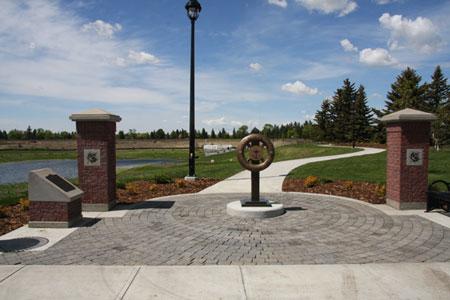
The Kisbie Ring was dedicated to the men and women who served in the Navy over the past 100 years by the Canada Lands Company on June 6, 2010, as part of their redevelopment of Edmonton’s former Canadian Forces Base (Griesbach Barracks).

Kisbie rings with painted names, are the traditional welcome and introduction symbol to the Navy ships, bases and Commanders. On this Kisbie ring, the service initials denote the Force in which Canadian men and women served over the past 100 years.

City
Edmonton
Country
Type Description
Kisbie ring
Memorial CF Legacy ID
8171
City/Municipality
Edmonton
Memorial Number
48011-013
Type
Address
At the North-East edge of Bedford Basin Lake.
Location
Navy memorial plaza
in Canada
Yes
GPS Coordinates
53.60232, -113.50602
Inscription

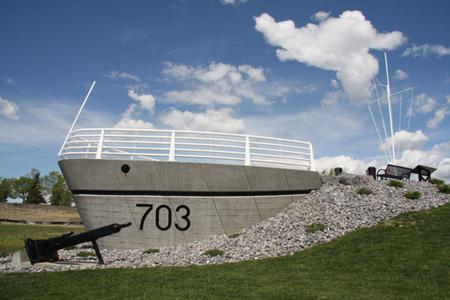
No inscription for the ship bow itself/Aucune inscription pour l`arc de bateau en tant que tel.

Image
Photo Credit
Don Stewart
Caption
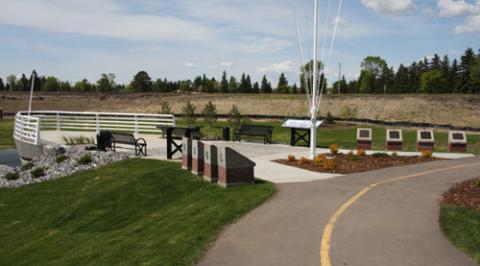
Left side of Ship bow and surroundings
1 of 4 images
Image
Caption
Front left side Ship bow
1 of 4 images
Image
Caption
right side
1 of 4 images
Image
Caption
view on the ship bow from the back
1 of 4 images
Province
!4v1615382879282!6m8!1m7!1sCAoSLEFGMVFpcE5TWHJUVXgtbTZOVHFhNEhlTEMzanBfUEFEOXN2ZTFhNXBiWFB2!2m2!1d53.6024156!2d-113.5054716!3f263.31080480769054!4f-1.789848371556232!5f3.325193203789971"
Body Content

The Navy Plaza and the ship bow were erected by the Canada Lands Company, and unveiled on June 6th, 2010. This memorial is dedicated to the men and women that served in the Navy over the past 100 years and "The Battle of the Atlantic". The arc is the life size replica of the bow of HMCS Edmonton. It's location is also called "The Navy Plaza", and is the place of more memorials including Storyboards and Plaques.

City
Edmonton
Country
Type Description
Plaza and Ship Bow
Memorial CF Legacy ID
8170
City/Municipality
Edmonton
Memorial Number
48011-012
Type
Address
Griesbach Parade and Gault Boulevard
Location
Village of Griesbach
in Canada
Yes
GPS Coordinates
53.6020092, -113.4957532
Inscription

(needs further research)

Image
Photo Credit
Michele Burghardt
Caption
Major General Griesbach Memorial
1 of 3 images
Image
Photo Credit
Griesbach Community
Caption
Statue of Major General Griesbach on a horse
1 of 3 images
Image
Caption
left side statue
1 of 3 images
War or Conflict Term
Province
!4v1615382690492!6m8!1m7!1s91te3Za6EVgPoH171jZ_gA!2m2!1d53.60201045456078!2d-113.4957540254507!3f213.36040873755886!4f6.977439324592879!5f2.9766589810077244"
Body Content

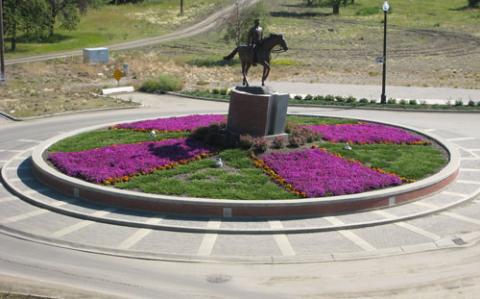
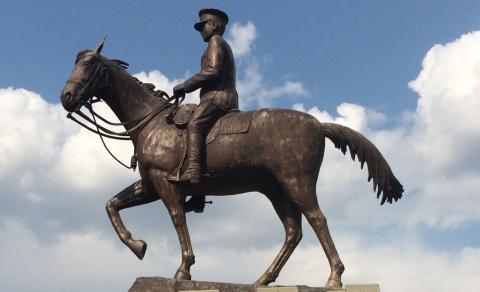
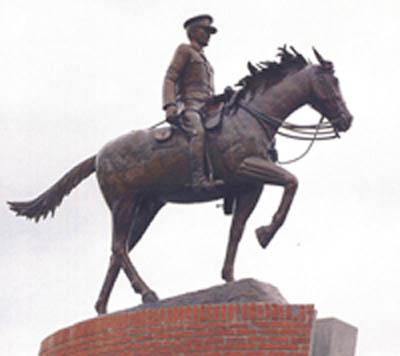
The Major General Griesbach Memorial was erected by Canada Lands Company as part of their redevelopment of Edmonton’s former Canadian Forces Base (Griesbach Barracks). It was  unveiled on September 11, 2005, and dedicated to men and women who serve in the military. A heroic scale equestrian bronze of Major-General William Antrobus Griesbach was designed by renowned bronze sculptor Don Begg of Studio West Bronze Foundry Ltd. for decorum and authentic representation of uniform, rank, regiment and time period. The flying mane and tail of the horse combined with the design of the pedestal create a dramatic centerpiece.

Major General Griesbach's military career began when he enlisted as a trooper for active service in the South African War, on December 28, 1899. In 1907, he became mayor of Edmonton. He continued to be active in the militia and achieved the rank of Major in the 19th Alberta Dragoons. When the First World War broke out in August 1914, Major Griesbach volunteered for the 1st Divisional Cavalry Squadron of the Canadian Expeditionary Force.

Shortly after reaching England, he was recalled to Canada and given command of an infantry battalion to be raised from the Edmonton area - the 49th Battalion. Led by Colonel W.A. Griesbach, the 49th Battalion was called to various engagements overseas, including the attack on Vimy Ridge, the defense of Arras and operations at Passchendaele and Mons.

In early 1916, the 49th Battalion joined the 7th Brigade, 3rd Division in France.  The Battalion saw continuous action in France and Belgium until November 11, 1918.  Of the 4,050 men who served with the 49th in the First World War, 977 were killed and 2,382 were wounded.  Despite its heavy casualties, the Battalion never lost an engagement or a position throughout the war.

In September, 1921, he was promoted to Major-General, and the same month appointed to the Canadian Senate, a post he held until his death on January 21, 1945. He was given a full military funeral.

City
Edmonton
Country
Type Description
Statue - bronze, plaque
Memorial CF Legacy ID
8166