Deep River Cenotaph
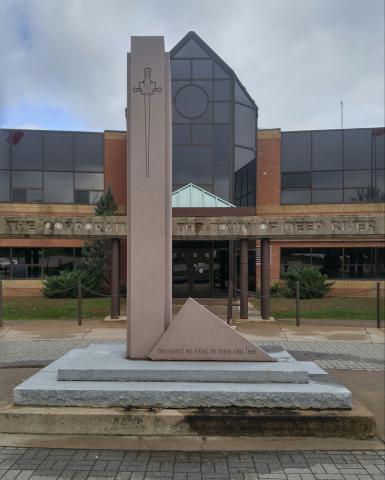
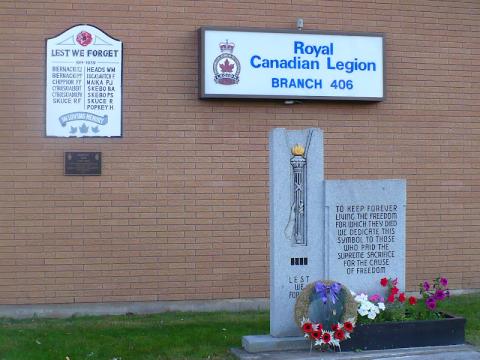
Deep River Cenotaph
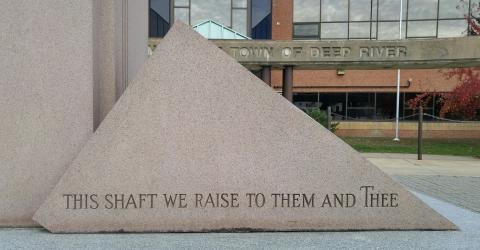
THIS SHAFT WE RAISE TO THEM AND THEE
My VAC Account
My VAC AccountTHIS SHAFT WE RAISE TO THEM AND THEE
Deep River Cenotaph
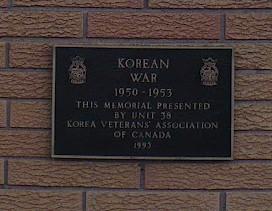
KOREAN
WAR
1950 - 1953
THIS MEMORIAL PRESENTED
BY UNIT 38
KOREA VETERANS ASSOCIATION
OF CANADA
1993
This plaque honours those who served in the Korean War and was erected in 1993 by Unit 38, Korea Veterans' Association of Canada.
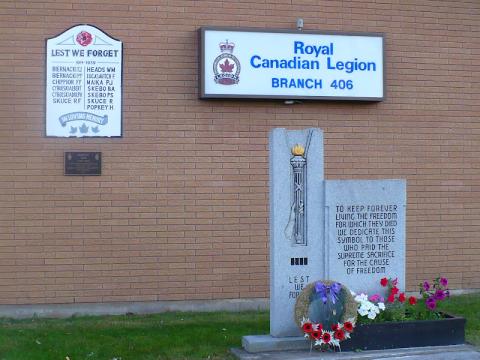
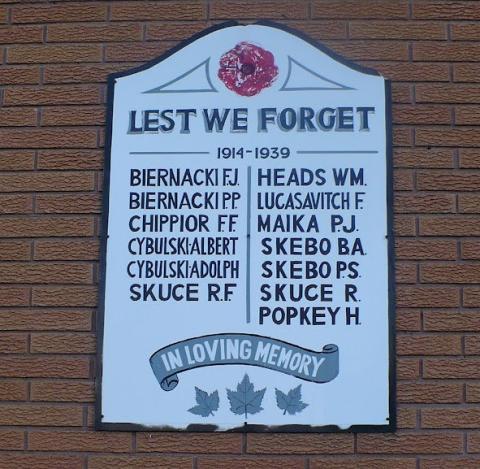
LEST WE FORGET
IN LOVING MEMORY
This tablet lists the names of those who gave their lives in the First and Second World Wars.
R.C.A.F.A.
433 "CHAMPLAIN" WING
RENFREW ONTARIO
60th ANNIVERSARY
1954 - 2014
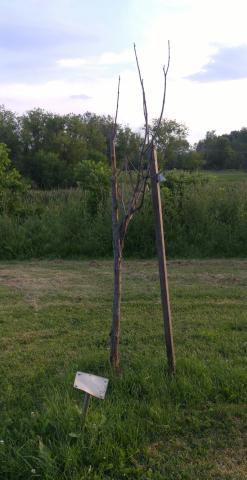
This tree was planted in 2014 in honour of the 60th anniversary of Royal Canadian Air Force Association 433 "Champlain" Wing.
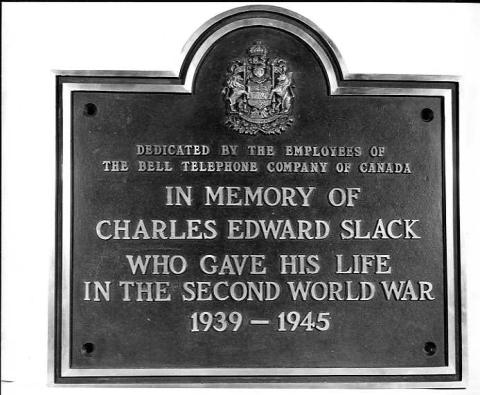
DEDICATED BY THE EMPLOYEES OF
THE BELL TELEPHONE COMPANY OF CANADA
IN MEMORY OF
CHARLES EDWARD SLACK
WHO GAVE HIS LIFE
IN THE SECOND WORLD WAR
1939 — 1945
This plaque was dedicated by Pembroke employees of the Bell Telephone Company of Canada in honour of their comrade who gave his life in the Second World War. It is not known where the plaque is located now.
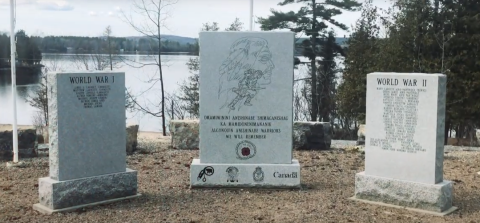
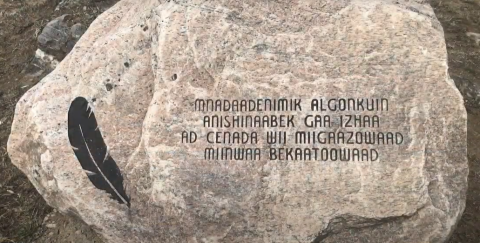
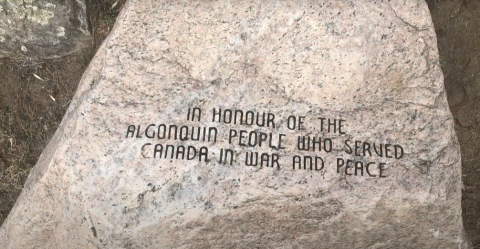
The Algonquin Veterans Warrior Memorial was dedicated to all Algonquin Warriors who served Canada during war and peace.
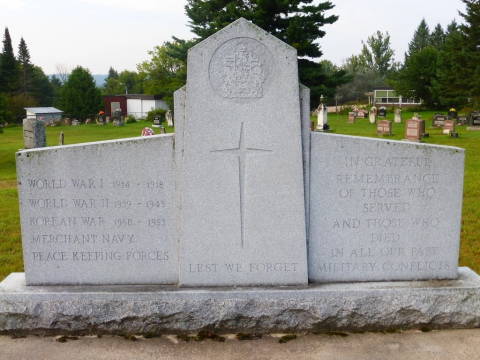
WORLD WAR I 1914 - 1918
WORLD WAR II 1939 - 1945
KOREAN WAR 1950 - 1953
MERCHANT NAVY
PEACE KEEPING FORCES
LEST WE FORGET
IN GRATEFUL
REMEMBRANCE
OF THOSE WHO
SERVED
AND THOSE WHO
DIED
IN ALL OUR PAST
MILITARY CONFLICTS
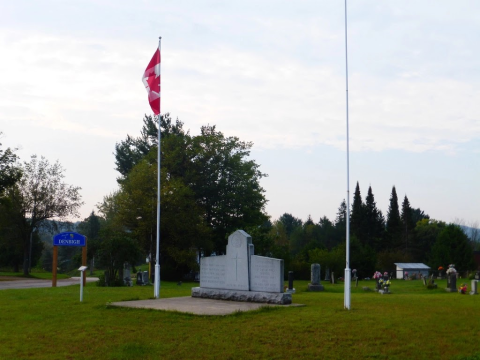
The Denbigh Cenotaph was dedicated by the Royal Canadian Legion Branch 328 of Northbrook to honour the local citizens who served and died in the name of our country.
(Cairn)
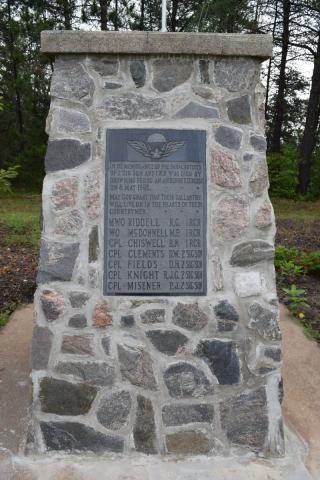
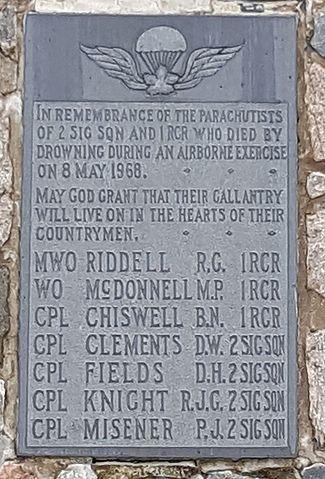
In remembrance of the prarachutists
of 2 Sigs Sqn and 1 RCR who died by
drowning during an air exercise
on 8 May 1968
May God grant their gallntry
will live on in the hearts of their
countrymen
...
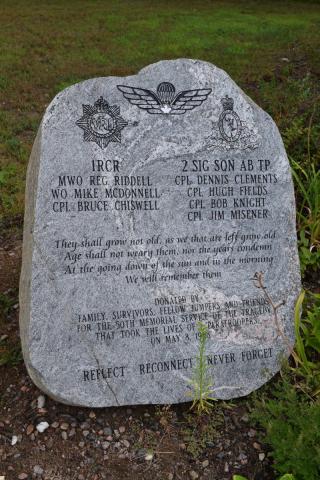
(Boulder)
1 RCR 2 SIG SQN AB TP
MWO Reginald Riddell Cpl. Dennis Clements
WO Michael McDonnell Cpl. Hugh Fields
Cpl. Bruce Chiswell Cpl. Bob Knight
Cpl. Jim Misener
They shall grow not old, as we that are left grow old:
Age shall not weary them, nor the years condemn.
At the going down of the sun and in the morning
We will remember them.
Donated by
Family, survivors, fellow jumpers, and friends
For the 50th memorial service of the tragedy
That took the lives of paratroopers
On May 8, 1968
Reflect Reconnect Never Forget
The Wegner Point Fallen Paratroopers Memorial commemorates seven soldiers (4 Signal Corps and 3 Royal Canadian Regiment) who drowned in the Ottawa River on 8 May 1968. Every year on 8 May a memorial service is held at Wegner Point by the members of 2 CMBG Headquarters and Signal Squadron, the 1st and 3rd Battalions of the Royal Canadian Regiment and the Airborne Regiment Association of Canada.
On 8 May 1968 at around 8:30 pm, the worst peacetime Canadian military training accident occurred at Camp Petawawa, 100 miles north-west of Canada’s capital city, Ottawa, Ontario. It was a cold and windy day that 26 paratroopers from the 1st Battalion, The Royal Canadian Regiment from Wollseley Barracks in London, Ontario, and 2 Signals Squadron, were participating in a training jump over Camp Petawawa.
Taking off in three Buffalo transport aircraft from the Bonnechere Airfield, an Air Defence Command auxiliary field, the paratroopers were expected to land in the designated landing zone on the Mattawa Plains within Camp Petawawa. The weather was good and a test dummy dropped earlier indicated no issues for the jumpers. In a tragic fluke, an unexpected wind shear at around 600 feet carried 22 of the paratroopers into the nearby Ottawa River, 1000 feet off shore near Wegner Point.
Weighted down by their heavy equipment and tangled in their parachutes, the soldiers struggled to make it out of the water. Rescue efforts saved all but seven of the soldiers. Some of the bodies weren’t recovered until days later, still entangled in their parachute harnesses.
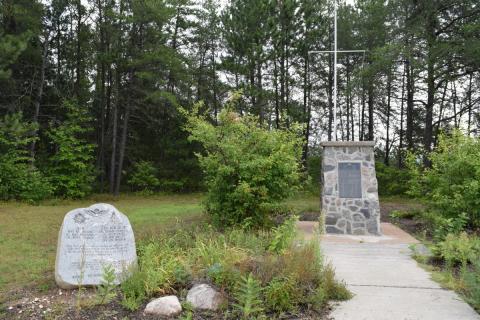
A memorial cairn was erected at Wegner Point the following July, with the name of paratroopers lost etched on the monument. A wreath-laying ceremony is held each May at the memorial cairn, led by the Canadian Airborne Regiment Association. Serving members of the 1st and 3rd Battalions, Royal Canadian Regiment, and 2 Canadian Mechanized Brigade Group (2CMBG) Headquarters and Signals Squadron, gather alongside retired members and survivors of that horrible day to remember their comrades who never came home.
The seven paratroopers who died on 8 May 1968:
During the 50th Fallen Paratrooper Memorial Service on May 13, 2018 a large boulder inscribed with the names of the fallen, installed next to the cairn, was unveiled. It features the crests of the Royal Canadian Regiment, Signals Squadron and Paratroopers.

|
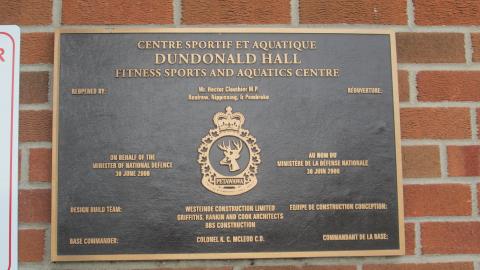
Centre Sportif et aquatique Dundonald Hall Fitness sports and aquatic centre |
||
|
Reopened by: |
|
Réouverture: |
|
|
Mr. Hector Cloutier M.P. Renfrew, Nippissing, & Pembroke |
|
|
On behalf of the Minister of National Defence 30 June 2000 |
|
Au nom du Ministère de la Défense nationale 30 juin 2000 |
|
|
|
|
|
Design build team: |
|
Équipe de construction conception: |
|
|
Westeinde Construction Limited Griffiths, Rankin, Cooke Architects BBS Construction |
|
|
|
|
|
|
Base Commander: |
|
Commandant de la base: |
|
|
Colonel K.C. McLeod, CD |
|
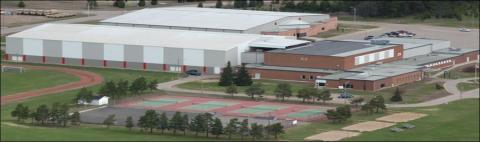
Dundonald Hall is named in honour of Lieutenant-General Douglas Mackinnon Baillie Hamilton Cochrane, 12th Earl of Dundonald, KCB, KCVO, the last British officer to command the Canadian militia. The building was originally built in the 1950s but extensively renovated in 2000.
Lieutenant-General Cochrane was born in 1852 and commissioned in the Life Guards in 1870. He served in the Nile Expedition, the Desert March and the Relief of Khartoum in 1885. In 1895, he was appointed Commanding Officer of 2nd Battalion, Life Guards. He served in the Second Boer War where in 1899 he was appointed Commander of the Mounted Brigade, part of the South Natal Field Force. He took part in the Relief of Ladysmith in February 1900. He was appointed General Officer Commanding the Militia of Canada in 1902. He served in the First World War in the British Admiralty Office. Lieutenant-General Cochrane, 12th Earl of Dundonald, died in 1935 at the age of 82.
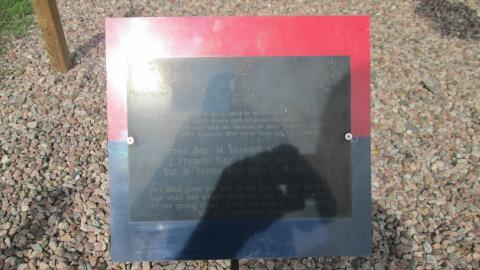
[dedication palque]
This monument is dedicated to the Gunners of Canada
WW I, WW II, Korea and Afghanistan, Ubique
Various costs associated with the monument were donated in memory of
those fallen Gunners who gave their all for Canada
Lt. W. Turner; Bdr. M. Mansell; Capt. N. Goddard
Capt. J. Francis; Gnr. J. Dion; Bdr. J. Ouellet
Sgt. K. Taylor and Bdr. K. Manning
They shall not grow old, as we that are left grow old
Age shall not weary them nor the years condemn
At the going down of the sun and in the morning
We will remember them
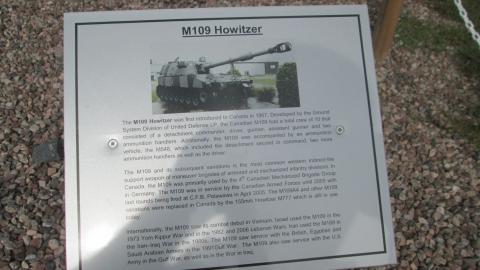
[explanatory plaque]
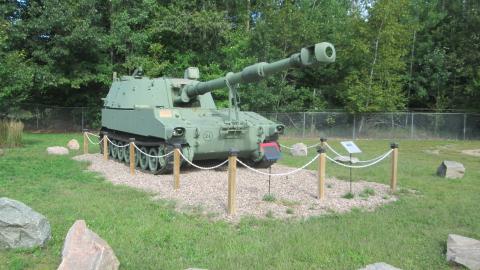
M109 Howitzer
The M109 Howitzer was first introduced to Canada in 1967. Developed by the Ground System Division of United Defense LP, the Canadian M109 had a total crew of 10 that consisted of a detachment commander, driver, gunner, assistant gunner, and two ammunition handlers. Additionally, the M109 was accompanied by an ammunition vehicle, the M548, which included the detachment second in command, two more ammunition handlers as well as the driver.
The M109 and its subsequent variations is the most common western indirect-fire support weapon of maneuver brigades of armored and mechanized infantry divisions. In Canada, the M109 was in service by the Canadian Armed Forces until 2005 with the last rounds being fired at CFB Petawawa in April 2005. The M109A4 and other M109 variations were replaced in Canada by the 155mm howitzer M777 which is still in use today.
Internationally, the M109 saw its combat debut in Vietnam.
This monument is dedicated to the Gunners of Canada