

At a public meeting on February 20, 1919, local citizens discussed an appropriate memorial to honour the town’s 19 men who lost their lives in the First World War. Between February 1919 and June 1920, the community engaged in extensive fundraising activities. Despite local enthusiasm the Memorial Committee, appointed in April 1919, faced internal disagreements and was disbanded in March 1920, returning responsibility to the town council.
In April 1920, a smaller committee of five was elected during a public meeting. Within weeks a successful fundraising drive was launched and the target was achieved by the end of the month. A final design for the memorial was selected on August 4. The town gave additional funding and a contract for the memorial’s construction was awarded to the McIntosh Granite Company of Toronto.
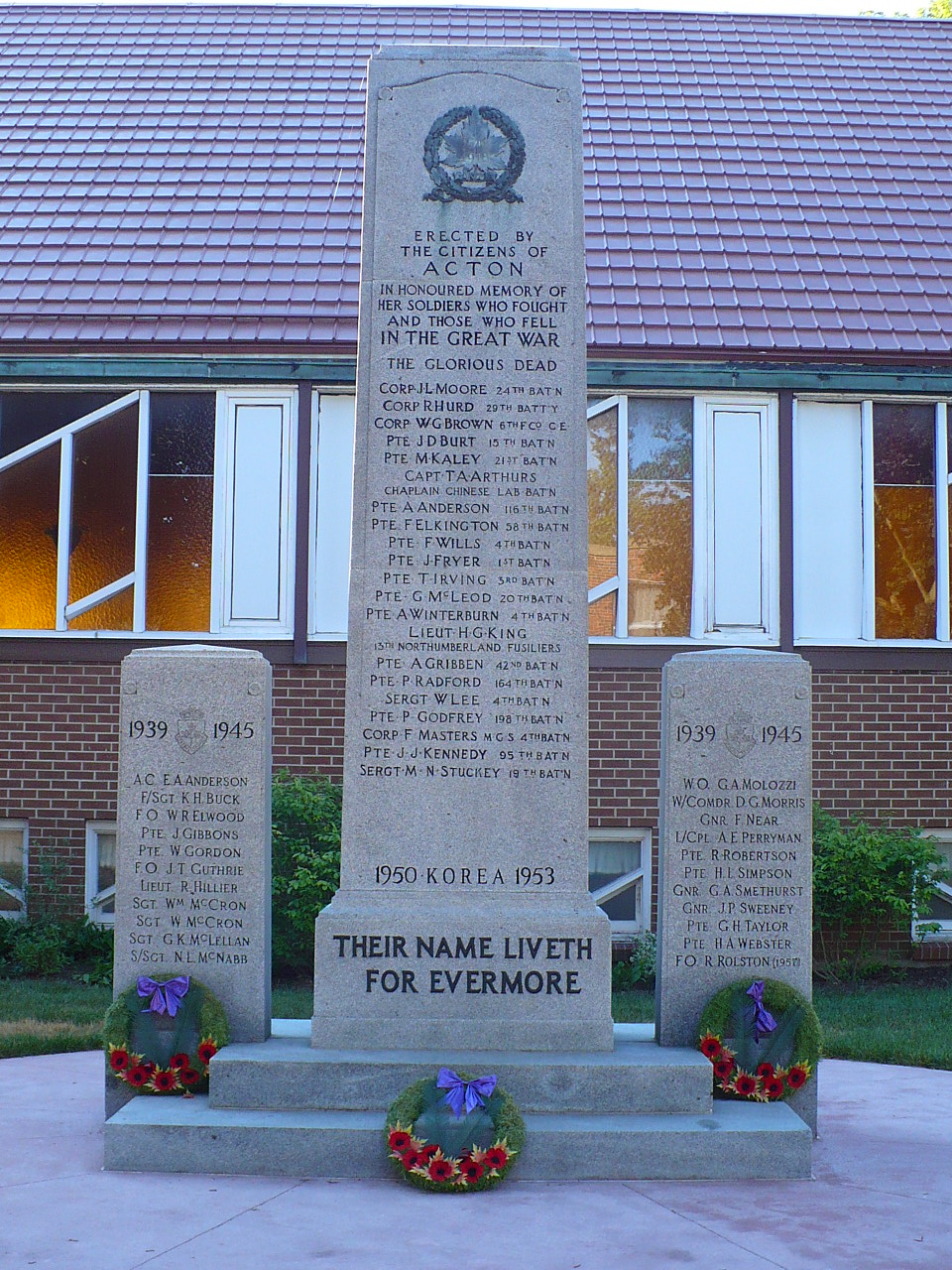
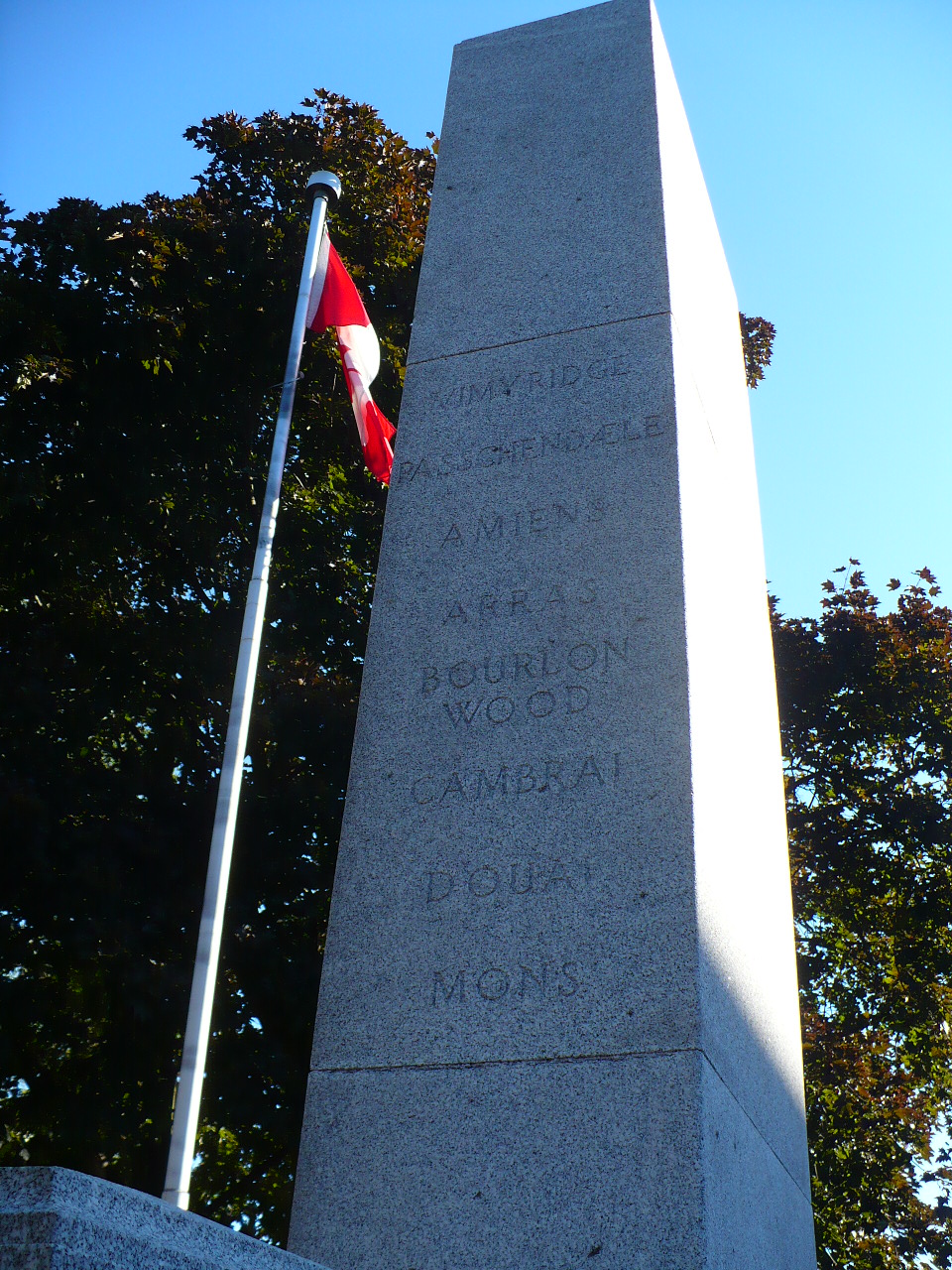
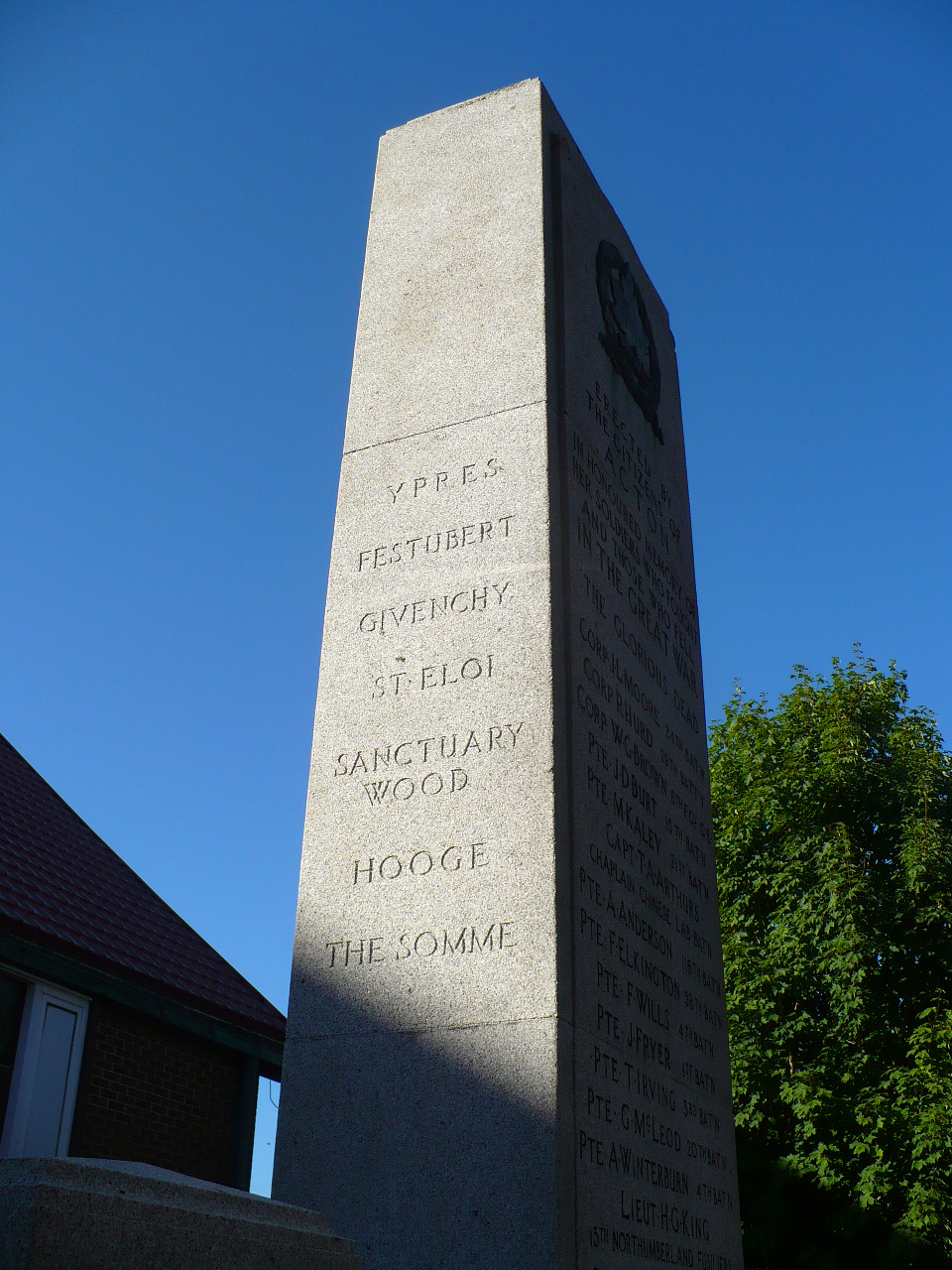
The Methodist Church offered a portion of its property on Mill Street as the site for the cenotaph and preparations began in September 1920. During this period, a German trench mortar, sent by the Minister of Defense as a war trophy, arrived and was stored in the town hall until its planned incorporation into the memorial. By October 1920, the groundwork for the monument was complete and the cenotaph was erected on November 4, 1920. It was an imposing structure of gray Stanstead granite measuring 7 feet 6 inches by 6 feet at the base with a column rising 16 feet high. Its front face bore the names of Acton’s fallen soldiers alongside their regiments, while other sides were inscribed with the names of battles where they fought.
Atop the cenotaph was a carved maple leaf adorned with a wreath made from a copper and bronze alloy sourced from Timmins, Ontario. The structure rested on a solid concrete foundation six feet deep and weighed 20 tons. A sodden terrace measuring two feet high and 36 feet square surrounded the monument. The cenotaph was unveiled on November 11, 1920, Armistice Day, at 2:30 PM. Col. A.J. Boak, Chief of Staff of the Military District, presided over the ceremony. A large crowd of over 700 citizens gathered to honour Acton’s fallen soldiers.
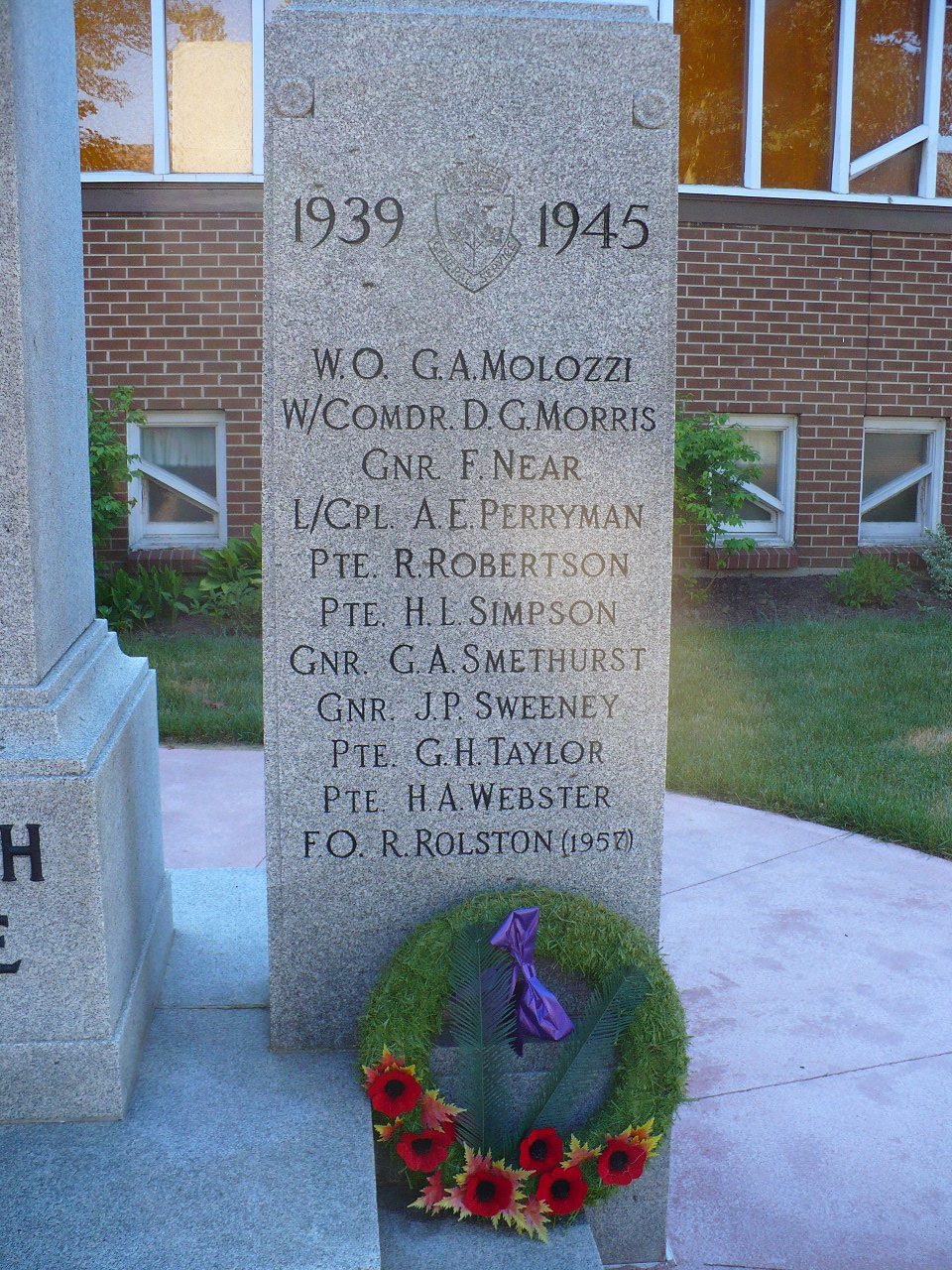
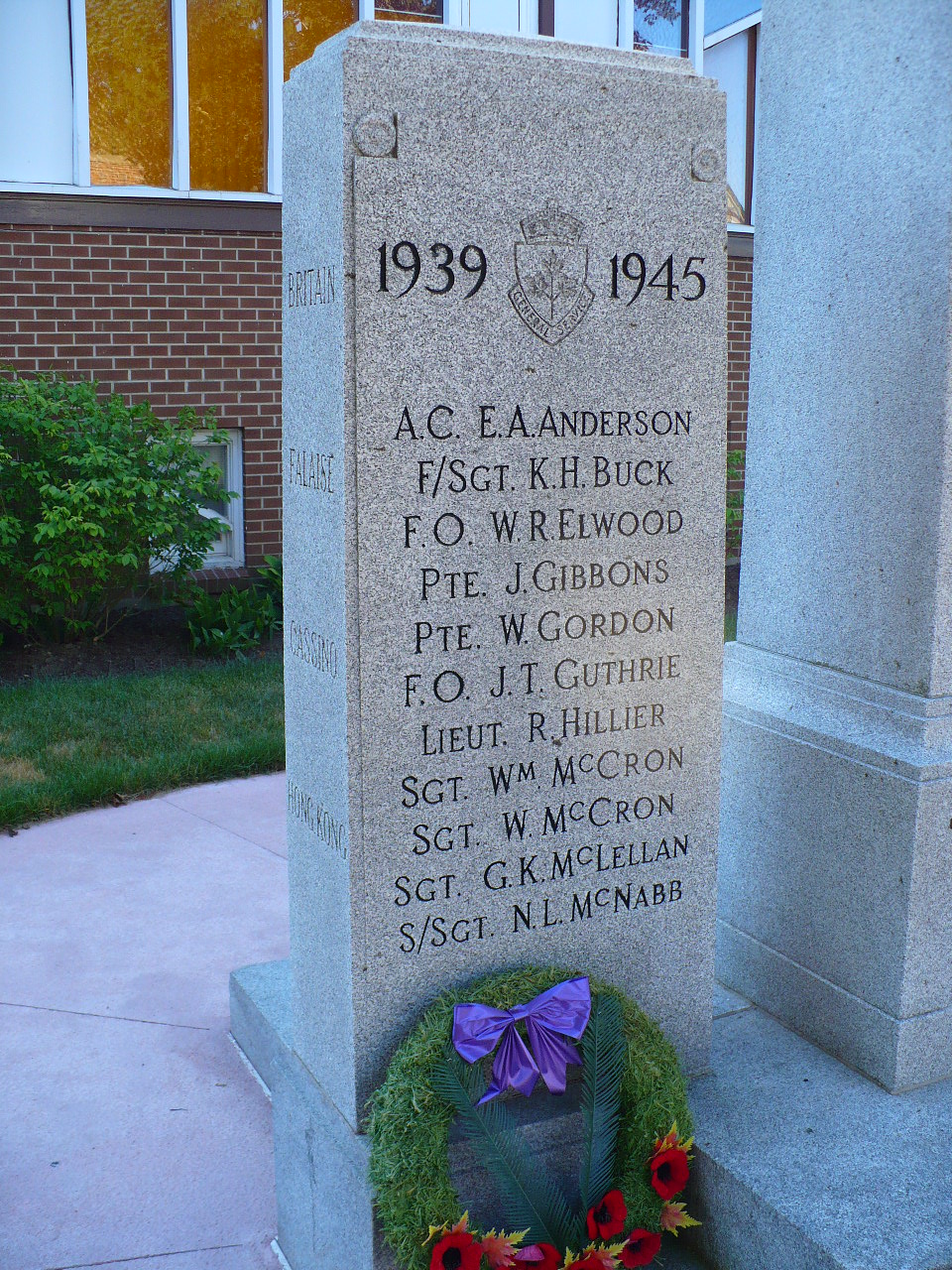
Acton experienced further losses during the Second World War, with 21 men from the community making the ultimate sacrifice. In recognition of their service, two smaller granite pillars with the names of the fallen were installed on either side of the cenotaph. The installation took place on November 1, 1949, and a formal unveiling ceremony presided by Lieutenant Governor Ray Lawson was held on November 11, 1949.
In 1955, the Acton cenotaph was further updated to commemorate local sacrifices made during the Korean War.