Service militaire
Lieu de l’enterrement/commemoration
Fils de John et Mary Miller de Cobalt, Ontario; époux de Mary Miller, de Brockville, Ontario.
Galerie numérique de Soldat Wilson Miller
Galerie numérique de
Soldat Wilson Miller
Gananoque, Ontario is a small town situated on the St. Lawrence River in the heart of 1,000 Islands. It is one of hundreds of communities throughout Canada with war memorials which commemorate more than 110,000 men and women who lost their lives during both world wars. Over a thousand citizens from Gananoque and surounding areas served in the navy, army, or air force: 83 lost their lives in parts of Canada, and in the battlefields of Europe. Among the dead of Gananoque include a 15 year old solider, a father of ten, four sets of brothers and a Victoria Cross winner. <P>
Today the town cenotaph lists the names of those who died and few citizens are aware of their family backgrounds or their circumstances of their deaths. Geraldine Chase of Gannaoque and Bill Beswetherick of Kingston believed it was necessary to collect this information and perpetuate their sacrifices.<P>
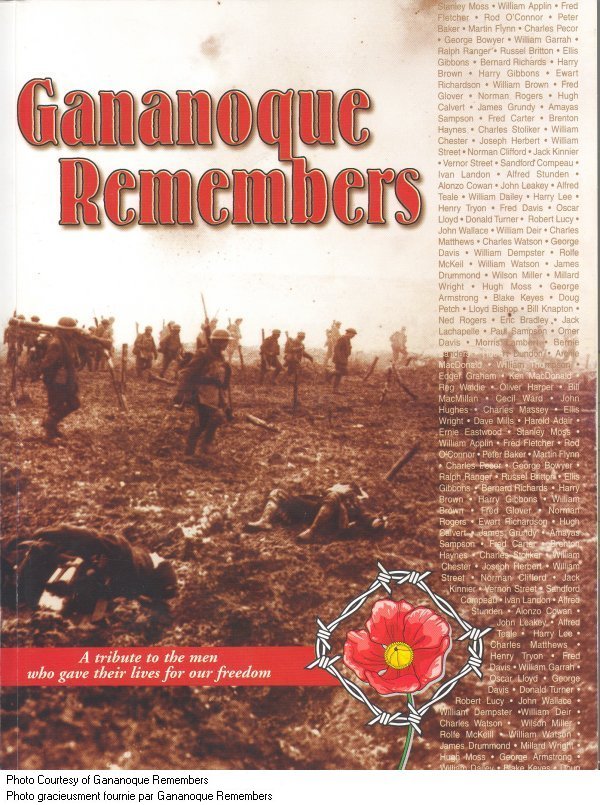
Gananoque Remembers book is a tribute to those who gave their lives for our freedom.<P>
Galerie numérique de
Soldat Wilson Miller
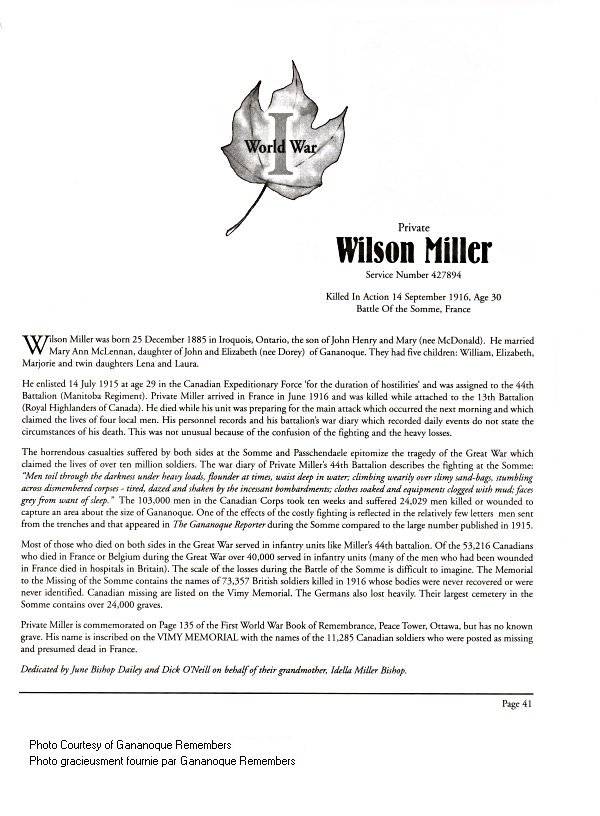
Wilson Miller is honoured on page 41 of the <i>Gananoque Remembers</i> booklet, published on January 31, 2005.<P>
He enlisted 14 July 1915 at age 29 and was assigned to the 44th Battalion (Manitoba) but later was transferred to the 13th Battalion (Royal Highlanders of Canada). He arrived in France in June 1916 and soon found himself at the Somme. On 3 September the Australians made their final attack at the Somme assisted by about 400 men from the 13th Canadian Battalion. Their objective was a small farm on Pozieres Ridge. Although they failed to capture it, they seized 300 metres of German trenches but then were subjected to an intense artillery barrage which killed or wounded 322 Canadians, an incredibly high casualty rate. Among the dead was Private Wilson Miller, age 30, who was killed 4 September.
Galerie d'images
-
Gananoque, Ontario is a small town situated on the St. Lawrence River in the heart of 1,000 Islands. It is one of hundreds of communities throughout Canada with war memorials which commemorate more than 110,000 men and women who lost their lives during both world wars. Over a thousand citizens from Gananoque and surounding areas served in the navy, army, or air force: 83 lost their lives in parts of Canada, and in the battlefields of Europe. Among the dead of Gananoque include a 15 year old solider, a father of ten, four sets of brothers and a Victoria Cross winner. <P> Today the town cenotaph lists the names of those who died and few citizens are aware of their family backgrounds or their circumstances of their deaths. Geraldine Chase of Gannaoque and Bill Beswetherick of Kingston believed it was necessary to collect this information and perpetuate their sacrifices.<P> Gananoque Remembers book is a tribute to those who gave their lives for our freedom.<P>
-
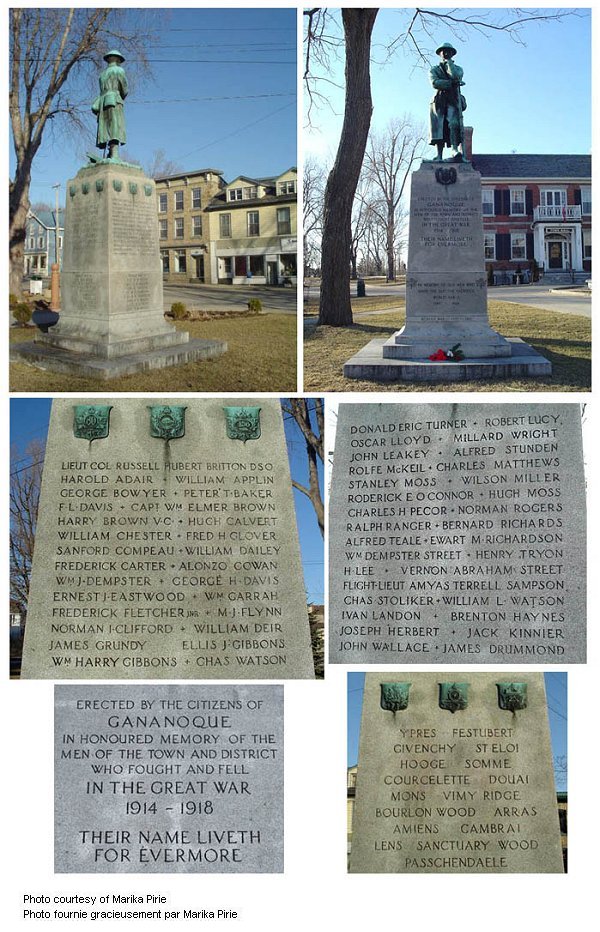
Pte. Wilson Miller's name appears on the Gananoque Ontario War Memorial.
-
-
Wilson Miller is honoured on page 41 of the <i>Gananoque Remembers</i> booklet, published on January 31, 2005.<P> He enlisted 14 July 1915 at age 29 and was assigned to the 44th Battalion (Manitoba) but later was transferred to the 13th Battalion (Royal Highlanders of Canada). He arrived in France in June 1916 and soon found himself at the Somme. On 3 September the Australians made their final attack at the Somme assisted by about 400 men from the 13th Canadian Battalion. Their objective was a small farm on Pozieres Ridge. Although they failed to capture it, they seized 300 metres of German trenches but then were subjected to an intense artillery barrage which killed or wounded 322 Canadians, an incredibly high casualty rate. Among the dead was Private Wilson Miller, age 30, who was killed 4 September.
-
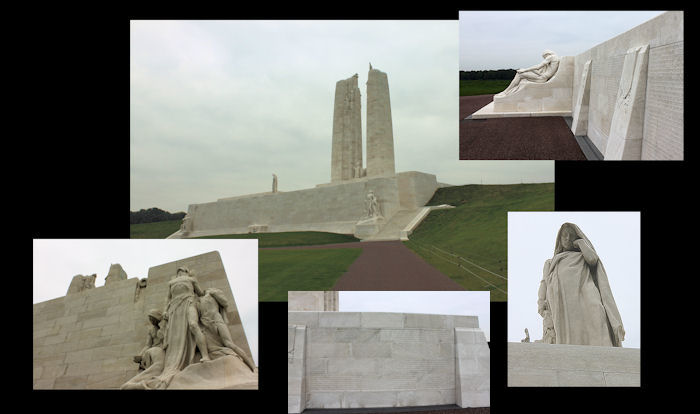
Canada's Vimy Memorial, located approximately 8 kilometres to the north-east of Arras, France. May the sacrifice of so many never be forgotten. (J. Stephens)
Dans les livres du souvenir
Inscription commémorative sur la :
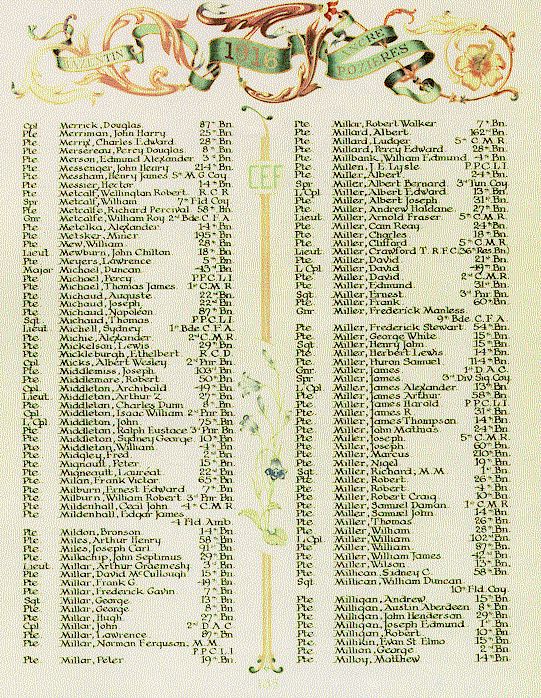
Page 135 du Livre du Souvenir de la Première Guerre mondiale.
Commander cette page
Télécharger cette page
MÉMORIAL DE VIMY Pas de Calais, France
L'hommage le plus impressionnant que le Canada a rendu à ceux de ses citoyens qui ont combattu et donné leur vie au cours de la Première Guerre mondiale, a trouvé son expression concrète dans le Monument Commémoratif du Canada à Vimy, qui surplombe majestueusement la plaine de Douai du sommet de la crête de Vimy, à environ huit kilomètres au nord-est d'Arras. Le Monument représente un hommage à tous ceux qui ont combattu pour leur pays durant ces quatre années de guerre et, en particulier, à ceux qui ont donné leur vie. Sur le socle du Monument, sont gravés dans la pierre, en français et en anglais, les mots suivants :
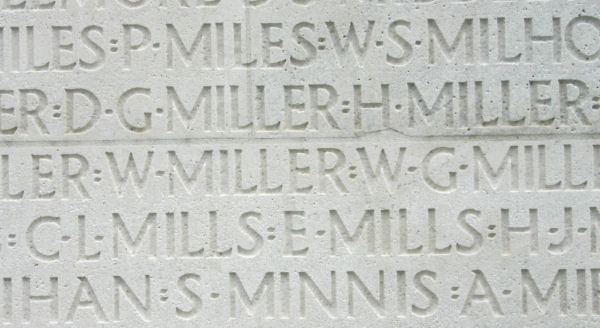
Sur les parois du Mémorial sont inscrits les noms de plus de 11 000 soldats canadiens «manquant à l'appel et présumés morts» en France.
Le terrain du parc de ce champ de bataille, d'une superficie de 91,18 hectares, «est un don de la nation française au peuple canadien», comme l'indique une plaque à l'entrée du Mémorial. La construction de cet ouvrage gigantesque commença en 1925; onze ans plus tard, le 26 juillet 1936, le roi Édouard VIII dévoilait le Mémorial de Vimy.
Le parc qui entoure le Mémorial est l'oeuvre d'experts en horticulture. Une multitude d'arbres et d'arbustes du Canada y ont été plantés pour rappeler les forêts et les bois canadiens. Autour du Mémorial, au-delà des coteaux verdoyants qui y mènent, s'étendent des parcs boisés. À la vue des tranchées et des tunnels parfaitement restaurés, le visiteur peut imaginer l'énorme tâche que le Corps canadien dut accomplir ce matin historique, il y a bien des années.
Le 3 avril 2003, le gouvernement du Canada a désigné le 9 avril de chaque année comme étant la journée nationale du souvenir de la bataille de la crête de Vimy.
Pour plus d’informations, visitez la Commission des sépultures de guerre du Commonwealth (site disponible en anglais seulement).
L’image du coquelicot est une marque déposée de la Légion royale canadienne (Direction nationale) et est utilisée avec sa permission. Cliquez ici pour en savoir plus sur le coquelicot.
Avons-nous oublié quelque chose ?
Contribuer à cette page commémorative
Avez-vous des photos, des informations ou une correction concernant la page commémorative de cet individu? Apprenez-en plus sur le MVGC et les informations que nous collectons.