Attention!
Cette vidéo est disponible en anglais seulement.
Description
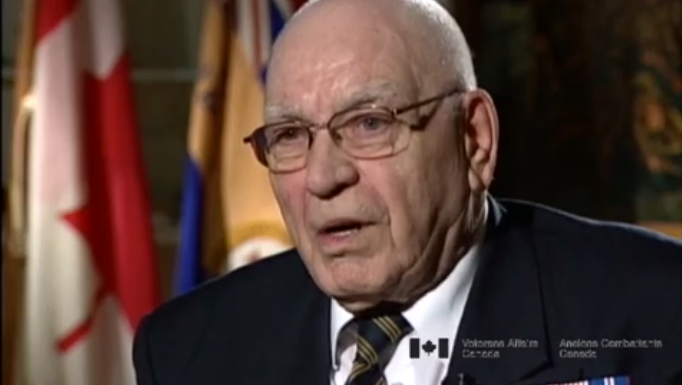
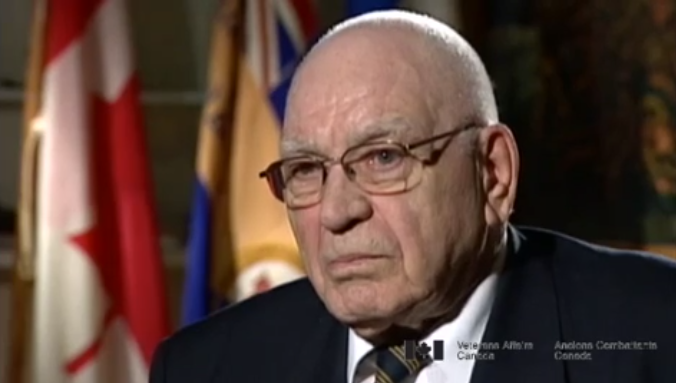
Mr. Berry gives a general description of the 86th Bridging Company’s responsibilities, and then describes three incidents related to the delivery of material to theatres of action at the Seine River, the Rhine River and at Arnhem, evacuating Canadian paratroopers.
Transcription
In our role in bridge building, we would take and deliver material. We had big diamond T trucks and they were loaded with all kind of bridging material, bailey bridging material, and we would pull up to a site and we would unload our material. If we were required to help, then we would have to help, but we had engineers there that did the building. They did the building during the war, they did. Peace time, we did it because it was part of our training. We did it. But during the war, I was only a few times, I guess, we had to go actually help to build. Our job was just to get it there, get it there, get it to the bridge hill, bridge head, unload it and go back and get more material and bring it up as it was required. Now I remember one occasion, now that you talk about it, when we were doing the crossing, the Seine river. It was daytime and the Germans was, well, we’ll say ten miles on the other side but they were using artillery. And between periods of building and everything, the firing would come and they’d say, “Hey, it’s about ready for another barrage. You guys take cover.” And there was a real big heavy barrage and an officer said to me, “Hey, Berry move that jeep!” Everybody was taking cover and running and he says, “Move that jeep!” And I looked at him and I said, “There’s lots of little jeeps back in the bridgehead but there is not a lot of little Berrys, you move it,” and we all took cover. That’s one occasion that was kind of comical and everything because he said to me the next day, “You know you refused an order.” I said, “No, that wasn’t an order. You just asked me to move and I said there was a lot bridge...” so we laughed about it. Crossing the Rhine there was a lot of heavy fire and we were doing it at night times and we unloaded. Another … there was another new chap had just come over to us as a driver, and it was his first time, night time. A lot of fire going on and artillery and a lot of tracers and everything. So we said, “Jeez, I got to go down there? ” We said, “Oh yeah, just drive down there.” We said, “You see all that stuff going across that’s red? ” “Yeah.” “Well, when it’s black, that’s when you go.” And Holy God he said, “I got to do that? ” And I said, “Oh yeah, you’ve got to do that. You’ve got to go down, back down. You’re okay, just do what I said.” And we laughed. We said what a way to greet a guy, you know, because there was certain things little things that happened and to us it seemed kind of a jokey thing. There was another occasion when they went to Arnhem, we went to Arnhem. We didn’t go in. We brought boats, collapsible boats up to bring them back from Arnhem. But the night that they were going in Arnhem, we were on a road by a forest. And you could see all the gliders and everything going in and dropping in. And we said, “Holy crap, them guys are in, they’re really in for it tonight.” So then they said to us, “Jeez, you got to get collapsible boats up there,” because they’re forced back across the river. So we did that, got them up and stuff like that. The bridge companies, we were always in the front. We were never in the, lets put it this way - in order for the infantry to get across canals and vice versa,we had to be there to get them across, so we were always up in the line. Now from the time I went in July, I was there all during the war. I never got no leave … seven days maybe to go to Amsterdam, but it was from there until we come back home in 1946. So my experience all through the campaign, so we called it a campaign, was hey, we’re here today. We heard about somebody getting a hard, a rough time, ah but that’s what we’re here for, let’s do it.
Catégories
Work Responsibility with the 86th Bridging Company
Médium
Video
Propriétaire
Veterans Affairs Canada
Guerre ou mission
Seconde Guerre mondiale
Emplacement géographique
Europe
Personne interviewée
Irving Malcolm Berry
Branche
Armée
Unité ou navire
86<sup>e</sup> Compagnie de brigade
Military Rank
Sergent
Occupation
Bridgeing Crew
Durée
5:06