Attention!
Cette vidéo est disponible en anglais seulement.
Description
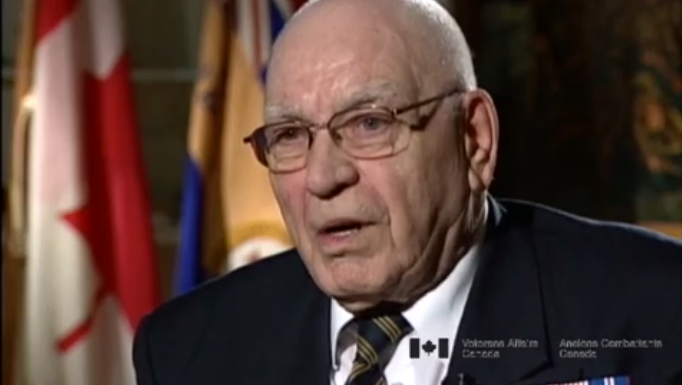
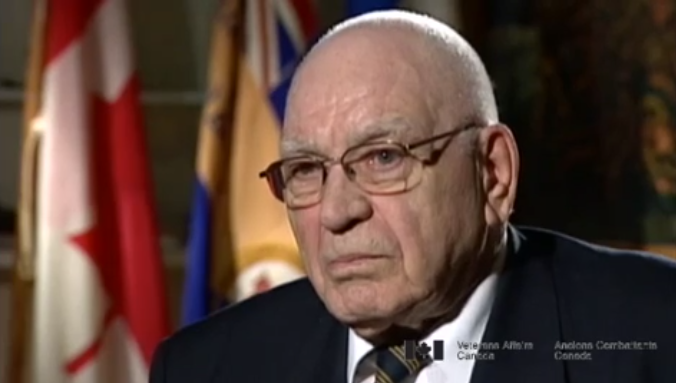
Mr. Gray talks about convoy duty and the HMCS St. Croix’s demise.
Transcription
The convoy duty, we left Newfoundland in November, and it was getting near Christmas and the, the convoy went, we left Newfoundland, and we used to call it the dairy run, Newfoundland to Ireland, New York, pick up a convoy. Anyhow, they went to sea. The first trip that we made we, we lost a couple of ships. The code about the navy is that these ships want to join the convoy and they get into trouble, they’re on their own. We couldn’t come out of, out of the escort to go back to pick up those ships because the Nazi submarines at that time in the North Atlantic Ocean were ruling supreme. And they did that a couple times. They left the convoy and went to rescue those ships there. And the submarine pops up right in, right in the middle of the convoy and sinks their ships that they want to sink. So, some of the ships that are over there, they’d lose behind them, just leave them, forget about them. They’re on their own. Incidentally, that ship that I was aboard, there, I made four trips, four trips with her and, my Lord, same as the last trip I made, it was a severe storm, one of the worst storms that I ever seen in my life. And, man, I was so sick. Boy, I couldn’t stand on my two feet. When I got back into port on Newfoundland, there, I signed off the ship. I said, “I had enough of that. I can’t stand that.” I think they were glad to see me go. But that ship, after I left, she made a couple more trips, there. But it was the first destroyer that the German submarine torpedoed with that new torpedo they had. Torpedos there before, they used to just come straight at you, and somebody probably on watch would say “torpedo such and such,” and the navigator would steer the ship out of it, zig zag out of it. But this torpedo would follow the wake of the ship no matter where it went.
Catégories
Nazi Submarines were Ruling Supreme
Médium
Video
Propriétaire
Veterans Affairs Canada
Guerre ou mission
Seconde Guerre mondiale
Emplacement géographique
Océan Atlantique Nord
Campagne
Jour-J
Personne interviewée
Earl Gray
Branche
Marine
Unité ou navire
NCSM <em>St. Croix</em>
Military Rank
Matelot de classes
Occupation
Deck, Équipe de l'artillerie
Durée
2:14