Attention!
Cette vidéo est disponible en anglais seulement.
Description
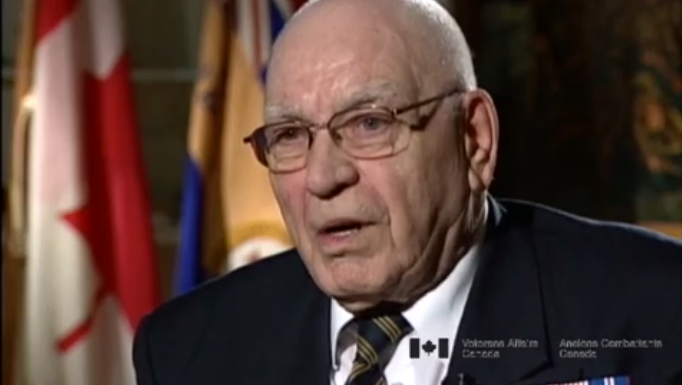
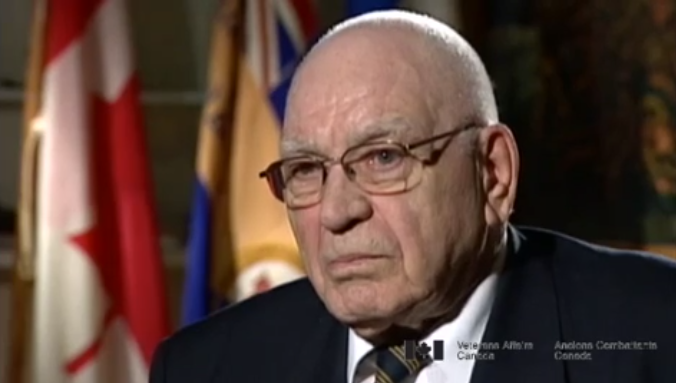
Mr. Gray describes transporting the wounded back to England after D-Day.
Transcription
Our duty was then . . . well, it was just to clean the mud that . . . there was so much debris in, in amongst the shore. There was aircraft assault boats that were broken and there, there, there was... And the Germans had rails drove down into, into the ground, and they had mines on top of those rails. And the French underground had most of them detonators taken off of, but we had to clean that up sort of, make a little thing, you know, clear. And then the other ships moved over, and then they told us to go to Cherbourg, Cherbourg Harbour. We went to Cherbourg Harbour, and they said, “Okay, you’re job here is done. You’re going back to Plymouth. Going back to Portsmouth.” And they said, “You’ll be taking with you as many casualties as you can possibly put aboard the ship.” So, they took the casualties that were in there and put them, just laid them on the thing like they would a box of oranges, or they were all up in little stretchers and everything. Merciful man, it was . . . there were, there’s some badly wounded personnel in that thing, there. But they, the most of them, most of them were only young fellas, 19 years old. And they said...we bent over, and they asked for a cigarette, and they give them a cigarette, and they said, “Shot up pretty bad, am I? ” And we were told, “Don’t say nothing. Don’t tell them anything.” We said, “No, no, no. We’re just taking you to the hospital. You’ll be alright.” And the fella would say, “Don’t tell my mother or father. Don’t say anything to my mother or my father. They’ll want to know. Just tell them what, that when you seen me, that I was alright, and I’m coming home soon.”
Catégories
Transporting the Wounded
Médium
Video
Propriétaire
Veterans Affairs Canada
Guerre ou mission
Seconde Guerre mondiale
Emplacement géographique
Manche
Campagne
Jour-J
Personne interviewée
Earl Gray
Branche
Marine
Unité ou navire
NCSM <em>Vegreville</em>
Military Rank
Matelot de classes
Occupation
Deck, Équipe de l'artillerie
Durée
1:49