Attention!
Cette vidéo est disponible en anglais seulement.
Description
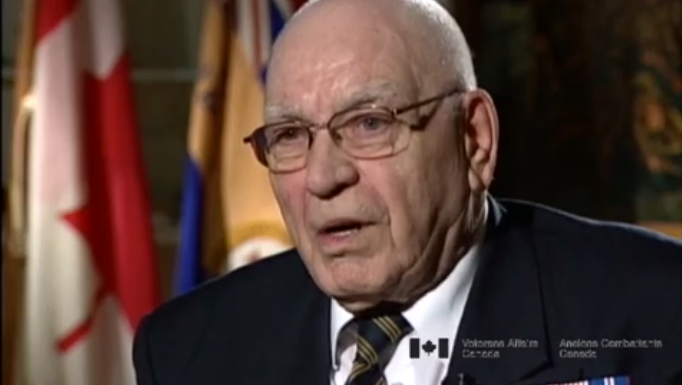
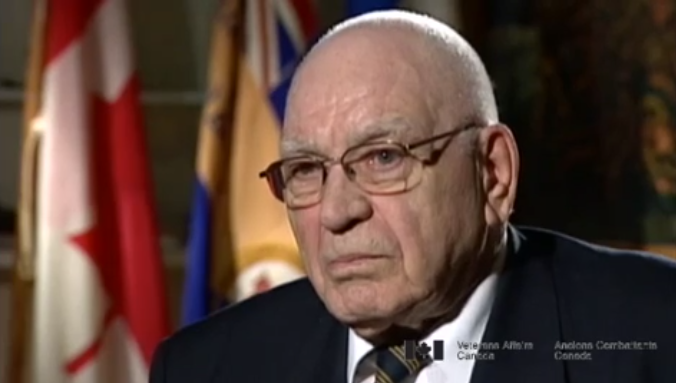
Mr. Pollak recounts how he went directly into service after landing in England and how his unit had three years experience intercepting and decoding German signals before they went over to Normandy in June 1944. He then describes the makeup of the unit and the duties they had.
Transcription
We, we had, for quite a while, an attached British Warrant Officer and, and a Captain came down every so often and spent a month or two months with us. And by this time, you had already
B-type, in other words mobile signals intercept units waiting for, to go war in Sicily or in the West Indies or in, in, in Europe who knew what they were up against and they helped us in getting started, but nobody had any idea. It was just amazing, but just to reflect we had almost three years to learn our job. So by the, in three years, we did nothing but intercept German traffic. So by the time we landed in Normandy in June 1944, we knew half the units which were opposing us. We did.
We had and okay, we are now in a signal unit. Do you want me to describe roughly the unit? Okay it, it was a composite unit. The, the major part, about ninety-eight people were signallers and about eighteen people were, was a signal unit and then the intelligence part of it. The signal unit was the housekeeping unit and their job was technically to pick up the signals and record them, write them down. They, and they had two sources of signals intelligence. One is traffic coming over the air from a transmitter on the other side and direction finding. Very elementary by today's standards. Today you know, you can hop into a tank and you switch on and it tells you where you are. You know, it tells you bloody well where...
B-type, in other words mobile signals intercept units waiting for, to go war in Sicily or in the West Indies or in, in, in Europe who knew what they were up against and they helped us in getting started, but nobody had any idea. It was just amazing, but just to reflect we had almost three years to learn our job. So by the, in three years, we did nothing but intercept German traffic. So by the time we landed in Normandy in June 1944, we knew half the units which were opposing us. We did.
We had and okay, we are now in a signal unit. Do you want me to describe roughly the unit? Okay it, it was a composite unit. The, the major part, about ninety-eight people were signallers and about eighteen people were, was a signal unit and then the intelligence part of it. The signal unit was the housekeeping unit and their job was technically to pick up the signals and record them, write them down. They, and they had two sources of signals intelligence. One is traffic coming over the air from a transmitter on the other side and direction finding. Very elementary by today's standards. Today you know, you can hop into a tank and you switch on and it tells you where you are. You know, it tells you bloody well where...
Catégories
Decoding German signals
Médium
Video
Propriétaire
Veterans Affairs Canada
Guerre ou mission
Seconde Guerre mondiale
Emplacement géographique
Europe
Campagne
Europe du Nord-Ouest
Personne interviewée
Fred Pollak
Branche
Armée
Occupation
Reseignements sur les transmissions
Durée
02:01